
Do Philosophers Believe in God?
Many people assume that philosophy is a path toward atheism, but the reality is that the vast majority of history’s most influential thinkers concluded that a Supreme Creator is a logical necessity.
When we ask, do philosophers believe in god, we find that from the ancient Greeks to modern analytical thinkers, the existence of a first cause has been the central pillar of rational inquiry.
Philosophy isn’t just about asking “why”; it’s about following the evidence of the universe to its ultimate source.
For the Muslim, this intellectual journey is deeply familiar. Islam doesn’t ask you to park your brain at the door. Instead, it invites you to use your “Aql” (intellect) to recognize the signs of Allah in the design of the cosmos and the intricacies of human consciousness
Do Philosophers Believe in God in The West?
Yes, some of history’s most influential Western thinkers believed in God. René Descartes built his entire philosophical system on proving God’s existence.
Immanuel Kant, though critical of traditional proofs, still argued for God as a necessary foundation for morality. Søren Kierkegaard made faith central to human existence.
But many others charted a different course. David Hume questioned religious miracles and divine design. In modern times, prominent philosophers like Bertrand Russell and Jean-Paul Sartre openly embraced atheism.
Contemporary surveys show Western academic philosophers remain largely skeptical. Studies indicate that roughly 70% of philosophy professors in Western universities identify as atheists or agnostics. Only about 15-20% profess theistic belief.
This secular trend reflects broader Western intellectual movements—the Enlightenment’s emphasis on human autonomy, the rise of materialism, and a growing assumption that reason and faith occupy separate spheres.
Why Some Philosophers Reject The Idea of a Creator?
It is true that in the last two centuries, particularly in Western academia, atheistic existentialism became popular. However, their rejection was often more about a reaction against the specific historical baggage of the Church rather than a failure of the logical proofs for a Creator.
When these thinkers removed Allah from the center of the universe, they struggled to find a basis for objective morality or ultimate meaning. If there is no Creator, then there is no “right” or “wrong”—only personal opinions and the “will to power.”
Islam offers a much more grounded alternative. It recognizes that our innate human nature (Fitrah) longs for a connection to the Divine. Philosophy, when stripped of ego, acts as a bridge that leads the seeker back to this natural state of belief.
Do Philosophers Believe in God Through The Lens of Causality?
The most enduring philosophical argument for the existence of Allah is the Cosmological Argument, or the Law of Causality.
Philosophers like Aristotle and later, the great Islamic thinkers like Al-Kindi and Ibn Sina, argued that the universe cannot be an infinite chain of causes stretching back forever.
There must be an “Unmoved Mover” or a “Necessary Being” who started everything but was not started by anything else.
If you see a row of falling dominoes, you know someone pushed the first one. Logic dictates that the universe, which began to exist, must have a cause that is external to it, powerful, and eternal. This isn’t just a religious “feeling”; it is a cold, hard logical requirement.
Allah points to this rational reality in the Quran:
“Or were they created by nothing, or were they the creators [of themselves]?” (Quran 52:35)

Have Questions About Islam?
Our team is ready to answer your questions clearly and respectfully. Ask freely and receive honest guidance.
Ask Us NowIslamic Philosophy is Where Reason Meets Revelation
The Islamic tradition tells a radically different story about whether philosophers believe in God.
During Islam’s Golden Age (roughly 8th to 14th centuries), Muslim philosophers didn’t see belief in Allah as something reason must overcome. They viewed it as something reason confirms and deepens.
Al-Kindi, often called “the first Islamic philosopher,” used rational arguments to defend Allah’s oneness and the reality of prophecy. Al-Farabi explored how human intellect connects to divine knowledge. Ibn Sina (Avicenna) developed sophisticated proofs for Allah’s necessary existence that influenced Western thought for centuries.
Ibn Rushd (Averroes) went further, arguing that true philosophy and revelation never contradict—because both come from Allah. When apparent conflicts arise, he taught, we’ve misunderstood either the text or the reasoning.
These weren’t philosophers who happened to be Muslim. They were Muslims whose faith drove them to philosophy, seeking to understand Allah’s creation through the gift of intellect He bestowed upon humanity.
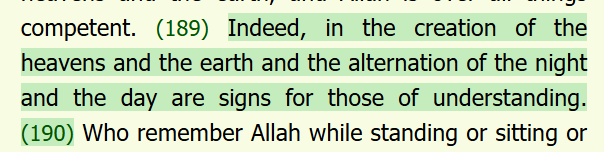
The Quran itself encourages this rational inquiry:
“Indeed, in the creation of the heavens and the earth and the alternation of the night and the day are signs for those of understanding.” (Quran 3:190)
1. Al-Kindi and the necessity of a beginning for the universe
Abu Yusuf Ya’qub ibn Ishaq al-Kindi, known as the “Philosopher of the Arabs,” argued that the universe must have had a beginning in time. He used mathematical logic to show that an actual infinite of past events is impossible.
If the universe had a beginning, it required a “Bringer-into-existence” who is eternal and not subject to the same laws of time and space. Al-Kindi saw no conflict between this logical conclusion and the Quranic message of creation.
He viewed philosophy as a tool to confirm what the prophets brought. To him, the harmony of the cosmos was a clear sign of a single, wise Designer who governs all things with precision.
2. Al-Farabi and the concept of the Necessary Being
Al-Farabi, often called the “Second Teacher,” developed the influential argument of “Necessity and Contingency.” He proposed that everything we see in the world is “contingent,” meaning it could either exist or not exist.
For these contingent things to exist right now, there must be a “Necessary Being” whose existence is part of its very essence. This Being does not depend on anything else for its existence; it is the source of all else.
This “First Cause” is what Muslims recognize as Allah. Al-Farabi’s work laid the groundwork for later thinkers to bridge the gap between abstract metaphysical proofs and the living faith of the Ummah.
3. Avicenna and the proof of the truthful
Ibn Sina, known in the West as Avicenna, refined the proof for Allah’s existence into what he called the “Burhan al-Siddiqin” or the Proof of the Truthful. He argued that we don’t even need to look at the physical world to prove Allah exists.
By simply analyzing the concept of “existence” itself, one can conclude that there must be a Necessary Existent. This being must be one, indivisible, and the source of all perfections found in the universe.
Ibn Sina’s philosophy was deeply rooted in the belief that the soul is immortal and that our ultimate happiness lies in the knowledge of Allah. His work remains a pillar in both Islamic and Western intellectual history.
4. Al-Ghazali and the limits of human reason
Imam al-Ghazali took a different approach by critiquing the philosophers of his time who relied too heavily on Greek thought. In his famous work, The Incoherence of the Philosophers, he pointed out where logic alone fails to grasp divine truths.
He didn’t reject reason, but he insisted that the heart and revelation are necessary to truly know Allah. For al-Ghazali, philosophy could prove a Creator exists, but only the Quran could tell us who He is.
He emphasized that Allah is a Willer who creates out of choice, not a static “cause” that produces effects mechanically. This distinction is vital for understanding the relationship between the Creator and His creation.
5. Ibn Rushd and the harmony of religion and philosophy
Ibn Rushd, known as Averroes, spent much of his life proving that there is no “double truth”—the idea that religion and philosophy could contradict each other. To him, truth cannot contradict truth.
He argued that the Quran actually commands Muslims to study philosophy and logic to better appreciate the wisdom of Allah. He pointed to verses that urge us to “reflect” and “see” as evidence for this.
Ibn Rushd’s commentaries on the heavens and the earth were grounded in the belief that the more we understand the laws of nature, the more we understand the Lawgiver. He saw the universe as a book that testifies to its Author.
Why Do Philosophers Believe in God So Differently Across Traditions?
The answer lies in foundational assumptions. Western philosophy after the Enlightenment increasingly assumed that human reason stands alone, independent and self-sufficient. Truth becomes whatever reason can demonstrate without reference to revelation. God becomes a “hypothesis” to be tested, not a reality to be recognized.
Islamic philosophy begins elsewhere. Islamic philosophy recognizes that human reason itself is a gift from Allah, and that the same Creator who gave us minds also gave us revelation. Both are tools for understanding reality.
This doesn’t mean blind acceptance. Islamic scholars developed sophisticated methodologies for interpreting texts, evaluating evidence, and resolving apparent contradictions. But they rejected the premise that reason and revelation are enemies.
The Prophet Muhammad ﷺ said: “Seeking knowledge is an obligation upon every Muslim.” (Sunan Ibn Majah)
This wasn’t knowledge limited to religious texts. Muslim philosophers studied mathematics, astronomy, medicine, logic, and natural philosophy—all as acts of worship, ways of understanding Allah’s creation.
Whether a philosopher believes in Allah often depends on their starting point—if they rely solely on human reason or if they allow divine revelation to guide that reason.
While modern Western philosophy frequently leans toward secularism, the history of human thought shows that many of the world’s most influential thinkers found it impossible to explain existence without a Creator.
The Rational Case for Belief
When Islamic philosophers contemplated whether philosophers should believe in God, they found reason itself pointing toward Allah.
They observed that everything in existence is contingent—it could have not existed. The universe didn’t have to be here. You didn’t have to exist. Yet here we are.
Contingent things require explanation. Why does anything exist rather than nothing? The chain of causes can’t extend infinitely backward—there must be a Necessary Being whose existence depends on nothing else, who brings all other things into being.
This Being must be one, not many—because if there were multiple necessary beings, they would need something to distinguish them, making them composite and therefore dependent on their parts.
This Being must be eternal, unchanging, all-powerful, and all-knowing—because any limitation would make it dependent on something else.
These aren’t just abstract arguments. They’re invitations to recognize what’s already evident in creation:
أَفِي اللَّهِ شَكٌّ فَاطِرِ السَّمَاوَاتِ وَالْأَرْضِ
“Is there doubt concerning Allah, Creator of the heavens and earth?” (Quran 14:10)
The Modern Question of Do Philosophers Believe In God?
Today’s seekers asking “do philosophers believe in god?” often carry Western assumptions—that smart, thoughtful people inevitably drift toward skepticism.
History shows otherwise. Some of humanity’s greatest minds found in Allah not a limit to inquiry but its foundation. They saw the universe not as a meaningless accident but as a creation saturated with purpose and signs.
The real question isn’t whether intelligent people can believe. It’s whether we’re willing to follow truth wherever it leads—even when it challenges the materialist assumptions dominating contemporary Western thought.
Islam invites precisely this honest seeking. It offers not blind faith versus cold reason, but a path where both illuminate each other, where the mind’s highest achievement is recognizing the One who gave us minds in the first place.
Have Questions About Islam?
Our team is ready to answer your questions clearly and respectfully. Ask freely and receive honest guidance.
Ask Us NowContinue Your Journey of Faith and Knowledge with Salam
The journey of seeking truth is one of the most noble endeavors a human can undertake. Whether you are coming from a background of philosophy, science, or simple curiosity, there is so much more to discover about how Islam answers life’s deepest questions.
We invite you to browse the Salam platform blog for more articles on the intersection of faith and reason. If you have specific questions about the existence of Allah, the life of Prophet Muhammad ﷺ, or how to begin your own journey into Islam, we are here to help.
- Have a specific question? Reach out to our team for a personal response.
- Curious about becoming Muslim? We provide one-on-one guidance for those looking to take their first steps.
- Want to learn more? Continue reading our latest insights on Islamic theology and practice.
Conclusion
Philosophers have never agreed unanimously about God, but disagreement itself reveals something important. The debate isn’t shallow. It turns on first principles—causality, existence, morality—and whether reality can explain itself without appealing to something beyond it.
Western philosophy’s modern skepticism often reflects historical tension with church authority, not a decisive refutation of a Creator. When God is removed, questions about meaning and moral obligation don’t disappear; they become harder to answer coherently.
Islamic philosophy approached the same questions from a different starting point. Reason was never isolated from revelation. Together, they formed a single pursuit of truth—one where thinking honestly about existence leads not away from God, but directly toward Him.
Curious about Islam?
Journey towards clarity and purpose. Our team is here to support you in your search for truth and spiritual guidance.
Embrace the TruthDiscussion
0 CommentsLeave a Comment
No comments yet. Be the first to share your thoughts!