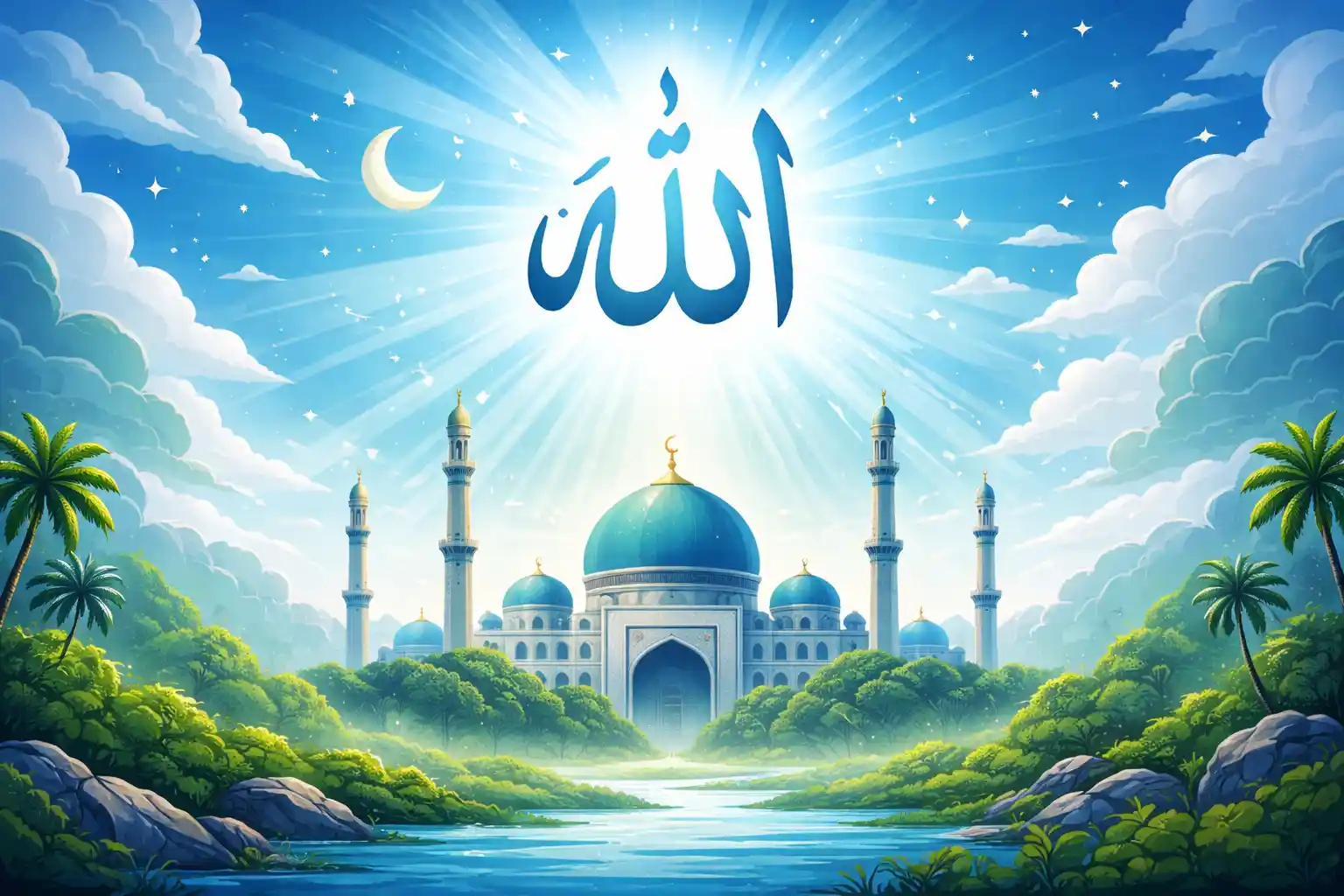
Monotheism – The Belief in a Single God
Islam’s entire worldview rests on a single, unshakeable truth: there is only one God, without partners, equals, or offspring. This belief—known as monotheism—isn’t just one teaching among many in Islam. It’s the bedrock upon which everything else stands.
When Muslims recite “La ilaha illa Allah” (There is no god but Allah), they’re affirming the most fundamental reality of existence. This declaration shapes how Muslims understand creation, worship, morality, and their very purpose in life.
But what does it truly mean to believe in one God, and why does Islam emphasize this concept so intensely?
Monotheism Means Recognizing Allah Alone As The Creator And Sustainer
The Islamic understanding of monotheism goes deeper than simply counting deities. It means recognizing that Allah alone created the heavens and the earth, that He alone sustains every living thing, and that He alone deserves worship.
The Quran addresses this foundation repeatedly, reminding humanity of the obvious signs in creation:
أَفَلَا يَنظُرُونَ إِلَى الْإِبِلِ كَيْفَ خُلِقَتْ
“Then do they not look at the camels – how they are created?” (Quran 88:17)
The verse continues to direct attention toward the sky, mountains, and earth—all pointing toward a single, incomparable Creator.
Nothing in existence came about by chance or through multiple competing forces. One divine will brought everything into being.
This Creator isn’t distant or uninvolved. Allah sustains His creation continuously, providing rain, food, and life itself. He hears prayers, responds to needs, and maintains perfect control over all affairs.
The Doctrine Or Belief That There is Only One God is Called Tawhid in Islam
Muslims use the Arabic term “Tawhid” to describe the doctrine or belief that there is only one god. Tawhid literally means “making one” or “asserting oneness,” and it represents the purest form of monotheism.
Tawhid has three interconnected dimensions that Muslims understand and practice:
1. Oneness of Lordship in Islam
Tawhid ar-Rububiyyah (Oneness of Lordship) acknowledges that Allah alone creates, provides, and controls the universe. No force in creation operates independently of His will.
2. Oneness of Worship in Islam
Tawhid al-Uluhiyyah (Oneness of Worship) means directing all acts of worship exclusively to Allah. Prayer, sacrifice, requests for help, and devotion belong to Him alone. To direct any of these toward another being—whether a prophet, angel, saint, or idol—violates the core of Islamic belief.
3. Oneness of Names and Attributes in Islam
Tawhid al-Asma was-Sifat (Oneness of Names and Attributes) affirms that Allah’s qualities are unique to Him. His knowledge, power, mercy, and justice are absolute and incomparable. Nothing shares His divine nature.
These aren’t abstract theological categories. They translate into how Muslims live daily—praying only to Allah, trusting His plan during hardship, and refusing to attribute divine qualities to any created being.
Have Questions About Islam?
Our team is ready to answer your questions clearly and respectfully. Ask freely and receive honest guidance.
Ask Us NowWhat Are Muslim Beliefs Regarding Allah?
Muslims believe that Allah is One. He has no parents, no children, or a physical family. They believe that He is beyond human imagination and no one is similar to Him.
To understand what are Muslim beliefs regarding Allah, we must look at how Allah describes Himself and how His Messenger ﷺ explained His attributes.
These beliefs are built on a foundation of majesty, mercy, and absolute uniqueness. Let’s present these divine attributes:
1. Muslims Believe in the Oneness of Allah
The absolute Oneness of Allah (Tawhid) is the core of every Muslim’s faith. It is the belief that Allah is the sole Creator and the only one worthy of devotion and worship, without any partners or intermediaries.
Allah says in the Holy Quran:
﴿وَإِلَٰهُكُمْ إِلَٰهٌ وَاحِدٌ ۖ لَا إِلَٰهَ إِلَّا هُوَ الرَّحْمَٰنُ الرَّحِيمُ﴾
“And your Allah is one Allah. There is no deity [worthy of worship] except Him, the Entirely Merciful, the Especially Merciful.” (Al-Baqarah2:163)
The Prophet ﷺ said: “Whoever dies knowing that there is no deity except Allah shall enter Paradise.” (Sahih Muslim)
2. Muslims Believe That Allah Has No Partner or Son
Central to the Muslim beliefs regarding Allah is the rejection of any human attributes being attributed to Him.
Muslims believe that Allah is self-sufficient and far above the need for a spouse, a child, or any partner in His sovereignty.
The Holy Quran states this fact:
﴿وَأَنَّهُ تَعَالَىٰ جَدُّ رَبِّنَا مَا اتَّخَذَ صَاحِبَةً وَلَا وَلَدًا﴾
“And that He—exalted is the nobleness of our Lord—has not taken a wife or a son.” (Al-Jinn72:3)
The Prophet ﷺ narrated that Allah said: “The son of Adam disbelieved Me and he had no right to do so… As for his disbelieving Me, it is his saying: Allah has taken a son; while I am the One, the Self-Sufficient Master. I beget not, nor was I begotten, and there is none co-equal or comparable unto Me.” (Sahih Bukhari)
Read also: Top 13 Scientists Who Believe in God
3. Muslims Believe that Allah is the Creator and the Sustainer (Al-Khaliq & Al-Qayyum)
Muslims believe that Allah is the sole Creator who brought everything into existence from nothing and continues to sustain every atom in the universe without fatigue.
They believe that Allah is the Living and Self-Sustaining. They believe that Allah does not sleep, does not tire, and is the One who keeps the stars in their orbits and the hearts beat.
Allah says in the Holy Quran:
﴿اللَّهُ لَا إِلَٰهَ إِلَّا هُوَ الْحَيُّ الْقَيُّومُ ۚ لَا تَأْخُذُهُ سِنَةٌ وَلَا نَوْمٌ ۚ لَهُ مَا فِي السَّمَاوَاتِ وَمَا فِي الْأَرْضِ ۗ مَن ذَا الَّذِ…َ الْعَلِيُّ الْعَظِيمُ﴾
“Allah—there is no deity except Him, the Ever-Living, the Sustainer of [all] existence. Neither drowsiness overtakes Him nor sleep…” (Al-Baqarah 2:255 – Ayat al-Kursi).
The Prophet ﷺ said: “O Allah, You are the Light of the heavens and the earth… You are the Truth, Your promise is true, and the meeting with You is true.” (Sahih Bukhari).
Read also: Do Jews and Muslims Believe in the Same God?
4. Muslims Believe that Allah is The Most Merciful and the Oft-Forgiving (Ar-Rahman & Al-Ghafur)
A central part of Muslim beliefs regarding Allah is His infinite compassion. He is not a deity looking to punish, but a Creator who is the most merciful and loves to forgive.
The Holy Quran assures this fact:
(وَرَحْمَتِي وَسِعَتْ كُلَّ شَيْءٍ)
“…My mercy encompasses all things…” (Al-A‘raf 7:156).
The Prophet ﷺ reported that Allah said: “O son of Adam, were your sins to reach the clouds of the sky and were you then to ask forgiveness of Me, I would forgive you.” (Hadith Qudsi – Tirmidhi).
5. Muslims Believe that Allah is the Nearness and Responsiveness (Al-Qarib & Al-Mujib)
Muslims believe that Allah is not distant; He hears every whisper and knows every silent thought. No intermediaries are needed to reach Him.
Allah says in the Holy Quran:
﴿وَإِذَا سَأَلَكَ عِبَادِي عَنِّي فَإِنِّي قَرِيبٌ ۖ أُجِيبُ دَعْوَةَ الدَّاعِ إِذَا دَعَانِ ۖ فَلْيَسْتَجِيبُوا لِي وَلْيُؤْمِنُوا بِي لَعَلَّهُمْ يَرْشُدُونَ﴾
“And when My servants ask you, [O Muhammad], concerning Me – indeed I am near. I respond to the invocation of the [one who calls] when he calls upon Me…” (Al-Baqarah 2:186).
The Prophet ﷺ said: “Your Lord is Munificent and Generous, and is ashamed to turn away empty-handed the servant who raises his hands to Him [in prayer].” (Sunan Abi Dawud).
6. Muslims Believe that Allah is Unique in His Essence
Muslims believe that Allah is absolutely distinct from His creation. He is not bound by time, space, or physical form. Nothing in the universe resembles Him, and He resembles nothing.
The holy Quran states this fact:
لَيْسَ كَمِثْلِهِ شَيْءٌ ۖ وَهُوَ السَّمِيعُ الْبَصِيرُ
“…There is nothing like unto Him, and He is the Hearing, the Seeing.” (Ash-Shura 42:11)
This verse is the foundational rule: while Allah has attributes like “Hearing” and “Seeing,” His way of hearing and seeing is entirely unique and unlike the way humans or any other creatures do.
When the pagans asked the Prophet ﷺ to describe the lineage or the “nature” of his Lord, Allah revealed Surah Al-Ikhlas. The Prophet ﷺ later emphasized its importance, which concludes with: “Nor is there to Him any equivalent.” (Al-Ikhlas 112:4)
Read also: Geniuses Who Believe in God
Believing In One God Means Rejecting All Forms Of Association With Allah
Believing in one god requires more than passive acceptance of monotheism. It demands active rejection of anything that diminishes Allah’s oneness. Islam calls any form of association with Allah “shirk”—the gravest sin a person can commit.
Shirk takes many forms, some obvious and others subtle. Worshipping idols or statues represents clear shirk.
But shirk also includes believing that created beings share Allah’s attributes, praying to saints or deceased persons for help, or trusting superstitions and charms for protection.
The Quran warns about this directly:
إِنَّ اللَّهَ لَا يَغْفِرُ أَن يُشْرَكَ بِهِ وَيَغْفِرُ مَا دُونَ ذَٰلِكَ لِمَن يَشَاءُ
“Indeed, Allah does not forgive association with Him, but He forgives what is less than that for whom He wills.” (Quran 4:48)
This severity reflects how shirk strikes at the heart of reality itself. If creation has one Creator, worshipping multiple beings makes no logical or spiritual sense. It’s like thanking the wrong person for a gift or asking a stranger for something only your parent can provide.
Muslims guard against shirk carefully, even avoiding phrases that might suggest another being shares Allah’s power. They say “if Allah wills” rather than attributing outcomes to luck or personal ability alone.
Have Questions About Islam?
Our team is ready to answer your questions clearly and respectfully. Ask freely and receive honest guidance.
Ask Us NowLearn More About Islamic Monotheism
This article has introduced the Islamic understanding of monotheism, but there’s so much more to explore about this beautiful, transformative belief.
The Salam platform offers many resources that dive deeper into Islamic teachings, from the nature of Allah to how Muslims practice their faith daily.
If you have specific questions about monotheism, Islamic belief, or how to embrace Islam, we’d love to help.
Whether you’re curious about entering Islam or simply seeking to understand this faith better, our team is here to provide guidance and answer your questions. Reach out to us through the Salam platform, and let’s continue this conversation together.
Conclusion
Islamic monotheism begins with recognizing Allah as the sole Creator and Sustainer, actively involved in every detail of existence. Creation, provision, mercy, and control are not divided forces but expressions of one divine will that governs everything without fatigue or distance.
Tawhid organizes this belief into lordship, worship, and divine attributes, forming a coherent framework rather than abstract theology. These dimensions shape prayer, reliance, moral responsibility, and how Muslims understand Allah’s names without comparing Him to creation.
Belief in one God also requires rejecting shirk in all its forms, from open worship of others to subtle reliance on charms or intermediaries. Guarding Allah’s oneness preserves clarity in worship and keeps faith aligned with the reality Islam insists upon.
Curious about Islam?
Journey towards clarity and purpose. Our team is here to support you in your search for truth and spiritual guidance.
Embrace the Truth