Did Mike Tyson Convert to Islam?
Mike Tyson’s name instantly brings to mind knockouts, championship belts, and one of the most unforgettable careers in boxing history. Yet behind the fame, many people are curious about a different side of his life—his spiritual transformation. Fans around the world frequently ask: Did Mike Tyson convert to Islam? And if so, when did Mike Tyson convert to Islam? This question has sparked wide interest because Tyson’s path from rise, fall, and redemption is deeply inspiring.
His embrace of Islam marks one of the most significant turning points in his personal story, shaping his character long after his time in the ring.
Did Mike Tyson Convert to Islam? —
Yes—Mike Tyson did convert to Islam, and his faith has remained an important part of his life ever since. His decision was not a publicity move or a temporary phase, but rather a sincere spiritual commitment that began during one of the most difficult periods he ever faced.
Tyson has openly spoken in interviews about finding comfort, discipline, and a sense of inner peace in Islam. He has described religion as a guide that helped him confront his past mistakes and rebuild his character with humility and purpose. After embracing Islam, he chose the Muslim name Malik Abdul Aziz, reflecting a new identity rooted in faith rather than fame.
While Tyson admits he is not a perfect person and continues to learn, he consistently expresses pride in being Muslim and gratitude for how Islam transformed his outlook on life.
When Did Mike Tyson Convert to Islam?
Mike Tyson converted to Islam in the early 1990s, during his time in prison. After being convicted in 1992, Tyson began a period of deep reflection and self-discovery. Surrounded by isolation and away from the chaos of fame, he started studying different religions and eventually found peace and purpose in Islam.
During his incarceration, Tyson was introduced to Islamic teachings through fellow inmates and by reading the Qur’an. The message of discipline, forgiveness, and submission to God deeply resonated with him. It was in this transformative phase of his life that he officially embraced Islam and adopted the Muslim name Malik Abdul Aziz.
This spiritual awakening marked a turning point for Tyson—helping him to rebuild his identity, find inner calm, and begin a new chapter focused on faith, humility, and personal growth.
How Does Tyson Describe His Faith Today?
Mike Tyson continues to speak openly about his Muslim identity, not as a headline in his past but as a living part of who he is today. He says Islam helped him rebuild his character after fame, pressure, and personal struggles pushed him toward self-destruction. His reflections provide a deeper look into how faith reshaped his worldview and daily habits.
Islam as His Moral Foundation
Tyson often explains that Islam keeps him honest with himself. He follows its teachings as a moral compass—helping him distinguish right from wrong beyond fame or public opinion. He describes prayer and remembrance of Allah as anchors that bring emotional stability, especially during difficult phases of his life.
Self-Discipline and Personal Responsibility
Before Islam, Tyson admitted he lived impulsively, driven by anger and ego. Today, he credits Islamic discipline—from prayer routines to practicing patience—with helping him maintain control over his emotions. He emphasizes that real power is in mastering oneself, not overpowering others.
Islam Encourages Humility and Gratitude
Tyson frequently expresses that Islam taught him humility. Once surrounded by luxury and applause, he now appreciates simplicity, family, and gratitude. He believes all success comes from Allah, and recognizing this protects him from pride and arrogance—the same forces that once led to his downfall.
A Continuous Journey of Growth
Tyson always highlights that faith is not a “finished transformation.” He still makes mistakes and learns every day. He says Islam reminds him to apologize, forgive others, and seek forgiveness from God. For him, the journey matters more than perfection.
Public Pride in His Muslim Identity
Even without making religious statements for attention, Tyson proudly acknowledges being Muslim in interviews, documentaries, and public appearances. His actions—like visiting Makkah and performing Umrah—show that his commitment to Islam goes beyond words.
Thinking About Converting to Islam?
We are here to guide you step by step with sincerity, knowledge, and care. Reach out and begin your journey with confidence.
Start Your JourneyTyson’s Visits to Makkah and Madinah
Mike Tyson’s spiritual journey has been visible to the world through his visits to the holy cities of Makkah and Madinah. These trips reflect his devotion as a Muslim and his desire to stay close to his faith despite living a life in the spotlight.
Performing Umrah in Makkah
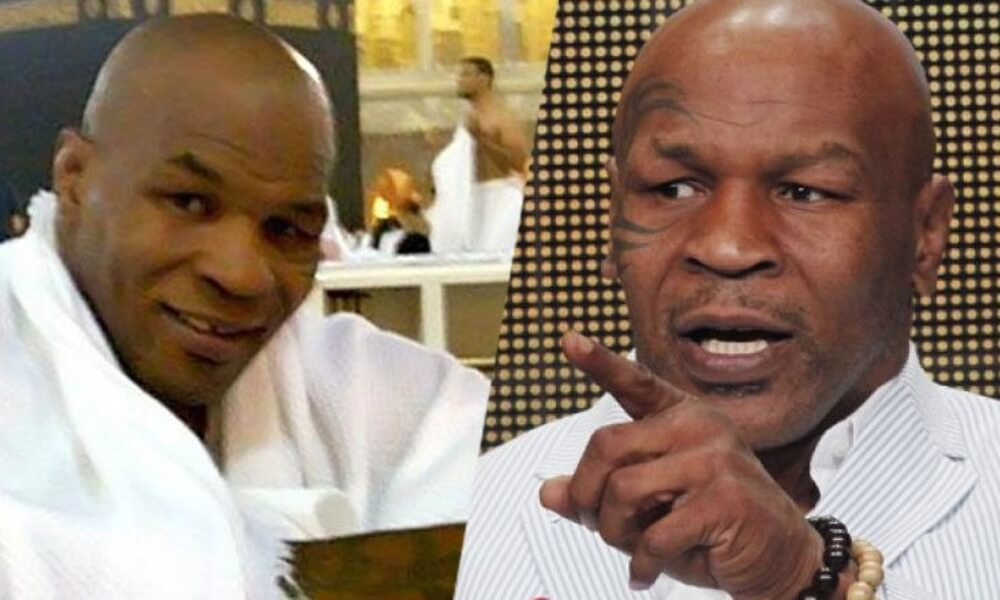
Tyson has traveled to Saudi Arabia multiple times to perform Umrah, the lesser pilgrimage. During these visits, he was seen walking among millions of Muslim worshippers in the courtyards of the Kaaba, wearing the simple white Ihram clothing like every other pilgrim. His presence demonstrated his humility and equality before God—regardless of his global fame.
Visiting the Prophet’s Mosque in Madinah
Tyson also visited Al-Masjid an-Nabawi, the Prophet Muhammad’s Mosque in Madinah. He expressed deep admiration and emotional connection while visiting the Prophet’s resting place. For him, it was a chance to strengthen his relationship with the teachings of Islam and reflect on the values he seeks to embody.
Positive Reactions from the Muslim World
His visits received warm reactions from Muslims worldwide, who appreciated his sincerity and respect for Islamic traditions. Many saw his presence in the holy lands as a reminder that faith can transform a person’s heart no matter their past.
A Symbol of His Continued Faith
Tyson’s pilgrimages serve as a clear sign that his conversion was not temporary. He continues to practice Islam and reaffirms his beliefs through worship, travel, and learning. These moments highlight a man searching for spiritual peace—far from the aggression he was once known for in the boxing ring.
Tyson’s Life Before Islam—What Led Him to Convert?
Before discovering Islam, Mike Tyson lived a life dominated by fame, pressure, and emotional turmoil. His rise in boxing was incredibly fast—becoming the youngest heavyweight champion at just 20 years old. But the sudden success came with consequences. Tyson faced overwhelming expectations, media attention, and a lack of stable guidance in his personal life. Behind his powerful punches was a young man battling insecurity, anger, and loneliness.
Growing up in difficult neighborhoods, Tyson had experienced trauma at an early age—from losing loved ones to getting involved in street life. Even after reaching global fame, those emotional wounds remained. As the spotlight intensified, he struggled with legal problems, addiction, and relationships that fell apart. The turning point came when he was sentenced to prison in 1992.
For Tyson, prison became a moment of forced reflection. Away from the cameras and chaos, he began questioning the direction of his life. It was during this period that he turned toward spirituality, searching for peace, forgiveness, and a new purpose. The teachings of Islam offered him a path of discipline, humility, and healing he had never experienced before.
His conversion wasn’t just a religious act—it was a lifeline, helping him rebuild his identity and break free from the destructive cycle he had been trapped in for years.
Tyson’s Muslim Name and Its Meaning
When Mike Tyson embraced Islam, he adopted the Muslim name Malik Abdul Aziz—a name with a powerful spiritual meaning. In Arabic, the name can be broken down into two meaningful elements:
- Malik (مالك) means king, leader, or one who possesses authority.
- Abdul Aziz (عبد العزيز) means servant of The Almighty, referring to one of the 99 Names of Allah, Al-Aziz (The All-Powerful and The Mighty).
Together, Malik Abdul Aziz symbolizes a believer who recognizes that true strength does not come from personal power, fame, or physical force—but from being a humble servant of the Most Powerful.
For Tyson, this new name marked a transformation in his identity. Once known as a fierce and dominant figure in the boxing world, he chose a name that highlights submission to God rather than domination over others. It reflects his commitment to leaving behind a life fueled by ego and entering a new chapter guided by faith, humility, and inner discipline.
Even though many fans continue to call him “Mike Tyson,” the name Malik Abdul Aziz carries deep spiritual meaning that remains part of his personal journey in Islam.
How Did Islam Influence His Career After Prison?
Mike Tyson’s embrace of Islam played a significant role in shaping his mindset and career after his release from prison. Although the boxing world expected the same aggressive fighter to return, Tyson emerged with a different attitude—one driven more by discipline and inner calm than by anger and chaos.
1. A New Perspective on Fame and Success
Tyson no longer viewed fame as the core of his identity. Islam taught him that achievements and titles are temporary, while faith and character remain. This shift helped him handle public pressure more maturely and focus on personal growth rather than media approval.
2. Improved Emotional Control and Discipline
Before prison, Tyson was known for his explosive reactions both inside and outside the ring. After his conversion, he aimed to practice the Islamic principles of patience and self-control. While he wasn’t perfect, he demonstrated noticeable improvement in managing his temper, especially during his boxing comeback.
3. Using Strength with Purpose
Tyson expressed that Islam reminded him strength should be used with responsibility. He continued boxing to regain his career, yet he showed greater sportsmanship and respect toward opponents compared to his earlier years. He spoke more often about integrity and representing himself—and his faith—with honor.
4. A Desire to Inspire and Rebuild
Tyson often mentioned that his faith fueled his desire to rebuild his life, not only financially but also morally. He wanted to become a better father, a better friend, and a more stable individual. His journey showed that success doesn’t end with winning fights—sometimes the greatest battles are within oneself.
Islam didn’t erase Mike Tyson’s past, but it gave him a new direction. His career after prison reflected a man striving not just to be a champion in boxing but a champion in character, guided by the principles of humility, gratitude, and self-discipline.
Tyson’s Public Statements About Islam
Over the years, Mike Tyson has spoken publicly about his faith in numerous interviews, podcasts, and documentary features. These statements offer a transparent look into how Islam continues to shape his heart and mindset long after his conversion.
Finding Peace and Protection Through Islam
In an interview reflecting on his spiritual transformation, Tyson once said:
“I’m very grateful to be a Muslim… Islam keeps me from being alone. I’m protected by Allah.”
This demonstrates how deeply he values the emotional and spiritual support he receives from his faith.
Humility as a Way of Life
Speaking about ego and self-control, Tyson shared in a podcast discussion:
“My faith teaches me to stay humble. Once you think you’re better than others, that’s when you fall.”
For someone who once dominated headlines with confidence and power, this shows a profound shift in character.
Islam Reminds Him of His Purpose
In the documentary Tyson, he explained how religion anchors his identity:
“My belief in Islam has a lot to do with the way I’m trying to live my life now. I want to be a better person.”
These words highlight how faith influences his decisions beyond the ring.
A Journey, Not Perfection
Tyson often acknowledges that being Muslim is a continuous learning process:
“I’m not perfect. But Islam gives me hope to improve, to be better tomorrow than I am today.”
His honesty and humility resonate deeply with many who share similar spiritual struggles.
These statements reflect a man who has walked through fame and hardship, yet continues to find direction and identity through Islam. Tyson’s openness makes his journey relatable to millions of people, especially those seeking personal transformation and inner peace.
How Muslims Around the World View Mike Tyson
Mike Tyson holds a unique place in the hearts of many Muslims worldwide. His transformation from a troubled athlete to a man striving for faith and humility has earned widespread respect in the Muslim community. Rather than being celebrated only for his boxing achievements, Tyson is admired for his honesty about struggle, repentance, and spiritual change.
A Symbol of Redemption and Strength
Muslims often view Tyson as a powerful example that no one is beyond improvement. His embrace of Islam, especially during a difficult time in his life, shows that guidance from Allah can reach a person at any moment—even in the darkest circumstances.
Representation in Global Sports
As one of the most famous boxers in history, Tyson stands among a small but influential group of Muslim athletes. His presence has helped represent Islam on international sports platforms, encouraging young Muslims to believe that success and faith can go hand in hand.
His Visits to Makkah Strengthened His Image
When photos and videos of Tyson performing Umrah surfaced, they spread quickly across social media. Many Muslims saw these moments as sincere expressions of devotion, reinforcing the belief that his faith remains strong and genuine.
Overall, Tyson is regarded not just as a sports legend but as a Muslim brother who continues to grow, learn, and seek closeness to Allah—making his story a source of hope and inspiration in the global Muslim community.
Thinking About Converting to Islam?
We are here to guide you step by step with sincerity, knowledge, and care. Reach out and begin your journey with confidence.
Start Your JourneyStart Your Journey with Salam Center
Are you searching for clarity, peace, or a deeper purpose in life? At Salam Center, we are here to support you with knowledge, sincerity, and compassion. Whether you are simply curious about Islam, exploring faith for the first time, or ready to take the next step, you are not alone on this journey.
We provide authentic understanding of Islam based on the Qur’an and the teachings of Prophet Muhammad ﷺ. Our dedicated team is always ready to answer your questions, guide you through every stage, and help you connect with a welcoming community that truly cares.
Take your first step toward truth, peace, and a meaningful life.
Your journey begins here—with Salam Center.
Conclusion
Mike Tyson’s journey to Islam is a story of transformation, redemption, and spiritual growth. From his turbulent early life and struggles in fame to finding peace and purpose through faith, Tyson’s experience demonstrates the profound impact Islam can have on personal development.
To answer the questions clearly: Did Mike Tyson convert to Islam? Yes, he embraced Islam sincerely during his time in prison in the early 1990s. When did Mike Tyson convert to Islam? Around 1992–1995, adopting the Muslim name Malik Abdul Aziz and committing to a life guided by discipline, humility, and devotion to Allah.
Today, Tyson’s faith continues to influence his actions, public statements, and personal growth, while inspiring Muslims worldwide. His story reminds us that no matter one’s past, change is always possible—and a sincere connection with God can lead to a life of purpose, peace, and integrity.
Curious about Islam?
Journey towards clarity and purpose. Our team is here to support you in your search for truth and spiritual guidance.
Embrace the Truth