
Is It OK to Question Your Faith in Islam? — and What Do You Do With the Doubt?
At some point, almost every sincere believer has sat with a question they were afraid to ask out loud. A doubt that crept in during a quiet moment, or a challenge thrown at them by a skeptic that they couldn’t immediately answer.
The question — is it ok to question your faith in Islam — deserves an answer that is both honest and grounded in the tradition itself.
Questioning, reflecting, and seeking are all built into the fabric of Islamic teaching. What matters enormously is what you do with the question.
Is It OK to Question Your Faith in Islam?
Yes, a doubt pursued with sincerity — taken to scholarship, measured against evidence, held alongside continued worship — is one of the most productive forces in a believer’s life.
The companions of the Prophet ﷺ asked constantly, and the great scholars of Islam passed through seasons of profound uncertainty.
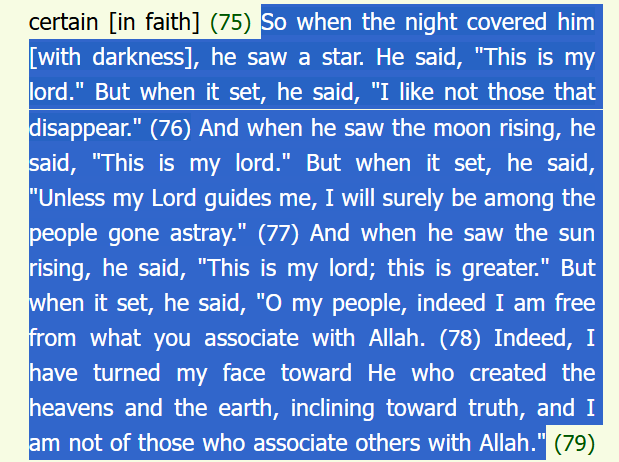
The Prophet Ibrahim (Abraham), openly questioned the idol-worship of his people. He looked at the stars, the moon, and the sun — one by one — and reasoned his way to the truth that only Allah deserves worship (Quran 6:76–79). His doubt in the false was the doorway to his certainty in the Real.
So when a Muslim sits with a hard question but with sincerity, they are in good company.
Distinction Between Doubt That Seeks and Doubt That Avoids
Not all doubt functions the same way. There is the doubt of someone who genuinely wants to understand — who asks a question hoping to find solid ground beneath their feet.
And there is the doubt that becomes an excuse, a reason to delay commitment indefinitely, a comfortable fog that never resolves into anything.
Islam has enormous patience with the first kind. The scholars of Islam have always distinguished between shubhāt (intellectual doubts or misconceptions) and shahawāt (desires that pull a person away from faith).
A genuine intellectual question — about creation, about divine justice, about the authenticity of revelation — is something the tradition takes seriously and has spent centuries addressing with extraordinary rigor.
Have Questions About Islam?
Our team is ready to answer your questions clearly and respectfully. Ask freely and receive honest guidance.
Ask Us NowIs It OK to Question Your Faith in Islam When You Were Raised Muslim?
For many Muslims who grew up in the faith, the doubting phase feels like a crisis of identity rather than a simple theological question. This makes it more emotionally charged — and more important to navigate carefully.
Ibn al-Qayyim, one of the great scholars of Islamic history, wrote extensively on the nature of certainty and how the heart moves from shakk (doubt) to yaqeen (certainty) through engagement with the evidence, not through avoidance of it.
The Prophet ﷺ himself gave guidance on this. When the companions reported experiencing passing thoughts that disturbed them — thoughts they were ashamed even to speak — he responded with reassurance rather than alarm. In an authentic narration:
“That is pure faith.” (Sahih)
He said this specifically because their distress at having the thought demonstrated that their hearts were alive to faith. The thought itself was recognized as a whisper — not a verdict.
What to Do WhenQuestioning Your Faith?
Sitting with doubt and not knowing what to do with it is its own kind of suffering. The tradition offers a practical path forward.
1. Bring the Question Into the Open With Someone Qualified to Engage It
A question left alone in the mind tends to grow larger than it actually is. The companions of the Prophet ﷺ asked constantly — about theology, about practice, about the nature of the unseen. They were not embarrassed by not knowing.
Seeking a scholar or someone grounded in Islamic knowledge and taking the question to them directly is one of the most Prophetic things a doubting Muslim can do.
2. Return to the Foundation of Why You Believe
The Quran consistently draws attention to the observable world as evidence of the Creator. The creation of the heavens and the earth, the alternation of night and day, the miracle of human consciousness — these are not decorative metaphors.
They are presented as ayaat (signs), a word that means both “verses of the Quran” and “signs in the world.” The same word used for revelation is used for creation — because both point to the same source.
إِنَّ فِي خَلْقِ السَّمَاوَاتِ وَالْأَرْضِ وَاخْتِلَافِ اللَّيْلِ وَالنَّهَارِ لَآيَاتٍ لِّأُولِي الْأَلْبَابِ
“Indeed, in the creation of the heavens and the earth and the alternation of the night and the day are signs for those of understanding.” (Quran 3:190)
When doubt rises, returning to these foundational evidences — not as a ritual but as genuine reflection — reorients the heart.
3. Keep the Acts of Worship Going Through the Doubt
This might seem counterintuitive, but it is deeply rooted in Islamic understanding of the human being. Iman (faith) in Islam fluctuates — it rises and falls, and this is acknowledged explicitly in the tradition.
The scholars say “al-iman yazeed wa yanqus” — faith increases and decreases. Maintaining prayer, dhikr (remembrance of Allah), and connection to the Quran during a period of doubt is not hypocrisy. It is holding the rope while you work through the question.
The heart is not purely a thinking organ. It responds to what surrounds it. Keeping it in proximity to acts of worship keeps the channel open.
Questioning Your Faith As A Spiritual Turning Point
Many of the most grounded, deeply certain Muslims alive today are people who passed through a season of serious doubt. The doubt forced them to stop inheriting their faith passively and start owning it actively.
They came out the other side with something they built rather than something they simply received — and that kind of faith tends to be far more resilient.
This is worth sitting with. The question is it ok to question your faith in Islam often comes from someone afraid that the doubt itself is a sign they are losing their faith. Frequently, it is the opposite — it is the sign that the faith is growing up.
A child believes because their parents believe. An adult has to find their own footing. Islam does not ask its followers to remain children in their understanding.
The Quran calls on ulu al-albab — people of deep understanding, people who think — more than it calls on any other category of human being.
Questioning The Faith in Islam Is Not the Question of Leaving
There is a harder version of this conversation that deserves honesty. Sometimes the question is not just intellectual restlessness — sometimes a person is genuinely considering whether they believe at all.
Islam does not pretend this scenario doesn’t exist, and the tradition has spoken to it directly.
What Islam asks, at that level, is that the person pursue the question with the same rigor they would bring to any consequential life decision. The evidence for the divine origin of the Quran, the historical reality of the Prophet ﷺ, and the rational foundations of Islamic monotheism are not thin — they are deep, layered, and have held under enormous scrutiny across fourteen centuries.
Before walking away from the structure of an entire worldview, the tradition asks: have you actually examined it? Not the caricature, not the cultural packaging, not the failures of individual Muslims — but the actual theological and philosophical case. Most honest seekers who do this work do not end up where they expected.
Have Questions About Islam?
Our team is ready to answer your questions clearly and respectfully. Ask freely and receive honest guidance.
Ask Us NowExplore More on Salam — Your Questions Deserve Real Answers
If this article has stirred more questions than it answered, that is a good sign. The Salam platform exists precisely for this — to meet curiosity with substance, and doubt with evidence rather than pressure.
Browse the Salam blog for articles on Islamic theology, misconceptions, and the intellectual case for faith. Every topic is approached with the same commitment to honesty and depth.
If you have a specific question this article did not address — whether about your own faith journey, entering Islam, or anything about Islamic teaching — reach out directly.
The Salam team is here to engage with you personally, without judgment and without a script.

Conclusion
Doubt handled with sincerity is one of the most productive forces in a believer’s life. Islamic scholarship has always treated the questioning mind as something to be engaged, not silenced — because certainty built on evidence is far stronger than certainty built on social pressure.
The Quran’s repeated call to reflect and reason places intellectual honesty at the heart of what it means to believe. Faith in Islam was never meant to be inherited passively; it grows most deeply when a person genuinely wrestles with the evidence and arrives at their own conviction.
Wherever you are in the journey, the door of inquiry remains wide open. Asking the hard question is often the first step toward the most solid ground — and the tradition has been answering those questions, with confidence and depth, for over fourteen centuries.
Curious about Islam?
Journey towards clarity and purpose. Our team is here to support you in your search for truth and spiritual guidance.
Embrace the Truth