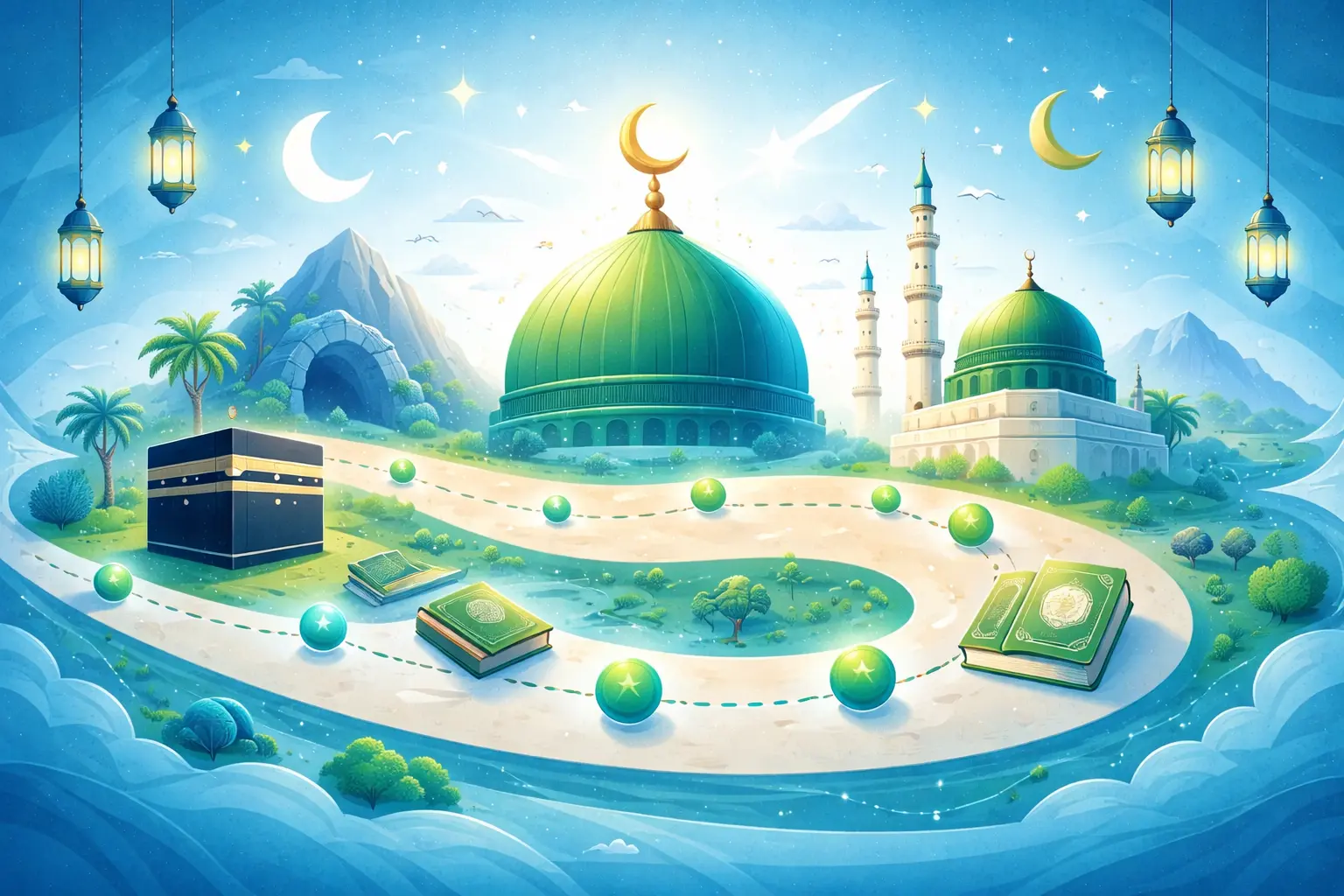
Prophet Muhammad Timeline And Life Events
The story of Prophet Muhammad ﷺ (peace and blessings be upon him) represents the most transformative narrative in human history.
Understanding the prophet muhammad timeline provides invaluable insight into how one man, guided by divine revelation, changed the course of civilization forever.
This comprehensive guide explores the major prophet muhammad life events that shaped Islam and continue to inspire over 1.8 billion Muslims worldwide.
1. Prophet Muhammad’s Birth and Early Years (570-595 CE)
The miraculous Prophet Muhammad timeline begins with the Year of the Elephant, marking the birth of a child destined to guide humanity as a mercy to the worlds.
The Year of the Elephant
The prophet muhammad timeline begins in 570 CE, known as the Year of the Elephant (Aam al-Feel). This year earned its name when Abrahah, the Abyssinian ruler of Yemen, marched toward Mecca with a massive army led by an elephant, intending to destroy the Ka’bah. Allah protected His Sacred House by sending flocks of birds that pelted the army with stones, destroying them completely.
Allah recounts this miraculous event in the Quran:
اَلَمۡ تَرَ كَيۡفَ فَعَلَ رَبُّكَ بِاَصۡحٰبِ الۡفِيۡلِؕ ﴿105:1﴾ اَلَمۡ يَجۡعَلۡ كَيۡدَهُمۡ فِىۡ تَضۡلِيۡلٍۙ ﴿105:2﴾ وَّاَرۡسَلَ عَلَيۡهِمۡ طَيۡرًا اَبَابِيۡلَۙ ﴿105:3﴾ تَرۡمِيۡهِمۡ بِحِجَارَةٍ مِّنۡ سِجِّيۡلٍۙ ﴿105:4﴾ فَجَعَلَهُمۡ كَعَصۡفٍ مَّاۡكُوۡلٍ ﴿105:5﴾
(105:1) Have you not seen how your Lord dealt with the people of the elephants? (105:2) Did He not bring their plan to naught? (105:3) And He sent against them swarms of birds (105:4) which smote them with stones of baked clay, (105:5) and made them like straw eaten up (by cattle).
“Have you not seen ˹O Prophet˺ how your Lord dealt with the Army of the Elephant? Did He not frustrate their scheme? For He sent against them flocks of birds.”
Birth of the Prophet ﷺ
On Monday, the 12th of Rabi al-Awwal in the Year of the Elephant, Aminah bint Wahb gave birth to Muhammad ﷺ in Mecca. His father, Abdullah, had died before his birth, making the child an orphan from the start. The grandfather, Abd al-Muttalib, named him “Muhammad,” meaning “the praised one”—a name virtually unknown among Arabs at that time.
The Prophet ﷺ spent his early years with his wet nurse, Halimah, from the Bani Sa’d tribe in the desert. This period was marked by extraordinary blessings; wherever Muhammad ﷺ went, prosperity followed. Halimah’s barren land became fertile, and her animals gave abundant milk.
Orphanhood and Youth
The prophet muhammad life events during childhood were marked by successive losses. At age six, his mother Aminah passed away during their return journey from Yathrib. Two years later, his beloved grandfather Abd al-Muttalib also died. The Prophet ﷺ was then taken in by his uncle Abu Talib, who raised him with great love and care.
During his youth, Muhammad ﷺ accompanied his uncle on a trading journey to Syria. There, a Christian monk named Bahira recognized signs of prophethood in the young boy and advised Abu Talib to protect him carefully. Even before revelation, Muhammad ﷺ was known among Quraysh as “Al-Amin” (the Trustworthy) for his impeccable honesty and noble character.
2. Marriage and Pre-Prophetic Life (595-610 CE)
At age twenty-five, Muhammad ﷺ married Khadijah bint Khuwaylid, a respected and wealthy widow of forty. Their marriage proved to be one of history’s greatest partnerships. Khadijah bore him six children—two sons (Qasim and Abdullah, both of whom died in infancy) and four daughters (Zaynab, Ruqayyah, Umm Kulthum, and Fatimah).
During this period, Muhammad ﷺ frequently retreated to Cave Hira on Mount Nur for contemplation and worship. He rejected the idol worship practiced by his people, seeking the truth about the Creator of the universe. This spiritual preparation would culminate in the most significant moment in the prophet muhammad timeline.
Learn More About Islam
Discover the beauty, teachings, and wisdom of Islam in a clear and welcoming way. Start exploring and deepen your understanding today.
Learn More3. The Beginning Of The Prophetic Mission (610 CE)
In Ramadan of 610 CE, when Muhammad ﷺ was forty years old, the Archangel Gabriel appeared to him in Cave Hira with the first divine revelation:
اِقۡرَاۡ بِاسۡمِ رَبِّكَ الَّذِىۡ خَلَقَۚ ﴿96:1﴾ خَلَقَ الۡاِنۡسَانَ مِنۡ عَلَقٍۚ ﴿96:2﴾ اِقۡرَاۡ وَرَبُّكَ الۡاَكۡرَمُۙ ﴿96:3﴾ الَّذِىۡ عَلَّمَ بِالۡقَلَمِۙ ﴿96:4﴾ عَلَّمَ الۡاِنۡسَانَ مَا لَمۡ يَعۡلَمۡؕ ﴿96:5﴾
(96:1) Recite in the name of your Lord Who created, (96:2) created man from a clot of congealed blood. (96:3) Recite: and your Lord is Most Generous, (96:4) Who taught by the pen, (96:5) taught man what he did not know.
Khadijah became the first person to accept Islam, followed by Ali ibn Abi Talib (the first youth), Zayd ibn Harithah (the first freed slave), and Abu Bakr (the first free adult man). The message spread secretly for three years before the public call began.
4. The Meccan Period of Persecution (613-622 CE)
The Meccan period of persecution highlights the Prophet Muhammad’s ﷺ unshakable resilience and the profound sacrifices made by early Muslims to uphold the message of monotheism.
Public Preaching and Opposition
When commanded to preach openly, the Prophet ﷺ faced fierce opposition from Quraysh. The prophet muhammad life events during this period included intense persecution of early Muslims. Believers like Bilal were tortured mercilessly, yet their faith remained unshaken.
The First Migration to Abyssinia occurred in 615 CE when a group of Muslims sought refuge with the just Christian king, Negus. When Quraysh sent emissaries to bring them back, Ja’far ibn Abi Talib’s eloquent defense of Islam, including his recitation of Surah Maryam, moved the king to tears and secured their protection.
The Year of Sorrow (619 CE)
This devastating year witnessed the deaths of both Khadijah and Abu Talib within a short period. The Prophet ﷺ lost his beloved wife and loyal supporter of twenty-five years, along with the uncle who had protected him from Quraysh’s plots. This period represented the lowest point in the prophet muhammad timeline during the Meccan era.
The Night Journey (Al-Isra wal-Mi’raj)
Shortly after the Year of Sorrow, Allah honored His Messenger with the miraculous Night Journey from Mecca to Jerusalem, followed by the Ascension through the heavens. During this journey, the five daily prayers were prescribed. Allah says:
سُبْحَـٰنَ ٱلَّذِىٓ أَسْرَىٰ بِعَبْدِهِۦ لَيْلًۭا مِّنَ ٱلْمَسْجِدِ ٱلْحَرَامِ إِلَى ٱلْمَسْجِدِ ٱلْأَقْصَا ٱلَّذِى بَـٰرَكْنَا حَوْلَهُۥ لِنُرِيَهُۥ مِنْ ءَايَـٰتِنَآ ۚ إِنَّهُۥ هُوَ ٱلسَّمِيعُ ٱلْبَصِيرُ
“Glory be to the One Who took His servant ˹Muḥammad˺ by night from the Sacred Mosque to the Farthest Mosque whose surroundings We have blessed, so that We may show him some of Our signs. Indeed, He alone is the All-Hearing, All-Seeing.”
5. The Medinan Period (622-632 CE)
The Hijrah to Medina marked a revolutionary shift in the Prophet Muhammad timeline, transforming a persecuted community into a thriving society built on faith, justice, and brotherhood.
The Hijrah (622 CE)
The migration to Yathrib (later called Madinah) on September 27, 622 CE marks the beginning of the Islamic calendar. The Prophet ﷺ and Abu Bakr’s miraculous escape, hidden in Cave Thawr while a spider’s web and dove’s nest concealed the entrance, demonstrated divine protection. Upon arriving in Madinah, the Prophet ﷺ established the first mosque and the Islamic brotherhood between the Emigrants (Muhajirun) and Helpers (Ansar).
Major Battles
The prophet muhammad timeline includes several decisive military engagements.
- The Battle of Badr (624 CE) saw 313 Muslims defeat over 1,000 Quraysh fighters with angelic assistance.
- The Battle of Uhud (625 CE) taught the painful lesson that disobedience leads to defeat.
- The Battle of the Trench (627 CE) demonstrated the power of strategic defense and unwavering faith.
The Treaty of Hudaybiyah (628 CE)
This treaty, initially appearing unfavorable, proved to be what Allah called “a clear victory”
“إِنَّا فَتَحْنَا لَكَ فَتْحًۭا مُّبِينًۭا”
“Indeed, We have granted you a clear triumph ˹O Prophet˺”
It established peace, allowing Islam to spread freely, and within two years, more people embraced Islam than in all previous years combined.
The Conquest of Mecca (630 CE)
Eight years after leaving Mecca as a persecuted refugee, the Prophet ﷺ returned with 10,000 believers. He entered humbly, bowing on his camel in gratitude to Allah. Demonstrating unparalleled mercy, he forgave his former persecutors, declaring: “Go, you are free.” The Ka’bah was purified of 365 idols, and Mecca became the spiritual heart of Islam forever.
6. The Final Year and Departure (632 CE)
The Farewell Pilgrimage marked the completion of the divine message, establishing timeless principles of equality and justice that continue to resonate throughout the world today.
The Farewell Pilgrimage
In 632 CE, the Prophet ﷺ led over 100,000 Muslims in the Farewell Pilgrimage. At Arafat, he delivered his final sermon, establishing principles of equality, justice, and human rights. Allah revealed:
ٱلْيَوْمَ أَكْمَلْتُ لَكُمْ دِينَكُمْ وَأَتْمَمْتُ عَلَيْكُمْ نِعْمَتِى وَرَضِيتُ لَكُمُ ٱلْإِسْلَـٰمَ دِينًۭا ۚ
Today I have perfected your faith for you, completed My favour upon you, and chosen Islam as your way.
The Prophet’s Death
On Monday, 12th Rabi al-Awwal, 11 AH (June 8, 632 CE), the Prophet Muhammad ﷺ passed away in Madinah with his head resting on Aisha’s lap. His final words were:
اللَّهُمَّ الرَّفِيقَ الأَعْلَى
“Nay, the Most Exalted Companion in Paradise.”
Abu Bakr addressed the grieving community with timeless wisdom:
“O people! Whoever worshipped Muhammad, indeed Muhammad has died. And whoever worships Allah, indeed Allah is alive and shall never die.”.
Learn More About Islam
Discover the beauty, teachings, and wisdom of Islam in a clear and welcoming way. Start exploring and deepen your understanding today.
Learn MoreStart Your Journey with Salam Center
If you are curious about Islam or wish to deepen your understanding of your faith, Salam Center offers a welcoming and supportive environment for everyone. Our mission is to provide guidance, education, and mentorship, enabling you to confidently explore and grow on your spiritual journey.
What the Salam Center Offers
- Guidance and Counseling: Knowledgeable staff and scholars help new Muslims understand Islamic teachings and practices.
- Educational Programs: Classes on the Qur’an, Salah, Islamic beliefs, and practical guidance for daily life.
- Community Support: Connect with fellow Muslims, join study circles, and participate in social and spiritual events.
- Resources: Access books, lectures, and online courses to study at your own pace.
Why Choose Salam Center
- A welcoming and safe space for beginners
- Personalized guidance tailored to your spiritual needs
- Opportunities to join a supportive Muslim community in Qatar
Starting your journey with Salam Center ensures you gain the knowledge, mentorship, and community support needed to embrace Islam with confidence, clarity, and understanding.
Conclusion
The prophet muhammad timeline spans sixty-three years of a life dedicated entirely to conveying Allah’s message. From orphan to Prophet, from persecuted preacher to beloved leader, Muhammad ﷺ exemplified perfect servitude to Allah. His legacy—the Quran and his Sunnah—remains the guiding light for humanity until the Day of Judgment.
Curious about Islam?
Journey towards clarity and purpose. Our team is here to support you in your search for truth and spiritual guidance.
Embrace the Truth