
Where And When Was Prophet Muhammad Born?
The story of Prophet Muhammad’s (peace be upon him) birth is both inspiring and fascinating. Knowing where and when Prophet Muhammad was born helps us understand the beginning of a life that would go on to guide millions of people across the world. Born in the holy city of Mecca and blessed with a noble family, his early life was filled with signs and experiences that pointed to his extraordinary future.
From miraculous events surrounding his birth to the early signs of his unique character, learning about the birth of the Prophet Muhammad offers a glimpse into the beginnings of Islam and the remarkable journey of its final messenger.
This article explores these events in a way that’s easy to understand and meaningful for anyone curious about the life of Prophet Muhammad ﷺ.
Where Was Prophet Muhammad Born?
Prophet Muhammad (peace be upon him) was born in the city of Mecca, a major center of trade and religion in the Arabian Peninsula. Mecca, located in present-day Saudi Arabia, was already famous for the Kaaba, the sacred sanctuary that attracted pilgrims from across Arabia.
The birth of the Prophet Muhammad in Mecca was significant because the city later became the heart of the Islamic faith. Mecca’s social, cultural, and spiritual environment shaped the early life of the Prophet, preparing him for the important mission of guiding humanity with the message of Allah.
Being born in Mecca also linked him directly to the lineage of the Quraysh tribe, a respected and influential tribe in Arabia. This connection helped him gain the trust of his people when he began preaching Islam.
When Was Prophet Muhammad Born?
Prophet Muhammad (peace be upon him) was born in the year 570 CE, a year famously known as the “Year of the Elephant” (Am al-Feel), when an army led by Abraha attempted to attack the Kaaba in Mecca. This year holds special significance in Islamic history, as it marked the arrival of a child who would grow to become the final messenger of Allah.
According to the Islamic lunar calendar, the Prophet Muhammad was born on the 12th of Rabi’ al-Awwal. This date is widely commemorated by Muslims worldwide as Mawlid al-Nabi, celebrating the life and teachings of the Prophet.
In the Gregorian calendar, the Prophet Muhammad was born in 570 CE. While the exact day in the Gregorian calendar is debated, the Islamic date of 12 Rabi’ al-Awwal is universally recognized in Muslim traditions.
The birth of Prophet Muhammad was a momentous event, heralding the beginning of a new era in spiritual guidance, morality, and social reform that continues to impact the world today.
Learn More About Islam
Discover the beauty, teachings, and wisdom of Islam in a clear and welcoming way. Start exploring and deepen your understanding today.
Learn MoreWhat Happened When Prophet Muhammad Was Born?
The birth of the Prophet Muhammad (peace be upon him) was marked by extraordinary signs, as recorded in Islamic tradition. Many events surrounding his arrival reflected the significance of his mission and the profound impact he would later have on humanity.
Some narrations mention that the idols in the Kaaba trembled, signaling the coming of a great messenger. Others describe a light that illuminated the palaces of Syria, symbolizing the guidance and enlightenment he would bring to the world. These remarkable occurrences indicated that the birth of the Prophet Muhammad was unlike any other in history.
His mother, Aminah bint Wahb, noticed signs of his special nature from an early age. Even as a child, Muhammad was known for his honesty, compassion, and integrity—qualities that would define his prophetic life.
The events surrounding the birth of the Prophet Muhammad continue to inspire Muslims, reminding them of the divine purpose behind his life and the timeless message of Islam.
The Fate of the Prophet Muhammad’s Birthplace (ﷺ)
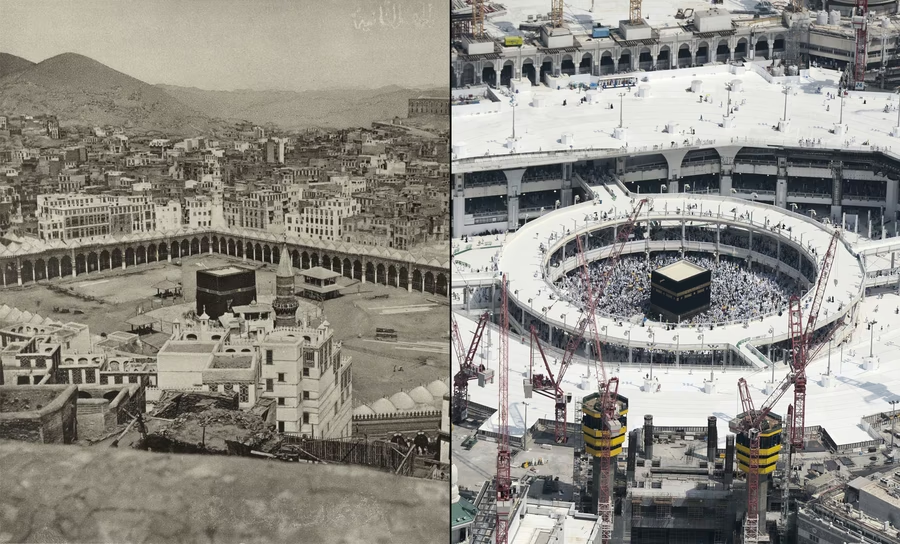
The birthplace of the Prophet Muhammad (peace be upon him) is traditionally located in Mecca, in the area now known as Al-Mawlid. Over the centuries, the original house where he was born underwent multiple changes. In early times, it was recognized and visited by pilgrims who sought blessings from the site.
However, throughout history, the structure was partially or completely demolished during periods of urban development and political change. During Ottoman rule, the site was reconstructed and maintained, but in modern times, the original house no longer exists.
Today, the location is marked by the Makkah Al Mukarramah Library, which sits on or near the foundations of the Prophet’s birth home. Although the original building is gone, the site remains historically and spiritually significant, symbolizing the birthplace of Islam’s final messenger.
Early Signs of Prophethood in Childhood
Even before his formal prophethood, the early life of Muhammad ﷺ exhibited signs, character, and events that many Muslims regard as indications of his future role as messenger. The following are some of those early signs, drawn from classical Muslim biographies and historical works.
Early Purification—The Splitting of the Chest (Jibreel cleanses his heart)
One of the most frequently cited early signs is the event known as “the splitting of the chest.” According to narrations, while young Muhammad ﷺ was under the care of his foster‑mother (in the desert living with the tribe that nursed him), the angel Jibreel is said to have come, opened his chest, removed a black clot (symbolic of sin or the influence of evil), washed his heart with Zam‑zam water, and returned it purified.
This spiritual cleansing is interpreted as divine protection and preparation for the Prophet’s future mission, safeguarding him from impurity and moral corruption from an early age.
Innate Virtues—Honesty, Trustworthiness, Compassion
Even in his youth and before any revelation, Muhammad ﷺ was widely known among his community for honesty, fairness, and high moral character. People entrusted him with their possessions and affairs, a reputation that earned him the nickname Al‑Amin (“The Trustworthy”).
He worked as a shepherd and later participated in trade caravans, but even during these humble or routine tasks, his behavior was marked by integrity and compassion—traits that many classical scholars consider early evidence of his prophetic nature.
Recognition by Others—The Story of the Christian Monk (Bahira)
A famous account from his youth involves a Christian monk named Bahira. On a trading journey to Syria with his uncle, the caravan stopped, and Bahira, discerning unusual signs (such as a mysterious cloud shading the young Muhammad ﷺ and other wonders), expressed recognition of Muhammad’s future status and warned his uncle to take special care of him.
This story is often cited in classical biographies as an early external recognition that Muhammad ﷺ was destined for a prophetic mission.
Natural Innocence & Instinctive Avoidance of Idolatry
Despite growing up in a society steeped in idol worship, tribal conflicts, and corrupt practices, Muhammad ﷺ maintained a natural disposition of piety and avoidance of such customs, even before he received divine revelation. This inborn moral compass is interpreted by many scholars as a sign of his fitrah (natural innate disposition) guided and protected by Allah.
Lineage and Family of Prophet Muhammad (ﷺ)
Understanding the lineage and family of Prophet Muhammad (peace be upon him) provides important context for his life, character, and the environment in which he was born. The Prophet belonged to the respected Quraysh tribe, one of the most influential tribes in Mecca, known for their leadership, trade, and custodianship of the Kaaba.
Prophet Muhammad ﷺ was the son of Abdullah ibn Abd al-Muttalib and Aminah bint Wahb. His father, Abdullah, was known for his piety and belonged to the noble Hashim clan of Quraysh, which was held in high esteem among the people of Mecca. His mother, Aminah, came from a well-respected family and was known for her virtue and nobility.
Tragically, Muhammad ﷺ lost his father before he was born, and his mother passed away when he was just six years old. Following these losses, he was placed under the care of his grandfather, Abdul Muttalib, and later his uncle, Abu Talib. Despite these hardships, his family ensured that he was raised with strong moral values, love, and guidance.
Influence of the Prophet Muhammad (ﷺ) Family
The Prophet’s family played a significant role in shaping his early life. His grandfather and uncle were respected figures in Meccan society, and they provided him protection, guidance, and support. This noble lineage and the influence of his family helped Muhammad ﷺ gain respect in the community, which later aided him when he began his mission of spreading Islam.
The lineage and family of Prophet Muhammad highlight not only his noble ancestry but also the environment of integrity, trustworthiness, and leadership that surrounded him from birth, preparing him for his future as the final messenger of Allah.
Learn More About Islam
Discover the beauty, teachings, and wisdom of Islam in a clear and welcoming way. Start exploring and deepen your understanding today.
Learn MoreStart Your Journey with Salam Center
If the story of the birth of Prophet Muhammad ﷺ sparks your curiosity, know that the path to understanding the life of the Messenger of Allah—and the wisdom of Islam—is open to you.
At Salam Center, we believe every heart deserves the chance to explore, learn, and connect with the beauty and guidance of Islam.
Here, you’ll discover:
- Authentic Islamic Knowledge about the life of the Prophet ﷺ, grounded in the Qur’an and Sunnah
- Personal Guidance and Support for seekers, new Muslims, and those deepening their faith
- Meaningful Insights into history, spirituality, and the timeless lessons of the Prophet’s ﷺ life
- A Welcoming Community where questions are encouraged, and understanding grows at your own pace
Every journey of faith begins with curiosity—and every step brings you closer to the wisdom and light of Islam.
Take your first step today.
Let Salam Center guide you—from learning about the Prophet ﷺ, to understanding his message to living by the beauty of his teachings.
Explore the life of the Prophet ﷺ and find your path with Salam.
Conclusion
The birth of Prophet Muhammad (ﷺ) in Mecca, on the 12th of Rabi’ al-Awwal, remains a momentous occasion in Islamic history. His arrival was marked by miraculous signs, noble lineage, and early demonstrations of piety, honesty, and trustworthiness.
The birthplace of the Prophet has undergone changes over centuries, yet its historical and spiritual significance continues to inspire Muslims around the world.
Understanding when and where Prophet Muhammad was born, as well as the miracles and early signs of prophethood, deepens our appreciation of his life and mission. The story of his birth is not only a historical account but also a timeless reminder of guidance, faith, and devotion to Allah, making it a source of inspiration for generations of believers.
Curious about Islam?
Journey towards clarity and purpose. Our team is here to support you in your search for truth and spiritual guidance.
Embrace the TruthDiscussion
0 CommentsLeave a Comment
No comments yet. Be the first to share your thoughts!