What Do Jews Believe About Jesus?
| Key Takeaways |
| Jews historically rejected Jesus (Isa, peace be upon him) as a prophet or messiah, accusing him of sorcery and his mother Mary of immorality — accusations the Quran explicitly refutes. |
| A Jewish man named Paul (Saul of Tarsus) systematically infiltrated early Christianity and distorted its original monotheistic message, introducing the doctrine of divine sonship. |
| Understanding the Jewish position on Jesus clarifies why Islam preserves the most authentic account of his mission, his nature, and his ultimate fate. |
For a seeker genuinely asking what Jews believe about Jesus, and what the correct understanding of Jesus actually is, Islam offers the clearest, most coherent, and most evidentially grounded answer of any tradition on earth. That answer begins in Bethlehem, carries through the Galilee, reaches its climax in Jerusalem — and ends not on a cross, but with a divine elevation that no human plot could prevent.
Do Jews believe in Jesus?
No, historically and scripturally, Jews rejected Jesus — not merely as a theological matter, but actively, systematically, and with documented hostility recorded in their own religious texts.
The Jewish religious establishment of Jesus time accused him, plotted against him, sought his death, and then — according to their own Talmudic tradition — recorded slanders against him and his mother Mary that persist to this day.
1. The Birth of Jesus and the Jewish Response to a Divine Sign
The birth of the Prophet Isa ibn Maryam (Jesus son of Mary, peace be upon him) was one of the most extraordinary events in human history. His mother Maryam (Mary, peace be upon her) conceived him by the word of Allah — no father, no human agency, a miracle standing alone in the annals of creation.
Allah describes this in the Quran:
إِذْ قَالَتِ الْمَلَائِكَةُ يَا مَرْيَمُ إِنَّ اللَّهَ يُبَشِّرُكِ بِكَلِمَةٍ مِّنْهُ اسْمُهُ الْمَسِيحُ عِيسَى ابْنُ مَرْيَمَ
“[And mention] when the angels said, ‘O Mary, indeed Allah gives you good tidings of a word from Him, whose name will be the Messiah, Jesus, the son of Mary.'” (Quran 3:45)
Allah further granted the infant Jesus the miracle of speech in the cradle — not as a curiosity, but as a divine declaration.
In his first words as a newborn, he announced his own prophethood, proclaimed the purity of his mother, and testified to his submission to Allah alone.
The Jewish community’s response to this extraordinary sign was not wonder. It was accusation. They declared Maryam guilty of fornication. They called her son a child of illegitimacy. And they recorded this slander formally in the Talmud — stating, in their own religious literature, that Jesus was the product of an illicit union between Mary and a Roman soldier named Pandera.
This accusation — preserved in tractates of the Babylonian Talmud — represents a deliberate, institutionalized rejection of one of Allah’s greatest signs. The Quran addresses their slander directly:
وَبِكُفْرِهِمْ وَقَوْلِهِمْ عَلَى مَرْيَمَ بُهْتَاناً عَظِيماً
“And [We cursed them] for their disbelief and their saying against Mary a great slander.” (Quran 4:156)
Maryam, peace be upon her, is honored in Islam as the greatest woman who ever lived — purified above all women of the world by Allah’s own testimony in the Quran.
The Jewish slander against her is, by Islamic reckoning, among the gravest sins of religious defamation in history.
2. The Jewish Establishment Pursued Jesus Throughout His Life
The hostility was not limited to words. From the earliest days of Jesus’s life, the Jewish religious and political establishment mobilized against Jesus with active force.
When Jewish astrologers informed King Herod that a child had been born who would displace his throne, Herod issued an order to kill every newborn male among the Israelites — a chilling parallel to Pharaoh’s persecution of Moses centuries earlier.
Allah, however, protected His prophet. He revealed to Maryam to flee with her son to a place of safety — identified in many narrations as Egypt — where they remained until the threat passed.
وَجَعَلْنَا ابْنَ مَرْيَمَ وَأُمَّهُ آيَةً وَآوَيْنَاهُمَا إِلَى رَبْوَةٍ ذَاتِ قَرَارٍ وَمَعِينٍ
“And We made the son of Mary and his mother a sign and sheltered them within a high ground having level [areas] and flowing water.” (Quran 23:50)
As Jesus grew, the signs of extraordinary wisdom and divine selection gathered around him. By the account of Islamic scholars, including the historian Ibn Kathir in his work Al-Bidaya wal-Nihaya, Jesus returned to Jerusalem around the age of thirteen and grew in scholarship and prophethood until he received his formal commission at approximately thirty years of age.
When Jesus began calling the Israelites back to the pure monotheism that Moses had brought — back to the worship of Allah alone — the Jewish religious hierarchy, already deeply corrupted, reacted with fury.
Jesus debated the Pharisees, confuted the scribes, exposed the Sadducees, and dismantled the hypocrisy of the priestly class with arguments they could not answer.
The scholar and Da’wah educator Abd al-Rahman Habannakah al-Maydani documents in his classical work Al-Aqeedah al-Islamiyyah wa Ususuha that it was precisely this intellectual and spiritual authority of Jesus that drove the religious establishment to seek his elimination.
Their chief priest, Caiaphas, delivered what amounted to a religious decree: it was better for one man to die than for the people to follow him.
They then brought their case to the Roman governor Pontius Pilate, manipulating Roman imperial power to accomplish what their own religious courts could not do openly.
Jesus Preached Pure Monotheism and the Worship of Allah Alone
Before addressing what happened at the end of Jesus’s mission, it is essential to understand what his mission actually was — because the Jewish rejection of him was, at its core, a rejection of the same message they had rejected from every prophet before him.
Jesus came to call the Israelites back to monotheism — to the exclusive worship of the one God who had no partner, no son, no image, and no rival. This is documented even in the Gospels that survived centuries of editing. The Gospel of John records Jesus declaring:
“This is eternal life: that they know You, the only true God, and Jesus Christ, whom You have sent.” (John 17:3)
The word “only” in that passage is a direct theological statement. Jesus positioned himself as a sent messenger, and Allah as the singular deity deserving worship.
This is precisely the Islamic understanding of his mission — and it is why Islam, unlike Christianity, preserved the original message Jesus brought.
The Quran confirms Jesus’ call explicitly:
إِنَّ اللَّهَ رَبِّي وَرَبُّكُمْ فَاعْبُدُوهُ هَٰذَا صِرَاطٌ مُّسْتَقِيمٌ
“Indeed, Allah is my Lord and your Lord, so worship Him. That is the straight path.” (Quran 3:51)
Understanding how Islam views the nature of God makes clear why Islamic theology is uniquely positioned to honor Jesus faithfully: Allah has no partners, no sons, no intermediaries — and Jesus himself, in his original teaching, proclaimed exactly this.
The Jewish establishment rejected this message as they had rejected every such message before it. The Quran describes this pattern with precision and gravity:
أَفَكُلَّمَا جَاءَكُمْ رَسُولٌ بِمَا لَا تَهْوَىٰ أَنفُسُكُمُ اسْتَكْبَرْتُمْ
“Then is it [not] that every time a messenger came to you with what your souls did not desire, you were arrogant?” (Quran 2:87)
Have Questions About Islam?
Our team is ready to answer your questions clearly and respectfully. Ask freely and receive honest guidance.
Ask Us Now3. The Jewish Plot to Kill Jesus
The Jewish establishment succeeded in bringing Pilate to order the crucifixion of Jesus. What they could not do was actually accomplish it.
Allah intervened.
The Quran states unambiguously that Jesus was neither killed nor crucified. A likeness was cast upon another — identified in classical Islamic exegesis, including by Ibn Kathir and the companion-era scholar Wahb ibn Munabbih, as Judas Iscariot, the disciple who had betrayed Jesus’s location to the authorities.
Judas was killed and crucified in Jesus’s place while Jesus was raised, alive, to Allah.
وَقَوْلِهِمْ إِنَّا قَتَلْنَا الْمَسِيحَ عِيسَى ابْنَ مَرْيَمَ رَسُولَ اللَّهِ وَمَا قَتَلُوهُ وَمَا صَلَبُوهُ وَلَٰكِن شُبِّهَ لَهُمْ
“And [for] their saying, ‘Indeed, we have killed the Messiah, Jesus, the son of Mary, the messenger of Allah.’ And they did not kill him, nor did they crucify him; but [another] was made to resemble him to them.” (Quran 4:157)
بَل رَّفَعَهُ اللَّهُ إِلَيْهِ وَكَانَ اللَّهُ عَزِيزاً حَكِيماً
“Rather, Allah raised him to Himself. And ever is Allah Exalted in Might and Wise.” (Quran 4:158)
This is not a minority position within Islam. It is the unanimous position of Islamic scholarship across fourteen centuries — affirmed by the creed of Ahlus Sunnah wal Jama’ah and established by multiple chains of Quranic evidence.
Jesus is alive. He was raised to Allah. He will return before the Day of Judgment. And the Jewish claim to have killed the Messenger of Allah is, as the Quran states, a certainty of falsehood.
Read also: What Beliefs Do Islam and Christianity Have in Common
4. The Jewish Infiltration That Transformed Christianity
After Jesus was raised, his disciples — the Hawwariyyun — scattered across the known world preaching the message he had brought: worship Allah alone, and believe in Jesus as His servant and messenger.
Their preaching was pure. Their theology was the same monotheism that Jesus had proclaimed.
Then came a man named Saul, later calling himself Paul.
Paul had been among the most aggressive persecutors of the early followers of Jesus. He raided their gatherings, imprisoned them, and participated in their killing.
Then — with suspicious abruptness — he announced a dramatic conversion, claiming that Jesus had appeared to him in a blinding light and commissioned him to preach.
What Paul then preached, however, bore little resemblance to what the disciples of Jesus had been teaching. Paul introduced the concept of Jesus as the son of God. He declared the law of Moses abolished.
Paul repositioned Jesus from a prophet calling people to Allah to a divine figure whose death was itself the mechanism of salvation. He wrote letters that became canonical scripture in a religion that increasingly diverged from the monotheistic foundation Jesus had laid.
Islamic scholarship has consistently identified this Pauline transformation as a deliberate act of religious sabotage — an operation conducted from within, far more effective than the external persecution that had failed to extinguish the message.
The original followers of Jesus had preserved monotheism. Paul’s intervention fractured that community into theological confusion.
The Quran captures exactly this fracturing. The three groups that emerged from the followers of Jesus reflected the degree to which Pauline distortion had penetrated their communities.
1. The Jacobites declared that God Himself had dwelt among them.
2. The Nestorians said that the son of God had been among them.
3. The true monotheists — whom Islamic scholars identify as the closest to the original disciples — said that the servant of Allah and His messenger had been among them, and that Allah had raised him.
This third position is the position of Islam, and it is the position that preserves the authentic teaching of Jesus himself.
Read also: What Do Muslims Believe About Jesus?
Islam’s Position Among the Abrahamic Faiths on the Question of Jesus
Understanding what Jews believe about Jesus, and what Christians came to believe about him, illuminates why Islam occupies a theologically unique position. Islam is the only major world religion that honors Jesus fully as a prophet while refusing both the Jewish slander against him and the Christian elevation of him beyond prophethood.
As the Salam Center team has emphasized in its educational materials, Islam’s relationship to previous prophets is one of confirmation and completion — not rejection.
Every prophet from Adam to Muhammad (PBUH) carried the same essential message: faith in Allah alone, without partners, without intermediaries, and without compromise.
Jesus is mentioned by name in the Quran fifteen times. He is called the Messiah, a word of Allah, a spirit from Him, a servant of Allah, and a messenger.
No other non-Islamic religious text treats Jesus with the theological precision, the moral clarity, and the profound respect that the Quran does.
How Islam views other religions is rooted in this framework of prophetic continuity: previous messages were authentic in their origins and distorted by human hands over time. The Quran came to restore, clarify, and complete what had been corrupted. On the question of Jesus, that restoration is total and decisive.
The rejection by Jews of Jesus’s prophethood fits within a Quranic pattern described explicitly across multiple surahs: a people who received divine guidance repeatedly, who repeatedly rejected it, who killed their prophets and slandered their messengers, and who will answer before Allah for every such act. This is not a statement of ethnic prejudice — the Quran condemns behaviors and beliefs, never ethnic groups.
The believing descendants of Israel who followed Jesus, Yahya (John), and Zakariyya (Zechariah) are among the honored of their people. The rejection came from the religious leadership and those who followed them.
إِنَّ ٱلَّذِينَ يَكْفُرُونَ بِـَٔايَٰتِ ٱللَّهِ وَيَقْتُلُونَ ٱلنَّبِيِّـۧنَ بِغَيْرِ حَقٍّ وَيَقْتُلُونَ ٱلَّذِينَ يَأْمُرُونَ بِٱلْقِسْطِ مِنَ ٱلنَّاسِ فَبَشِّرْهُم بِعَذَابٍ أَلِيمٍ
“Those who disbelieve in the signs of Allah and kill the prophets without right and kill those who order justice from among the people – give them tidings of a painful punishment.” (Quran 3:21)
The Quran addresses this pattern not to incite hatred, but to name a historical and spiritual reality with the honesty that divine revelation demands — and to warn all people, across all times, against repeating such patterns of rejection in their own lives.
Have Questions About Islam?
Our team is ready to answer your questions clearly and respectfully. Ask freely and receive honest guidance.
Ask Us NowExplore More Authentic Knowledge at Salam
If this topic has stirred sincere questions in you — about Jesus, about prophets, about the nature of Allah, about how Islam fits into the larger picture of human spiritual history — you are in exactly the right place.
The Salam Platform exists for you. Whether you are exploring Islam for the first time, correcting what you have heard in the media, or searching for a spiritual home that honors truth without compromise, every article and resource here is written with your journey in mind.
Browse the Salam blog for in-depth answers to the questions that matter most.
Reach out directly to speak with someone from the Salam Center team — for a personal question, a conversation about entering Islam, or simply a sincere dialogue.

And if you have already taken your Shahada — or are close to doing so — consider joining the Asawirat Al-Yaqeen (Bracelets of Certainty) program:
- A structured four-stage curriculum designed specifically for new Muslims
- Covers everything from purification and prayer to Islamic creed, prophetic biography, and contemporary life rulings
- Grounded in the methodology of Ahlus Sunnah wal Jama’ah with a warm, therapeutic approach to learning
- Already completed by over 114,000 new Muslims across 140 countries
- Delivered in a professionally designed format that maintains engagement and builds genuine certainty (Yaqeen)
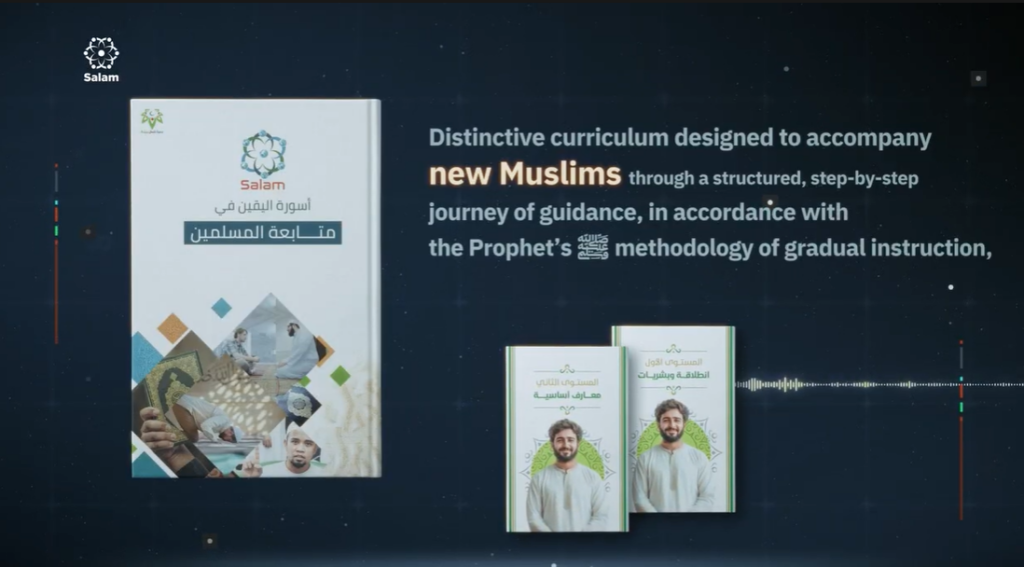
Reach out directly to the Salam Center team to start Asawirat Al-Yaqeen (Bracelets of Certainty) curriculum.
Conclusion
The Jewish religious establishment’s rejection of Jesus (Isa, peace be upon him) began at his miraculous birth and culminated in a plot to crucify him — a plot Allah foiled by raising Jesus alive to Himself, leaving only a likeness in his place, as confirmed in Surah An-Nisa.
Islam preserves the most authentic account of Jesus’s mission: a call to pure monotheism, the exclusive worship of Allah, delivered by a noble prophet born of a virgin and honored by Allah above any slander his enemies devised against him or his mother.
The Pauline distortion of early Christianity — identified by Islamic scholars as a deliberate infiltration — fractured the original monotheistic community into competing theologies, while Islam arrived to restore the uncorrupted truth that Jesus himself had taught.
Frequently Asked Questions
Do Jews believe Jesus was a real historical figure?
Most mainstream Jewish authorities — including institutions such as the Jewish Theological Seminary of America — acknowledge that a Jewish preacher named Jesus of Nazareth likely existed as a historical figure in first-century Judea. The Jewish rejection is theological, not historical.
They deny his prophethood, deny any divine mission attached to him, and their classical religious texts, including tractates of the Babylonian Talmud such as Sanhedrin, record deeply hostile characterizations of him and his mother Mary. Islam affirms his historical reality with far greater certainty — the Quran names him, his mother, and the specifics of his mission with the authority of divine revelation.
What do Jews believe about Jesus’s mother Mary?
Classical Jewish religious sources, particularly sections of the Talmud, contain accusations against Mary (Maryam) of sexual immorality — claiming Jesus was born from an illicit relationship with a Roman soldier.
Islam categorically rejects this slander. The Quran declares Maryam purified above all women of the worlds, chosen by Allah, and a model of chastity and devotion. Allah Himself addresses the Jewish slander against her in Surah An-Nisa (4:156), calling it buhtan azeem — a great and terrible lie. Maryam is so honored in Islam that an entire chapter of the Quran bears her name.
Why did the Jewish religious authorities want Jesus killed?
Jesus exposed Jewish corruption, refuted their religious innovations, and called people back to the pure monotheism they had abandoned. This threatened their religious authority and their hold over the people.
The Quran describes this pattern as consistent across Jewish religious history — a tendency to reject, slander, and kill the prophets whom Allah sent to them, documented in Surah Al-Baqarah (2:87) and Surah Al-Imran (3:21). It was not a reaction to something Jesus did wrong; it was a reaction to the truth he carried.
Was Jesus crucified according to Islam?
No. This is among the most clear and unambiguous statements in the entire Quran. Allah declares in Surah An-Nisa (4:157–158) that Jesus was neither killed nor crucified — that a likeness was cast upon another man in his place, and that Allah raised Jesus to Himself.
This is the unanimous position of Islamic scholarship. The Jewish claim to have killed the Messenger of Allah is described by the Quran as a falsehood of certainty. Jesus is alive, raised to Allah, and will return to earth before the Day of Judgment.
How is Islam’s view of Jesus different from both Judaism and Christianity?
Judaism denies Jesus’s prophethood entirely and records hostile accounts of him in classical religious texts. Christianity elevated him beyond prophethood into divine sonship and part of a Trinity — a belief Islam identifies as originating largely with Paul of Tarsus, not with Jesus himself.
Islam occupies the position that Jesus himself held: he was a mighty prophet and messenger of Allah, born miraculously, confirmed by clear signs, calling people to the worship of Allah alone — consistent with every prophet before and after him. Islam honors Jesus more faithfully than either of the traditions that claim the most attachment to him, because Islamic belief preserves what he actually taught.
What happened to the true followers of Jesus after he was raised?
The disciples of Jesus — the Hawwariyyun — continued preaching the original message of pure monotheism after he was raised to Allah. They called people to worship Allah alone and to believe in Jesus as His servant and messenger.
The Jewish religious establishment persecuted them as they had persecuted Jesus, inciting rulers and governors against them with accusations of sedition.
Over time, Pauline theology overwhelmed the original community, fracturing it into theological camps. The monotheistic strand — closest to what Jesus had actually taught — was ultimately preserved and completed in the final revelation of the Quran, which Allah guaranteed to protect from all distortion.
Curious about Islam?
Journey towards clarity and purpose. Our team is here to support you in your search for truth and spiritual guidance.
Embrace the Truth