
What Do Muslims Believe About Jesus?
| Key Takeaways |
| Muslims believe in Jesus (Isa, peace be upon him) as one of Allah’s greatest prophets and messengers — a figure of profound honor in Islam. |
| Islam affirms that Jesus was born miraculously to the Virgin Mary without a father, and that this miracle confirms Allah’s limitless power, not Jesus’s divinity. |
| The Quran explicitly rejects the crucifixion narrative, affirming that Allah raised Jesus to Himself and that he was neither killed nor crucified. |
| Muslims believe Jesus will return before the Day of Judgment to rule by the law of Prophet Muhammad (PBUH) and restore justice on earth. |
What follows is Islam’s full creed on Jesus, drawn from the Quran and authentic Prophetic traditions — presented as ten clear beliefs that form the foundation of every Muslim’s understanding of this great prophet.
But Islam’s beliefs about Jesus differ sharply from what much of the world has come to assume. He is celebrated — profoundly so — while the theological additions that accumulated over centuries of Christian tradition are carefully distinguished from what Allah revealed.
The Quran addresses this directly, calling on the People of the Book to speak only truth about Allah and to neither exaggerate nor diminish what is real.
Do Muslims believe in Jesus?
Yes Muslims believe in Jesus — and with deep reverence. In Islam, Jesus (known as Isa ibn Maryam — Jesus son of Mary) holds a position of extraordinary honor. Jesus in Islam is one of the five greatest messengers Allah ever sent to humanity, and no Muslim’s faith is complete without affirming his prophethood.
Believing in Jesus is a requirement of Islamic faith — rejecting him as a prophet means one’s faith in Islam is incomplete.
1. Jesus Is Allah’s Servant and Messenger — Honored, Not Divine
The most foundational Islamic belief about Jesus is precisely expressed in a single hadith. Prophet Muhammad (PBUH) said:
“Whoever testifies that there is no god but Allah, that Muhammad is His servant and messenger, that Jesus is the servant of Allah and His messenger, His word which He cast to Mary, and a spirit from Him, that Paradise is true and Hellfire is true — Allah will admit him into Paradise.” (Sahih al-Bukhari, Hadith 3435)
Every word in this description carries deliberate theological weight. Calling Jesus the servant of Allah is a refutation of those who elevated him beyond his station into divinity.
Calling Jesus the messenger of Allah is equally a refutation of those who rejected him entirely or dismissed his prophethood. Islam occupies the precise middle — honoring Jesus fully as what he truly was: a chosen, noble, and exalted human messenger.
The Quran states this with unmistakable clarity:
إِنْ هُوَ إِلَّا عَبْدٌ أَنْعَمْنَا عَلَيْهِ وَجَعَلْنَاهُ مَثَلًا لِّبَنِي إِسْرَائِيلَ
“He was not but a servant upon whom We bestowed favor, and We made him an example for the Children of Israel.” (Quran 43:59)
This verse closes the theological question completely. Jesus possessed none of the characteristics of divinity or lordship. Understanding this belief is inseparable from understanding God in Islam — a reality defined by absolute oneness, to which no created being can ever belong.
2. Jesus Was Born Miraculously to a Virgin
Islam affirms the virgin birth of Jesus with full conviction. Mary (Maryam) — herself one of the greatest women in Islamic tradition — conceived Jesus without a father, by the direct command of Allah.
This is stated plainly in the Quran, described as one of the most remarkable signs Allah has placed in human history.
إِذْ قَالَتِ الْمَلَائِكَةُ يَا مَرْيَمُ إِنَّ اللَّهَ يُبَشِّرُكِ بِكَلِمَةٍ مِّنْهُ اسْمُهُ الْمَسِيحُ عِيسَى ابْنُ مَرْيَمَ
“[And mention] when the angels said, ‘O Mary, indeed Allah gives you good tidings of a word from Him, whose name will be the Messiah, Jesus, the son of Mary.'” (Quran 3:45)
Yet the Quran immediately contextualizes this miracle to prevent misinterpretation. Allah compares the creation of Jesus directly to the creation of Adam:
إِنَّ مَثَلَ عِيسَىٰ عِندَ اللَّهِ كَمَثَلِ آدَمَ ۖ خَلَقَهُ مِن تُرَابٍ ثُمَّ قَالَ لَهُ كُن فَيَكُونُ
“Indeed, the example of Jesus to Allah is like that of Adam. He created him from dust; then He said to him, ‘Be,’ and he was.” (Quran 3:59)
Adam had neither a father nor a mother. If having no father made Jesus divine, the argument would apply far more strongly to Adam — yet no one claims Adam was the son of Allah.
The miracle of Jesus’s birth is a testament to Allah’s absolute power over the laws of creation He established. Miracles exist to demonstrate that power — not to elevate a created being above the boundaries of creation.
3. Jesus Is One of the Five Greatest Messengers in All of Human History
Islam categorizes certain prophets as Ulul Azm — the Possessors of Resolve. These are the five messengers who carried the heaviest burdens, endured the greatest trials, and brought the most comprehensive divine guidance to humanity. Jesus is explicitly among them.
Allah says in the Quran:
وَإِذْ أَخَذْنَا مِنَ النَّبِيِّينَ مِيثَاقَهُمْ وَمِنكَ وَمِن نُّوحٍ وَإِبْرَاهِيمَ وَمُوسَىٰ وَعِيسَى ابْنِ مَرْيَمَ ۖ وَأَخَذْنَا مِنْهُم مِّيثَاقًا غَلِيظًا
“And [mention] when We took from the prophets their covenant and from you, and from Noah and Abraham and Moses and Jesus, the son of Mary; and We took from them a solemn covenant.” (Quran 33:7)
Five names. Five covenants of immense weight. Prophet Muhammad (PBUH), Noah, Abraham, Moses, and Jesus — these are the pillars of divine prophethood in Islamic understanding.
Placing Jesus in this company reflects the magnitude of his mission and the depth of his spiritual station. Believing in all prophets is one of the six pillars of faith in Islam, and Jesus stands among the greatest of them.
4. Jesus Shares Nothing of Allah’s Lordship or Divinity
Islamic theology draws an absolute, unbreachable line between the Creator and all of creation. Every created being — regardless of how exalted, how miraculous, or how beloved — belongs entirely to the realm of creation.
Allah’s lordship (Rububiyyah) and divinity (Uluhiyyah) are exclusively His. No prophet, no angel, no being of any kind shares in them.
The Quran returns to this point in its account of Jesus with particular force. On the Day of Judgment, Allah will ask Jesus directly whether he ever invited people to worship him and his mother as gods. The Quran records Jesus’s answer:
مَا قُلْتُ لَهُمْ إِلَّا مَا أَمَرْتَنِي بِهِ أَنِ اعْبُدُوا اللَّهَ رَبِّي وَرَبَّكُمْ
“I said not to them except what You commanded me — to worship Allah, my Lord and your Lord.” (Quran 5:117)
Jesus himself, in the Quran’s account, testifies that he never claimed divinity and never asked to be worshipped. Understanding monotheism in Islam — the absolute oneness of Allah — makes clear why this distinction is not a theological footnote but the defining axis of the Islamic worldview.
Associating partners with Allah is the one category of wrong that the Quran describes as unforgivable if a person dies upon it.
Have Questions About Islam?
Our team is ready to answer your questions clearly and respectfully. Ask freely and receive honest guidance.
Ask Us Now5. Allah Empowered Jesus with Extraordinary Miracles
Muslims believe that Allah confirmed Jesus’s prophethood with signs that stand among the most astonishing in human history. These were not performed by Jesus through his own power — they were granted to him by Allah’s leave, as clear evidence for the Children of Israel.
The Quran enumerates these miracles directly from Jesus’s own words:
أَنِّي قَدْ جِئْتُكُم بِآيَةٍ مِّن رَّبِّكُمْ ۖ أَنِّي أَخْلُقُ لَكُم مِّنَ الطِّينِ كَهَيْئَةِ الطَّيْرِ فَأَنفُخُ فِيهِ فَيَكُونُ طَيْرًا بِإِذْنِ اللَّهِ ۖ وَأُبْرِئُ الْأَكْمَهَ وَالْأَبْرَصَ وَأُحْيِي الْمَوْتَىٰ بِإِذْنِ اللَّهِ
“Indeed I have come to you with a sign from your Lord: I will create for you from clay that which is like the form of a bird. Then I will breathe into it, and it will be a bird by permission of Allah. And I will cure the blind and the leper, and I will bring the dead to life — by permission of Allah.” (Quran 3:49)
Among his miracles was also speaking from the cradle as a newborn — a sign that silenced those who questioned his mother’s honor and testified to his prophethood before he could even walk.
The phrase “by permission of Allah” appears repeatedly in these verses — deliberately, purposefully — affirming that the source of every miracle was Allah, and that Jesus was the instrument of divine will, not its origin.
6. Jesus Called His People to Worship Allah Alone
Every prophet carried the same essential message at the core of their mission: worship Allah alone, associate no partners with Him, and live according to His guidance. Jesus was no different. The Quran records his words directly:
إِنَّ اللَّهَ رَبِّي وَرَبُّكُمْ فَاعْبُدُوهُ ۚ هَٰذَا صِرَاطٌ مُّسْتَقِيمٌ
“Indeed, Allah is my Lord and your Lord, so worship Him. That is the straight path.” (Quran 3:51)
These are Jesus’s own words, as preserved in the Quran. He called his people to the same pure monotheism that Abraham called to, that Moses called to, and that Muhammad (PBUH) would later call all of humanity to.
This continuity of message is one of the hallmarks of Islam’s principles — the prophets form a single, unified chain of divine guidance, not a series of contradictory theologies. Islam views all authentic prophetic missions as expressions of the same eternal truth.
Read also: What Beliefs Do Islam and Christianity Have in Common
7. Jesus Foretold the Coming of Prophet Muhammad (PBUH)
One of the most significant beliefs Muslims hold about Jesus is that he explicitly foretold the prophethood of Muhammad (PBUH). This was part of his mission — to prepare his community for the final messenger who would come after him.
The Quran records this announcement in Jesus’s own words:
وَمُبَشِّرًا بِرَسُولٍ يَأْتِي مِن بَعْدِي اسْمُهُ أَحْمَدُ
“And bringing good tidings of a messenger to come after me, whose name is Ahmad.” (Quran 61:6)
Ahmad is one of the names of Prophet Muhammad (PBUH). Muslims understand this verse as pointing to a genuine prophecy that Jesus delivered to the Children of Israel — a prophecy that was either later altered or misidentified in surviving texts.
This belief places Jesus within the continuous Prophetic tradition in a deeply purposeful role: not merely as a messenger in his own right, but as a bridge preparing humanity for the final revelation.
Islamic scholars, including Ibn Kathir in his monumental Tafsir, understood this verse as referring to the very same prophet whom the gospel accounts reference in certain passages about a coming “Comforter.”
8. No Prophet Came Between Jesus and Muhammad (PBUH)
The Quran’s phrasing in Surah Al-Saf — “a messenger to come after me” — implies a direct succession without intervening prophethood. Islamic scholarship affirms this: there was no prophet sent between Jesus (peace be upon him) and Muhammad (PBUH).
The period between them is known in Islamic tradition as the Fatrah — a gap in prophetic guidance — during which authentic divine teaching had become corrupted or lost among the nations.
This fact carries significant implications. It explains the urgency of Muhammad’s mission — sent as the final prophet and mercy to all of humanity when the original messages of prior prophets had been distorted. It also affirms the singular position of Jesus as the last prophet before the seal of prophethood, making his announcement of Ahmad all the more significant.
The two greatest messengers to come to the Abrahamic tradition after Moses are thus directly linked — the latter announcing the former, and the former completing what the latter began. Together, they form a pivotal arc in Islamic prophetic history.
Read also: What Do Jews Believe About Jesus?
9. Jesus Was Neither Killed Nor Crucified
This is among the most distinctive and firmly held beliefs in Islam, and it addresses the event that sits at the very center of Christian theology. Muslims believe, based on explicit Quranic revelation, that Jesus was not crucified and was not killed. Allah protected him and raised him to Himself.
The Quran addresses the Jewish claim directly:
وَقَوْلِهِمْ إِنَّا قَتَلْنَا الْمَسِيحَ عِيسَى ابْنَ مَرْيَمَ رَسُولَ اللَّهِ وَمَا قَتَلُوهُ وَمَا صَلَبُوهُ وَلَٰكِن شُبِّهَ لَهُمْ… بَل رَّفَعَهُ اللَّهُ إِلَيْهِ وَكَانَ اللَّهُ عَزِيزًا حَكِيمًا
“And [for] their saying, ‘Indeed, we have killed the Messiah, Jesus, the son of Mary, the messenger of Allah.’ And they did not kill him, nor did they crucify him; but it was made to appear so to them… Rather, Allah raised him to Himself. And ever is Allah Exalted in Might and Wise.” (Quran 4:157-158)
What exactly occurred — who was mistaken for Jesus, how the events unfolded — is a matter of interpretation among Islamic scholars.
But the Quran’s verdict is unambiguous: the crucifixion, as a historical event ending in Jesus’s death, did not happen. Allah intervened, and Jesus was raised alive.
This belief stands as a direct consequence of how Islam views other religions and their narratives — with respect for the prophetic origin, and with honest acknowledgment of where later distortions entered.
10. Jesus Will Return Before the Day of Judgment to Establish Justice on Earth
Muslims believe Jesus is alive — raised by Allah — and that he will return to this world near the end of times. This is not a marginal or speculative belief; it is affirmed by multiple authenticated hadiths and is part of the established creed of Ahlus Sunnah wal Jama’ah.
Prophet Muhammad (PBUH) described this return in detail:
“By the One in Whose hand is my soul, the son of Mary will soon descend among you as a just ruler. He will break the cross, kill the swine, abolish the jizyah, and wealth will be so abundant that no one will accept it.” (Sahih al-Bukhari, Hadith 3448)
When Jesus returns, he will govern by the Sharia of Muhammad (PBUH) — affirming his submission to the final and universal divine law. He will defeat the Dajjal (the False Messiah), unify the believing community, and fill the earth with justice after it had been filled with oppression.
Then, having fulfilled his mission, he will live a natural life, die, and be buried in the earth. On the Day of Resurrection, he will be raised as all of humanity is raised.
The verse of Surah Taha applies to every human soul, including the prophets:
مِنْهَا خَلَقْنَاكُمْ وَفِيهَا نُعِيدُكُمْ وَمِنْهَا نُخْرِجُكُمْ تَارَةً أُخْرَى
“From it We created you, and into it We will return you, and from it We will extract you another time.” (Quran 20:55)
Have Questions About Islam?
Our team is ready to answer your questions clearly and respectfully. Ask freely and receive honest guidance.
Ask Us NowContinue Gaining Authentic Islamic Knowledge with Salam
If these ten beliefs about Jesus in Islam have opened a door for you — to questions, to reflection, or to a deeper search for truth — the Salam Platform is here to walk that path with you.
Browse our growing library of articles on Salam blog — covering Islamic beliefs, answers to common questions, and guidance for sincere seekers.
Have a personal question about Islam, or are you considering taking your Shahada? Reach out directly — our team is available to speak with you with no pressure and no judgment.

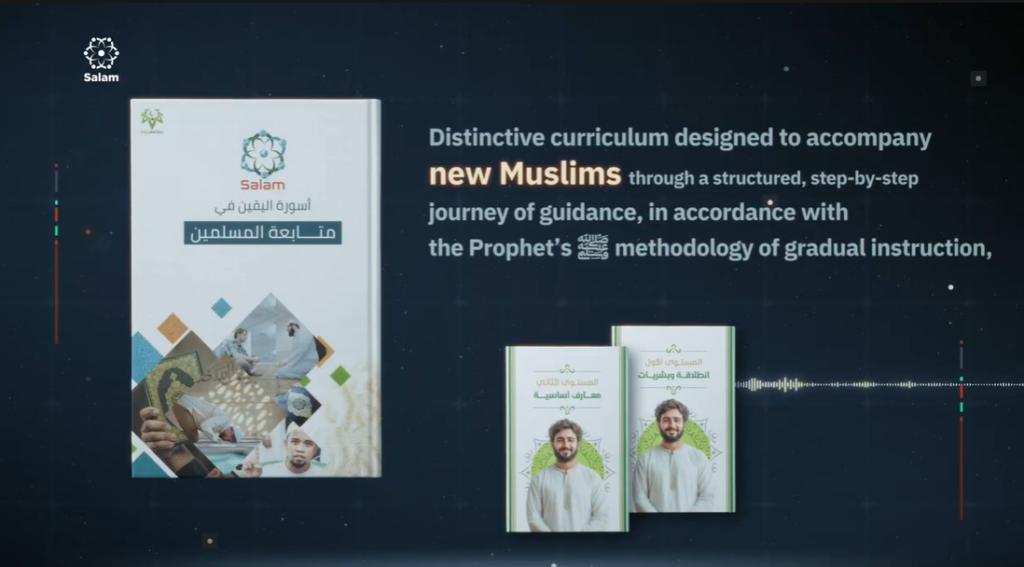
For those who have already entered Islam and are looking for structured, compassionate guidance in their new faith, the Salam Center offers the Asawirat Al-Yaqeen (Bracelets of Certainty) program — a complete four-stage curriculum designed specifically for new Muslims:
- Stage One — The Foundation: The meaning of Shahada, prayer, purification, and the pillars of Islam
- Stage Two — The Construction Phase: The six pillars of faith, fasting, Zakat, Hajj, and repentance
- Stage Three — The Consolidation Phase: Character development, etiquette, practical life rulings
- Stage Four — The Empowerment Phase: Contemporary issues, theological grounding, and a life roadmap rooted in Quranic wisdom
The program has already guided 114,588 new Muslims across 140 countries toward firm, grounded faith. It is available in multiple languages, with a smart application and interactive platform currently in development.
Reach out directly to the Salam Center team to start the Asawirat Al-Yaqeen (Bracelets of Certainty) curriculum.
Conclusion
Muslims hold Jesus (Isa ibn Maryam) in profound honor as a prophet and messenger of Allah, affirming his miraculous birth, his extraordinary miracles, and his role in foretelling the final prophethood of Muhammad (PBUH) — all without attributing divinity to him.
The Quran explicitly preserves Jesus’s own call to pure monotheism and records his disavowal of being worshipped. Islamic belief upholds his full prophethood while firmly rejecting the theological layers added after his mission — understanding them as departures from the original revelation he brought.
Jesus remains a living figure in Islamic eschatology, raised to Allah and awaiting his return before the Day of Judgment. His eventual descent, death, and resurrection link him permanently to the human journey — and to every believer’s ultimate hope.
Frequently Asked Questions
Do Muslims believe in Jesus as a prophet?
Yes, Muslims believe in Jesus as one of the greatest prophets and messengers Allah ever sent. Affirming his prophethood is a requirement of Islamic faith — rejecting Jesus as a prophet means one’s Islam is incomplete. He is revered by name in the Quran, where he is mentioned more times than Prophet Muhammad (PBUH) himself.
How does Islam view Jesus differently from Christianity?
Islam honors Jesus as a mighty prophet while rejecting beliefs that were added to his original message after his time — specifically the doctrines of divine sonship, the Trinity, and redemptive crucifixion. The Quran presents Jesus as a human messenger who called his people to worship Allah alone, and who was protected by Allah rather than crucified.
What does "word of Allah" mean when applied to Jesus in Islam?
The description "His word which He cast to Mary" refers to the command "Be" (Kun) by which Allah created Jesus in Mary’s womb without a father. Jesus was created through Allah’s word — he is not the word itself, and this phrase carries no implication of divinity. Dar al-Ifta al-Misriyyah, Egypt’s foremost Islamic legal authority, clarifies that divine attributions in the Quran follow specific grammatical patterns of honor or ownership that must be understood within their theological context.
Do Muslims believe Jesus was crucified?
Muslims do not believe Jesus was crucified or killed. The Quran states explicitly that those who claimed to kill him were mistaken — it was made to appear so to them — and that Allah raised Jesus to Himself. This is a firmly held, non-negotiable element of Islamic creed, drawn directly from Quran 4:157-158.
Will Jesus return according to Islamic belief?
Yes. Islam teaches that Jesus will return before the Day of Judgment as a just ruler who will govern by the law of Prophet Muhammad (PBUH). Authenticated hadiths in Sahih al-Bukhari describe his descent, his defeat of the Dajjal, and his eventual death and burial on earth — after which he will be resurrected like all of humanity on the Last Day.
Is believing in Jesus required in Islam?
Yes. Belief in all of Allah’s prophets and messengers is one of the six pillars of faith in Islam. A Muslim must believe in Jesus, Moses, Abraham, Noah, and all other prophets sent by Allah. Rejecting any prophet — including Jesus — invalidates one’s Islamic faith entirely. This reflects Islam’s understanding of prophethood as a single, unbroken divine mission across human history.
Curious about Islam?
Journey towards clarity and purpose. Our team is here to support you in your search for truth and spiritual guidance.
Embrace the Truth