The Childhood of Prophet Muhammad (PBUH)
| Key Takeaways |
| Prophet Muhammad (PBUH) was born in Mecca in approximately 570 CE, the same year known as the Year of the Elephant. |
| Prophet Muhammad (PBUH) lost his father Abdullah before birth and his mother Aminah at age six, making him an orphan twice over in his earliest years. |
| Prophet Muhammad’s grandfather Abd al-Muttalib and uncle Abu Talib raised him with deep affection, shielding him through the formative years of his youth. |
| Even before prophethood, Muhammad (PBUH) was recognized by his community as Al-Amin — the Trustworthy — a title earned through character, not claimed through lineage. |
| The hardships of his childhood were not accidental; the Quran itself frames them as divine preparation for the mercy he would bring to all of humanity. |
| His early life dismantles the claim that his message was born of personal privilege — he rose from vulnerability to prophethood, shaped entirely by Allah’s will. |
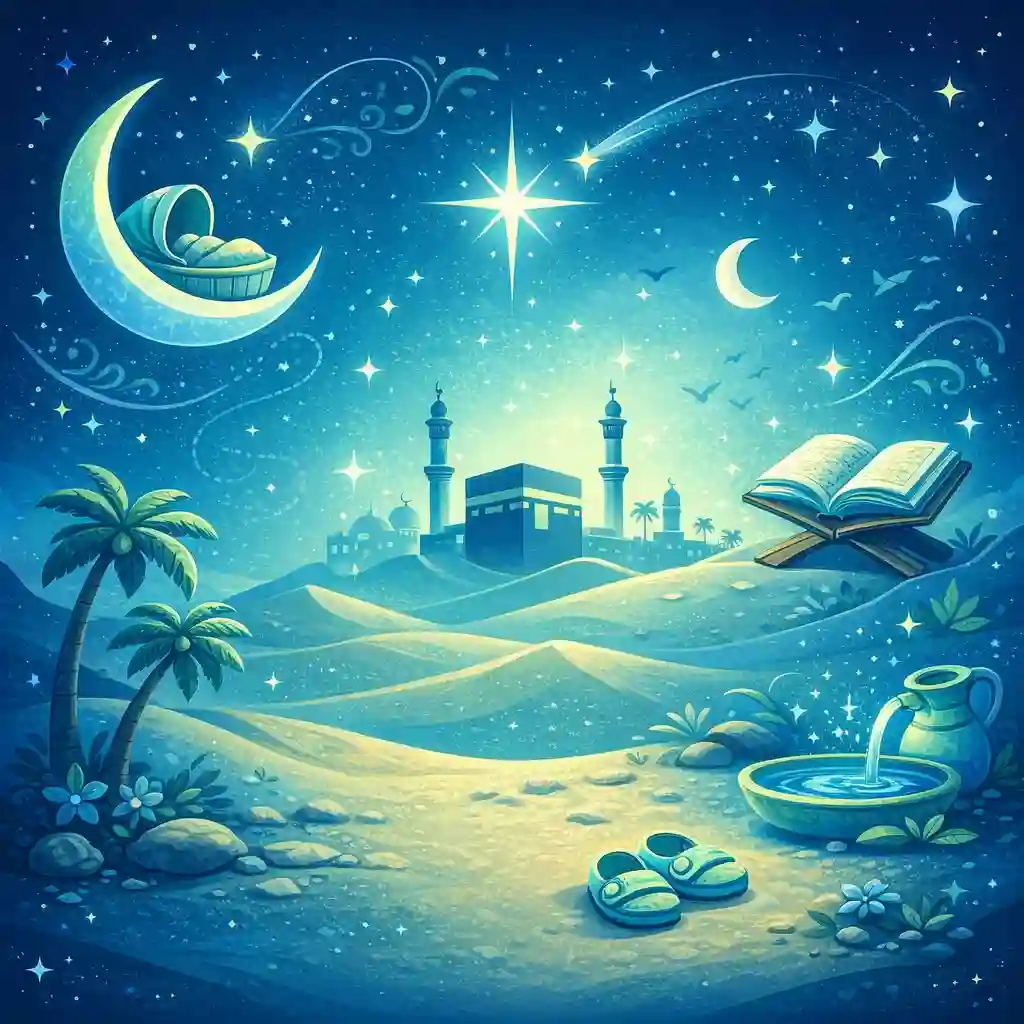
The childhood of Prophet Muhammad (PBUH) is one of the most instructive and moving stories in all of human history — and one of the least understood by those encountering Islam from the outside. He was not born into a palace. He did not inherit a religious institution. He came into the world an orphan, raised in the desert by a wet nurse, and grew up in the care of a grandfather and then an uncle in the tribal society of seventh-century Arabia.
That is the beginning. And it matters enormously.
Because when you understand where Muhammad (PBUH) started — the loss, the dependency, the early displacement — you begin to grasp the full weight of what he became: the final prophet and messenger of Allah, whose message reshaped civilization across continents and centuries.
Allah did not prepare him through comfort. He was prepared through experience. Through grief. Through the particular kind of clarity that comes only to those who have known how fragile life is from the very first years of it. Understanding his childhood means understanding something essential about why his message carries the depth and compassion it does.
1. The Year of the Elephant is the Year of Prophet Muhammad’s Birth
The Prophet Muhammad (PBUH) was born in Mecca in the year approximately 570 CE — the year Arab historians called ‘Am al-Fil, the Year of the Elephant.
That very year, the Abyssinian general Abraha marched toward Mecca with a war elephant at the head of his army, intending to destroy the Kaaba. He never reached it.
Allah sent flights of birds that struck the army down with stones of hardened clay, an event mentioned in the Quran:
أَلَمْ تَرَ كَيْفَ فَعَلَ رَبُّكَ بِأَصْحَابِ الْفِيلِ
“Have you not considered how your Lord dealt with the companions of the elephant?” (Quran 105:1)
This was the year Muhammad (PBUH) entered the world. The Kaaba — the House of Allah — had just been supernaturally preserved. The timing was not coincidental. It was a sign of the kind of epoch this birth would inaugurate.
He was born into the Banu Hashim clan of the Quraysh tribe — an honored lineage in Mecca — to his father Abdullah ibn Abd al-Muttalib and his mother Aminah bint Wahb.
The 12th of Rabi’ al-Awwal is the most widely cited date of his birth.
His father Abdullah had died months before he was born, while returning from a trading journey to Madinah.
Before Muhammad (PBUH) had drawn his first breath, he had already lost his father.
2. Prophet Muhammad Was an Orphan
Orphanhood in seventh-century Arabian society was not merely a personal tragedy. It carried social consequences. Without a father, a child had no immediate male protector in a world organized entirely around tribal kinship and paternal authority. The Prophet’s (PBUH) situation was more acute than most.
His grandfather Abd al-Muttalib, the leader of the Banu Hashim, took guardianship of the infant Muhammad (PBUH) with immediate and genuine love.
3. Prophet Muhammad Was Raised in Desert
As was the custom of Meccan nobility, the newborn was sent to be nursed and raised in the desert among the Bedouin — a practice believed to strengthen children physically and preserve them from the diseases of the city.
He was placed in the care of Halimah al-Sa’diyah, a woman from the Banu Sa’d tribe. What happened next became legendary among her people. Halimah had been struggling with drought, her animals producing barely enough milk, her family in want.
The moment she took the infant Muhammad (PBUH) into her home, blessings came. Her milk flowed. Her animals gave more than they ever had. Her husband marveled. She recognized, even then, that this child was different.
Muhammad (PBUH) spent approximately four years in the desert with Halimah. He grew strong. He learned the purest Arabic — the Bedouin dialect of the desert was considered the most eloquent and uncontaminated form of the language. This was the Arabic that would one day carry the Quran.
Angels came to Muhammad in his childhood and cleansed his heart
It was during this time with Halimah that the famous event of the chest-opening (Sharh al-Sadr) is recorded to have occurred — angels came to the child, cleansed his heart, and prepared him for what Allah had destined.
The scholars discuss this narration in detail, and the Quran itself refers to this divine preparation:
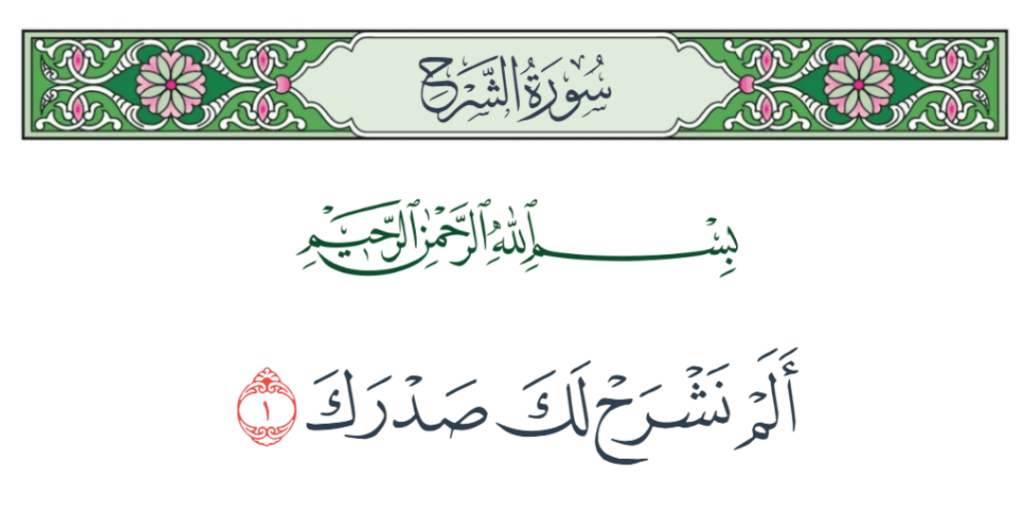
أَلَمْ نَشْرَحْ لَكَ صَدْرَكَ
“Did We not expand for you, [O Muhammad], your breast?” (Quran 94:1)
Learn More About Islam
Discover the beauty, teachings, and wisdom of Islam in a clear and welcoming way. Start exploring and deepen your understanding today.
Learn More4. The Death of His Mother and the Care of Abd al-Muttalib
At around age six, Muhammad (PBUH) traveled with his mother Aminah to Madinah — then called Yathrib — to visit the grave of his father Abdullah and to see his maternal relatives among the Banu Najjar. On the return journey, Aminah fell gravely ill at a place called Al-Abwa. She died there.
A six-year-old child watched his mother buried in the ground at Al-Abwa. He returned to Mecca in the care of Umm Ayman, an Ethiopian servant who had been with the family since before his birth and who would remain devoted to him for the rest of her life.
Abd al-Muttalib, his grandfather, received him and wrapped him in a love that companions and historians would later describe with striking warmth.
There is a well-known account that Abd al-Muttalib had a special mat spread near the Kaaba where he would sit — and that no one dared sit on it with him, not even his own adult sons, except young Muhammad (PBUH), who would come and sit beside him.
Abd al-Muttalib would smile and say, “Leave my son.” He saw something in this child.
But Abd al-Muttalib was already an old man. He died when Muhammad (PBUH) was approximately eight years old. In the span of eight years, the boy had lost his father, his mother, and his grandfather.
At each point of potential abandonment, Allah placed someone to care for him. This is the Sunnah of Allah in the life of His Prophet: provision through what appears to be loss, elevation through what appears to be diminishment. The Quran addresses this directly:
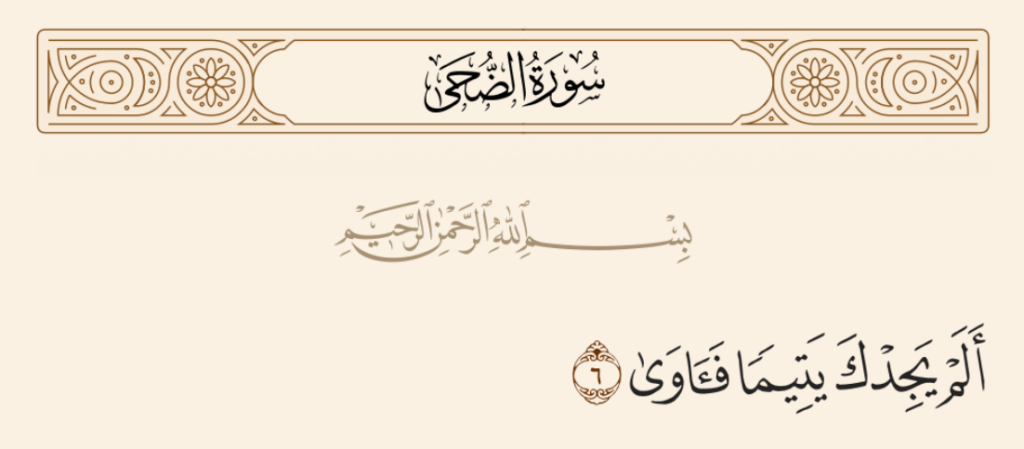
أَلَمْ يَجِدْكَ يَتِيمًا فَـَٔاوَىٰ
“Did He not find you an orphan and give [you] refuge?” (Quran 93:6)
5. Abu Talib and the Young Muhammad Among the Quraysh
Upon Abd al-Muttalib’s death, guardianship of Muhammad (PBUH) passed to his uncle Abu Talib — a man of honor and generosity who, despite his many children and limited means, embraced his nephew with complete sincerity. Abu Talib would remain Muhammad’s (PBUH) protector for decades, long into the years of prophethood.
The relationship between them was one of profound mutual loyalty. Abu Talib never converted to Islam — this is historically established — but he never abandoned his nephew either, even when the Quraysh tribal leaders placed enormous pressure on him to withdraw his protection.
His care during the Prophet’s (PBUH) childhood and youth was among the most important human shields Allah placed around His messenger.
It was also during this period that Muhammad (PBUH) began accompanying the trading caravans.
At around age twelve, he traveled with Abu Talib to Syria. It was on this journey that the encounter with the Christian monk Bahira took place — a man who recognized signs in the young Muhammad (PBUH) that matched descriptions of the coming prophet in the scriptures Bahira had studied. He urged Abu Talib to protect the boy carefully and to take him home before others noticed him.
The journey itself, the exposure to different peoples and beliefs, the observation of trade, commerce, and the moral texture of society — all of this was forming him. He was learning the world he would one day address with revelation.
6. The Community Recognized His Character Before Prophethood as The Trustworthy
By the time Muhammad (PBUH) reached young adulthood, the people of Mecca had given him a name that no tribe elects by committee: Al-Amin — the Trustworthy. It emerged organically from repeated experience of his honesty.
He was known never to lie. When he handled goods in trade, the accounting was exact. When he gave his word, it held. This was remarkable in a mercantile society where the manipulation of weights, prices, and agreements was routine. He stood apart.
It was this reputation that brought him to the attention of Khadijah bint Khuwaylid, a respected and wealthy businesswoman who hired him to lead her trading expedition to Syria. He was approximately twenty-five years old.
She sent a companion to observe him. The report that came back was unambiguous: this man was unlike anyone she had dealt with. His integrity was complete.
She proposed marriage. He accepted. Khadijah became his first wife, his closest companion, and the first person to believe in him when revelation came. Their marriage was a reflection of the character he had built through years of honest living — a character shaped by the very orphanhood and hardship that might have broken someone else.
The faith in Islam he would later teach — its emphasis on truthfulness, justice, and accountability to Allah — was not theoretical for him. He had lived it before he had a name for it.
Why Would Allah Allow His Final Prophet To Suffer Such Loss In Childhood?
People sometimes ask: why would Allah allow His final prophet to suffer such loss in childhood? The question itself reveals a misunderstanding of how Allah prepares His messengers.
The Prophet Muhammad (PBUH) was sent to humanity as a whole — to the poor and the powerful, to the orphan and the elder, to the grieving and the proud. By giving him early experience of loss, dependence, and vulnerability, Allah gave him access to every human experience.
He understood hunger. He understood what it meant to be without a father’s protection in a world that demanded it. He understood grief at a level that no privileged upbringing could have taught him.
When he later commanded the believers to honor orphans — as in the repeated Quranic injunctions — it was not abstract legislation. It was a commandment rooted in lived experience.
فَأَمَّا الْيَتِيمَ فَلَا تَقْهَرْ
“So as for the orphan, do not oppress [him].” (Quran 93:9)
The principles of Islam are inseparable from the biography of its Prophet. His childhood was not a prelude to his mission — it was part of the mission, already underway.
Understanding his early years also clarifies something for the intellectual skeptic who wonders whether Muhammad (PBUH) simply invented a religion for personal gain or social advancement.
He had no institutional backing, no inherited power, no wealthy patronage at the time revelation began. He was a self-made man of moral reputation in a tribal society — and even that reputation would be attacked when he began to preach monotheism publicly.
The monotheism he preached — the absolute oneness of Allah, with no partners, no intercessors, no idols — was as radical to the Quraysh as it was to the wider pagan world. A man seeking power would not have chosen this message. He would have worked within the existing system.
Muhammad (PBUH) From Orphan to Prophet
The Quran summarizes the arc of the Prophet’s (PBUH) early life in a passage of extraordinary brevity and power — three verses that trace his journey from vulnerable orphan to divinely guided messenger:
أَلَمْ يَجِدْكَ يَتِيمًا فَآوَىٰ وَوَجَدَكَ ضَالًّا فَهَدَىٰ وَوَجَدَكَ عَائِلًا فَأَغْنَىٰ
“Did He not find you an orphan and give [you] refuge? And He found you lost and guided [you]. And He found you poor and made [you] self-sufficient.” (Quran 93:6–8)
This is the Islamic understanding of the Prophet’s (PBUH) childhood in miniature: a man found in need, in every dimension of need, and raised by Allah’s will to the highest station any human being has ever occupied.
The nature of Allah as Islam presents it — All-Knowing, All-Wise, the perfect Planner — is visible in how the Prophet’s (PBUH) early years unfolded. Nothing was left to chance. Every loss was a preparation. Every person who stepped in — Halimah, Abd al-Muttalib, Abu Talib, Umm Ayman — was placed there deliberately.
This is the biography of a prophet who knew what it meant to be human before he was asked to guide humanity.
By the time Jibril (Gabriel) appeared to him in the Cave of Hira when he was forty years old, Muhammad (PBUH) had already spent four decades becoming the kind of person who could carry that encounter — and everything that followed — with integrity, patience, and grace.
His childhood was the first chapter of that preparation. And it remains, for those willing to read it carefully, one of the most compelling arguments for the authenticity of his prophethood.
Learn More About Islam
Discover the beauty, teachings, and wisdom of Islam in a clear and welcoming way. Start exploring and deepen your understanding today.
Learn MoreExplore Further with Salam
The childhood of Prophet Muhammad (PBUH) is an entry point into a life of extraordinary depth and meaning. If his early years have raised more questions for you — about the faith he carried, the beliefs that animated him, or the Allah in whose name he spoke — there is much more to discover.
Browse the Salam blog for in-depth articles on the Prophet’s life, Islamic beliefs, and answers to the questions most people are afraid to ask out loud.
Visit the Salam Platform for a wider look at how Islam understands the world — from the nature of monotheism, to the foundations of Islamic belief, to what Muslims actually hold about other religious traditions and the afterlife.
Have a specific question? Want to learn more about entering Islam, or simply need clarity on something you’ve read or heard? Reach out directly — every sincere question deserves a sincere answer, and the Salam team is here for exactly that.

Frequently Asked Questions
Where and when was Prophet Muhammad (PBUH) born?
Prophet Muhammad (PBUH) was born in Mecca, in the Arabian Peninsula, in approximately 570 CE. This year is known in Islamic and Arab historical tradition as ’Am al-Fil — the Year of the Elephant — because it coincided with the failed military campaign of the Abyssinian general Abraha against the Kaaba. He was born into the Banu Hashim clan of the Quraysh tribe, which was among the most respected lineages in Mecca. The 12th of Rabi’ al-Awwal is the most commonly cited date of his birth.
Did Prophet Muhammad (PBUH) grow up as an orphan?
Yes. Muhammad (PBUH) was orphaned in stages. His father Abdullah died before he was born, while returning from a trading journey. His mother Aminah died when he was approximately six years old, on the return journey from a visit to Madinah. His grandfather Abd al-Muttalib, who then raised him, died when he was around eight years old.
After each loss, care was provided — by Halimah the wet nurse during infancy, by Abd al-Muttalib after his mother’s death, and by his uncle Abu Talib after his grandfather’s passing. The Quran itself acknowledges this directly: "Did He not find you an orphan and give [you] refuge?" (Quran 93:6). Far from being incidental, this experience shaped his profound concern for the vulnerable throughout his prophetic mission.
What does the title Al-Amin mean and why was it given to Muhammad (PBUH)?
Al-Amin means the Trustworthy One. The people of Mecca gave Muhammad (PBUH) this title before prophethood, based entirely on his character in daily life — his honesty in trade, his reliability in keeping agreements, and his consistent refusal to deceive. This was not a self-proclaimed title. It emerged from the repeated experience of the community around him, in a mercantile city where dishonesty in commerce was commonplace.
The title is historically significant because it establishes that his moral excellence preceded the revelation. He was known as Al-Amin for years before he stood in Mecca and declared prophethood — meaning the community that rejected his message did so against their own established assessment of his character.
Who raised Prophet Muhammad (PBUH) after his parents died?
After his mother Aminah died, his grandfather Abd al-Muttalib took care of him with exceptional warmth and distinction. Historical accounts describe Abd al-Muttalib showing the young Muhammad (PBUH) a level of favor that set him apart from his own adult sons, including allowing the boy to sit beside him on a mat near the Kaaba that no one else was permitted to share.
When Abd al-Muttalib died approximately two years later, guardianship passed to his uncle Abu Talib — a man of honor who raised Muhammad (PBUH) among his own children and maintained his protection for decades, even into the years after prophethood began. It was Abu Talib who first took the young Muhammad (PBUH) on a trading journey to Syria, where the monk Bahira recognized signs of prophethood in him.
Was the Prophet’s (PBUH) difficult childhood part of Allah’s plan?
The Islamic understanding is unambiguous: yes. The Quran presents the hardships of the Prophet’s (PBUH) early years not as misfortune but as divine preparation. The three verses of Surah Ad-Duha — "Did He not find you an orphan and give [you] refuge? And He found you lost and guided [you]. And He found you poor and made [you] self-sufficient" (Quran 93:6–8) — frame each difficulty as something Allah actively addressed and transformed.
His experience of orphanhood gave him an intimate understanding of vulnerability that informed some of the most pressing ethical commands in the Quran — including the command to never oppress the orphan (Quran 93:9). He did not legislate from a distance. He spoke from experience.
How did the Prophet’s (PBUH) childhood influence his later teachings?
Profoundly and directly. His early years of poverty, loss, and dependence on others’ generosity produced a prophet whose most consistent themes were care for the poor, protection of the orphan, and the dignity of those society marginalized. "The one who cares for an orphan and I will be together in Paradise like this," — and he joined his index and middle fingers together — is recorded in Sahih Bukhari.
His childhood shaped the texture of his mercy. He knew what hunger felt like. He knew the social fragility of the child without a father in tribal Arabia. When the Quran he received addressed the rights of the vulnerable, it did so through a messenger who had personally been among them. This coherence between lived experience and revealed message is one of the reasons Islamic scholarship points to his biography as itself a form of evidence for the authenticity of his prophethood.
Curious about Islam?
Journey towards clarity and purpose. Our team is here to support you in your search for truth and spiritual guidance.
Embrace the Truth