
Abraham in Islam vs Christianity
| Key Takeaways |
| Islam holds that Abraham (Ibrahim) was neither a Jew nor a Christian but a Muslim in submission to Allah, while Christianity regards him as the father of faith within the Judeo-Christian covenant tradition. |
| The defining split between Islam and Christianity centers on which son carried Abraham’s covenant — Ishmael in Islamic scholarship, Isaac in mainstream Christian theology. |
| Abraham and Ishmael built the Kaaba together in Mecca, a fact that has no equivalent in Christian scripture or tradition. |
| Both the Quran and the Bible describe Abraham as tested by Allah/God — the Quran through several trials culminating in his readiness to sacrifice his son, the Bible through the binding of Isaac in Genesis 22. |
| Prophet Muhammad (PBUH) is the direct descendant of Abraham through Ishmael. |
Was Abraham a Muslim, a Jew, or a Christian? The Quran answers directly:
“Abraham was neither a Jew nor a Christian, but he was one inclining toward truth, a Muslim [submitting to Allah].” (Quran 3:67)
This verse captures the heart of how Abraham in Islam vs Christianity diverges — not on whether Abraham existed or mattered, but on what he actually believed, which son inherited his covenant, and which tradition legitimately continues his mission.
Christianity, by contrast, situates Abraham within the unfolding story of Israel and the Church — the man whose faith was “credited to him as righteousness” (Romans 4:3), the ancestor through whom the Messiah would eventually come. Both traditions claim Abraham as their spiritual father.
Both cannot be describing the same theological figure in the same way. This article walks through exactly where the two accounts agree, where they part ways, and why the difference matters far beyond ancient genealogy.
1. Abraham’s Identity and Religion Between Islam and Christianity
Islam identifies Abraham as a hanif — an uncorrupted monotheist who submitted entirely to Allah before Judaism or Christianity existed as organized religions. This is not a minor technicality in Islamic theology. It is foundational.
The Quran states this explicitly and repeats the theme across multiple surahs, framing Abraham’s faith as predating and superseding the later religious labels his descendants would adopt.
قُلْ إِنَّنِي هَدَانِي رَبِّي إِلَىٰ صِرَاطٍ مُّسْتَقِيمٍ دِينًا قِيَمًا مِّلَّةَ إِبْرَاهِيمَ حَنِيفًا وَمَا كَانَ مِنَ الْمُشْرِكِينَ
“Say, ‘Indeed, my Lord has guided me to a straight path — a correct religion — the way of Abraham, inclining toward truth. And he was not among those who associated others with Allah.'” (Quran 6:161)
Christianity presents Abraham as the patriarch whose covenant faith initiated the redemptive story that culminates in Jesus Christ. The New Testament does not describe Abraham as belonging to any later religious system either, but it reads his story forward — toward the Sinai covenant, the Davidic kingship, and ultimately the Gospel.
Paul writes that Abraham’s faith, credited to him before he was circumcised, makes him “the father of all who believe” (Romans 4:11), a framing that anchors him firmly within the trajectory that leads to the Church.
Christianity reads Abraham forward — a man whose faith initiates a covenant history whose destination is Christ.
2. Which Son of Abraham Carried the Covenant Between Islam and Christianity
This is the most consequential dispute between Islam and Christianity regarding Abraham, and it determines how each tradition understands its own legitimacy. Islamic scholarship holds that Ishmael (Ismail), Abraham’s firstborn son through Hagar, was the son intended for sacrifice and the ancestor through whom the Arab prophetic line — culminating in Muhammad (PBUH) — descended. Mainstream Christian theology, inheriting the Genesis narrative directly, holds that Isaac, Abraham’s son through Sarah, was the child of promise and the carrier of the covenant.
The Bible states this distinction plainly regarding the covenant itself. When Abraham pleads on Ishmael’s behalf, God responds:
“Yes, but your wife Sarah will bear you a son, and you will call him Isaac. I will establish my covenant with him as an everlasting covenant for his descendants after him. And as for Ishmael, I have heard you: I will surely bless him… But my covenant I will establish with Isaac.” (Genesis 17:19–21)
Ishmael receives blessing and numerous descendants in this passage, but the covenant explicitly bypasses him.
Islamic sources reverse this emphasis. While the Quran does not name which son was nearly sacrificed in Surah As-Saffat, the overwhelming majority of classical Sunni commentators — including Ibn Kathir in his Tafsir — held it to be Ishmael, based on the sequence of the verses and supporting narrations.
More significantly for Islamic theology, the Quran records Abraham and Ishmael together building the sacred house:
وَإِذْ يَرْفَعُ إِبْرَاهِيمُ الْقَوَاعِدَ مِنَ الْبَيْتِ وَإِسْمَاعِيلُ
“And [mention] when Abraham was raising the foundations of the House and [with him] Ishmael.” (Quran 2:127)
This single act of joint construction gives Ishmael a role in sacred history that no biblical text assigns him.
For the full genealogical case connecting this lineage to Muhammad (PBUH), the Salam platform’s detailed piece on the Prophet Muhammad’s family tree from Abraham traces every documented link in the chain.
The Kaaba Narrative Has No Equivalent in Christian Scripture
Islamic tradition holds that Abraham and Ishmael built the Kaaba in Mecca as the first house dedicated to the worship of the one true God, a fact entirely absent from the Bible. The Bible contains no account of Abraham traveling to Arabia, no mention of Mecca, and no narrative of a joint building project with Ishmael.
Genesis places Abraham’s later life in Canaan and describes Hagar and Ishmael being sent away to the wilderness of Beersheba and then Paran (Genesis 21:14–21) — a different geography and a different narrative arc entirely from the Islamic account.
This divergence is not a minor detail to be smoothed over for the sake of interfaith comfort. It represents two genuinely separate historical claims, and readers examining Abraham in Islam vs Christianity should recognize that harmonizing them requires accepting one tradition’s account over the other’s silence, rather than blending them into a single composite story.
Learn More About Islam
Discover the beauty, teachings, and wisdom of Islam in a clear and welcoming way. Start exploring and deepen your understanding today.
Learn More3. Abraham’s Trials and Tests Between Islam and Christianity
Both the Quran and the Bible describe Abraham undergoing severe trials of obedience, and both traditions treat his response as the defining proof of his faith — though the Quran catalogs a broader sequence of tests than the Bible does.
The Quran states:
وَإِذِ ابْتَلَىٰ إِبْرَاهِيمَ رَبُّهُ بِكَلِمَاتٍ فَأَتَمَّهُنَّ ۖ قَالَ إِنِّي جَاعِلُكَ لِلنَّاسِ إِمَامًا
“And [mention] when Abraham was tried by his Lord with commands and he fulfilled them. [Allah] said, ‘Indeed, I will make you a leader for the people.'” (Quran 2:124)
Classical Islamic scholarship, drawing on early exegesis attributed to Ibn Abbas, understood these trials to include Abraham’s confrontation with his idol-worshipping people, his dispute with the tyrant king Nimrod, his being cast into fire and emerging unharmed, his migration from his homeland, his generous hospitality toward guests, and ultimately Allah’s command that he sacrifice his son.
The Quran frames these collectively as the basis for Abraham being appointed Imam — a leader and exemplar for all humanity.
The Bible narrows its most dramatic trial to a single, sharply focused episode: the binding of Isaac on Mount Moriah.
“Take your son, your only son, whom you love — Isaac — and go to the region of Moriah. Sacrifice him there as a burnt offering.” (Genesis 22:2)
Both accounts converge on the same essential moral: Abraham’s willingness to obey completely, even at the cost of his own son, is what secures his exalted status. Where they diverge is in the theological weight placed on that single test.
Genesis 22 stands almost alone as the definitive proof of Abraham’s righteousness in the biblical narrative.
The Quran situates the sacrifice as one trial among several, part of a longer pattern of tested and proven submission that earns Abraham the title of Imam — leader — for all subsequent generations, both by descent and by faith.
4. Abraham’s Relationship to God Between Islam and Christianity
Islam describes Abraham as Khalilullah — the intimate friend of Allah — a title of extraordinary honor reserved uniquely for him among the prophets, while Christianity describes him more broadly as a man of covenant faith whose righteousness became the model for all believers.
وَاتَّخَذَ اللَّهُ إِبْرَاهِيمَ خَلِيلًا
“And Allah took Abraham as an intimate friend.” (Quran 4:125)
This designation carries specific theological weight in Islamic tradition. No other prophet is given precisely this title in the Quran. It signals a relationship of profound closeness and trust, distinct from prophethood itself, and it is why Abraham occupies such a singular place of honor across Islamic literature, jurisprudence, and devotional life.
The Bible uses similar language, though somewhat differently applied. The book of Isaiah refers to Israel as “the offspring of Abraham my friend” (Isaiah 41:8), and James 2:23 states that Abraham “was called God’s friend” precisely because his faith was demonstrated through action — his willingness to offer Isaac.
The concept of friendship with God appears in both traditions, but Christianity develops it primarily as evidence of justifying faith, tied closely to Pauline theology about righteousness through belief rather than works.
Islam treats Khalilullah as a standing title and rank, central to how Muslims relate to Abraham devotionally and how he is invoked in daily prayer.
5. Abraham’s Legacy Through His Descendants Between Islam and Christianity
Islam traces two parallel prophetic lines from Abraham — Ishmael’s line producing the Arab prophets culminating in Muhammad (PBUH), and Isaac’s line producing the Israelite prophets including Moses and Jesus — treating both as equally legitimate carriers of the same original message. This is a distinctly Islamic theological move.
Rather than choosing one son’s line as authoritative and dismissing the other, the Quran affirms prophecy through both branches of Abraham’s family, while insisting that all the prophets across both lines taught the identical core message of pure monotheism.
قُولُوا آمَنَّا بِاللَّهِ وَمَا أُنزِلَ إِلَيْنَا وَمَا أُنزِلَ إِلَىٰ إِبْرَاهِيمَ وَإِسْمَاعِيلَ وَإِسْحَاقَ وَيَعْقُوبَ وَالْأَسْبَاطِ وَمَا أُوتِيَ مُوسَىٰ وَعِيسَىٰ وَمَا أُوتِيَ النَّبِيُّونَ مِن رَّبِّهِمْ لَا نُفَرِّقُ بَيْنَ أَحَدٍ مِّنْهُمْ وَنَحْنُ لَهُ مُسْلِمُونَ
“Say, [O believers], “We have believed in Allah and what has been revealed to us and what has been revealed to Abraham and Ishmael and Isaac and Jacob and the Descendants and what was given to Moses and Jesus and what was given to the prophets from their Lord. We make no distinction between any of them, and we are Muslims [in submission] to Him.'” (Quran 2:136)
This verse structures the entire Islamic approach to how Islam views other religions — as originally sharing the same prophetic source, with later human deviation, rather than as fundamentally different revelations in competition with one another.
Christianity, meanwhile, reads Abraham’s descendants through a single covenantal line — Isaac, then Jacob, then the twelve tribes of Israel — through which the Torah, the kingship of David, and finally Jesus as Messiah all emerge.
Paul develops this into an argument that Gentile Christians, though not physical descendants of Abraham, become his spiritual children through faith: “If you belong to Christ, then you are Abraham’s seed, and heirs according to the promise” (Galatians 3:29).
Ishmael and his descendants appear in the biblical narrative but occupy a secondary role, blessed by God yet outside the covenant line that Christian theology treats as salvation-historically decisive.
Genealogical Comparison Table
| Element | Islamic Position | Christian Position |
| Covenant-bearing son | Ishmael (Ismail) | Isaac |
| Son nearly sacrificed | Ishmael (majority Sunni view) | Isaac (explicit in Genesis 22) |
| Prophetic line to the final messenger | Ishmael → Arab tribes → Muhammad (PBUH) | Isaac → Jacob → Israel → Jesus Christ |
| Sacred site associated with Abraham’s descendants | Mecca and the Kaaba | Jerusalem and the Temple |
| How later peoples relate to Abraham | Spiritual submission (Islam) plus, for Muhammad, direct descent | Spiritual adoption through faith in Christ (Galatians 3:29) |
6. Why Prophet Muhammad’s Descent From Abraham Matters
Prophet Muhammad (PBUH) is not the founder of a new religion but as the promised fulfillment of a supplication Abraham himself made at the Kaaba, which gives Muhammad’s prophethood a genealogical and theological continuity that Christianity does not require of Jesus. This distinction matters because it reflects two entirely different models of how prophecy operates.
When Abraham and Ishmael completed building the sacred house, the Quran records Abraham’s specific prayer:
رَبَّنَا وَابْعَثْ فِيهِمْ رَسُولًا مِّنْهُمْ يَتْلُو عَلَيْهِمْ آيَاتِكَ وَيُعَلِّمُهُمُ الْكِتَابَ وَالْحِكْمَةَ وَيُزَكِّيهِمْ
“Our Lord, and send among them a messenger from themselves who will recite to them Your verses and teach them the Book and wisdom and purify them.” (Quran 2:129)
Islamic tradition holds that Muhammad (PBUH) is the direct answer to this prayer, a claim reinforced by another Quranic verse that ties legitimate connection to Abraham not merely to bloodline but to faithful continuation of his message:
إِنَّ أَوْلَى النَّاسِ بِإِبْرَاهِيمَ لَلَّذِينَ اتَّبَعُوهُ وَهَٰذَا النَّبِيُّ وَالَّذِينَ آمَنُوا
“Indeed, the most worthy of Abraham among the people are those who followed him [in submission to Allah] and this prophet, and those who believe.” (Quran 3:68)
Prophet Muhammad (PBUH) reinforced this same connection in an authenticated hadith, describing the honor of his lineage as a chain of divine selections:
“Allah chose Kinanah from the sons of Ishmael, and He chose Quraysh from Kinanah, and He chose Banu Hashim from Quraysh, and He chose me from Banu Hashim.” (Jami` at-Tirmidhi 3606)
Christianity structures Jesus’s relationship to Abraham differently. The Gospel of Matthew opens by tracing Jesus’s genealogy explicitly through Abraham and Isaac, through David, to Joseph (Matthew 1:1–17) — establishing legal descent to satisfy messianic expectation rooted in the covenant with David.
Yet Christian theology does not treat Jesus’s divinity or authority as contingent on this genealogy in the way Islamic theology treats Muhammad’s prophethood as connected to Abraham’s specific request.
For Christians, Jesus’s identity as the Son of God stands independently of lineage; the genealogy confirms messianic credentials rather than constituting the source of his authority.
This is one further expression of the deeper doctrinal split covered in the Salam platform’s comprehensive guide on Islam vs. Christianity, where the nature of prophethood itself is a central point of departure.
Read Also: Noah’s Ark in Islam vs Christianity
What Do Muslims Believe the Bible Say About Abraham Compared to the Quran?
Islamic scholarship holds that the earliest, authentic revelations to Abraham existed but were not preserved intact in their original form, meaning Muslims read the Genesis account of Abraham with respect for its prophetic core while maintaining that later textual history introduced changes the Quran corrects. This position is not a rejection of Abraham’s biblical story wholesale. Muslims affirm that Abraham was a real prophet who received genuine communication from God.
What Islamic scholarship disputes is the Bible’s current textual reliability as an unaltered record of that communication, given the complex, multi-author, multi-century compilation history of the Hebrew scriptures.
This is a distinct claim from simply preferring one narrative over another, and readers wanting the fuller doctrinal basis for this position can consult the Salam platform’s dedicated article on what Muslims believe about the Bible, which addresses the textual history question in depth.
Read Also: Musa (Moses) in Islam vs Christianity
Learn More About Islam
Discover the beauty, teachings, and wisdom of Islam in a clear and welcoming way. Start exploring and deepen your understanding today.
Learn MoreRead Also: Judgment Day in Islam vs Christianity
Continue Exploring Prophet’s Stories With Salam
If this comparison has raised more questions about how Islam understands prophecy, scripture, or Abraham’s place in sacred history, there is more to explore.
Read further on the Salam Platform for deeper articles on Islamic belief and evidence.
Browse the Salam blog for ongoing coverage of comparative faith questions.
Have a specific question about Abraham, prophethood, or anything else in Islam? Reach out directly — the team is ready to listen without judgment.

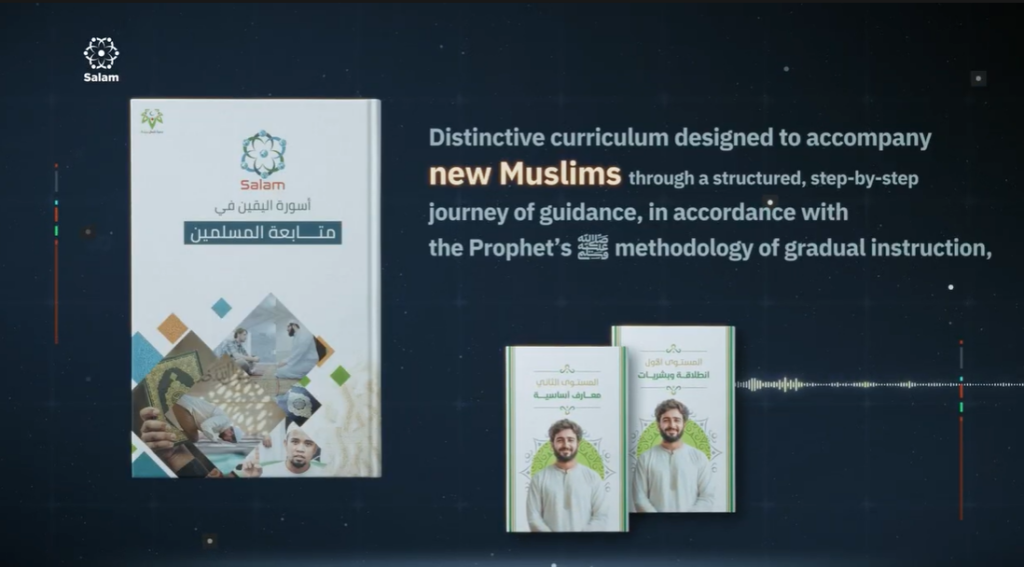
If you are exploring Islam more seriously, the Salam Center team also offers the Asawirat Al-Yaqeen (Bracelets of Certainty) program — a structured, four-stage curriculum built for exactly this kind of inquiry:
- Stage One covers the Shahada, the pillars of Islam, and the basics of prayer and purification
- Stage Two covers the pillars of faith, zakat, fasting, and the rites of Hajj
- Stage Three addresses repentance and everyday character and etiquette
- Stage Four engages contemporary questions, including comparative scripture and theology
Reach out directly to the Salam Center team to start the Asawirat Al-Yaqeen (Bracelets of Certainty) program for FREE.
Summary
Abraham stands at the center of both faiths, yet Islam and Christianity read his story toward different conclusions. Islam identifies him as a pure monotheist and traces prophecy through Ishmael to Muhammad (PBUH), while Christianity follows the covenant through Isaac toward Christ.
The sharpest divide concerns which son carried Abraham’s blessing and where his legacy physically took root — Mecca in Islamic tradition, Canaan and Jerusalem in the biblical account. Understanding both readings honestly, rather than blending them, clarifies what each tradition actually claims.
Frequently Asked Questions About Abraham in Islam vs Christianity
Was Abraham a Muslim, Jew, or Christian?
The Quran states plainly that Abraham was neither a Jew nor a Christian but a Muslim — one who submitted entirely to Allah — since both Judaism and Christianity as organized religions emerged centuries after his lifetime. (Quran 3:67) Christianity does not use the term “Muslim” for Abraham but similarly regards him as predating any formal religious system.
Which son did Abraham almost sacrifice, according to Islam and Christianity?
The Bible names Isaac explicitly as the son nearly sacrificed in Genesis 22. The Quran does not name the son directly in Surah As-Saffat, but the majority of classical Sunni commentators, including Ibn Kathir, held it to be Ishmael based on the surrounding verses and early scholarly narrations.
Do Muslims and Christians both consider Abraham the father of their faith?
Yes. Muslims regard Abraham as a prophet and the model of pure submission to Allah, while Christians regard him as the father of covenant faith fulfilled in Christ. Both traditions claim direct spiritual continuity with him, though through different theological frameworks and different sons.
Did Abraham build the Kaaba according to Islamic teaching?
Yes, Islamic tradition holds that Abraham and his son Ishmael together raised the foundations of the Kaaba in Mecca as the first house dedicated to the worship of one God. (Quran 2:127) This account has no parallel in the Bible, which places Abraham’s later life in Canaan rather than Arabia.
Is Prophet Muhammad a descendant of Abraham?
Islamic sources trace Muhammad’s (PBUH) lineage directly to Abraham through Ishmael, a connection reinforced by Abraham’s Quranic prayer for a messenger to arise among his descendants and by the Prophet’s own statements about his ancestry. (Quran 2:129)
Curious about Islam?
Journey towards clarity and purpose. Our team is here to support you in your search for truth and spiritual guidance.
Embrace the Truth