Judgment Day in Islam vs Christianity
| Key Takeaways |
| Islam teaches that every soul stands individually before Allah on Yawm al-Qiyamah, with deeds weighed on a literal scale (mizan). |
| Christianity’s judgment day theology varies by tradition, with some strands describing multiple judgment events and others a single final reckoning. |
| The Quran states no soul carries another’s burden, while intercession in Islam is granted only by Allah’s permission, not earned by status. |
| Both describe a bridge, a book of deeds, and a final separation between the saved and the condemned, though the mechanics differ sharply. |
| Salvation in Islam rests on tawhid (belief in Allah’s Oneness) paired with righteous deeds and Allah’s mercy, not on a single act of faith alone. |
Both Islam and Christianity teach that a Day of Judgment is coming — but what happens on that day, who judges, and what determines a soul’s fate diverge in fundamental ways. In Islam, Yawm al-Qiyamah is the day every human being, without exception, stands alone before Allah to answer for every deed, thought, and intention recorded across a lifetime.
The Quran describes this moment as one of total individual accountability, where no relationship, wealth, or lineage offers protection. Christianity, particularly in its Protestant and evangelical expressions, often centers judgment around faith in Jesus Christ’s atonement, though the Bible itself contains multiple judgment scenes that theologians have interpreted differently for centuries.
1. The concept of judgment day differs in structure between Islam and Christianity
Islamic theology presents Yawm al-Qiyamah as a single, unified event following the resurrection of all humanity. Allah says in the Quran:
وَنَضَعُ الْمَوَازِينَ الْقِسْطَ لِيَوْمِ الْقِيَامَةِ فَلَا تُظْلَمُ نَفْسٌ شَيْئًا
“And We place the scales of justice for the Day of Resurrection, so no soul will be treated unjustly at all.” (Quran 21:47)
This verse anchors the entire Islamic framework: a literal weighing, applied equally, with zero tolerance for injustice down to the weight of a mustard seed. The judgment is singular — one Day, one Reckoning, one standard applied to every soul that ever lived. Christianity’s picture is less uniform.
Depending on the theological tradition, believers point to the Judgment Seat of Christ (2 Corinthians 5:10), the sheep and goats judgment (Matthew 25:31-33), and the Great White Throne judgment (Revelation 20:11-15) as either the same event described three ways or as three separate judgments spaced across different periods, including a proposed thousand-year millennium between some of them.
Christian scholars themselves disagree on whether these passages describe one day or several, which is a structural difference from the Islamic position of a single Day of Standing (Yawm al-Hisab).
2. Who does the judging separates Islamic and Christian theology sharply
In Islam, judgment belongs to Allah alone. No prophet, angel, or righteous person judges on behalf of Allah — they may only intercede with His permission. This is a core plank of monotheism in Islamic creed, distinguishing it from any framework where a created being holds independent judicial authority.
لِمَنِ الْمُلْكُ الْيَوْمَ ۖ لِلَّهِ الْوَاحِدِ الْقَهَّارِ
“To whom belongs the dominion this Day? To Allah, the One, the Prevailing.” (Quran 40:16)
Christian theology generally holds that Jesus Christ serves as judge, a position drawn from passages such as John 5:22, where the Father is described as having entrusted all judgment to the Son.
This reflects a Trinitarian framework absent in Islamic theology, which maintains that Prophet Isa (Jesus), peace be upon him, was a human messenger, not a divine judge sharing in Allah’s essence.
Islamic sources do affirm Isa’s return before the Hour — Sahih Muslim records the Prophet Muhammad ﷺ describing Isa’s descent as a sign of the Last Day, where he will rule by the law of Muhammad ﷺ, not establish a separate judgment (Sahih Muslim 155a).
Isa’s role in the end times is real in Islamic eschatology; the question is what he does there, and Islamic sources are explicit that he acts as a follower of the Prophet Muhammad’s message, not as the divine arbiter of souls.
Learn More About Islam
Discover the beauty, teachings, and wisdom of Islam in a clear and welcoming way. Start exploring and deepen your understanding today.
Learn More3. The weighing of deeds is central to judgment day between Islam and Christianity
The image of a scale — mizan — appears repeatedly in the Quran as the literal mechanism of judgment. Every good deed and every sin is placed on this balance, and the outcome, heavier or lighter, determines a soul’s direction.
فَمَن ثَقُلَتْ مَوَازِينُهُ فَأُولَٰئِكَ هُمُ الْمُفْلِحُونَ وَمَنْ خَفَّتْ مَوَازِينُهُ فَأُولَٰئِكَ الَّذِينَ خَسِرُوا أَنفُسَهُم
“And those whose scales are heavy [with good deeds] – it is they who are the successful. But those whose scales are light – those are the ones who have lost their souls.” (Quran 23:102-103)
Christianity’s approach to deeds at judgment varies considerably by denomination. Some traditions emphasize salvation by faith alone, where deeds are evidence of prior salvation rather than a determining factor themselves; others, including much of Catholic and Orthodox theology, hold that works genuinely factor into final judgment alongside grace.
Matthew 25:31-46, the parable of the sheep and the goats, explicitly ties eternal destiny to concrete actions — feeding the hungry, clothing the poor, visiting the imprisoned — which some Christian scholars read as evidence that deeds carry real weight in the Bible’s judgment scenes, not merely faith.
This is one area where the traditions are closer than commonly assumed, even as the underlying theology of why deeds matter remains distinct.
4. The record of deeds appears in Islam and Christianity with different emphasis
Islam teaches that angels record every action across a person’s life, and on the Day of Judgment, this record is handed to its owner.
فَأَمَّا مَنْ أُوتِيَ كِتَابَهُ بِيَمِينِهِ فَسَوْفَ يُحَاسَبُ حِسَابًا يَسِيرًا
“So as for he who is given his record in his right hand, he will be judged with an easy account.” (Quran 84:7-8)
Receiving the record in the right hand signals a favorable outcome; receiving it in the left hand, or behind the back, signals condemnation. (Quran 17:71) documents this same imagery, describing every community called forth with its record on that Day.
The Bible parallels this with the “books” opened at the Great White Throne judgment: “And I saw the dead, great and small, standing before the throne, and books were opened… the dead were judged by what was written in the books, according to what they had done.” (Revelation 20:12)
Both traditions describe a literal, itemized account of a person’s life being consulted — the difference lies in what the record is measured against and who ultimately determines its weight.
5. Intercession works differently within judgment day theology in Islam and Christianity
A well-known hadith in Sahih Muslim describes humanity, overwhelmed on the Day of Resurrection, approaching Adam, then Nuh, then Ibrahim, then Musa, then Isa, each declining to intercede and recalling their own limitations, until they reach Prophet Muhammad ﷺ, who prostrates before Allah and is granted permission to intercede for his nation (Sahih Muslim 194a). This chain establishes a key Islamic principle: intercession is a gift Allah grants, never a right any created being possesses independently — including the Prophet Muhammad ﷺ himself.
وَلَا يَشْفَعُونَ إِلَّا لِمَنِ ارْتَضَىٰ
“And they cannot intercede except for one whom He approves.” (Quran 21:28)
Even the Prophet Muhammad ﷺ affirmed this dependence on mercy rather than merit. The Prophet ﷺ said, “None of you will enter Paradise by his deeds alone.” His Companions asked, “Not even you, O Messenger of Allah?” He replied, “Not even me, unless Allah covers me with His mercy.” (Sahih Muslim 2818)
Christianity’s concept of intercession centers on Jesus Christ as a permanent mediator, described in Hebrews 7:25 as one who “always lives to make intercession” for believers.
The structural difference is significant: Islamic intercession is granted case-by-case, by Allah’s permission, to whoever He approves, while Christian intercession through Christ is generally understood as continuous and tied directly to one’s faith relationship with him.
6. The bridge over Hell appears as a defining image of judgment day in Islamic sources
One of the most vivid descriptions in Islamic eschatology is As-Sirat, a bridge stretched over Hell that every soul must cross.
Sahih Muslim records this description in detail: the Companions asked whether they would see their Lord, and Abu Sa’id al-Khudri added,
“I have come to know that the bridge is thinner than a hair and sharper than a sword.” (Sahih Muslim 183)
The hadith continues describing believers crossing at different speeds — some like lightning, some like wind, some walking, some crawling — according to the weight of their deeds, while those who fall are caught by hooks positioned along the bridge.
This image has no direct one-to-one equivalent named in the Bible, though Revelation 20:15 describes the “lake of fire” as the final destination for anyone whose name is not found in the book of life — a destination, without the specific crossing imagery Islamic sources provide.
7. Eternal destinations are described with more graduated detail in Islamic sources
Islamic theology describes multiple levels within both Paradise (Jannah) and Hell (Jahannam), with the severity or reward corresponding to the weight of one’s deeds and the sincerity of one’s tawhid. This is distinct from a flat binary outcome.
وَقَالُوا الْحَمْدُ لِلَّهِ الَّذِي صَدَقَنَا وَعْدَهُ وَأَوْرَثَنَا الْأَرْضَ نَتَبَوَّأُ مِنَ الْجَنَّةِ حَيْثُ نَشَاءُ
“And they will say, ‘Praise to Allah, who has fulfilled for us His promise and made us inherit the earth [so] we may settle in Paradise wherever we will.'” (Quran 39:74)
Christian eschatology, particularly in its evangelical and Protestant forms, more commonly presents heaven and hell as singular destinations without the graduated levels Islamic sources describe in detail, though some Christian traditions, including Catholic teaching on purgatory, introduce intermediate states.
The core Islamic position holds that a person’s ultimate placement, and the severity of their experience within either destination, corresponds precisely to their record — nothing added, nothing removed unjustly.
Read Also: Abraham in Islam vs Christianity
8. Belief and deeds together determine judgment day outcomes in the Islamic framework
A recurring misconception is that Islam teaches salvation through works alone, disconnected from faith. This is inaccurate. The starting point is tawhid — sincere belief in Allah’s Oneness — without which deeds hold no weight in the Islamic framework at all.
وَمَن يَبْتَغِ غَيْرَ الْإِسْلَامِ دِينًا فَلَن يُقْبَلَ مِنْهُ وَهُوَ فِي الْآخِرَةِ مِنَ الْخَاسِرِينَ
“And whoever desires other than Islam as religion – never will it be accepted from him, and he, in the Hereafter, will be among the losers.” (Quran 3:85)
From this foundation, righteous deeds, sincere repentance (tawbah), and Allah’s mercy work together. Understanding this interplay is central to grasping faith in Islam as a complete system rather than isolated rituals.
This mirrors, in structure though not content, the ongoing Christian discussion about the relationship between faith and works — a debate visible even within Christianity’s own denominations, from the Reformation-era emphasis on faith alone to the Catholic and Orthodox insistence that genuine faith necessarily produces works that matter at judgment.
Read Also: Noah’s Ark in Islam vs Christianity
Learn More About Islam
Discover the beauty, teachings, and wisdom of Islam in a clear and welcoming way. Start exploring and deepen your understanding today.
Learn MoreRead Also: Musa (Moses) in Islam vs Christianity
Your Path to Deeper Knowledge Starts Here with Salam
Questions about the Day of Judgment often open the door to bigger questions about faith, purpose, and what happens after this life ends. If this comparison raised more than it answered, that’s a good sign — sincere questions deserve real engagement, not deflection.
Explore more comparative and foundational topics on the Salam Platform
Read ongoing reflections and answers on the Salam blog
Reach out directly if you have a specific question about Islam, want guidance on the path to entering Islam, or are curious about structured learning after taking that step

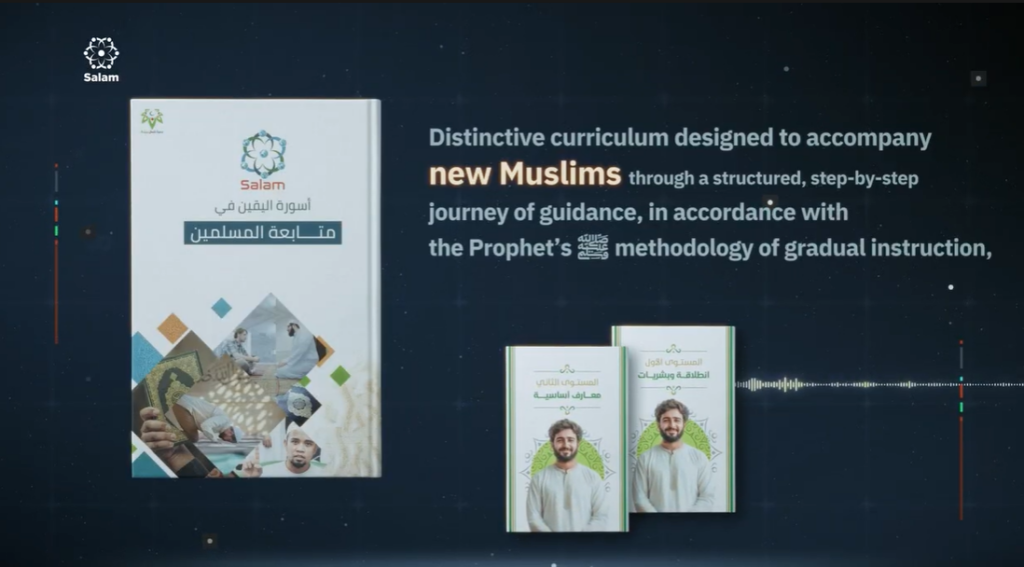
For those who have already found their way to Islam, Salam Center‘s Asawirat Al-Yaqeen (Bracelets of Certainty) program offers a structured path forward, including:
- A four-stage curriculum moving from foundational beliefs through practical life rulings
- Lessons on prayer, purification, the pillars of faith, and the Seerah of Prophet Muhammad ﷺ
- Guidance on repentance, etiquette, and navigating daily life as a Muslim
- A supportive structure designed specifically for the questions new Muslims actually ask
General inquiries, questions about Islamic beliefs, or requests for one-on-one conversation are always welcome through the Salam Center team.
Reach out directly to the Salam Center team to start the Asawirat Al-Yaqeen (Bracelets of Certainty) program for FREE.
Summary
Judgment day in Islam centers on a single Day of Resurrection where Allah alone judges every soul by a literal weighing of deeds, with intercession granted only by His permission. Christianity’s judgment theology varies by tradition, drawing on multiple biblical passages interpreted as either one event or several distinct ones.
Both traditions describe recorded deeds, a final separation of destinies, and the return of Prophet Isa (Jesus) before the Hour, though the theological structure around each differs substantially. Understanding these distinctions offers a clearer, evidence-based foundation for anyone exploring what the Last Day truly means.
Frequently Asked Questions
Does Islam believe in judgment day like Christianity does?
Yes, both faiths teach a coming Day of Judgment, but Islam describes a single unified event (Yawm al-Qiyamah) where Allah alone judges every soul by weighing deeds, while Christian tradition includes several judgment passages interpreted differently across denominations.
What happens to good deeds on judgment day in Islam?
Good deeds are placed on a literal scale (mizan) described in Quran 21:47; a heavier scale of good deeds leads to success, though acceptance ultimately rests on sincere tawhid and Allah’s mercy, not deeds alone.
Will Jesus return in Islamic end-times belief?
Yes, Sahih Muslim records the Prophet Muhammad ﷺ describing Isa’s (Jesus’) return before the Hour as a major sign of the Last Day, where he rules by the law brought by Prophet Muhammad ﷺ (Sahih Muslim 155a).
Who judges humanity on judgment day according to the Quran?
Allah alone judges, as stated in Quran 40:16: “To whom belongs the dominion this Day? To Allah, the One, the Prevailing.” No prophet or angel holds independent judicial authority in Islamic theology.
Is salvation in Islam based on faith or good deeds?
Both, in sequence. Sincere belief in Allah’s Oneness (tawhid) is the necessary foundation, per Quran 3:85, after which righteous deeds, repentance, and Allah’s mercy together determine a soul’s outcome.
Curious about Islam?
Journey towards clarity and purpose. Our team is here to support you in your search for truth and spiritual guidance.
Embrace the Truth