Do Muslims Believe The Bible?
| Key Takeaways |
| Muslims believe the original Torah (Tawrah) and Gospel (Injeel) were genuine divine revelations from Allah, sent to Prophets Moses and Jesus (peace be upon them). |
| Muslims believe both scriptures were significantly corrupted — in wording and meaning — by Jewish and Christian communities over centuries of transmission. |
| The Quran states that some People of the Book altered the words of Allah, mixing truth with falsehood in their scriptures. |
| The Bible in its current form cannot be fully attributed to divine revelation; it contains authentic remnants alongside human additions, contradictions, and fabrications. |
| Western and Christian scholars themselves have increasingly acknowledged the textual inconsistencies and non-divine elements within the Bible. |
Muslims believe in the Bible — but with a precise, evidence-grounded qualification that most people never hear. The original scriptures revealed to Moses and Jesus (peace be upon them) were divine truth.
The Bible in its present form, however, is not that original revelation. It is a collection of texts compiled centuries after those prophets, subjected to human memory, ideological editing, translation errors, and deliberate alteration.
This is the Islamic position — not a polemic, but a conclusion reached through Quranic guidance, scholarly analysis, and, increasingly, the admissions of Christian theologians themselves.
Do Muslims Believe the Bible?
Yes, Muslims believe the original revelation of the Bible fully and without hesitation. However, Muslims do not believe the Bible as it exists today — because that original revelation no longer exists in an unadulterated form.
Do Muslims Believe the Bible is the Word of Allah?
Muslims affirm that a divine scripture was sent to both Prophet Moses and Prophet Jesus (peace be upon them). The original Torah (Tawrah) and the original Gospel (Injeel) were genuine revelations from Allah. The Quran states clearly:
إِنَّا أَنزَلْنَا التَّوْرَاةَ فِيهَا هُدًى وَنُورٌ
“Indeed, We sent down the Torah, in which was guidance and light.” (Quran 5:44)
And regarding Jesus (peace be upon him):
وَآتَيْنَاهُ الْإِنجِيلَ فِيهِ هُدًى وَنُورٌ
“And We gave him the Gospel, in which was guidance and light.” (Quran 5:46)
Believing in these original scriptures is a pillar of Islamic faith itself. As part of faith in Islam, every Muslim must affirm that Allah revealed books to His messengers before the Quran.
And here is what Muslims believe about the Bible in detail:
1. The Original Torah and Gospel Were Divine Revelations from Allah
The starting point of the Islamic view is one of profound respect. Muslims do not dismiss the Torah and Gospel as inventions or myths. They were sent by Allah, carried divine guidance, and were honored scriptures in their original form.
The Quran confirms that Prophet Muhammad (PBUH) was himself foretold in those original scriptures:
الَّذِينَ يَتَّبِعُونَ الرَّسُولَ النَّبِيَّ الْأُمِّيَّ الَّذِي يَجِدُونَهُ مَكْتُوبًا عِندَهُمْ فِي التَّوْرَاةِ وَالْإِنجِيلِ
“Those who follow the Messenger, the unlettered Prophet, whom they find written in what they have of the Torah and the Gospel.” (Quran 7:157)
This verse alone establishes that the original Torah and Gospel contained authentic prophecy — and that remnants of that truth may still be found within the scriptures that People of the Book carry today.
The Islamic tradition honors the messengers who received those revelations, and that honor extends to the revelation itself as Allah gave it.
2. Muslims Believe That the Bible Was Corrupted By Jews And Christians
This is the core of the Islamic position on the Bible as it exists today. The Quran directly addresses the distortion of scripture by members of the Jewish and Christian communities:
مِّنَ الَّذِينَ هَادُوا يُحَرِّفُونَ الْكَلِمَ عَن مَّوَاضِعِهِ
“Among the Jews are those who distort words from their [proper] usages.” (Quran 4:46)
The Quran also describes a more deliberate act of scribal manipulation:
فَوَيْلٌ لِّلَّذِينَ يَكْتُبُونَ الْكِتَابَ بِأَيْدِيهِمْ ثُمَّ يَقُولُونَ هَٰذَا مِنْ عِندِ اللَّهِ
“So woe to those who write the ‘scripture’ with their own hands, then say, ‘This is from Allah.'” (Quran 2:79)
These are not vague allegations. They are specific, revealed indictments of a process — the replacement of divine words with human compositions, then the attribution of that human writing to Allah. The Islamic view of the Bible is therefore grounded in Quranic testimony, not in anti-Christian prejudice.
The corruption took multiple forms: outright textual changes, omissions of inconvenient passages (including prophecies of Prophet Muhammad (PBUH)), additions that served communal or doctrinal interests, and the mixing of human commentary with what remained of divine speech — until the two became inseparable in the texts that survive today.
Have Questions About Islam?
Our team is ready to answer your questions clearly and respectfully. Ask freely and receive honest guidance.
Ask Us Now3. The Bible’s Current Form Contains Both Truth and Falsehood
The Islamic scholarly tradition has never claimed that every word in the current Bible is fabricated. That would be as inaccurate as claiming none of it was altered.
The more precise and honest position is that truth and falsehood have become intermingled — and cannot be reliably separated without divine guidance.
Ibn Hazm, the eminent Andalusian scholar of the 11th century, documented this position rigorously, noting that the scriptures in the hands of Jews and Christians contain internal contradictions, historical impossibilities, and statements unworthy of Allah’s prophets — evidence of human intervention rather than pure divine preservation.
Ibn Kathir, one of the foremost Quran commentators in Islamic scholarly history, explained in his Tafsir that the Quran’s statement about Allah’s words being unchangeable refers specifically to the Quran and the knowledge Allah preserved directly — while the scriptures entrusted to human communities without that divine guarantee became susceptible to corruption.
The admission that some truth remains is itself Quranic. When the Prophet (PBUH) encountered a story from Jewish scripture that did not contradict Islamic teaching, he did not categorically reject it.
He instructed Muslims, however, with a precise governing principle:
“Do not believe the People of the Book and do not disbelieve them.” (Sahih Bukhari)
Neutrality toward unverifiable content — neither wholesale acceptance nor blanket rejection.
Read also: Does Islam Believe In A Messiah?
4. The Contradictions Within the Bible Themselves Evidence Its Corruption
The Quran offers a logical criterion for identifying divine speech:
أَفَلَا يَتَدَبَّرُونَ الْقُرْآنَ ۚ وَلَوْ كَانَ مِنْ عِندِ غَيْرِ اللَّهِ لَوَجَدُوا فِيهِ اخْتِلَافًا كَثِيرًا
“Then do they not reflect upon the Quran? If it had been from other than Allah, they would have found within it much contradiction.” (Quran 4:82)
The inverse logic applies directly to the Bible. The contradictions between the four Gospels alone — on the details of Jesus’s birth, his genealogy, the events of the crucifixion narrative, and the resurrection accounts — are extensively documented.
Matthew and Luke present irreconcilable genealogies of Jesus. Mark and John differ sharply in their opening accounts. These are not minor stylistic variations. They are substantive factual divergences that cannot all be true simultaneously.
Christian scholarship has grappled with this openly for centuries. The Encyclopaedia Britannica has recorded that many scholars acknowledge not every passage in the biblical texts can be considered divinely inspired.
The Encyclopaedia of Religion and Ethics, compiled by Christian academics, states explicitly that early Christians did not regard the apostles as necessarily infallible, and that errors and disagreements existed among them.
These are not Muslim accusations. They are internal Christian scholarly concessions — and they align precisely with what the Quran declared fourteen centuries ago.
5. Western and Christian Scholars Have Confirmed the Bible’s Textual History
The Islamic position on the Bible’s corruption is not an isolated theological claim — it is increasingly supported by the conclusions of Western biblical scholarship itself.
Professor Paul Schwarzenau, a Protestant theologian at the University of Dortmund in Germany, concluded in his research that the sayings of Jesus and the beliefs of early Christians were not accurately transmitted into the New Testament as it exists today.
He went further, stating that the Quran represents the authentic completion of Jesus’s original teachings.
This finding carries significant weight. A Protestant Christian academic, trained in biblical theology, arrived at a conclusion that mirrors what the Quran has stated from the beginning: the original Gospel of Jesus (peace be upon him) was not preserved in the texts that bear that name today.
The four canonical Gospels — Matthew, Mark, Luke, and John — were not written during Jesus’s lifetime. They were composed decades after him, in languages he did not speak, by authors who were not present witnesses to most of what they recorded.
Mark and Luke, in particular, were not even among the twelve disciples. This is standard biblical scholarship, not Islamic polemic.
Read also: Does Islam Believe Jesus Is the Son of God?
6. The Scholarly Consensus on the Nature of Biblical Corruption
Islamic scholars have long discussed not just whether the Bible was corrupted, but how and to what extent. The classical scholar Rahmatullah al-Hindi documented this comprehensively in his landmark work Izhar al-Haqq (The Manifestation of Truth) — a rigorous comparative religious analysis that exposed textual contradictions in the Bible using the internal standards of Christian biblical scholarship itself.
Al-Hindi identified four categories of alteration documented by the scholars: complete replacement of entire books; corruption of the majority of the text while remnants of original content survive; corruption only of isolated passages; and alteration of meaning while preserving the original wording.
The scholarly consensus, as summarized by Ibn Hajar al-Asqalani in Fath al-Bari, leans toward the view that corruption occurred in both wording and meaning — with the position of Imam al-Bukhari and others suggesting that the most visible corruption manifests in the distortion of meanings applied to intact text.
What is unanimous across all four scholarly positions: the Bible as transmitted today cannot be read as a purely divine text.
Engaging with it is appropriate only for a grounded scholar seeking to demonstrate its internal contradictions, to respond to theological arguments from its adherents, or to identify the remnants of original truth within it — not for the average Muslim seeking religious guidance.
For that, the Quran and the authenticated Sunnah are entirely sufficient, as part of the complete principles of Islam that govern Muslim life.
Read also: Does Islam Believe in Original Sin?
7. The Quran Is the Final, Preserved, and Superseding Revelation
The answer to the Bible’s corruption is not scholarly despair — it is the Quran. Allah did not leave humanity without a preserved, reliable, uncorrupted revelation. He guaranteed the protection of His final message:
إِنَّا نَحْنُ نَزَّلْنَا الذِّكْرَ وَإِنَّا لَهُ لَحَافِظُونَ
“Indeed, it is We who sent down the Quran and indeed, We will be its guardian.” (Quran 15:9)
No equivalent promise was made for the Torah or the Gospel — and the textual history of both scriptures demonstrates precisely what happens when divine revelation is left to human custodianship without divine protection.
The Quran’s relationship to previous scriptures is one of confirmation and authority. It confirms what remained true in them and stands as the criterion — the Furqan — by which truth and falsehood within them can be distinguished. As Allah describes it:
مَا فَرَّطْنَا فِي الْكِتَابِ مِن شَيْءٍ
“We have not neglected in the Register a thing.” (Quran 6:38)
Everything humanity needs for guidance is contained within the Quran. The Quran’s unique characteristics — its linguistic miracle, its internal consistency, its historical preservation through memorization and written transmission simultaneously — make it unlike any other scripture in human history.
Understanding why Muslims believe in the Quran is inseparable from understanding why the Bible, in its current form, cannot hold that same status.
The Prophet Muhammad (PBUH) made this hierarchy explicit when he saw Umar ibn al-Khattab (may Allah be pleased with him) carrying a page from the Torah. He expressed displeasure and said:
“By the One in whose hand is my soul, if Moses were alive, he would have no choice but to follow me.”
Have Questions About Islam?
Our team is ready to answer your questions clearly and respectfully. Ask freely and receive honest guidance.
Ask Us NowExplore More Authentic Knowledge with Salam
If this article raised questions — or if it began answering ones you’ve carried for a long time — the Salam Center exists precisely for you.
Whether you’re exploring Islam for the first time, working through doubts, or already Muslim and seeking deeper grounding, you’re welcome here.
Browse the Salam Platform for carefully sourced articles on Islamic belief, spirituality, and contemporary questions.
Read more on the Salam blog for accessible, in-depth discussions about Islam’s relationship with other faiths and traditions.
Reach out directly with your questions — our team is ready to respond with care and scholarship.

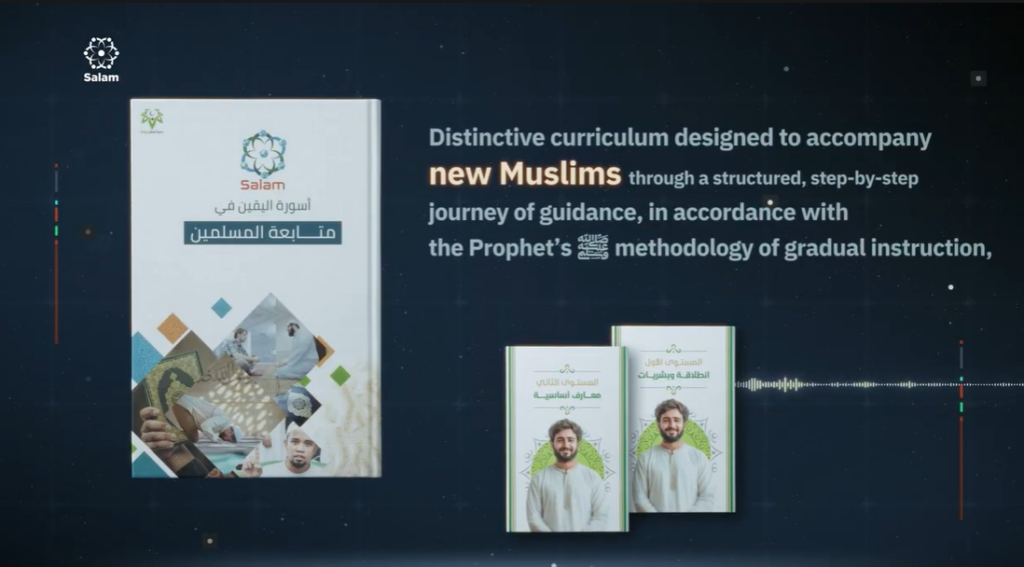
If you’ve recently taken your Shahada or are considering it, ask us about joining Asawirat Al-Yaqeen (Bracelets of Certainty) — the Salam Center’s structured post-conversion curriculum designed to build your faith on solid ground. The program offers:
- Four progressive stages moving from foundational pillars of Islam to advanced theological and practical knowledge
- Seven structured levels covering everything from wudu and salah to Islamic ethics, family rulings, and contemporary issues
- A therapeutic pedagogical approach — compassionate, reasoned, and grounded in the Prophetic tradition
- Engagement with a global community of new Muslims across 140 countries who have completed the journey alongside you
- Certification upon completion, with 41.3% of graduates achieving an excellent grade
Reach out directly to the Salam Center team to start the Asawirat Al-Yaqeen (Bracelets of Certainty) program for FREE.
Conclusion
Muslims affirm that the original Torah and Gospel were divine revelations from Allah, sent to Prophets Moses and Jesus (peace be upon them). The Quran explicitly confirms their divine origin while documenting their subsequent corruption through human alteration, omission, and fabrication over centuries of transmission.
The Bible’s internal contradictions — between its four Gospels, across genealogies, and in accounts of core events — serve as evidence of human intervention in a text once divinely revealed.
Western biblical scholars, including Protestant theologians, have reached conclusions that align with what Islamic scholarship has maintained for fourteen centuries.
Frequently Asked Questions
Do Muslims believe the Bible is a holy book?
Muslims believe the original Torah and Gospel — as revealed to Prophets Moses and Jesus (peace be upon them) — were genuinely holy books from Allah. The Quran confirms their divine origin explicitly in multiple verses. The current Bible, however, is considered a collection that mixes surviving remnants of that original revelation with human additions, alterations, and contradictions introduced during centuries of transmission without divine protection.
What do Muslims believe about the corruption of the Bible?
Muslims believe that members of the Jewish and Christian communities altered the scriptures — in wording, meaning, or both — after their original revelation. The Quran addresses this directly in verses such as 4:46 and 2:79, describing deliberate distortion by scribes and scholars. Islamic scholars have identified four scholarly positions on the extent of this corruption, but all agree that the Bible in its current form cannot be treated as a purely divine text.
Do Muslims believe Jesus’s actual words are in the Bible?
Muslims believe some authentic sayings of Jesus (peace be upon him) may survive within the New Testament, alongside significant additions and alterations made after his time. The Gospels were written decades after Jesus, in Greek rather than Aramaic, by authors — including Mark and Luke — who were not eyewitnesses to his ministry. The only statements of Jesus (peace be upon him) that Muslims can affirm with certainty are those preserved in the Quran and the authenticated Sunnah of Prophet Muhammad (PBUH).
Why do Muslims believe the Quran is preserved while the Bible was not?
Allah explicitly guaranteed the preservation of the Quran in Quran 15:9, a promise with no equivalent for the Torah or Gospel. The Quran’s preservation was secured through both written manuscripts and an unbroken tradition of memorization by hundreds of thousands of Muslims across every generation. The Bible, by contrast, was transmitted through manuscripts with thousands of documented variants, translated across multiple languages, and compiled into its current form by church councils centuries after the prophets it describes.
Can Muslims read the Bible?
Classical Islamic scholarship permits a grounded scholar to read the Bible for specific scholarly purposes — to identify remnants of original truth, to engage with the arguments of Christians and Jews, or to demonstrate where the text’s own internal contradictions evidence its corruption. For the general Muslim seeking religious guidance, the Quran and authenticated Sunnah are entirely sufficient. Reading the Bible casually, without the scholarly tools to distinguish preserved truth from human addition, is not recommended — as the Prophet (PBUH) expressed clearly when he saw Umar ibn al-Khattab reading from the Torah.
Curious about Islam?
Journey towards clarity and purpose. Our team is here to support you in your search for truth and spiritual guidance.
Embrace the Truth