
Does the Quran Say to Follow Prophet Muhammad?
The Quran commands believers to obey Prophet Muhammad (PBUH) directly alongside Allah in Surah An-Nisa 4:59, making obedience to the Messenger a distinct religious duty. Surah Ali ‘Imran 3:31 ties genuine love for Allah to following the Prophet’s example, presenting obedience as the proof of sincere faith.
Sahih al-Bukhari records the Prophet’s own explanation: obeying him is obeying Allah, since he conveys nothing but divine revelation. The Quran in Surah Al-Ahzab 33:21 names the Prophet’s life an excellent pattern for anyone hoping for Allah and the Last Day.
Does the Quran Say to Follow Prophet Muhammad?
Yes, the Quran directly commands obedience to Prophet Muhammad. The Quran states this obligation in the clearest possible terms in Surah An-Nisa. Allah says:
يَا أَيُّهَا الَّذِينَ آمَنُوا أَطِيعُوا اللَّهَ وَأَطِيعُوا الرَّسُولَ وَأُولِي الْأَمْرِ مِنكُمْ ۖ فَإِن تَنَازَعْتُمْ فِي شَيْءٍ فَرُدُّوهُ إِلَى اللَّهِ وَالرَّسُولِ إِن كُنتُمْ تُؤْمِنُونَ بِاللَّهِ وَالْيَوْمِ الْآخِرِ ۚ ذَٰلِكَ خَيْرٌ وَأَحْسَنُ تَأْوِيلًا
“O you who have believed, obey Allah and obey the Messenger and those in authority among you. And if you disagree over anything, refer it to Allah and the Messenger, if you should believe in Allah and the Last Day. That is the best [way] and best in result.” (Quran 4:59)
This verse structures obedience in a specific order. Allah is obeyed absolutely and without condition.
The Messenger is named separately and obeyed on that same absolute footing, since his guidance is itself revelation rather than personal opinion.
Those in authority — scholars and rulers — are obeyed only within the bounds of what Allah and His Messenger have already commanded, which is why classical commentators note that the verb “obey” is not repeated a third time in the Arabic text. Their authority derives from and is bounded by the first two.
This distinction matters for understanding faith in Islam as a coherent system rather than a set of isolated beliefs.
A Muslim does not simply affirm Allah’s existence; the Shahada itself testifies that Muhammad is His Messenger, which makes following his guidance inseparable from believing in Allah.
The Quran Makes Following the Prophet the Proof of Loving Allah
Surah Ali ‘Imran answers a question the early Muslims themselves raised. Some people at the time claimed love for Allah while rejecting the Prophet’s guidance. Allah’s response settles the matter directly:
قُلْ إِن كُنتُمْ تُحِبُّونَ اللَّهَ فَاتَّبِعُونِي يُحْبِبْكُمُ اللَّهُ وَيَغْفِرْ لَكُمْ ذُنُوبَكُمْ
“Say, [O Muhammad], ‘If you should love Allah, then follow me, [so] Allah will love you and forgive you your sins. And Allah is Forgiving and Merciful.'” (Quran 3:31)
The renowned exegete Ibn Kathir explained that this verse judges against anyone who claims to love Allah while not following the Prophet’s way, since the claim only becomes true through following his teachings in statement, action, and condition. Love for Allah is not measured by feeling alone.
It is measured by whether a person’s daily life conforms to what the Prophet taught and modeled.
This principle also explains why Muslims believe in the Quran as a living guide rather than a historical text. The Quran does not present itself as a book to be read and set aside. It presents itself as a text meant to be followed through the example of the one who received it.
Learn More About Islam
Discover the beauty, teachings, and wisdom of Islam in a clear and welcoming way. Start exploring and deepen your understanding today.
Learn MoreFollowing the Quran Says About Obedience to the Prophet in His Own Words
Prophet Muhammad (PBUH) clarified this relationship himself in an authenticated narration. Abu Hurairah reported that the Messenger of Allah said:
مَنْ أَطَاعَنِي فَقَدْ أَطَاعَ اللَّهَ، وَمَنْ عَصَانِي فَقَدْ عَصَى اللَّهَ
“Whoever obeys me, obeys Allah, and whoever disobeys me, disobeys Allah.” (Sahih al-Bukhari 7137)
This hadith removes any ambiguity about where obedience to the Prophet stands. He does not present his commands as separate from Allah’s law.
He presents them as the vehicle through which Allah’s law reaches the Ummah, since the Prophet does not speak from personal desire but conveys what has been revealed to him.
A separate verse reinforces this same principle regarding practical rulings, not just belief:
وَمَا آتَاكُمُ الرَّسُولُ فَخُذُوهُ وَمَا نَهَاكُمْ عَنْهُ فَانتَهُوا
“And whatever the Messenger has given you – take; and what he has forbidden you – refrain from.” (Quran 59:7)
Ibn Kathir’s tafsir on this verse preserves an account of a woman who searched the Quran for a specific ruling the Prophet had given and could not find its exact wording, until she was shown this very verse — demonstrating that the Quran itself instructs believers to accept what the Prophet legislates, even when the specific ruling is elaborated through his Sunnah rather than stated verse by verse.
This is part of what Muslims believe about the Quran as a text that works together with the Prophet’s example, not apart from it.
Read Also: What Does the Quran Say About Forcing Religion on Others?
The Quran States That Prophet’s Life Functions as a Model
Surah Al-Ahzab gives the theological basis for treating the Prophet’s conduct as instructive. Allah says:
لَّقَدْ كَانَ لَكُمْ فِي رَسُولِ اللَّهِ أُسْوَةٌ حَسَنَةٌ لِّمَن كَانَ يَرْجُو اللَّهَ وَالْيَوْمَ الْآخِرَ وَذَكَرَ اللَّهَ كَثِيرًا
“There has certainly been for you in the Messenger of Allah an excellent pattern for anyone whose hope is in Allah and the Last Day and [who] remembers Allah often.” (Quran 33:21)
This verse was revealed in the context of the Battle of the Trench, when the Prophet endured the same hardship, cold, and hunger as his companions rather than exempting himself from difficulty.
His conduct was not theoretical instruction. It was lived example, which is why the Seerah — the biography of his life — holds such weight in Islamic learning.
| Source of Guidance | What It Establishes |
| Quran 4:59 | Direct command to obey the Prophet alongside Allah |
| Quran 3:31 | Following the Prophet as proof of loving Allah |
| Quran 59:7 | Accepting what the Prophet gives and forbids |
| Quran 33:21 | The Prophet’s life as a pattern to emulate |
| Sahih al-Bukhari 7137 | The Prophet’s own explanation that obeying him is obeying Allah |
How This Connects to the Prophet’s Own Life and Mission
Understanding why obedience to the Prophet carries this weight becomes clearer through how he became the Prophet of Islam and through the details of his childhood before revelation began.
His character was recognized as trustworthy by his own community decades before he received the first revelation, which is part of why his later teachings carried immediate authority among those who knew him.
His family lineage traced back to Prophet Abraham situates his prophethood within the same chain of messengers recognized across Abrahamic tradition, a point relevant to anyone comparing Islam and Christianity or Islam and Judaism.
Read Also: What Does the Quran Say About Forgiveness?
What Obedience to the Prophet Does Not Mean
Obedience to the Prophet is not obedience to any human being without condition. This is a critical distinction Islamic scholarship maintains carefully. The Prophet himself is obeyed absolutely because his commands constitute revelation.
Rulers, scholars, and community leaders are obeyed only so long as their instructions do not contradict what Allah and His Messenger have established — a principle summarized in the well-known scholarly maxim that there is no obedience to any created being in disobedience to the Creator.
Read Also: Does the Quran Say to Follow Hadith?
Learn More About Islam
Discover the beauty, teachings, and wisdom of Islam in a clear and welcoming way. Start exploring and deepen your understanding today.
Learn MoreDiscover More About Faith, Certainty, and the Journey to Islam
Questions like this one sit at the heart of what makes Islam distinct, and there is always more depth available for anyone genuinely searching. The Salam Center team welcomes both sincere inquiry and structured learning.
Explore more on the Salam Platform or browse the Salam blog for further reading on these foundations.
If you have specific questions about Islam, or you are considering entering the faith, reach out — the team is here for exactly that conversation.
Reach out directly — our team is ready to listen, guide, and welcome you.

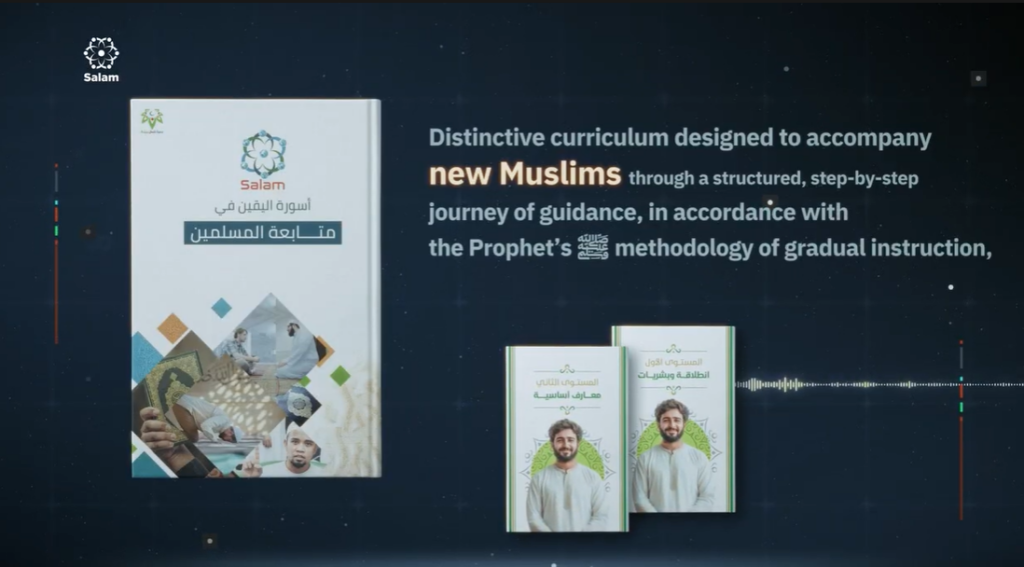
For those who have already taken the Shahada, the Asawirat Al-Yaqeen (Bracelets of Certainty) program offers structured, post-conversion guidance built around:
- A progressive four-stage curriculum moving from foundational pillars through practical life rulings
- Lessons on the Seerah, tawbah, and the etiquette that shapes daily Muslim life
- Interactive assessments designed to reinforce what is learned at each stage
- A pace built for real life, not rushed memorization
Reach out directly to the Salam Center team to start the Asawirat Al-Yaqeen (Bracelets of Certainty) program for FREE.
Summary
The Quran establishes obedience to Prophet Muhammad as a direct command tied to obedience to Allah Himself, not a secondary or optional matter. This obedience covers belief, worship, and daily conduct, all rooted in verses and authenticated narrations rather than assumption.
Understanding this relationship opens the door to deeper study of the Seerah, the Sunnah, and the broader structure of Islamic belief. Sincere seekers are encouraged to keep exploring these foundations with patience and an open heart.
Frequently Asked Questions
Does the Quran command Muslims to obey Prophet Muhammad?
Yes. Quran 4:59 commands believers to obey Allah and obey the Messenger directly, placing this obedience on the same absolute footing as obedience to Allah, since the Prophet conveys divine revelation rather than personal opinion.
What happens if someone claims to love Allah but ignores the Prophet’s teachings?
Quran 3:31 states that genuine love for Allah is proven through following the Prophet, not through claiming love alone. Classical commentary from Ibn Kathir describes this as the standard by which sincerity is measured.
Is obeying the Prophet the same as obeying Allah?
Sahih al-Bukhari 7137 records the Prophet’s own words: whoever obeys him has obeyed Allah, and whoever disobeys him has disobeyed Allah, because his instructions transmit what Allah has already commanded.
Curious about Islam?
Journey towards clarity and purpose. Our team is here to support you in your search for truth and spiritual guidance.
Embrace the Truth