Islam vs Judaism – Full Guide
| Key Takeaways |
| Judaism began on pure monotheism — the same Abrahamic foundation as Islam — but its accumulated theological layers include grave deviations: anthropomorphism, tribal exclusivity, and attributing human deficiencies to Allah. |
| The Jewish concept of Allah (Yahweh) in the Torah oscillates between transcendent monotheism and disturbing descriptions of a deity who tires, regrets, forgets, eats, weeps, and is defeated in a wrestling match with a human being. |
| Islam affirms all the prophets of Israel with complete reverence and purity, while Jewish scripture attributes unspeakable sins to those very prophets — including adultery, idolatry, and apostasy — which Islam categorically rejects. |
| Islam’s Sharia is a universal covenant for all humanity; Jewish law (Halakha) is a tribal covenant that — in its extreme expressions — treats non-Jews as a servant class created for the benefit of the Jewish people. |
| Islam came as the final, preserved, and uncorrupted restoration of the original Abrahamic monotheism — the very message that Judaism once carried but over time altered, distorted, and partially abandoned. |
Judaism and Islam share the same origin point: the pure call of Ibrahim (Abraham, peace be upon him) to worship Allah alone, reject all partners, and live in complete submission to the divine will. Yet the two traditions arrived at profoundly different destinations — and the distance between them is a matter of theological corruption on one side, and divine preservation on the other.
In this article we will examine Islam and Judaism comparatively — their agreements, their divergences, and, with full honesty and Islamic evidential precision, the specific deviations that entered Jewish theology over time.
Islam and Judaism Both Began on the Same Monotheistic Foundation
Before examining where Judaism deviated, the original agreement must be stated clearly: Jews are Ahl al-Kitab — People of the Book — who received genuine revelation from Allah.
The Quran honors the original Torah (Tawrah) sent to Musa (Moses, peace be upon him) as divine light and guidance:
إِنَّا أَنزَلْنَا التَّوْرَاةَ فِيهَا هُدًى وَنُورٌ
“Indeed, We sent down the Torah, in which was guidance and light.” (Quran 5:44)
Both Islam and Judaism affirm the same prophetic chain: Ibrahim, Ishaq (Isaac), Yaqub (Jacob), Yusuf (Joseph), and Musa — peace be upon them all. Islam requires belief in all of them as one of the six pillars of Iman. Rejecting a single prophet is, in Islam, a rejection of faith itself.
The Jewish Shema — the daily declaration “Hear O Israel: the Lord our God, the Lord is One” (Deuteronomy 6:4) — echoes the Islamic affirmation of tawhid.
Both Islam and Judaism emphatically reject any Trinity, any physical form for Allah, and any partner beside Him. This shared origin is the proof that the message delivered through Prophet Muhammad (PBUH) is the restoration of the same original religion.
The Jewish Concept of Allah (Yahweh) vs. the Islamic Concept of Allah
The most consequential divergence between Islam and Judaism lies in the concept of the divine itself — and it demands precise treatment.
Judaism began on the original Abrahamic monotheism. The Jewish people were Ahl al-Kitab by origin — a people who received genuine revelation, were sent more prophets than any other nation precisely because they kept drifting, and whose scripture once proclaimed the purest tawhid.
The monotheism that the Children of Israel grasped in its early phase was not a monotheism of pure reason and transcendence, but of supremacy — the supremacy of one lord over other lords. Their attachment remained tribal.
Islam on the Nature of Allah vs. What the Torah Attributes to Yahweh
The Islamic concept of Allah rests on absolute perfection. Allah does not tire, forget, regret, or change. He is not bound by time or affected by events. The Quran states:
وَلَقَدْ خَلَقْنَا السَّمَاوَاتِ وَالأَرْضَ وَمَا بَيْنَهُمَا فِي سِتَّةِ أَيَّامٍ وَمَا مَسَّنَا مِن لُّغُوب
“And We did certainly create the heavens and earth and what is between them in six days, and there touched Us no weariness.” (Quran 50:38)
This verse was revealed precisely to refute the Jewish claim that Allah rested on the seventh day because He was fatigued from creation.
The Torah’s description in Genesis suggests exhaustion requiring rest — a description entirely incompatible with divine perfection, and one that Islamic theology rejects as a corruption introduced into the text.
The Old Testament goes further. It describes Yahweh as feeling regret: “And the Lord repented of the evil which He thought to do unto His people” (Exodus 32:14).
In another passage: “And the Lord repented that He had made Saul king over Israel” (1 Samuel 15:35).
He forgets and then remembers: “And God remembered His covenant with Abraham” (Exodus 2:24) — the implication being that He had forgotten it prior.
He is persuaded by Musa (peace be upon him) to change His decision to destroy the Israelites (Exodus 32:10–14).
This description of a deity that changes His mind, feels emotional regret, forgets His own covenants, and is dissuaded by human intercession contradicts Islamic tawhid at its foundation.
Have Questions About Islam?
Our team is ready to answer your questions clearly and respectfully. Ask freely and receive honest guidance.
Ask Us NowThe Torah’s Anthropomorphism vs. Islam’s Pure Monotheism
The description goes further still. The Torah presents Yahweh as taking physical forms: He walks before the Israelite community as a pillar of cloud by day and a pillar of fire by night (Exodus 13:21–22).
He asks the Israelites to build Him a sanctuary so that He may dwell among them (Exodus 25:8). And in Genesis 32, Yahweh is described as wrestling with Yaqub (Jacob, peace be upon him) in human form — and losing the wrestling match.
The Talmud intensifies this to a degree that is, from an Islamic perspective, complete theological corruption. Talmudic literature portrays Yahweh wearing turbans, sitting on a throne, weeping over the destruction of the Temple until He develops an eye inflammation, playing with a whale to pass the time, consulting rabbis before making decisions, and spending His day divided between studying the Torah, judging the world, feeding creation, and playing with sea creatures.
Islam, by contrast, is singular and unambiguous. The nature of Allah in Islam admits no anthropomorphism, no imperfection, no tribal limitation, and no emotional volatility. True monotheism requires that none of these attributes be ascribed to Him.
ٱللَّهُ لَآ إِلَٰهَ إِلَّا هُوَ ٱلْحَىُّ ٱلْقَيُّومُ ۚ لَا تَأْخُذُهُۥ سِنَةٌ وَلَا نَوْمٌ ۚ لَّهُۥ مَا فِى ٱلسَّمَٰوَٰتِ وَمَا فِى ٱلْأَرْضِ ۗ مَن ذَا ٱلَّذِى يَشْفَعُ عِندَهُۥٓ إِلَّا بِإِذْنِهِۦ ۚ يَعْلَمُ مَا بَيْنَ أَيْدِيهِمْ وَمَا خَلْفَهُمْ ۖ وَلَا يُحِيطُونَ بِشَىْءٍ مِّنْ عِلْمِهِۦٓ إِلَّا بِمَا شَآءَ ۚ وَسِعَ كُرْسِيُّهُ ٱلسَّمَٰوَٰتِ وَٱلْأَرْضَ ۖ وَلَا يَـُٔودُهُۥ حِفْظُهُمَا ۚ وَهُوَ ٱلْعَلِىُّ ٱلْعَظِيمُ
“Allah – there is no deity except Him, the Ever-Living, the Sustainer of [all] existence. Neither drowsiness overtakes Him nor sleep. To Him belongs whatever is in the heavens and whatever is on the earth. Who is it that can intercede with Him except by His permission? He knows what is [presently] before them and what will be after them, and they encompass not a thing of His knowledge except for what He wills. His Kursi extends over the heavens and the earth, and their preservation tires Him not. And He is the Most High, the Most Great..” (Quran 2:255)
قُلْ هُوَ اللَّهُ أَحَدٌ اللَّهُ الصَّمَدُ لَمْ يَلِدْ وَلَمْ يُولَدْ وَلَمْ يَكُن لَّهُ كُفُوًا أَحَدٌ
“Say, ‘He is Allah, [who is] One, Allah, the Eternal Refuge. He neither begets nor is born, nor is there to Him any equivalent.'” (Quran 112:1–4)
Islam Honors the Prophets of Israel — Judaism Slanders Them
One of the most striking divergences between Islam and Judaism concerns the prophets they ostensibly share.
Islam holds all prophets to be sinless in their conveyance of the divine message. They are protected (ma’sum) from major sins. Their honor is inviolable, and attributing depravity to them is itself a form of corruption of faith.
The Torah, in its current form, contains descriptions that Islam completely rejects:
1. Hārūn (Aaron, peace be upon him):
Exodus 32 states that Aaron himself constructed the golden calf and declared a feast unto it.
The Quran definitively corrects this: the one who made the calf was al-Sāmirī — not Aaron.
قَالَ فَمَا خَطْبُكَ يَٰسَٰمِرِىُّ ﴿٩٥﴾ قَالَ بَصُرْتُ بِمَا لَمْ يَبْصُرُوا۟ بِهِۦ فَقَبَضْتُ قَبْضَةً مِّنْ أَثَرِ ٱلرَّسُولِ فَنَبَذْتُهَا وَكَذَٰلِكَ سَوَّلَتْ لِى نَفْسِى
“Moses] said, “And what is your case, O Samiri?” He [the Sāmirī] said: I perceived what they did not perceive, so I took a handful [of dust] from the track of the messenger and threw it.” (Quran 20:96)
Hārūn (peace be upon him) is completely exonerated.
2. Lūt (Lot, peace be upon him):
Genesis 19:30 claims that Lot became intoxicated and committed incest with both his daughters.
Islam rejects this absolutely. He was a prophet of Allah who called his people to virtue throughout his life, and Allah does not send such men to deliver His guidance.
3. Ibrāhim (Abraham, peace be upon him):
Genesis 12 claims Ibrahim offered his wife Sarah to Pharaoh for worldly gain. Islam exonerates him entirely.
4. Dāwūd (David, peace be upon him):
2 Samuel 11 claims David committed adultery with the wife of a military commander, arranged the commander’s death in battle, and then married the widow. Islam categorically rejects this account.
5. Sulaymān (Solomon, peace be upon him):
1 Kings 11 claims Solomon apostatized at the end of his life and built temples for idols. The Quran presents Sulaymān (peace be upon him) as a prophet who submitted to Allah until the end.
The Islamic scholarly tradition identifies these narratives as corruptions introduced by those who, as the Quran states, “alter the Scripture with their tongues” (Quran 3:78), making immoral behavior easier to rationalize by attributing it to the most honorable figures in history.
وَإِنَّ مِنْهُمْ لَفَرِيقًا يَلْوُۥنَ أَلْسِنَتَهُم بِٱلْكِتَٰبِ لِتَحْسَبُوهُ مِنَ ٱلْكِتَٰبِ وَمَا هُوَ مِنَ ٱلْكِتَٰبِ وَيَقُولُونَ هُوَ مِنْ عِندِ ٱللَّهِ وَمَا هُوَ مِنْ عِندِ ٱللَّهِ وَيَقُولُونَ عَلَى ٱللَّهِ ٱلْكَذِبَ وَهُمْ يَعْلَمُونَ
“And indeed, there is among them a party who alter the Scripture with their tongues so you may think it is from the Scripture, but it is not from the Scripture. And they say, “This is from Allah,” but it is not from Allah. And they speak untruth about Allah while they know.” (Quran 3:78)
Islam vs Judaism — Key Beliefs and Practices Compared
| Category | Islam | Judaism |
| Concept of Allah/God | One, indivisible, without form or partner (Tawhid). Allah has no son, no equal, no image. | The Jewish concept of Allah (Yahweh) in the Torah oscillates between transcendent monotheism and disturbing descriptions of a deity who tires, regrets, forgets, eats, weeps, and is defeated in a wrestling match with a human being. |
| Scripture | The Quran — the final, preserved word of Allah. Previous scriptures acknowledged but deemed altered. | The Torah (Written + Oral). The Talmud contains centuries of rabbinic interpretation. |
| Prophets & prophethood | All biblical prophets affirmed. Prophet Muhammad (PBUH) is the final messenger. | Biblical prophets affirmed. Prophethood ended with Malachi. Prophet Muhammad (PBUH) not recognized. |
| Jesus (‘Isa ﷺ) | Affirmed as a prophet, the Messiah, and born of a virgin miracle. Not divine, not crucified. | Not recognized as a prophet or the Messiah. The awaited Messiah has not yet come. |
| Divine law | Sharia — universal, addressed to all of humanity as the final covenant. | Halakha — binding specifically on the Jewish people as their covenantal obligation. |
| Prayer | Salah — five daily prayers facing Mecca, prescribed in exact form and times. | Three daily prayers (Shacharit, Mincha, Ma’ariv). Facing Jerusalem. |
| Dietary law | Halal — pork, blood, and improperly slaughtered animals forbidden. Alcohol forbidden. | Kosher — pork and shellfish forbidden. Milk and meat must not be combined. |
| Fasting | Ramadan — obligatory month-long fast from dawn to sunset each year. | Yom Kippur — the major fast. Several other fast days observed throughout the year. |
| Universal vs. national mission | Islam is explicitly addressed to all of humanity without distinction. | Jews understand themselves as a covenant people. |
10 Categories of Jewish Theological Deviation Addressed by the Quran
The Quran does not merely critique Judaism abstractly — it names specific deviations with documented precision. These constitute a systematic theological diagnosis:
1. Associating partners with Allah:
They took the golden calf as an object of worship immediately after the exodus from Egypt — an act of outright shirk.
2. Calling Ezra the son of Allah:
وَقَالَتِ الْيَهُودُ عُزَيْرٌ ابْنُ اللَّهِ
“And the Jews said, ‘Ezra is the son of Allah.'” (Quran 9:30)
Ezra was called this because he reconstructed the Torah after it was reportedly lost and led the rebuilding of the Temple — and the people elevated him to divine sonship in gratitude.
3. Audacity toward Allah:
Jews said, “Allah is poor and we are rich” (Quran 3:181) and “The hand of Allah is chained.” (Quran 5:64) — both expressions of theological insolence that the Quran directly refutes.
4. Speaking about Allah without knowledge:
Jewish claimed, “Fire will only touch us for a numbered few days”
وَقَالُوا۟ لَن تَمَسَّنَا ٱلنَّارُ إِلَّآ أَيَّامًا مَّعْدُودَةً ۚ قُلْ أَتَّخَذْتُمْ عِندَ ٱللَّهِ عَهْدًا فَلَن يُخْلِفَ ٱللَّهُ عَهْدَهُۥٓ ۖ أَمْ تَقُولُونَ عَلَى ٱللَّهِ مَا لَا تَعْلَمُونَ
And they say, “Never will the Fire touch us, except for a few days.” Say, “Have you taken a covenant with Allah? For Allah will never break His covenant. Or do you say about Allah that which you do not know?” (Quran 2:80).
5. Claiming Allah tired from creation:
The Quran answered this directly with the verse in Surah Qaf (50:38) already cited above — affirming that no weariness touched Allah in the creation of the heavens and earth.
6. Attributing regret and illness to Allah:
Their literature claims Allah regretted creating human beings and wept so much that He developed an eye ailment that had to be visited by angels — descriptions that are, in Islamic terms, pure tajsim (corporealism) and tashbih (anthropomorphism).
7. Corrupting their belief in divine revelation:
A faction among them denied that Allah had revealed anything to any human being
— وَمَا قَدَرُوا اللَّهَ حَقَّ قَدْرِهِ إِذْ قَالُوا مَا أَنزَلَ اللَّهُ عَلَىٰ بَشَرٍ مِّن شَيْءٍ
And they did not appraise Allah with true appraisal when they said, “Allah did not reveal to a human being anything.” Say, “Who revealed the Scripture that Moses brought as light and guidance to the people? You [Jews] make it into pages, disclosing [some of] it and concealing much. And you were taught that which you knew not – neither you nor your fathers.” Say, “Allah [revealed it].” Then leave them in their [empty] discourse, amusing themselves. (Quran 6:91).
8. Corrupting their belief in prophethood:
They reserved prophethood for those they themselves approved. When a messenger came with what displeased them, “a party they denied, and a party they killed”
أَفَكُلَّمَا جَآءَكُمْ رَسُولُۢ بِمَا لَا تَهْوَىٰٓ أَنفُسُكُمُ ٱسْتَكْبَرْتُمْ فَفَرِيقًا كَذَّبْتُمْ وَفَرِيقًا تَقْتُلُونَ
But is it [not] that every time a messenger came to you, [O Children of Israel], with what your souls did not desire, you were arrogant? And a party [of messengers] you denied and another party you killed. (Quran 2:87).
9. Denying the prophethood of Muhammad (PBUH):
Despite recognizing prophethood of Muhammad (PBUH) yet they denied him out of envy and tribal interest:
الَّذِينَ آتَيْنَاهُمُ الْكِتَابَ يَعْرِفُونَهُ كَمَا يَعْرِفُونَ أَبْنَاءَهُمْ
“Those to whom We gave the Scripture recognize him as they recognize their own sons” (Quran 6:20) —
10. Claiming Gabriel and Michael are enemies:
The Quran directly addresses this:
مَن كَانَ عَدُوًّا لِّلَّهِ وَمَلَائِكَتِهِ وَرُسُلِهِ وَجِبْرِيلَ وَمِيكَالَ فَإِنَّ اللَّهَ عَدُوٌّ لِّلْكَافِرِينَ
“Whoever is an enemy to Allah and His angels and His messengers and Gabriel and Michael — then indeed, Allah is an enemy to the disbelievers.” (Quran 2:98)
Islam as the Correction and Completion of What Judaism Distorted
Judaism’s original message was Islam — pure submission to Allah, following His prophets, honoring His law, and treating all of humanity with justice. Prophets were sent to the Children of Israel in extraordinary numbers precisely because they kept deviating from this origin. As the Quran records:
“Whenever a messenger came to them with what their souls did not desire, a party they denied, and a party they killed.” (Quran 5:70)
Islam came not as something alien to the prophetic tradition — it came as its final, preserved, and universal form.
The principles of Islam do not replace the message of Musa (peace be upon him); they restore and complete what was corrupted after him. The Quran is not a new scripture — it is the final, divinely protected preservation of the same monotheistic truth that all prophets carried.
As for how Islam views other religions, the framework is always honest clarity: honoring the genuine divine origin, acknowledging the shared heritage, and correcting — without apology — what departed from it.
The Jewish theological tradition, in its current accumulated layers, includes genuine monotheistic affirmations alongside serious deviations from divine perfection, from prophetic honor, and from universal justice. Islam is the divine answer to all of it.
And why polytheism — including the subtle polytheism of calling Ezra the son of Allah — is categorically rejected by Islam is precisely because tawhid is the one thing that cannot be compromised. The Jewish people were entrusted with it. The Quran calls them back to it.
Read Also: Islam vs Hinduism
Have Questions About Islam?
Our team is ready to answer your questions clearly and respectfully. Ask freely and receive honest guidance.
Ask Us NowRead Also: Sunni Islam vs Shia Islam
Your Path to Deeper Knowledge Starts Here with Salam
If this comparison has opened questions you want to pursue honestly, the Salam Platform is your space to think, ask, and discover — with full scholarly integrity and no pressure.
Explore the complete library of carefully sourced Islamic articles on the Salam blog.
Have a personal question, want guidance on entering Islam, or simply need someone to talk to? Reach out directly — the Salam Center team responds with care and without judgment.
Reach out directly — our team is ready to listen, guide, and welcome you.
Read Also: Islam vs. Christianity
Read Also: Islam vs Buddhism
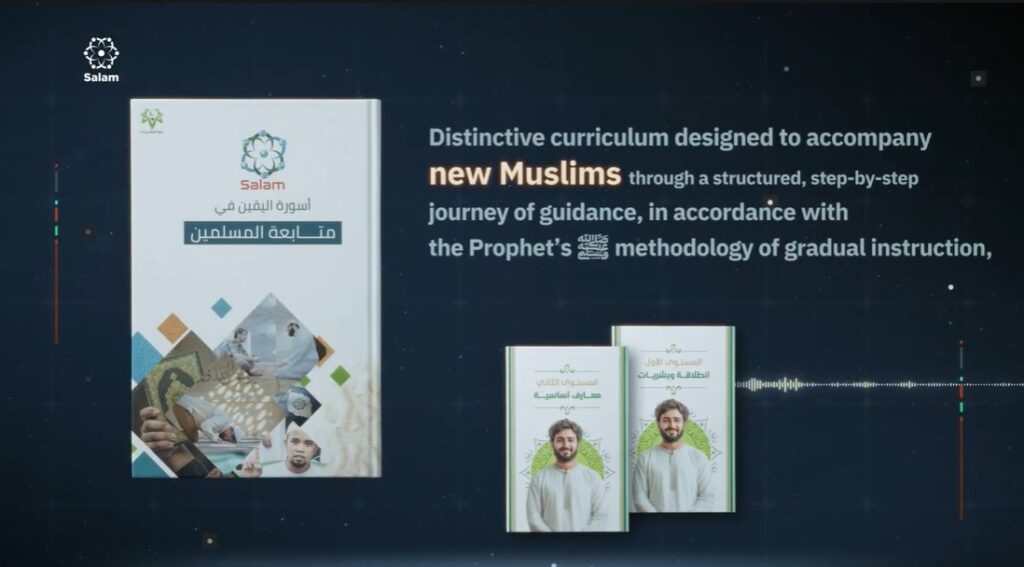
Begin Your Structured Journey: Asawirat Al-Yaqeen — Bracelets of Certainty
For those who have embraced Islam — or who are seriously on the threshold — the Asawirat Al-Yaqeen (Bracelets of Certainty) program provides the structured, compassionate path forward:
- Stage One — The Foundation: The Shahada, its meaning, the pillars of Islam, prayer, purification
- Stage Two — The Construction Phase: The six pillars of Iman, zakat, fasting, the Seerah of the Prophet (PBUH)
- Stage Three — The Consolidation Phase: Spiritual refinement, tawbah, Islamic etiquette, practical life rulings
- Stage Four — The Empowerment Phase: Contemporary issues, Islamic theology, the Quran as a life roadmap
Over 114,588 new Muslims across 140 countries have completed this journey. The program is compassionate, evidence-grounded, and free of confusion.
Reach out directly to the Salam Center team to start the Asawirat Al-Yaqeen (Bracelets of Certainty) program for FREE.
Summary
Islam and Judaism share a common Abrahamic origin. Judaism’s accumulated theological layers — spanning the Torah, Talmud, and rabbinic literature — contain serious deviations from original Abrahamic monotheism: anthropomorphic descriptions of Allah, tribal exclusivism, slanders against the prophets, and the denial of Muhammad’s prophethood despite recognizing him. The Quran addresses these deviations systematically across eleven documented categories, from calling Ezra the son of Allah to claiming Paradise is exclusively for Jews.
Islam affirms itself as the final, divinely preserved restoration of the original monotheistic message — the very message the prophets of Israel carried and that human alteration subsequently distorted. Every sincere seeker who examines this comparison with honesty will find that Islam’s call is not foreign to the Jewish prophetic tradition; it is that tradition in its original, uncorrupted, and universally addressed form.
Frequently Asked Questions
Is the Jewish concept of God the same as the Islamic concept of Allah?
The Torah and Talmud contain descriptions of Yahweh as tiring, regretting, forgetting, taking physical form, and being defeated by a human in a wrestling match — all of which contradict Islamic tawhid absolutely. The Islamic concept of Allah in Surah Al-Ikhlas (112:1–4) is pure, without any such attributes.
Why does the Quran criticize the Jewish people directly?
The Quran’s critique is theological and specific — not ethnic. It identifies categories of deviation from correct belief: including shirk, slander of prophets, denial of divine revelation, and rejection of Muhammad (PBUH) despite recognizing him. The Quran simultaneously honors the Children of Israel for the genuine revelation they received and calls them back to the original monotheism all the prophets carried.
Did Judaism originally teach what Islam teaches?
Yes — in its essential origin. Pure monotheism, submission to one Creator, honoring His prophets, and following divine law are the core of both. The Quran states that the original Torah contained guidance and light (Quran 5:44). Islam’s claim is that the Torah was subsequently altered — both in wording and interpretation — while the Quran remains divinely protected as the final preserved guidance for all humanity.
Curious about Islam?
Journey towards clarity and purpose. Our team is here to support you in your search for truth and spiritual guidance.
Embrace the Truth