What Does the Quran Say About Forgiveness?
The Quran teaches that Allah’s forgiveness is limitless, offered to anyone who turns to Him with sincerity, and that this same generosity is asked of believers toward one another.
Two of Allah’s 99 names, Al-Ghafoor (the All-Forgiving) and Ar-Raheem (the Merciful), appear together dozens of times across the Quran. That repetition is deliberate. A reader moving through the Quran encounters forgiveness in the context of major sin, minor slights, business disputes, and family conflict.
The message stays consistent: Allah pardons generously, and He asks His servants to extend a portion of that same generosity to each other.
What Does The Quran Say About Forgiveness?
Allah addresses forgiveness directly and without qualification in Surah Az-Zumar, telling even those who have sinned excessively that despair is never the right response. The verse was revealed to comfort believers who feared their past had placed them beyond reach.
قُلْ يَا عِبَادِيَ الَّذِينَ أَسْرَفُوا عَلَىٰ أَنْفُسِهِمْ لَا تَقْنَطُوا مِن رَّحْمَةِ اللَّهِ ۚ إِنَّ اللَّهَ يَغْفِرُ الذُّنُوبَ جَمِيعًا ۚ إِنَّهُ هُوَ الْغَفُورُ الرَّحِيمُ
“Say, ‘O My servants who have transgressed against themselves [by sinning], do not despair of the mercy of Allah. Indeed, Allah forgives all sins. Indeed, it is He who is the Forgiving, the Merciful.'” (Quran 39:53)
The wording matters here. Allah does not say He forgives most sins, or forgives sins under certain conditions. He says He forgives them jamee’an, all of them, for anyone who returns to Him.
Classical commentators, including those who worked within the methodology of Ahlus Sunnah wal Jama’ah, treat this as the clearest single statement on the scope of divine mercy in the entire Quran.
It sits alongside the broader Islamic doctrine of faith in Islam, where hope in Allah’s mercy is treated as a pillar of a healthy relationship with Him, distinct from presumption.
Allah Describe Himself Through Forgiveness
The Quran does not present forgiveness as one attribute among many. It presents it as central to how Allah introduces Himself to His creation.
نَبِّئْ عِبَادِي أَنِّي أَنَا الْغَفُورُ الرَّحِيمُ
“[O Muhammad], inform My servants that it is I who am the Forgiving, the Merciful.” (Quran 15:49)
The Arabic root of Ghafoor, gh-f-r, carries the sense of covering and shielding, the same root found in the word for a soldier’s helmet.
When Allah forgives, the concept is not a bare legal pardon. It conceals the sin, removes its trace, and protects the believer from its consequences.
This ties into the broader question of how Islam views the nature of God: not a distant judge keeping score, but a Lord whose default posture toward a repentant servant is covering, not exposure.
Learn More About Islam
Discover the beauty, teachings, and wisdom of Islam in a clear and welcoming way. Start exploring and deepen your understanding today.
Learn MoreWhoever Wrongs Himself and Seeks Forgiveness Will Find Allah Forgiving
This verse sits in Surah An-Nisa, a chapter largely concerned with justice and social conduct. It applies the promise of forgiveness to something specific: not abstract sinfulness, but the ordinary human pattern of wronging oneself or others and then genuinely turning back.
وَمَن يَعْمَلْ سُوءًا أَوْ يَظْلِمْ نَفْسَهُ ثُمَّ يَسْتَغْفِرِ اللَّهَ يَجِدِ اللَّهَ غَفُورًا رَّحِيمًا
“And whoever does a wrong or wrongs himself but then seeks forgiveness of Allah will find Allah Forgiving and Merciful.” (Quran 4:110)
The result, “will find,” is stated as something close to guaranteed for the one who takes that step.
Allah Is the Perpetual Forgiver for Those Who Repent, Believe, and Do Good
Ibn Katheer’s tafsir on this verse identifies four elements bound together here: repentance, faith, righteous action, and staying on that path afterward.
وَإِنِّي لَغَفَّارٌ لِّمَن تَابَ وَآمَنَ وَعَمِلَ صَالِحًا ثُمَّ اهْتَدَىٰ
“But indeed, I am the Perpetual Forgiver of whoever repents and believes and does righteousness and then continues in guidance.” (Quran 20:82)
The word used for “Forgiver,” Ghaffar, is an intensive form, conveying repetition, someone who forgives again and again, not a single pardon issued once and closed.
Ask Forgiveness of Your Lord, for He Is Ever a Perpetual Forgiver
This verse comes from Surah Nuh, describing Prophet Nuh’s (Noah’s) own call to his people.
فَقُلْتُ اسْتَغْفِرُوا رَبَّكُمْ إِنَّهُ كَانَ غَفَّارًا
“And said, ‘Ask forgiveness of your Lord. Indeed, He is ever a Perpetual Forgiver.'” (Quran 71:10)
What follows in the next verses ties seeking forgiveness to tangible provision, rain, wealth, and children, showing that istighfar (seeking forgiveness) was presented by the prophets as something that reorders a person’s whole life, not only their standing in the Hereafter.
Your Lord Is Vast in Forgiveness
The word used here, wasi’, means vast or expansive, the same root applied elsewhere to Allah’s knowledge and provision.
إِنَّ رَبَّكَ وَاسِعُ الْمَغْفِرَةِ
“Indeed, your Lord is vast in forgiveness.” (Quran 53:32)
The verse places forgiveness in the same category as Allah’s other limitless attributes rather than treating it as something rationed out carefully.
Allah Pardons Much of What Befalls You
This verse acknowledges a hard reality, that hardship is often connected to human wrongdoing, while immediately balancing it: Allah overlooks far more than He holds people accountable for.
وَمَا أَصَابَكُم مِّن مُّصِيبَةٍ فَبِمَا كَسَبَتْ أَيْدِيكُمْ وَيَعْفُو عَن كَثِيرٍ
“And whatever strikes you of disaster is for what your hands have earned; but He pardons much.” (Quran 42:30)
Many classical commentators read “He pardons much” as a reassurance that the trials a person actually faces are only a small fraction of what their errors might otherwise deserve.
The Quran Command Forgiveness Between People
Yes, and Surah Ash-Shura is direct about it. The verse first establishes a right to justice, then places something higher above it.
وَجَزَاءُ سَيِّئَةٍ سَيِّئَةٌ مِّثْلُهَا ۖ فَمَنْ عَفَا وَأَصْلَحَ فَأَجْرُهُ عَلَى اللَّهِ ۚ إِنَّهُ لَا يُحِبُّ الظَّالِمِينَ
“And the retribution for an evil act is an evil one like it, but whoever pardons and makes reconciliation – his reward is [due] from Allah. Indeed, He does not like wrongdoers.” (Quran 42:40)
The structure of this verse is worth sitting with. Islam does not deny a wronged person the right to an equal response; that right is affirmed in the same breath.
But the verse immediately opens a better door: choosing to pardon instead, and actively working toward reconciliation, moves the reward out of human hands and places it directly with Allah.
A retaliation, even a just one, ends the matter between two people. A pardon opens a transaction with Allah Himself.
Forgiveness Is Considered A Virtue Higher Than Charity In The Quran
In certain situations, yes. Surah Al-Baqarah makes a comparison that many readers find unexpected on first encounter.
قَوْلٌ مَّعْرُوفٌ وَمَغْفِرَةٌ خَيْرٌ مِّن صَدَقَةٍ يَتْبَعُهَا أَذًى ۗ وَاللَّهُ غَنِيٌّ حَلِيمٌ
“Kind speech and forgiveness are better than charity followed by injury. And Allah is Free of need and Forbearing.” (Quran 2:263)
This verse addresses a specific human failure: giving charity and then wounding the recipient’s dignity through a reminder of the favor, or through public mention of it.
Allah states plainly that a gentle word and a willingness to overlook a person’s fault outweighs that kind of charity.
The lesson extends beyond almsgiving. It establishes that the manner of a person’s conduct toward others, patient, forgiving, free of humiliation, carries real weight in the Quranic value system, sometimes weighing more than the outward act itself.
Allah Praises Those Who Forgive Others
Surah Al Imran ties forgiveness to a broader description of righteous character, placed among the traits Allah says He loves.
الَّذِينَ يُنفِقُونَ فِي السَّرَّاءِ وَالضَّرَّاءِ وَالْكَاظِمِينَ الْغَيْظَ وَالْعَافِينَ عَنِ النَّاسِ ۗ وَاللَّهُ يُحِبُّ الْمُحْسِنِينَ
“Who spend [in the cause of Allah] during ease and hardship and who restrain anger and who pardon the people – and Allah loves the doers of good.” (Quran 3:134)
Three qualities appear together in this single verse: generosity regardless of circumstance, restraint of anger, and pardoning others.
The Quran does not treat these as separate virtues that happen to coexist. It treats them as a package, the profile of a muhsin, someone whose good conduct is deliberate and consistent rather than occasional.
Restraining anger is listed as the step before pardon, a sequence that reflects how the Quran generally frames forgiveness: not as a passive feeling, but as an active discipline exercised at the exact moment it is hardest to exercise.
How Did Prophet Muhammad Teach and Practice Forgiveness?
The Prophet Muhammad (PBUH) translated these verses into lived instruction, and Sahih Hadith collections preserve both his direct teaching and his example under real provocation.
عَنْ أَبِي هُرَيْرَةَ قَالَ قَالَ رَسُولُ اللهِ صَلَّى اللهُ عَلَيْهِ وَسَلَّمَ: مَا نَقَصَتْ صَدَقَةٌ مِنْ مَالٍ وَمَا زَادَ اللَّهُ عَبْدًا بِعَفْوٍ إِلاَّ عِزًّا
“Charity does not decrease wealth, no one forgives except that Allah increases his honor, and no one humbles himself for the sake of Allah except that Allah raises his status.” (Sahih Muslim 2588)
This hadith directly contradicts an instinct many people carry, that forgiving a wrongdoer is a kind of loss or weakness. The Prophet (PBUH) states the opposite outcome: a person who forgives gains honor with Allah, not honor in the eyes of others necessarily, but a real elevation in status before his Lord. The reward is described using the same word, izzan, that denotes strength and dignity, not surrender.
What Did the Prophet Say About Allah’s Mercy Toward Forgiveness?
A hadith agreed upon by both Bukhari and Muslim describes something Allah is reported to have written about Himself before creation existed.
لَمَّا قَضَى اللَّهُ الْخَلْقَ كَتَبَ فِي كِتَابِهِ فَهُوَ عِنْدَهُ فَوْقَ الْعَرْشِ: إِنَّ رَحْمَتِي غَلَبَتْ غَضَبِي
“When Allah decreed the Creation, He pledged Himself by writing in His book which is laid down with Him: My mercy prevails over My wrath.” (Sahih Bukhari and Sahih Muslim, cited via sunnah.com)
This hadith addresses the question underneath a great deal of anxiety about forgiveness: is Allah’s mercy the exception or the rule?
The Prophet’s report answers plainly. Mercy is written as the governing principle, established before creation began, with wrath positioned as secondary to it.
This is one of the texts scholars of Ahlus Sunnah wal Jama’ah point to most often when explaining that despair of Allah’s mercy is itself considered a serious error in Islamic theology, not a sign of humility.
Read Also: What Does the Quran Say About Forcing Religion on Others?
How Did The Prophet Forgive Those Who Wronged Him Personally?
Beyond his verbal teaching, the Prophet’s own biography (Seerah) is the clearest demonstration of these verses in practice.
At the conquest of Mecca, facing the very people who had exiled, boycotted, and fought him for over a decade, he chose collective pardon over the retaliation his position would have justified.
Read Also: Does the Quran Say to Follow Hadith?
What Are The Conditions For Allah’s Forgiveness In The Quran?
The Quran does not describe forgiveness as automatic regardless of a person’s state. Several conditions recur across the relevant verses:
Step 1: Sincere turning to Allah
The forgiveness described in 39:53 is directed at those who address Allah directly, acknowledging their own transgression rather than minimizing it.
Step 2: Genuine repentance (Tawbah)
Classical scholarship within Ahlus Sunnah wal Jama’ah outlines specific conditions for accepted repentance: stopping the sin, sincere regret, and firm intention not to return to it, with restitution to any wronged person where applicable.
Step 3: Avoiding despair on one hand and presumption on the other
The Quran positions hope in Allah’s mercy and fear of His justice as a balanced pair, not a license to sin carelessly while assuming automatic pardon.
This structure reflects the broader consistency found across the nine principles of Islam, where mercy and accountability are held together rather than treated as competing ideas.
Read Also: Does the Quran Say to Follow Prophet Muhammad?
Learn More About Islam
Discover the beauty, teachings, and wisdom of Islam in a clear and welcoming way. Start exploring and deepen your understanding today.
Learn MoreGet Guidance And Support From Salam Platform
If these verses raised more questions than they answered, that is a normal and welcome response. The Quran rewards a second and third reading.
Explore more Quranic themes and their evidences on the Salam Platform
Read reflections and deeper studies on the Salam blog
Reach out directly — our team is ready to listen, guide, and welcome you.

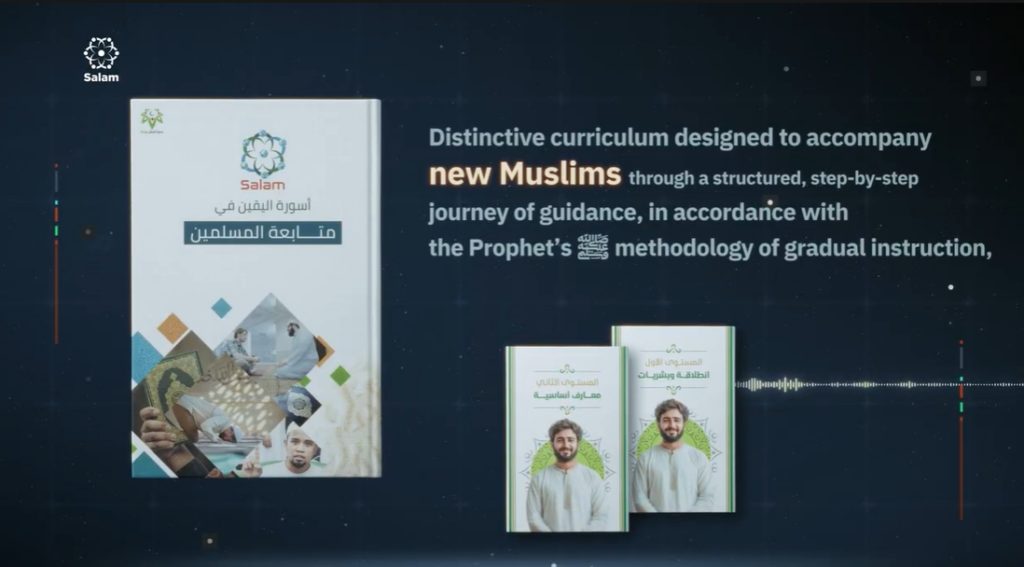
If you are exploring Islam personally, or have recently taken your Shahada, the Salam Center team offers a structured path forward through the Asawirat Al-Yaqeen (Bracelets of Certainty) program:
- A four-stage curriculum moving from foundational practice through advanced understanding
- Early lessons cover the pillars of faith, prayer, and purification
- Later stages address repentance, the Seerah of the Prophet, and practical daily rulings
- Designed specifically for new Muslims seeking steady, guided growth rather than scattered information
General inquiries, questions about entering Islam, or interest in joining the program are all welcome through the same contact channel above.
Reach out directly to the Salam Center team to start the Asawirat Al-Yaqeen (Bracelets of Certainty) program for FREE.
Summary
The Quran treats forgiveness as central to Allah’s own identity, not a peripheral virtue, repeating the names Al-Ghafoor and Ar-Raheem throughout its verses. Human forgiveness mirrors this pattern, earning direct reward when chosen over retaliation or resentment.
Prophet Muhammad’s teaching and Seerah confirm that pardoning others raises a person’s standing rather than lowering it. Sincere repentance, paired with hope rather than despair, opens the door the Quran describes as always open.
Frequently Asked Questions
Does the Quran say Allah forgives all sins?
Yes. Quran 39:53 states plainly that Allah forgives all sins for those who turn to Him and do not despair of His mercy, using the word “jamee’an,” meaning without exception, for anyone who sincerely repents.
Can a person’s sins be too great for Allah to forgive?
No. Quran 39:53 addresses this exact fear directly, telling those who have “transgressed against themselves” not to despair of Allah’s mercy, since He describes Himself as Al-Ghafoor, the All-Forgiving, without qualifying the scope of what He forgives.
Does the Quran connect human forgiveness to receiving Allah’s forgiveness?
Yes. Multiple verses and hadiths frame human forgiveness as connected to divine forgiveness, asking believers “Would you not love for Allah to forgive you?” as a direct incentive for extending forgiveness to others in daily conduct.
Curious about Islam?
Journey towards clarity and purpose. Our team is here to support you in your search for truth and spiritual guidance.
Embrace the Truth