
Nobel Scientists Who Believe in God
Nobel scientists who believe in God are far more common than mainstream secular culture would have you expect. Among the most decorated scientific minds in human history — people who have probed the atom, mapped the cosmos, and decoded the chemistry of life itself — a striking number have arrived at the same conclusion: behind all of this order, there is a Creator.
This is not a fringe position or a relic of pre-modern science. It is the considered conviction of men and women who spent their lives in laboratories and lecture halls, wielding the most rigorous tools of human inquiry.
Their testimony matters — not as a substitute for revelation, but as powerful confirmation of what the Quran declared centuries before the first electron was observed:
سَنُرِيهِمْ آيَاتِنَا فِي الْآفَاقِ وَفِي أَنفُسِهِمْ حَتَّىٰ يَتَبَيَّنَ لَهُمْ أَنَّهُ الْحَقُّ
“We will show them Our signs in the horizons and within themselves until it becomes clear to them that it is the truth.” (Quran 41:53)
What follows is a numbered look at Nobel laureates whose scientific greatness walked hand in hand with genuine faith in God.
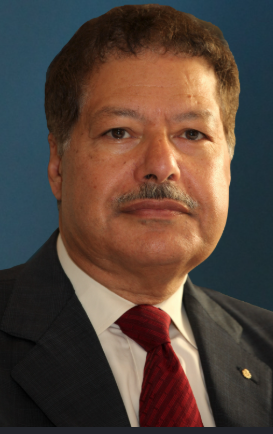
1. Ahmed Zewail — The Father of Femtochemistry
Ahmed Zewail is the most fitting place to begin. Born in Damanhur, Egypt, in 1946, he became the first Arab scientist to win the Nobel Prize in Chemistry (1999), honored for pioneering femtochemistry — the study of chemical reactions at the femtosecond timescale, a millionth of a billionth of a second. He essentially gave humanity the ability to photograph atoms in motion.
Throughout his life, Zewail was openly and unapologetically Muslim. He spoke and wrote about his belief in Allah as the ultimate source of both his personal orientation and his scientific curiosity.
In multiple interviews, he stated plainly that his faith — rooted in his upbringing with the mosque, in his love of his Egyptian homeland, and in his lived experience — made him who he was. He described his belief in God as inseparable from his belief in life, in the universe, and in himself.
Zewail understood scientific discovery as an act of contemplating the signs of the Creator — a direct echo of the Quranic principle that the universe is filled with ayat (signs) for those who reflect. At Caltech, where he served as the Linus Pauling Chair Professor of Chemical Physics, his commitment to science was inseparable from his sense of purpose rooted in his Islamic identity.
He donated his entire Nobel Prize money to establish a university in Egypt and died in 2016 having demonstrated that the highest peak of scientific achievement is fully compatible with — and enriched by — sincere faith in Allah.
2. Abdus Salam — Nobel Physicist
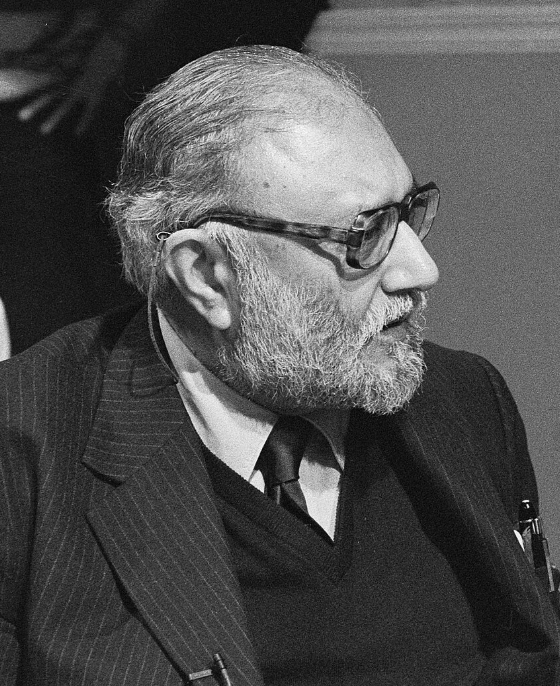
Abdus Salam shared the Nobel Prize in Physics in 1979 for his contribution to the electroweak unification theory — one of the most significant achievements in theoretical physics, merging the electromagnetic force and the weak nuclear force into a single mathematical framework. Born in Jhang, in what is now Pakistan, he was a devout Muslim who wore that identity openly throughout his scientific career.
Salam frequently cited Quranic verses in his scientific lectures and public addresses, drawing explicit connections between the Quran’s invitation to reflect on creation and the physicist’s drive to uncover the laws governing that creation.
He saw the mathematical unity underlying nature’s forces as a sign — an aya — of the divine unity Islam proclaims. In one celebrated address, he opened by reciting a verse from the Quran about the orderliness of the cosmos — a deliberate act of public testimony from a man who had won the highest prize his field could offer.
His life models the intellectual and spiritual integrity Islam calls for: pursuing knowledge as ‘ibadah (worship), and finding in the depths of that knowledge not contradiction but confirmation.
3. Max Planck — The Founder of Quantum Theory
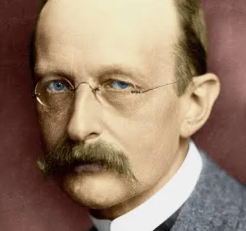
Max Planck received the Nobel Prize in Physics in 1918 for his discovery of energy quanta — the foundational insight that launched quantum mechanics and permanently altered our understanding of physical reality. He is, by any measure, one of the most consequential scientists in human history.
Planck was a man of deep theistic conviction who spoke and wrote extensively about his belief in God. He stated publicly that both religion and science require a belief in God — that for the scientist, God stands as the crown and destination of every serious thought process about the universe. He saw the lawfulness and mathematical order embedded in nature as pointing unmistakably to a rational, purposeful Mind.
In a 1944 speech delivered in Florence, later preserved in the Archiv zur Geschichte der Max-Planck-Gesellschaft, Planck made one of his most striking statements: that behind the force holding atoms together, behind all of matter itself, one must posit a conscious and intelligent spirit.
He described this as the conclusion not of religious sentiment, but of scientific reasoning carried to its honest end.
Planck’s reflections point toward something Islam has always maintained: the created order is not self-explanatory. The deeper science goes, the more it encounters a precision and intelligibility that demands an explanation beyond nature itself. This is precisely why faith in Islam is rooted in aql (reason) — not in opposition to it.
Thinking About Converting to Islam?
We are here to guide you step by step with sincerity, knowledge, and care. Reach out and begin your journey with confidence.
Start Your Journey4. Arthur Compton — Nobel Physicist
Arthur Compton won the Nobel Prize in Physics in 1927 for discovering the Compton effect — the shift in wavelength of X-rays when they scatter off electrons — a result that confirmed the particle nature of electromagnetic radiation and deepened the foundations of quantum theory.
Compton was one of the most outspoken advocates for the compatibility of science and theistic belief among his scientific generation.
He stated plainly that a scientist who investigates the nature of things — examining the precision of natural laws, the complexity of life, the fine-tuning of physical constants — finds it far more reasonable to affirm a Creator than to deny one.
He saw belief in God not as an emotional retreat from reason but as the most intellectually honest response to what science actually reveals.
The existence of rational laws governing an ordered universe, he argued, implies a rational Lawgiver.
For Compton, the more deeply he engaged with the physics of light and matter, the more undeniable that conclusion became.
This reasoning finds its most complete expression in the Islamic conception of God’s nature — a Being who is not merely a philosophical abstraction but Al-Hakim (the All-Wise), whose wisdom is imprinted into every natural law and every atom of creation.
5. William D. Phillips — Nobel Laureate in Physics
William D. Phillips shared the Nobel Prize in Physics in 1997 for developing methods to cool and trap atoms using laser light — work with profound implications for atomic clocks, quantum computing, and the fundamental understanding of matter.
He has held senior positions at the National Institute of Standards and Technology (NIST) and is a member of the Pontifical Academy of Sciences.
Phillips has spoken clearly and publicly about his belief in God, including in academic and scientific forums. In a letter, Phillips stated: “I believe in God. In fact, I believe in a personal God who acts in and interacts with the creation. I believe that the observations about the orderliness of the physical universe, and the apparently exceptional fine-tuning of the conditions of the universe for the development of life suggest that an intelligent Creator is responsible.”
He has directly challenged the notion that serious scientists are, or should be, non-believers — calling that assumption false both statistically and philosophically.
For Phillips, the universe’s stunning mathematical elegance and the very fact that human minds can comprehend it at all are not accidents. They are pointers toward a Creator.
His conviction echoes what Islam presents as the clearest conclusion of sound reasoning: the universe points to monotheism — the worship of one God, undivided, incomparable, and the source of all that exists.
6. Charles Townes — Nobel Prize Winner
Charles Townes received the Nobel Prize in Physics in 1964 for his work on quantum electronics, particularly foundational contributions to the development of the laser and maser. He is also one of the most philosophically explicit Nobel laureates on the question of God.
Townes publicly stated his belief in the existence of God on many occasions. He declared plainly: “I strongly believe in the existence of God, based on intuition, observations, logic, and also scientific knowledge.” He argued in writing that science and the search for ultimate truth are, in the long run, converging — that the further science advances, the more it arrives at questions demanding answers that lie beyond what scientific instruments can measure.
He authored a widely cited essay titled “The Convergence of Science and Religion,” in which he argued that the most fundamental questions science raises — Why does the universe exist? Why does it follow laws? Why are those laws knowable? — cannot be answered by science itself. They point beyond. He understood this not as a failure of science but as its natural horizon.
The God Townes was pointing toward — a rational, purposeful, singular Creator — is the God whom Islam presents with perfect clarity. God in Islam is not a theological compromise or cultural tradition. He is Al-Haqq — the Absolute Truth — the only answer that fully satisfies where science’s questions end.
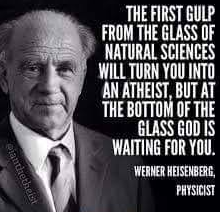
7. Werner Heisenberg — Nobel Prize in Physics
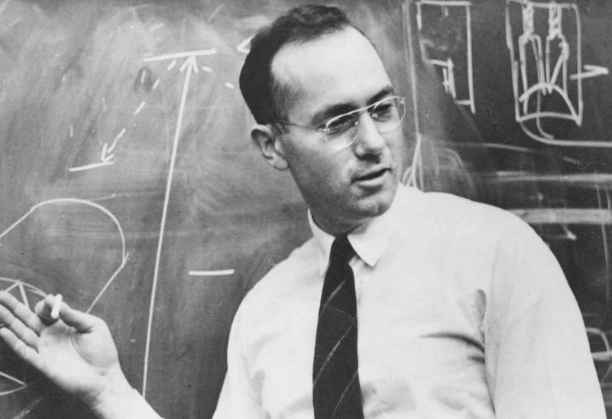
Werner Heisenberg received the Nobel Prize in Physics in 1932 for the creation of quantum mechanics — specifically, for developing matrix mechanics, the first complete and mathematically rigorous formulation of quantum theory. His uncertainty principle remains one of the most discussed results in the history of physics.
Heisenberg maintained a theistic worldview throughout his intellectual life. He engaged seriously with the philosophical implications of quantum mechanics and concluded that the further one penetrates into the foundations of matter, the more one encounters something that cannot be explained by material processes alone.
He articulated a position that science, at its frontier, arrives at questions it cannot answer from within — and that these questions open naturally onto the metaphysical. He described the order of nature as a reflection of a deeper order, one that science points toward but cannot ultimately contain.
In his view, the very intelligibility of the cosmos — the fact that human minds can map its laws with mathematics — is itself a mystery that materialism leaves untouched.
Heisenberg’s openness is significant precisely because quantum mechanics — the field he helped create — is often misused in popular culture to suggest that reality is fundamentally chaotic and ungoverned.
Heisenberg himself drew the opposite conclusion: the mathematical structure underlying quantum phenomena is, if anything, more astonishing than classical physics, and the demand for a rational explanation of that structure only intensifies.
A Note on the Path These Nobel Scientists Who Believe in God Were Walking
Every scientist on this list arrived at belief through honest inquiry. Some were born into faith and found science deepening rather than eroding it. Others — like Francis Collins — traveled through atheism and came out the other side.
What unites them is the recognition that the universe is not self-explanatory, that reason does not terminate in materialism, and that behind the equations there is a Mind.
Many of these scientists affirm the existence of a Creator through the lens of the tradition they were born into or encountered. Islam does not dismiss this. The Quran acknowledges that people in every era have had access to something of the truth, and it views other traditions with a nuanced lens — honoring what is true in them while calling toward what is complete.
The God these scientists gesture toward — the rational Creator, the source of order and moral reality, the one whose signs fill the horizons and human souls — is Al-Ilah, the One whom Islam calls humanity to worship without partner, without intermediary, and without distortion.
Any sincere seeker who has followed reason toward belief in a Creator is, in a real sense, already walking the path whose final destination is Islam.
Thinking About Converting to Islam?
We are here to guide you step by step with sincerity, knowledge, and care. Reach out and begin your journey with confidence.
Start Your JourneyExplore Further with the Salam Platform
If this article has stirred something in you — a question, a curiosity, a desire to go deeper — you are exactly the person the Salam Center was built for.
The Salam Platform exists as a free, open resource for everyone seeking honest answers about Islam — whether you are asking for the first time or have been wondering for years.
Browse the Salam blog for articles on Islamic belief, the nature of Allah, the evidence for the Quran, and much more.
Visit the Salam Platform to explore organized learning paths designed for seekers at every stage.
Have a specific question? Reach out directly — the Salam Center team is here to listen and respond.

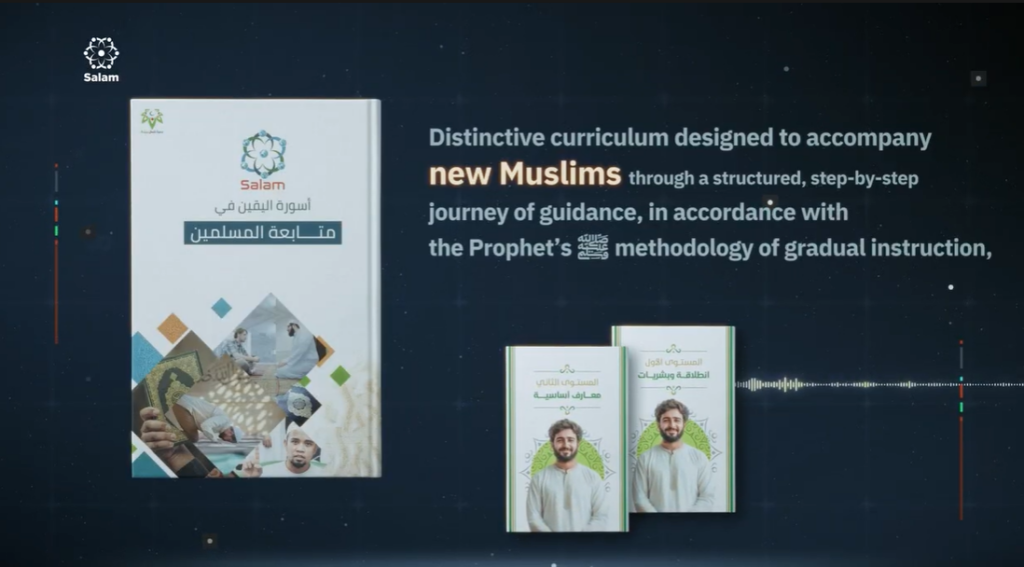
If you have already taken your Shahada or are seriously considering Islam, you are warmly invited to join the Asawirat Al-Yaqeen (Bracelets of Certainty) program — a structured, compassionate curriculum designed specifically for new Muslims:
- Stage One lays the spiritual and practical foundation: the Shahada, prayer, purification, and the pillars of faith
- Stage Two builds your knowledge of Iman, fasting, Zakat, and the life of the Prophet (PBUH)
- Stage Three nurtures your character, ethics, and understanding of Islamic daily life
- Stage Four empowers you with theological depth, contemporary answers, and a lifelong roadmap rooted in the Quran
The program has guided over 114,000 new Muslims across 140 countries — and it is waiting for you.
Reach out directly to the Salam Center team to start the Asawirat Al-Yaqeen (Bracelets of Certainty) program for FREE.
Conclusion
Scores of Nobel laureates across physics, chemistry, and medicine have publicly affirmed belief in God — including Muslim scientists Ahmed Zewail and Abdus Salam, both of whom understood their scientific work as an act of reflecting on the signs of the Creator.
The convergence of elite scientific minds on theistic belief dismantles the assumption that rigorous inquiry leads toward atheism. Figures like Max Planck, William Phillips, and Charles Townes reached their convictions precisely because of what their science revealed — each arriving at the conclusion that an ordered, intelligible universe requires a rational Creator.
Every sincere mind that follows reason toward a Creator is walking a path the Quran has always illuminated. Islam presents the clearest, most complete answer to the questions these scientists raised — and it extends an open invitation to anyone ready to take the next step.
Curious about Islam?
Journey towards clarity and purpose. Our team is here to support you in your search for truth and spiritual guidance.
Embrace the Truth