What Beliefs Do Islam and Christianity Have in Common
| Key Takeaways |
| Islam and Christianity both trace their origin to the same Abrahamic lineage — but only Islam preserved the pure monotheism that lineage carried. |
| Jesus (Isa, peace be upon him) is one of the greatest prophets in Islam — honored, loved, and awaited for his return — but he is a servant of Allah, never divine. |
| The moral overlaps that do exist between Islam and the Christian tradition — modesty, charity, prohibition of murder — reflect surviving fragments of original divine guidance, not equivalent religious authority. |
When people ask what Islam and Christianity have in common, the question deserves a precise, honest answer — not a diplomatic one. There are genuine points of contact between the two traditions, but they require careful framing.
Most of what Islam and original Christianity shared was the preserved truth of divine revelation. What Christianity became, after centuries of human alteration, councils, and theological invention, is a different matter entirely.
The Quran is not ambiguous on this. Allah says:
شَرَعَ لَكُم مِّنَ الدِّينِ مَا وَصَّى بِهِ نُوحًا وَالَّذِي أَوْحَيْنَا إِلَيْكَ وَمَا وَصَّيْنَا بِهِ إِبْرَاهِيمَ وَمُوسَى وَعِيسَى أَنْ أَقِيمُوا الدِّينَ وَلَا تَتَفَرَّقُوا فِيهِ
“He has ordained for you of religion what He enjoined upon Noah and that which We have revealed to you, [O Muhammad], and what We enjoined upon Abraham and Moses and Jesus — to establish the religion and not be divided therein.” (Quran 42:13)
The Prophet Muhammad (PBUH) said:
“Both in this world and in the Hereafter, I am the nearest of all the people to Jesus, the son of Mary. The prophets are paternal brothers; their mothers are different, but their religion is one.” (Sahih Bukhari)
The religion of all prophets was one: pure submission to Allah alone, with no partners, no intermediaries, and no incarnations.
What this article does is distinguish honestly — identifying where genuine overlap exists between Islamic truth and what survives in the Christian tradition, while naming clearly where Christianity departed from that truth entirely.
1. Islam and Christianity Trace Their Lineage to Ibrahim (Abraham), Peace Be Upon Him
Ibrahim (peace be upon him) is the shared patriarch — claimed by Islam, Christianity, and Judaism alike. But lineage and fidelity are two different things. Ibrahim’s religion was pure, uncompromising submission to Allah alone. The Quran records his declaration:
إِذْ قَالَ لَهُ رَبُّهُ أَسْلِمْ قَالَ أَسْلَمْتُ لِرَبِّ الْعَالَمِينَ
“When his Lord said to him, ‘Submit,’ he said, ‘I have submitted [in Islam] to the Lord of the worlds.'” (Quran 2:131)
He worshipped Allah alone, rejected every form of idolatry, and passed that conviction to his descendants. Christianity’s claim to Abrahamic lineage is historical.
Its theological claim — that the same God is a Trinity of Father, Son, and Holy Spirit — is a departure from everything Ibrahim stood for. Islam alone maintained, without alteration, the core of what Ibrahim carried.
2. Islam Upholds True Tawheed Like The Original Unaltered Christianity
This must be stated with full clarity: Islam and the altered Christianity do not share a belief in one God in any theologically equivalent sense.
Islam’s foundation is Tawheed — the absolute, undivided, uncompromised oneness of Allah. He has no son, no partner, no equal, no incarnation, and no form that can be depicted or divided. The Quran states this with direct, unambiguous finality:
قُلْ هُوَ اللَّهُ أَحَدٌ اللَّهُ الصَّمَدُ لَمْ يَلِدْ وَلَمْ يُولَدْ وَلَمْ يَكُن لَّهُ كُفُوًا أَحَدٌ
“Say, ‘He is Allah, [who is] One. Allah, the Eternal Refuge. He neither begets nor is born. Nor is there to Him any equivalent.'” (Quran 112:1–4)
Christianity’s mainstream doctrine today — the Trinity — holds that God is simultaneously Father, Son, and Holy Spirit, three persons sharing one divine essence. This doctrine was formalized at the Council of Nicaea in 325 CE, more than three centuries after Isa (peace be upon him) was raised. It was a human theological construction, not a revelation.
The Quran addresses this directly and condemns it:
لَّقَدْ كَفَرَ الَّذِينَ قَالُوا إِنَّ اللَّهَ ثَالِثُ ثَلَاثَةٍ وَمَا مِنْ إِلَٰهٍ إِلَّا إِلَٰهٌ وَاحِدٌ
“They have certainly disbelieved who say, ‘Allah is the third of three.’ And there is no god except one God.” (Quran 5:73)
There is no softening of this position in Islamic theology. A Christian who believes in the Trinity is not believing in the same Allah that Muslims worship. The word “God” in English cannot paper over that fundamental theological chasm. To understand Islam’s position on monotheism and the absolute rejection of polytheism in all its forms, the Salam platform provides detailed resources rooted in Quranic evidence.
What the two traditions share on this point is only this: both claim to worship the Creator of the universe. Islam rests on preserved, unaltered revelation. Christianity’s claim rests on a centuries-long chain of theological revision that the Quran explicitly identifies as corruption.
3. Isa (Jesus) is Honored in Islam and in the Unaltered Christianity as a Prophet
Islam’s position on Isa (peace be upon him) is one of profound love and honor — combined with absolute theological clarity. He is one of the greatest prophets. He is the Messiah. He was born of a virgin. He performed miracles. He will return before the Last Day. Muslims love him, revere him, and cannot be Muslims without believing in him.
إِذْ قَالَتِ الْمَلَائِكَةُ يَا مَرْيَمُ إِنَّ اللَّهَ يُبَشِّرُكِ بِكَلِمَةٍ مِّنْهُ اسْمُهُ الْمَسِيحُ عِيسَى ابْنُ مَرْيَمَ وَجِيهًا فِي الدُّنْيَا وَالْآخِرَةِ وَمِنَ الْمُقَرَّبِينَ
“[And mention] when the angels said, ‘O Mary, indeed Allah gives you good tidings of a word from Him, whose name will be the Messiah, Jesus, the son of Mary — distinguished in this world and the Hereafter and among those brought near [to Allah].'” (Quran 3:45)
And yet the Quran is equally direct about what Isa (peace be upon him) himself never claimed:
وَإِذْ قَالَ اللَّهُ يَا عِيسَى ابْنَ مَرْيَمَ أَأَنتَ قُلْتَ لِلنَّاسِ اتَّخِذُونِي وَأُمِّيَ إِلَٰهَيْنِ مِن دُونِ اللَّهِ قَالَ سُبْحَانَكَ مَا يَكُونُ لِي أَنْ أَقُولَ مَا لَيْسَ لِي بِحَقٍّ
“And [beware the Day] when Allah will say, ‘O Jesus, Son of Mary, did you say to the people, ‘Take me and my mother as deities besides Allah?’ He will say, ‘Exalted are You! It was not for me to say what I had no right to say.'” (Quran 5:116)
The Quran further condemns the claim of Christ’s divinity with unambiguous language:
لَّقَدْ كَفَرَ الَّذِينَ قَالُوا إِنَّ اللَّهَ هُوَ الْمَسِيحُ ابْنُ مَرْيَمَ
“They have certainly disbelieved who say that Allah is the Messiah, the son of Mary.” (Quran 5:72)
Christianity’s central theological claim — that Jesus is God incarnate, the second person of the Trinity, whose crucifixion atones for human sin — contradicts Islamic theology at every point. Isa (peace be upon him) was not crucified.
Jesus was not the son of Allah. Jesus was not divine. Jesus did not die to save humanity. Jesus was a servant and messenger of Allah who delivered a pure message, which his followers then distorted after his departure.
The honor Islam gives Isa (peace be upon him) is real. The similarity between Islam and Christianity on this figure ends precisely where Christianity begins to claim his divinity.
Have Questions About Islam?
Our team is ready to answer your questions clearly and respectfully. Ask freely and receive honest guidance.
Ask Us Now4. Islam and Christianity Acknowledge That Allah Sent Divine Revelation
Islam affirms that the Torah given to Musa (Moses) and the Injeel (Gospel) given to Isa (peace be upon him) were authentic divine revelations. This is an article of faith. A Muslim cannot deny that these scriptures, in their original form, were true words from Allah.
The operative phrase is in their original form.
Allah guarantees the preservation of only one book:
إِنَّا نَحْنُ نَزَّلْنَا الذِّكْرَ وَإِنَّا لَهُ لَحَافِظُونَ
“Indeed, it is We who sent down the Quran and indeed, We will be its guardian.” (Quran 15:9)
No such guarantee was extended to the Torah or the Gospel. The Quran documents the alteration of previous scriptures explicitly:
مِّنَ الَّذِينَ هَادُوا يُحَرِّفُونَ الْكَلِمَ عَن مَّوَاضِعِهِ
“Among the Jews are those who distort words from their [proper] usages.” (Quran 4:46)
The Bible that exists today is not the original Injeel of Isa (peace be upon him). It is a collection of texts written decades after his raising, compiled by committees, translated through multiple languages, and shaped by theological debates of the third and fourth centuries.
The eleventh-century Andalusian scholar Ibn Hazm, in his landmark comparative religion work Al-Fisal fil-Milal wal-Ahwa’ wal-Nihal, documented the internal contradictions of the Biblical texts in rigorous detail, reaching the conclusion that they cannot be trusted as preserved revelation.
The Quran stands alone as the word of Allah that reached us intact, letter by letter, from the mouth of the Prophet (PBUH) to the present day. To understand why Muslims believe in the Quran, or to explore what Muslims believe about the Quran as a living, preserved miracle, the Salam platform provides the full theological foundation.
5. Both Traditions Believe in Angels as Real, Unseen Beings
Among the cleaner points of overlap: both Islam and the Christian tradition affirm that angels are real. They are unseen beings created by Allah to carry out His commands — they deliver revelation, record deeds, and are present at the moments of birth, death, and resurrection.
Belief in angels is one of the six pillars of faith in Islam. The Quran describes them:
لَّا يَعْصُونَ اللَّهَ مَا أَمَرَهُمْ وَيَفْعَلُونَ مَا يُؤْمَرُونَ
“They do not disobey Allah in what He commands them but do what they are commanded.” (Quran 66:6)
The Christian tradition similarly records the angel Jibril (Gabriel) appearing to Maryam, angels ministering to Isa (peace be upon him), and angels described as servants of Allah throughout both Testaments.
This is a point of genuine convergence — because it reflects the preserved remnant of the original divine message that was common to all prophetic traditions before distortion entered.
6. Islam and Christianity Affirm a Day of Judgment and Resurrection
Islam and the Christian tradition both affirm that physical death is not the end, that souls continue, and that there will be a Day when all are gathered and judged. On this broad framework, there is overlap.
كُلُّ نَفْسٍ ذَائِقَةُ الْمَوْتِ وَإِنَّمَا تُوَفَّوْنَ أُجُورَكُمْ يَوْمَ الْقِيَامَةِ
“Every soul will taste death, and you will only be given your [full] compensation on the Day of Resurrection.” (Quran 3:185)
The critical difference, however, must be named clearly. Islam holds that every individual stands before Allah on their own — judged for their own deeds, accountable for their own choices, without any intermediary to absorb their sins.
فَمَن يَعْمَلْ مِثْقَالَ ذَرَّةٍ خَيْرًا يَرَهُ — “Whoever does an atom’s weight of good will see it.” (Quran 99:7)
Christianity’s mainstream doctrine of atonement — the idea that Jesus died to absorb the sins of humanity, and that belief in his sacrifice grants salvation regardless of individual accountability — is theologically incompatible with this.
Islam rejects vicarious atonement entirely. No soul can carry the burden of another:
وَلَا تَزِرُ وَازِرَةٌ وِزْرَ أُخْرَىٰ
“And no bearer of burdens will bear the burden of another.” (Quran 35:18)
The shared belief in an afterlife and a Day of Judgment is real. The mechanism of salvation is fundamentally different — and that difference is not a minor theological nuance.
Read also: What Do Jews Believe About Jesus?
7. Both Traditions Recognize the Reality of Satan as a Real Adversary
Islam and the Christian tradition both affirm that Iblis (Satan) is a real being — not a metaphor for evil, not a psychological concept, but an actual creature who rejected Allah and now works to lead human beings astray.
قَالَ فَبِمَا أَغْوَيْتَنِي لَأَقْعُدَنَّ لَهُمْ صِرَاطَكَ الْمُسْتَقِيمَ
“[Iblees] said, ‘Because You have put me in error, I will surely sit in wait for them on Your straight path.'” (Quran 7:16)
The Christian scriptures similarly warn against Satan as a real adversary who seeks to mislead.
This convergence reflects a surviving fragment of authentic prophetic guidance — truth that was part of the original message given to every prophet and that has not been entirely erased from the Christian tradition despite centuries of alteration.
8. Islam and Christianity Share Many Moral Prohibitions
Here is a genuine area of substantive overlap, grounded in the fact that divine moral commands were consistent across prophetic missions.
The prohibitions of fornication, intoxicants, murder, and theft are found across Islamic and original Biblical teaching — because they came from the same source.
On fornication, the Quran is explicit:
وَلَا تَقْرَبُوا الزِّنَا إِنَّهُ كَانَ فَاحِشَةً وَسَاءَ سَبِيلًا
“Do not approach unlawful sexual intercourse. Indeed, it is ever an immorality and is evil as a way.” (Quran 17:32)
On the sanctity of human life:
مَن قَتَلَ نَفْسًا بِغَيْرِ نَفْسٍ أَوْ فَسَادٍ فِي الْأَرْضِ فَكَأَنَّمَا قَتَلَ النَّاسَ جَمِيعًا
“Whoever kills a soul unless for a soul or for corruption in the land — it is as if he had slain mankind entirely.” (Quran 5:32)
These moral prohibitions appear in the Christian scriptures as well. They represent the preserved moral backbone of original divine guidance — commands that endured across prophetic generations because human moral needs did not fundamentally change.
Where the Christian tradition maintained them, it maintained what was originally Islamic in spirit. Where it abandoned or qualified them, it departed from that original guidance.
Read also: What Do Muslims Believe About Jesus?
9. Both Traditions Command Modesty in Dress
Modesty in dress, particularly for women, is commanded in both the Quran and in the Christian scriptures. The Quran instructs:
وَقُل لِّلْمُؤْمِنَاتِ يَغْضُضْنَ مِنْ أَبْصَارِهِنَّ وَيَحْفَظْنَ فُرُوجَهُنَّ وَلَا يُبْدِينَ زِينَتَهُنَّ إِلَّا مَا ظَهَرَ مِنْهَا
“And tell the believing women to reduce [some] of their vision and guard their private parts and not expose their adornment, except that which [necessarily] appears thereof.” (Quran 24:31)
The original Christian teaching, preserved in Paul’s First Epistle to Timothy, gives nearly identical instruction about modest dress and covered heads for women.
The traditional garb of Catholic nuns — covering the hair and body — is structurally identical to the Islamic hijab. All classical depictions of Maryam (Mary), honored in both traditions, show her fully covered.
This is one of the genuine points of contact. The difference is that Islam maintains this command with full consistency and traces it directly to divine revelation.
Much of contemporary Christianity has softened or abandoned it entirely under cultural pressure — a departure from what the original teaching required.
10. Islam and Christianity Command Charity and Care for the Poor as a Divine Obligation
Zakat — structured, obligatory giving — is one of the five pillars of Islam, a divine command with precise conditions and designated recipients defined in the Quran itself.
Charity in original Christianity was similarly elevated as a central act of worship, not a voluntary kindness.
وَأَقِيمُوا الصَّلَاةَ وَآتُوا الزَّكَاةَ وَمَا تُقَدِّمُوا لِأَنفُسِكُم مِّنْ خَيْرٍ تَجِدُوهُ عِندَ اللَّهِ
“And establish prayer and give Zakat, and whatever good you put forward for yourselves — you will find it with Allah.” (Quran 2:110)
The Sermon on the Mount in the Christian tradition places almsgiving alongside prayer and fasting as foundational acts of religious life.
This overlap is genuine — both traditions, drawing from a common prophetic lineage, recognized that caring for the poor is an act of obedience to the Creator.
The presence of this value in Christianity is a fragment of the original divine instruction that ran through all prophetic missions.
11. Both Traditions Honor Parents and the Family Bond as a Religious Duty
Honoring one’s parents is a divine command in Islam, placed in the Quran immediately alongside the command to worship Allah alone:
وَقَضَى رَبُّكَ أَلَّا تَعْبُدُوا إِلَّا إِيَّاهُ وَبِالْوَالِدَيْنِ إِحْسَانًا
“And your Lord has decreed that you not worship except Him, and to parents, good treatment.” (Quran 17:23)
The Christian scriptures include “Honor your father and your mother” among the Ten Commandments — one of the foundational moral commands given to Musa (Moses).
This is a real point of overlap, and it exists because the same Allah gave the same command through successive prophets.
The family as the fundamental unit of a healthy society, and the duty of children to parents, is a consistent thread across authentic prophetic teaching.
Have Questions About Islam?
Our team is ready to answer your questions clearly and respectfully. Ask freely and receive honest guidance.
Ask Us NowYour Next Step in the Genuine Path of Guidance With Salam
If this article has prompted genuine questions — whether you are exploring Islam for the first time, or you are a new Muslim building your knowledge on firm ground — the Salam Center is here.
Explore the Salam Platform for articles, answers, and resources built specifically for seekers and new Muslims: Salam Platform
Browse the Salam Blog for in-depth articles on Islamic belief, the refutation of misconceptions, and the foundations of Tawheed: Salam Blog
Have a specific question or want to take the next step toward Islam? Reach out directly — our team is ready.
Contact the Salam Center team to begin
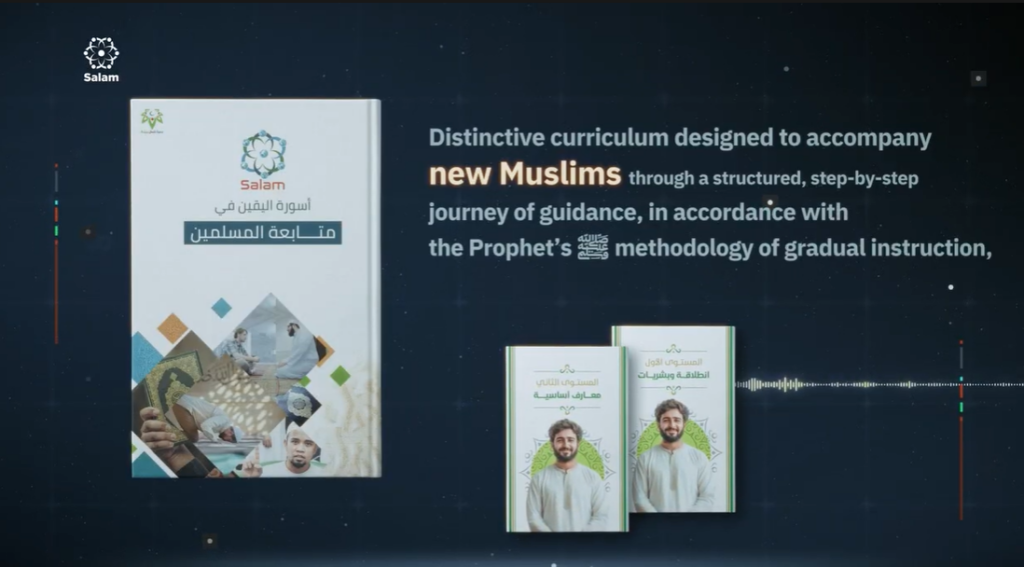
For new Muslims, the Asawirat Al-Yaqeen (Bracelets of Certainty) program offers a structured, four-stage journey toward firm faith:
- Stage One — Foundations: the Shahada, the pillars, Wudu, Salah, the six pillars of Iman, Zakat, and Fasting
- Stage Two — Construction: Tawbah, the biography of the Prophet (PBUH), and lessons from his life
- Stage Three — Consolidation: spiritual actions of the heart, etiquette, hijab rulings, and practical life guidance
- Stage Four — Empowerment: contemporary issues, theological evidence, characteristics of Ahlus Sunnah, and a life roadmap based on Surah Al-Asr
- Implemented with 114,588 new Muslims across 140 countries, with 63.3% completing all four stages
Reach out directly to the Salam Center team to start the Asawirat Al-Yaqeen (Bracelets of Certainty) curriculum.
Conclusion
Islam and Christianity share Abrahamic roots and certain moral commands — but only Islam preserved the pure Tawheed that those roots carried. The Trinity doctrine, invented at Nicaea in 325 CE, is explicitly condemned in the Quran as disbelief, making the two traditions theologically incompatible on their most fundamental question.
Isa (peace be upon him) is honored deeply in Islam as the Messiah and one of the greatest prophets — but his divinity, his crucifixion, and his role as an atoning sacrifice are all rejected entirely by the Quran and by the testimony of Isa himself on the Day of Judgment. What Christians claim about him, he never claimed for himself.
The genuine overlaps — belief in angels, the Day of Judgment, moral prohibitions, charity, modesty — are fragments of original divine guidance that survived in the Christian tradition. They reflect not equivalence between the two religions, but the consistent truth that runs through all prophetic missions and finds its complete, preserved form in Islam alone.
Frequently Asked Questions
Do Islam and Christianity believe in the same God?
Islam and Christianity both claim to worship the Creator of the universe, but their theological definitions are fundamentally different. Islam’s Tawheed holds that Allah is absolutely one — with no partners, no son, and no equals. Christianity’s Trinity doctrine divides the divine nature into three persons.
The Quran explicitly condemns this: لَّقَدْ كَفَرَ الَّذِينَ قَالُوا إِنَّ اللَّهَ ثَالِثُ ثَلَاثَةٍ — "They have certainly disbelieved who say, ‘Allah is the third of three.’" (Quran 5:73). Using the same word — "God" in English — does not mean both traditions are worshipping the same being as defined by their own theologies. To understand the Islamic concept fully, the Salam platform’s article on Allah in Islam provides a complete foundation.
What does Islam say about Jesus being God?
Islam rejects the divinity of Isa (peace be upon him) completely and without ambiguity. The Quran states: لَّقَدْ كَفَرَ الَّذِينَ قَالُوا إِنَّ اللَّهَ هُوَ الْمَسِيحُ ابْنُ مَرْيَمَ — "They have certainly disbelieved who say that Allah is the Messiah, the son of Mary." (Quran 5:72).
Isa (peace be upon him) is one of the five greatest prophets, born of a virgin, who performed miracles and will return before the Last Day. His greatness in Islam is immense. His divinity is a claim the Quran attributes to human invention after his raising — not to anything Isa himself ever taught.
Does the Bible count as divine scripture in Islam?
Islam affirms that the original Torah and original Gospel were genuine divine revelations. The Bible in its current form is a different matter — it is a collection of texts written decades after the prophets, compiled by human councils, and shaped by theological agendas.
The Quran documents the alteration of previous scriptures explicitly, and Islamic scholars across the centuries — including Ibn Hazm in his comparative work Al-Fisal fil-Milal — have demonstrated the Bible’s internal contradictions. Only the Quran carries Allah’s direct guarantee of preservation: إِنَّا نَحْنُ نَزَّلْنَا الذِّكْرَ وَإِنَّا لَهُ لَحَافِظُونَ — "Indeed, it is We who sent down the Quran and indeed, We will be its guardian." (Quran 15:9)
Do Islam and Christianity share any genuine moral common ground?
Yes — and this is where the most honest overlap lies. Both traditions prohibit fornication, murder, and dishonesty, and both command care for the poor and honor toward parents. These shared moral commands reflect the consistent divine guidance sent through all prophets from the same source.
Where Christianity maintained these prohibitions, it maintained what was originally part of the same prophetic tradition that Islam carries fully. Where contemporary Christianity has softened or abandoned them under cultural pressure, it has departed from what its own original scriptures required.
Why does Islam reject the Christian concept of salvation through Jesus?
Islam rejects vicarious atonement — the idea that one person’s death can absolve the sins of others — because it contradicts both divine justice and Quranic revelation. Every soul is accountable for its own deeds: وَلَا تَزِرُ وَازِرَةٌ وِزْرَ أُخْرَىٰ — "No bearer of burdens will bear the burden of another." (Quran 35:18).
In Islam, the path to forgiveness is direct: sincere repentance, turning to Allah, and striving to do what is right. No intermediary is needed and none can substitute for personal accountability before the Creator on the Day of Judgment.
If Islam and Christianity differ so fundamentally, why do Muslims study these comparisons?
Understanding the genuine points of contact and the precise points of departure serves the mission of Da’wah — inviting people to the complete, preserved truth of Islam. Many Christians carry sincere belief in the original prophetic values — monotheism, moral law, reverence for Isa (peace be upon him) as a holy messenger — without realizing that Islam is the fullest expression of exactly what they are reaching toward.
Comparative study, done with theological honesty, is an invitation: the truth that was fragmented and altered in Christianity reaches its complete and preserved form in Islam. Understanding how Islam views other religions and the foundations of faith in Islam equips every Muslim and seeker to navigate these conversations with both knowledge and compassion.
Curious about Islam?
Journey towards clarity and purpose. Our team is here to support you in your search for truth and spiritual guidance.
Embrace the Truth