Do Muslims Believe In The New Testament?
| Key Takeaways |
| Muslims believe Allah revealed a Gospel (Injeel) to Prophet Jesus (PBUH), which they consider a divine scripture distinct from the New Testament as it exists today. |
| The Quran names the Injeel as one of the four major divine books, making faith in it a pillar of Islamic belief alongside the Quran, Torah, and Psalms. |
| The New Testament was written by the disciples of Jesus decades after his departure — Muslims hold that the original divine revelation given to Jesus was a single book, not four gospels authored by humans. |
| Islamic scholarship affirms that the current New Testament contains historical and spiritual value while also containing alterations, additions, and contradictions that disqualify it as a preserved divine text. |
| The Quran itself is the only scripture Muslims believe has been preserved in its original revealed form, word for word, since its revelation to Prophet Muhammad (PBUH). |
Muslims believe in Jesus. They believe Allah sent him a divine book. What they do not accept is that the New Testament sitting in church pews today is that book.
This distinction — precise, principled, and rooted in both Quranic evidence and reasoned scholarship — is widely misunderstood. The question “do Muslims believe in the New Testament” deserves a careful answer, because the Islamic position is neither a flat rejection of Jesus’s revelation nor a blanket endorsement of everything printed under the label “Gospel.”
Faith in the divinely revealed scriptures is one of the six pillars of Iman (faith) in Islam. As the Quran states:
يَا أَيُّهَا الَّذِينَ آمَنُوا آمِنُوا بِاللَّهِ وَرَسُولِهِ وَالْكِتَابِ الَّذِي نَزَّلَ عَلَى رَسُولِهِ وَالْكِتَابِ الَّذِي أَنزَلَ مِن قَبْلُ
“O you who have believed, believe in Allah and His Messenger and the Book that He sent down upon His Messenger and the Scripture which He sent down before.” (Quran 4:136)
That scripture sent down before — one of them is the Injeel, the Gospel given to Jesus (PBUH). Understanding what that means, and how it relates to the New Testament, is the heart of this article.
Do Muslims Believe in the New Testament?
Muslims believe in the original Gospel that Allah revealed to Prophet Jesus (PBUH) — called the Injeel in Arabic — as a matter of religious obligation. Muslims do not believe the New Testament in its current form is that original revelation, preserved intact.
The Quran explicitly names the Injeel as a divine book:
وَآتَيْنَاهُ الإِنجِيلَ فِيهِ هُدًى وَنُورٌ وَمُصَدِّقاً لِّمَا بَيْنَ يَدَيْهِ مِنَ التَّوْرَاةِ وَهُدًى وَمَوْعِظَةً لِّلْمُتَّقِينَ
“And We gave him the Gospel, in which was guidance and light, confirming what came before it of the Torah, and as guidance and instruction for the righteous.” (Quran 5:46)
This is the Injeel Muslims believe in — a single, direct divine revelation given word and meaning from Allah to Jesus (PBUH).
The New Testament, as Christians themselves acknowledge, was written by the companions and followers of Jesus in the decades after his departure, in multiple documents by different human authors.
That is a fundamentally different claim from what Islam means by a “revealed scripture.” Muslim scholars, including Sheikh Muhammad ibn Ibrahim Al-Hamd in his work Al-Iman bil Kutub (Faith in the [Divine] Books), make this distinction with precision: the original Injeel was real and divine; what exists in Christian hands today is a human compilation written after the fact, mixed with authentic traces and later alterations.
What Are The Islamic Beliefs About the Gospel and the New Testament?
Muslims believe that Allah gave Jesus a special message called the Injeel, but they see it as something different from the New Testament we have today because the original version hasn’t been preserved.
1. The Injeel Is One of the Main Four Divine Books Allah Revealed to Humanity
Allah revealed four major scriptures to His prophets: the Suhuf (Scrolls) to Ibrahim (AS), the Tawrah (Torah) to Musa (AS), the Zabur (Psalms) to Dawud (AS), and the Injeel (Gospel) to Isa (AS) — before completing revelation with the Quran given to Muhammad (PBUH).
The Quran confirms this in Surah Aal Imran:
نَزَّلَ عَلَيْكَ الْكِتَابَ بِالْحَقِّ مُصَدِّقاً لِّمَا بَيْنَ يَدَيْهِ وَأَنزَلَ التَّوْرَاةَ وَالإِنجِيلَ
“He has sent down upon you the Book in truth, confirming what came before it. And He revealed the Torah and the Gospel.” (Quran 3:3)
Believing in all four books is not optional. The Prophet Muhammad (PBUH) described the pillars of faith, and the authenticated narration recorded in Sahih Muslim includes:
“…and that you believe in Allah, His angels, His books, His messengers, the Last Day, and that you believe in divine decree — its good and its bad.”
Denying the Injeel’s original divine status would contradict this pillar entirely.
Read also: Do Muslims Believe In The Virgin Birth Of Jesus?
2. The Injeel Was Revealed Directly to Jesus as Both Word and Meaning from Allah
The Islamic understanding of revelation (wahy) distinguishes between two types: wahy of both word and meaning — where Allah directly transmits the precise wording of the text, as with the Quran — and wahy of meaning alone, where a prophet receives divine guidance and conveys it in his own words.
Muslim scholars hold that the Injeel, like the Quran and Torah, was revealed to Jesus as direct divine text — both word and meaning — from Allah. The Quran affirms Allah taught Jesus scripture directly:
وَيُعَلِّمُهُ الْكِتَابَ وَالْحِكْمَةَ وَالتَّوْرَاةَ وَالإِنجِيلَ
“And He will teach him writing and wisdom and the Torah and the Gospel.” (Quran 3:48)
This is categorically different from the New Testament’s four gospels, which Matthew, Mark, Luke, and John authored in their own voices, in their own languages, recording their memories and accounts of Jesus.
As Judge Mansur Hussein Abd al-Aziz explains in Da’wat al-Haqq bayna al-Masihiyyah wal-Islam (The Call of Truth Between Christianity and Islam), the original Injeel was a divine revelation in word and meaning — not a human-authored biography of a prophet.
Have Questions About Islam?
Our team is ready to answer your questions clearly and respectfully. Ask freely and receive honest guidance.
Ask Us Now3. Islam Affirms That the Original Injeel Confirmed the Torah of Moses
The Injeel did not arrive as a competing or independent message. It came as a continuation and confirmation of what preceded it — the divine guidance given to Musa (AS). The Quran states this explicitly in Surah Al-Maidah:
وَقَفَّيْنَا عَلَى آثَارِهِم بِعَيسَى ابْنِ مَرْيَمَ مُصَدِّقاً لِّمَا بَيْنَ يَدَيْهِ مِنَ التَّوْرَاةِ
“And We sent, following in their footsteps, Jesus, the son of Mary, confirming that which came before him of the Torah.” (Quran 5:46)
This is the consistent pattern of divine revelation across all prophets: each new scripture confirms and completes its predecessor, building toward the final, perfected message of the Quran.
Understanding this chain is essential to grasping what faith in Islam actually means — it encompasses all prophets and all genuine scriptures without distinction.
4. Muslims Believe the Original Injeel Was Lost to Alteration and Is No Longer Available
The Quran does not accuse Christians of inventing Jesus or fabricating their entire tradition. It affirms there was a real revelation, a real prophet, and a real message.
What Islamic scholarship holds — based on textual evidence, historical record, and Quranic testimony — is that this original revelation was not preserved.
Allah says in the Quran about the People of the Book:
وَلَوْ أَنَّهُمْ أَقَامُواْ التَّوْرَاةَ وَالإِنجِيلَ وَمَا أُنزِلَ إِلَيهِم مِّن رَّبِّهِمْ لأكَلُواْ مِن فَوْقِهِمْ وَمِن تَحْتِ أَرْجُلِهِم
“And if only they had upheld [the law of] the Torah, the Gospel, and what has been revealed to them from their Lord, they would have consumed [provision] from above them and from beneath their feet.” (Quran 5:66)
The phrasing — “if only they had upheld” — implies they did not, and that the original texts were no longer being followed in their pure form. Sheikh Muhammad Salih al-Munajjid’s well-known fatwa platform Islam Q&A addresses this directly: the Injeel of divine revelation and the gospels of the New Testament are two distinct things, and no existing manuscript — of any scripture — represents the pristine original as revealed, with the sole exception of the Quran.
5. The New Testament Contains Historical Inconsistencies That Confirm Alteration
The Islamic position on the New Testament is not simply theological — it is also evidential. The grounds for considering it a preserved divine text do not hold up under scrutiny, and Islamic scholarship has long engaged this point seriously.
Consider the following:
A. No original manuscripts exist
What scholars possess today are copies of copies, with no two manuscripts identical. Textual variants between manuscripts number in the tens of thousands, a reality acknowledged openly by New Testament scholars at institutions.
B. The gospels were written decades after Jesus
Mark is dated to roughly 70 CE, Matthew and Luke to the 80s, and John to around 90–100 CE — all by authors who were not present eyewitnesses to the events they describe, at least according to the majority of modern biblical scholarship.
C. Early church fathers disagreed on which books were sacred
There was no settled Christian canon for centuries. Different church leaders recognized different lists of authoritative texts, and the current New Testament canon was not formally fixed until the councils of the 4th century CE.
D. Descriptions of Allah unworthy of His majesty appear in the text
Passages that attribute regret to Allah — such as in 1 Samuel 15:11 — or that compare Him to a warrior awakening from the effects of wine — as in Psalm 78:65 — are incompatible with the perfection of divinity. The Islamic understanding of the nature of Allah holds that no authentic divine revelation would contain such descriptions.
These are among the reasons Islamic scholarship — rooted in the creed of Ahlus Sunnah wal Jama’ah — maintains that the New Testament, while containing traces of original truth, cannot be accepted as a preserved divine scripture
Read also: Do Muslims Believe in the Ten Commandments?
6. The Quran Supersedes All Previous Scriptures and Stands as the Only Preserved Divine Text
Allah did not leave humanity without guidance. After the Injeel, He revealed the Quran to Prophet Muhammad (PBUH) — as the final, complete, and perfectly preserved scripture for all of humanity until the Last Day.
نَزَّلَ عَلَيْكَ الْكِتَابَ بِالْحَقِّ مُصَدِّقاً لِّمَا بَيْنَ يَدَيْهِ
“He has sent down upon you the Book in truth, confirming what came before it.” (Quran 3:3)
The Quran confirms what was true in the previous scriptures, corrects what was altered, and completes what was left for a later time.
Unlike the Torah and Injeel, the Quran has been memorized by millions in an unbroken chain since its revelation, preserved in writing from the time of the Prophet (PBUH) himself, and never subjected to editorial revision by human councils.
For anyone seeking to understand what Muslims believe about the Quran and why it holds this unique status, the answer lies precisely in this distinction: the Quran is the word of Allah, transmitted with a level of preservation that no other scripture in human history can match. And for those asking why Muslims believe in the Quran, the evidence — linguistic, historical, and spiritual — is both comprehensive and compelling.
7. Respecting Jesus and His Gospel Is Part of Muslim Faith
One of the most important things to understand about the Islamic position is that it comes from a place of deep reverence for Jesus (PBUH), his prophethood, and the original message he carried.
A Muslim who rejects Jesus as a prophet exits the fold of Islam. That is how central Jesus’s status is in Islamic belief.
The Prophet Muhammad (PBUH) said, as recorded in Sahih Bukhari:
“Whoever believes there is no god but Allah, alone without partner, and that Muhammad is His slave and messenger, and that Jesus is His slave and messenger and His word which He directed to Mary and a soul from Him, and that Paradise is true and Hell is true — Allah will admit him into Paradise.”
This is why the Islamic engagement with the New Testament is never dismissive of Jesus or his mission. It is a principled theological position: the Injeel was real, divine, and true. What has reached us under that name today is a human document — worthy of study, containing echoes of truth, but not the word of Allah in its original form.
Islam’s relationship with other religious traditions, including Christianity, is one of respectful disagreement grounded in clear principles.
The broader framework of how Islam views other religions reflects this: acknowledgment of shared prophetic lineage, combined with firm conviction in the Quran as the final and preserved divine word.
Have Questions About Islam?
Our team is ready to answer your questions clearly and respectfully. Ask freely and receive honest guidance.
Ask Us NowContinue Your Learning Journey with the Salam Platform
If this article opened a door for you, there is much more waiting on the other side.
The Salam Platform is built for exactly this kind of sincere exploration — whether you are a curious seeker, someone reassessing what you believe, or a new Muslim looking for grounded, structured knowledge.
Browse the Salam blog for articles covering Islamic beliefs, misconceptions, and the intellectual foundations of faith.
Visit the Salam Platform for the full library of resources.
Have a specific question, or ready to take the next step? Reach out directly — our team is here to help.
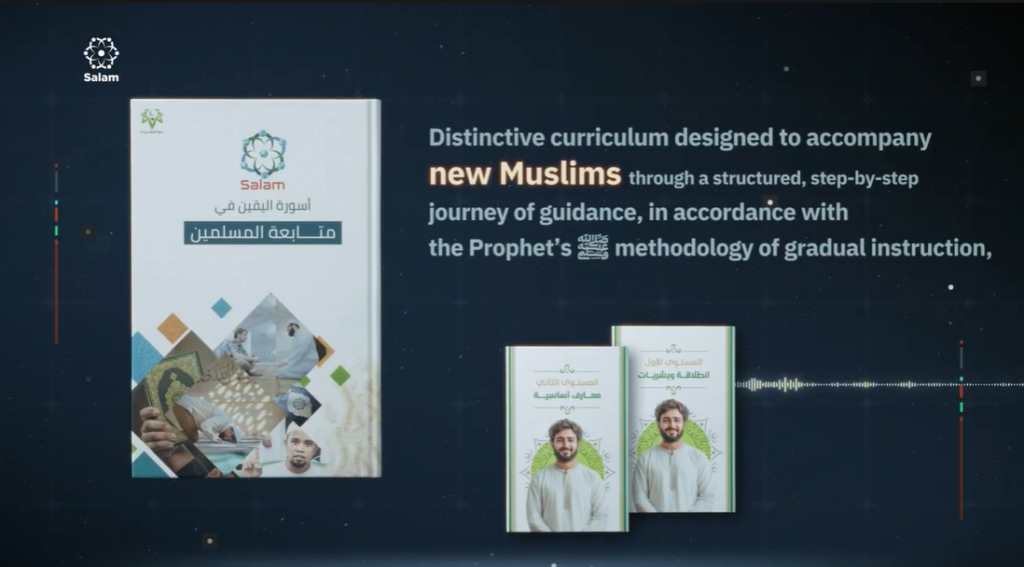
For those who have entered Islam or are seriously considering it, the Salam Center offers the Asawirat Al-Yaqeen (Bracelets of Certainty) program — a structured, four-stage curriculum designed specifically for new Muslims:
- Stage One — The Foundation: Understanding the Shahada, the pillars of Islam, purification, and prayer
- Stage Two — The Construction Phase: The six pillars of Iman, fasting, zakat, and the life of the Prophet (PBUH)
- Stage Three — The Consolidation Phase: Tawbah, moral nurturing, spiritual character, and practical life rulings
- Stage Four — The Empowerment Phase: Contemporary issues, theological foundations, the Islamic view of reason and revelation, and a life roadmap from Surah Al-Asr
The program has already guided 114,588 new Muslims across 140 countries, with over 63% completing all four stages. It is therapeutically designed, professionally formatted, and grounded entirely in authentic Islamic scholarship.
Reach out directly to the Salam Center team to start the Asawirat Al-Yaqeen (Bracelets of Certainty) program for FREE.
Conclusion
Muslims are obligated to believe in the Injeel as a divine scripture revealed directly to Prophet Jesus (PBUH), making faith in it one of the six pillars of Iman. This belief is explicitly grounded in multiple Quranic verses and authenticated prophetic narrations.
The New Testament, by contrast, was composed by human authors decades after Jesus, with no original manuscripts surviving and no two existing manuscripts identical. Islamic scholarship holds that the original divine Injeel was subject to alteration and is no longer available in its preserved form among humanity.
Frequently Asked Questions
Do Muslims believe Jesus received a divine scripture from Allah?
Yes, fully and without reservation. Muslims believe Allah revealed a divine book called the Injeel to Prophet Jesus (PBUH), just as He revealed the Torah to Moses and the Quran to Muhammad. Belief in this is obligatory — denying the Injeel’s divine origin contradicts one of the six pillars of Islamic faith. The Quran states: وَآتَيْنَاهُ الإِنجِيلَ فِيهِ هُدًى وَنُورٌ — "And We gave him the Gospel, in which was guidance and light." (Quran 5:46)
Why don’t Muslims accept the New Testament as the original Gospel?
The New Testament was authored by the companions and followers of Jesus (PBUH) in their own words, in the decades after his departure — not dictated by Allah word for word. No original manuscripts survive. The four gospels were written by different authors at different times, and early Christian communities disagreed for centuries about which texts were authoritative. The Injeel that Muslims believe in was a single divine revelation — word and meaning from Allah — which Islamic scholarship affirms was not preserved in its original form.
Is the New Testament completely rejected in Islam?
The Islamic position is precise, not sweeping. Muslims hold that the New Testament contains traces of authentic prophetic truth transmitted from Jesus (PBUH), alongside later additions, alterations, and human editorial decisions. The text is not dismissed entirely — it is engaged with carefully and critically. What Muslims reject is the claim that it represents a perfectly preserved divine revelation, because the historical and textual evidence does not support that claim.
What is the Islamic view of the Bible’s descriptions of Allah?
Islam teaches that Allah is absolutely perfect, beyond all imperfection and comparison. Any text attributing regret, limitation, or human-like weakness to Allah contradicts the fundamental Islamic understanding of the nature of Allah. The presence of such descriptions in the biblical text — such as Allah "repenting" of a decision or being compared to someone awakening from wine — is itself evidence, from the Islamic perspective, that these passages do not reflect the original divine revelation.
Is the Quran considered more reliable than the Bible in Islam?
Muslims believethe Quran is the only scripture preserved in its original revealed form. It has been memorized continuously by millions of Muslims in an unbroken chain since the time of the Prophet (PBUH), and no variant version exists. This level of preservation — linguistic, textual, and oral — is unique in the history of revealed scriptures. The Quran explicitly describes itself as a confirmation and guardian over previous scriptures, not simply one text among equals.
Can a Muslim read the New Testament?
Reading the New Testament for the purpose of understanding, dialogue, or comparative study is permitted, with appropriate scholarly guidance. A Muslim approaches it knowing it contains some authentic prophetic tradition alongside later human additions — treating it with academic engagement rather than devotional authority. The governing framework for all belief and practice remains the Quran and the authenticated Sunnah of Prophet Muhammad (PBUH), as outlined in the foundational Islam principles that define Muslim life.
Curious about Islam?
Journey towards clarity and purpose. Our team is here to support you in your search for truth and spiritual guidance.
Embrace the Truth