Do Muslims Believe In The Virgin Birth Of Jesus?
| Key Takeaways |
| Muslims affirm the virgin birth of Jesus (Isa, peace be upon him) as a foundational article of Islamic faith, not merely a historical detail. |
| The Quran dedicates an entire chapter — Surah Maryam — to Mary, and mentions her more times than the entire New Testament does. |
| Islam holds that Jesus was conceived through Allah’s direct command “Be,” without any human father, making his birth a divine sign for all humanity. |
| Mary (Maryam) is honored in the Quran as the purest woman among all of creation, chosen and purified above all women of the worlds. |
| Believing in Jesus as a servant and messenger of Allah, born of a virgin, is a condition of valid Islamic faith. |
| The Quran explicitly condemns the Jewish slander against Mary’s honor and defends her chastity with unambiguous divine testimony. |
What often surprises seekers is how central Mary and Jesus are to the Islamic doctrine. Islam does not merely tolerate their stories — it enshrines them.
The Quran names a full chapter after Mary (Surah Maryam, Chapter 19), and Jesus (Isa, peace be upon him) is mentioned by name over fifty times across the Quran’s pages.
For any sincere seeker asking whether Muslims share this belief with Christians, the answer is an unambiguous yes — though the theological conclusions drawn from that birth differ profoundly.
Do Muslims Believe in the Virgin Birth of Jesus?
Yes, Muslims believe in the virgin birth of Jesus completely. The virgin birth of Jesus is affirmed explicitly in the Quran, the word of Allah, and is a matter of established Islamic creed from which no Muslim may deviate.
The Quran recounts the moment with vivid clarity: the Angel Jibreel (Gabriel) appeared to Mary in human form and announced that Allah would give her a pure son.
Her response was immediate and natural — she was unmarried and had never been touched by a man. The angel’s reply settled the matter entirely:
قَالَ كَذَلِكِ قَالَ رَبُّكِ هُوَ عَلَيَّ هَيِّنٌ وَلِنَجْعَلَهُ آيَةً لِلنَّاسِ وَرَحْمَةً مِنَّا وَكَانَ أَمْرًا مَقْضِيًّا
“He said, ‘Thus [it will be]; your Lord says, “It is easy for Me, and We will make him a sign to the people and a mercy from Us. And it is a matter [already] decreed.”‘” (Quran 19:21)
The virgin birth of Jesus in Islam is a miracle — deliberate, purposeful, and complete. It required no human father because Allah’s creative power is not bound by the laws He established for His creation.
What Are the Islamic Beliefs About the Virgin Birth?
The Quran affirms that Mary conceived Jesus without a father, that she was a chaste and chosen woman, and that the birth itself was a deliberate divine sign for all of humanity.
1. Mary Was Chosen, Purified, and Preferred Above All Women of the Worlds
Allah announces Mary’s election with the words of His angels:
وَإِذْ قَالَتِ الْمَلَائِكَةُ يَا مَرْيَمُ إِنَّ اللَّهَ اصْطَفَاكِ وَطَهَّرَكِ وَاصْطَفَاكِ عَلَى نِسَاءِ الْعَالَمِينَ
“And [mention] when the angels said, ‘O Mary, indeed Allah has chosen you and purified you and chosen you above the women of the worlds.'” (Quran 3:42)
The word iṣṭafā — chosen — appears twice in a single verse, an emphatic repetition that classical scholars of Quranic language note as signaling absolute distinction.
Mary was not merely a vehicle for a miraculous event; she was a woman whose lifelong purity, worship, and closeness to Allah made her the most fitting vessel for this divine sign.
The Prophet Muhammad (PBUH) reinforced this status explicitly. He said:
“…Among women, none reached perfection except Mary daughter of Imran, and Asiya wife of Pharaoh…” (Sahih al-Bukhari, Hadith 3769)
This narration places Mary at the summit of female virtue across all of human history — a rank Islam does not grant lightly.
2. Mary Conceived Jesus While Still a Virgin, With No Human Father Involved
The Quran states this fact with a directness that leaves no room for interpretation:
وَمَرْيَمَ ابْنَتَ عِمْرَانَ الَّتِي أَحْصَنَتْ فَرْجَهَا فَنَفَخْنَا فِيهِ مِنْ رُوحِنَا
“And [the example of] Mary, the daughter of Imran, who guarded her chastity, so We blew into [her garment] through Our angel [i.e., Gabriel].” (Quran 66:12)
The phrase aḥṣanat farjahā — she guarded her chastity — is a legal and moral testimony embedded in divine scripture. It is not a character reference; it is Allah’s own declaration of her innocence and purity. The same verse appears in Surah Al-Anbiya:
وَالَّتِي أَحْصَنَتْ فَرْجَهَا فَنَفَخْنَا فِيهَا مِنْ رُوحِنَا وَجَعَلْنَاهَا وَابْنَهَا آيَةً لِلْعَالَمِينَ
“And [mention] the one who guarded her chastity, so We blew into her [garment] through Our angel, and We made her and her son a sign for the worlds.” (Quran 21:91)
Mother and son together — Mary and Jesus — constitute a single unified divine sign. Their story cannot be separated, and it is precisely the absence of a father that makes their testimony to Allah’s absolute power so complete.
Have Questions About Islam?
Our team is ready to answer your questions clearly and respectfully. Ask freely and receive honest guidance.
Ask Us Now3. The Virgin Birth Was a Deliberate Divine Sign Demonstrating That Allah Creates Without Constraint
Allah did not choose this manner of creation randomly. The Quran explicitly names its purpose:
“We will make him a sign to the people.” (Quran 19:21)
The 14th-century scholar Ibn Kathir, whose Tafsir remains among the most authoritative works of Quranic exegesis in the Sunni tradition, explains the divine wisdom in this pattern: Allah diversified His creation across four modes to demonstrate that His power transcends every natural law.
Adam was created from neither father nor mother.
Eve was created from a father without a mother.
All other human beings are created from both father and mother.
Jesus alone was created from a mother without a father.
The four modes together constitute a complete testimony to Allah’s sovereignty over creation itself.
The contemporary Saudi scholar Sheikh Abd al-Rahman al-Sa’di, whose Taysir al-Karim al-Rahman is widely taught across Islamic institutions, adds a dimension that speaks directly to the human tendency to mistake causes for origins: “Allah shows His servants that all causes together do not act independently — their effect comes only by Allah’s permission and decree, so that people do not anchor their gaze on causes and lose sight of the One who originates and governs them.”
This is why, when it comes to the nature of Allah and the question of how Islam views the nature of Allah, the virgin birth functions as one of the clearest proofs in human history that Allah is bound by nothing — not biology, not physics, not the patterns He Himself established for His creation.
Read also: Do Muslims Believe in the Ten Commandments?
4. Jesus Is the Word of Allah — and This Title Does Not Imply Divinity
The Quran refers to Jesus with a title that requires careful understanding:
إِنَّمَا الْمَسِيحُ عِيسَى ابْنُ مَرْيَمَ رَسُولُ اللَّهِ وَكَلِمَتُهُ أَلْقَاهَا إِلَى مَرْيَمَ وَرُوحٌ مِنْهُ
“The Messiah, Jesus the son of Mary, was but a messenger of Allah and His word which He directed to Mary and a soul [created at a command] from Him.” (Quran 4:171)
The title Kalimatullah — Word of Allah — means that Jesus came into existence by Allah’s creative command: “Be.” He is not the command itself; he is the being who resulted from it.
Classical scholars are precise on this point: everything attributed to Allah through the construction “from Him” or “His” falls into one of two categories.
If it is a self-subsisting entity, the attribution denotes that it is owned by and created by Allah — as in “the she-camel of Allah” or “the House of Allah.”
If it is not self-subsisting, the attribution denotes a divine attribute. Jesus belongs to the first category: a created being, honored by his connection to the divine command that originated him.
The Prophet (PBUH) bound this belief directly to salvation:
“Whoever bears witness that there is no god but Allah, and that Muhammad is His servant and messenger, and that Jesus is the servant of Allah, His messenger, His word which He cast to Mary, and a spirit from Him — and that Paradise is real and Hell is real — Allah will admit him to Paradise.” (Sahih al-Bukhari)
The phrase “His servant” in this hadith is a refutation of deification. The phrase “His messenger” is a refutation of rejection. Together they define the precise Islamic position on Jesus — honored, beloved, and fully human.
Read also: Do Muslims Believe In The Virgin Birth Of Jesus?
5. The Quran Defends Mary Against Slander and Condemns Those Who Attack Her Honor
One of the most striking dimensions of the Quranic account is its explicit condemnation of those who slandered Mary. The Quran does not merely affirm her purity — it holds up her accusers as deserving of divine censure:
وَبِكُفْرِهِمْ وَقَوْلِهِمْ عَلَى مَرْيَمَ بُهْتَانًا عَظِيمًا
“And [We cursed them] for their disbelief and their saying against Mary a great slander.” (Quran 4:156)
The Arabic word buhtān means a lie so grave and baseless that it strikes its target with shock — a slander of the highest order.
The Quran’s use of this term, qualified further with ‘aẓīm (immense), leaves no ambiguity about how Allah regards the accusation against Mary’s honor.
This defense is not incidental. It is theological. The honor of the prophet’s mother is inseparable from the honor of the prophet himself. Islam’s insistence on Mary’s purity is part of its insistence on the integrity of Jesus’s prophethood.
6. The Story of the Virgin Birth in the Quran Flows With Human Emotion and Wisdom
The Quranic account of the birth of Jesus is among the most moving passages in all of revelation. When the pangs of labor drove Mary to the trunk of a palm tree, alone and overwhelmed, she cried out in despair:
قَالَتْ يَا لَيْتَنِي مِتُّ قَبْلَ هَذَا وَكُنْتُ نَسْيًا مَنْسِيًّا
“She said, ‘Oh, I wish I had died before this and was in oblivion, forgotten.'” (Quran 19:23)
She feared not the pain of childbirth, but the accusation she would face upon returning to her people. The Quran does not gloss over her humanity. It records her anguish with tenderness, then immediately follows it with divine comfort, fresh water, ripe dates, and a command to speak to no one — because her newborn son would speak for her.
When the infant Jesus spoke from the cradle — declaring himself a servant of Allah, a prophet, commanded to pray and give charity — it was not a spectacle. It was a mercy. It dismantled the accusation before it could fully form.
The Quran frames this as Allah’s care for Mary, orchestrated so that her innocence would be established not by her own words, but by a miracle that no human hand could manufacture.
Read also: Do Muslims Believe In The New Testament?
7. Jesus and Mary Together Are One of the Clearest Proofs of Allah’s Absolute Power
The Quran draws the comparison between Jesus and Adam deliberately:
إِنَّ مَثَلَ عِيسَى عِنْدَ اللَّهِ كَمَثَلِ آدَمَ خَلَقَهُ مِنْ تُرَابٍ ثُمَّ قَالَ لَهُ كُنْ فَيَكُونُ
“Indeed, the likeness of Jesus to Allah is as the likeness of Adam. He created him from dust; then He said to him, ‘Be,’ and he was.” (Quran 3:59)
If the creation of Adam from dust — without any parent — does not lead a person to believe Adam is divine, then the creation of Jesus from a mother alone cannot serve as evidence for his divinity either. The logic is clean and irrefutable.
As the Quran reminds:
“And the creation of the heavens and earth is greater than the creation of mankind.“ (Quran 40:57)
The One who created the cosmos does not find the birth of a single human being — however miraculous — a matter requiring partnership or offspring.
Understanding this belief is inseparable from understanding the core principles that govern Islamic faith — among them the absolute oneness of Allah, a doctrine that admits no qualification. Monotheism in Islam is not merely a theological position; it is the lens through which every miracle, every prophet, and every divine sign must be understood.
Have Questions About Islam?
Our team is ready to answer your questions clearly and respectfully. Ask freely and receive honest guidance.
Ask Us NowLearn More Authentic Knowledge About Jesus With Salam
If this article has stirred something within you — a question, a recognition, or a desire to understand Islam more deeply — the Salam Center exists precisely for moments like this.
Whether you are exploring Islam for the first time, working through sincere doubts, or have recently embraced the faith and need structured guidance, there is a place for you here.
Visit the Salam Platform to explore a growing library of articles on Islamic belief, written for curious minds and sincere hearts.
Browse the Salam blog for in-depth explorations of questions just like this one.
Reach out directly to speak with a Da’wah specialist — whether you have a question, want to take your Shahada, or simply need someone to talk to.
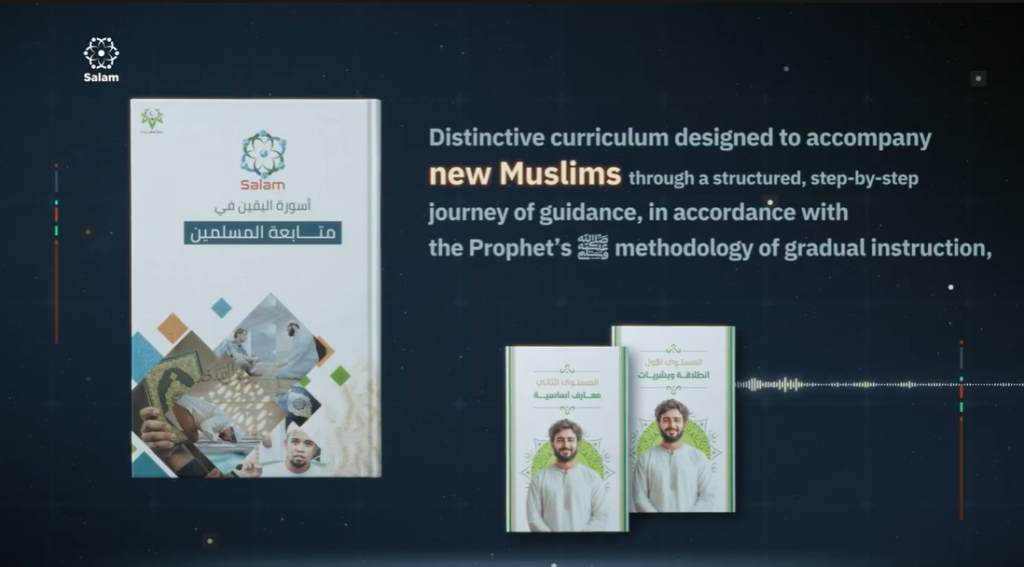
For those who have already entered Islam and are seeking a structured path to firm and certain faith, the Salam Center offers enrollment in the Asawirat Al-Yaqeen (Bracelets of Certainty) program — a four-stage curriculum designed specifically for new Muslims:
- Stage One builds your foundation: the Shahada, purification, prayer, and the pillars of Iman
- Stage Two deepens your understanding: repentance, the biography of the Prophet (PBUH), zakat, and fasting
- Stage Three cultivates your character: spiritual refinement, Islamic etiquette, and practical rulings for daily life
- Stage Four empowers your identity: theological foundations, contemporary challenges, and your personal roadmap for a life of purpose
The Asawirat Al-Yaqeen (Bracelets of Certainty) curriculum has already guided over 114,000 new Muslims across 140 countries. The journey toward yaqeen — unshakeable certainty — begins with a single step.
Reach out directly to the Salam Center team to start the Asawirat Al-Yaqeen (Bracelets of Certainty) program for FREE.
Conclusion
The Quran affirms the virgin birth of Jesus as a deliberate divine miracle, declared in multiple chapters and defended through explicit testimony to Mary’s chastity. Islamic belief holds that Jesus was created by Allah’s command — “Be” — without a human father, making his birth a sign of Allah’s absolute creative power.
Mary occupies a singular rank in Islamic theology — chosen, purified, and honored above all women of creation according to Quranic revelation and authentic Prophetic narration. Her son Jesus holds the titles of Allah’s servant, His messenger, His word, and a spirit created at His command, all of which affirm prophethood while preserving the absolute oneness of Allah.
Believing in the virgin birth of Jesus is not optional for Muslims — it is a condition of sound Islamic faith. The Quran, the Sunnah, and the unanimous consensus of Islamic scholars across centuries affirm that Jesus and Mary together constitute one of the greatest signs of Allah’s sovereignty ever given to humanity.
Frequently Asked Questions
Do Muslims believe that Mary was a virgin when she conceived Jesus?
Yes. The Quran explicitly states that Mary guarded her chastity and that no man had ever touched her. Allah caused her to conceive through the angel Jibreel, who breathed into her garment by Allah’s command. This is not a metaphor or a symbolic reading — it is affirmed as literal divine fact in Surah Maryam (19:20–21) and Surah Al-Anbiya (21:91). Mary’s virginity at the time of conception is an article of Islamic faith.
Does the Quran name a specific chapter about Mary and Jesus?
Yes — Surah Maryam, the 19th chapter of the Quran, is named entirely after Mary. It recounts in detail the annunciation by the angel, Mary’s withdrawal from her people, the labor, the birth, and the infant Jesus speaking from the cradle. No woman in the Quran receives an honor of this magnitude. Mary is mentioned by name 34 times in the Quran, and Jesus is referenced over 50 times across multiple chapters.
If Muslims believe in the virgin birth of Jesus, why don’t they accept his divinity?
The Quran addresses this directly. Adam was created from dust, without any father or mother, yet no one argues Adam is divine. The Quran uses this exact comparison: "The likeness of Jesus to Allah is as the likeness of Adam." (Quran 3:59) A miraculous birth is a sign of Allah’s power — it is evidence of the Creator’s sovereignty, not evidence that the created being shares in divinity. Islam’s understanding of the nature of Allah is that He has no partners, no children, and no equals. The Quran states: "Say, ‘He is Allah, [who is] One.’" (Quran 112:1)
What does the Quran say about people who slander Mary?
The Quran condemns this in Surah Al-Nisa (4:156), describing the accusation against Mary as buhtān ‘aẓīm — an immense slander — and links it to the broader pattern of disbelief among those who rejected the divine message. Allah’s own words in the Quran serve as Mary’s permanent defense. Any doubt about her honor is answered not by human testimony but by divine declaration, and by the miracle of Jesus speaking from the cradle immediately after his birth.
Is believing in Jesus part of what it means to have faith in Islam?
Believing in Jesus as a prophet and messenger of Allah is obligatory. The Prophet Muhammad (PBUH) said: "Whoever bears witness that there is no god but Allah, and that Muhammad is His servant and messenger, and that Jesus is the servant of Allah, His messenger, His word which He cast to Mary, and a spirit from Him — Allah will admit him to Paradise." (Sahih al-Bukhari) A Muslim who rejects Jesus’s prophethood has departed from the foundations of faith in Islam. Honoring Jesus is not optional — it is an integral part of what it means to be Muslim.
Curious about Islam?
Journey towards clarity and purpose. Our team is here to support you in your search for truth and spiritual guidance.
Embrace the Truth