Why Are Europeans Converting To Islam?
| Key Takeaways |
| Tens of thousands of Europeans embrace Islam annually, with France, Germany, and the UK recording the highest conversion rates on the continent. |
| The most commonly cited reason among European converts is Islam’s uncompromising monotheism — a direct, personal relationship with Allah requiring no intermediary. |
| Many converts report that the intellectual coherence of Islamic theology answered existential questions that secular culture and Christianity left unresolved. |
| Women constitute the majority of European converts to Islam, often citing the dignity, spiritual depth, and clear moral framework the religion provides. |
| The Quran’s preservation, internal consistency, and scientific coherence are frequently identified by European intellectuals as decisive factors in their conversion. |
| European converts overwhelmingly describe Islam as a complete system of life — one that addresses the spiritual, ethical, social, and intellectual dimensions of human existence simultaneously. |
Europeans are converting to Islam in numbers that social researchers describe as historically unprecedented in the modern era. Estimates from the Open Doors research network and the Pew Research Center suggest that between 50,000 and 100,000 Europeans embrace Islam each year, with France alone home to an estimated 70,000 to 110,000 converts.
These are not people born into Muslim families or shaped by Muslim-majority cultures. They are individuals who grew up inside secular Europe — attending its schools, absorbing its media, living its values — and then, through sincere inquiry, arrived at a conviction that Islam is the truth.
This is a spiritual phenomenon, rooted in genuine theological searching. The reasons European converts give — in interviews, memoirs, and testimonies recorded by academic researchers — point consistently toward the same core realities: a hunger for the Divine that secularism cannot satisfy, a search for rational certainty that Islam uniquely provides, and a recognition that the monotheism Allah revealed is the most coherent account of existence a human being can hold.
1. Pure Monotheism Speaks to a Deep Human Instinct That Europe Lost
The single most reported reason European converts give for embracing Islam is tawhid — the absolute oneness of Allah.
In a continent where Christian theology introduced the Trinity and centuries of church authority created distance between the worshipper and the Divine, the Islamic declaration that Allah is One, undivided, and directly accessible carries extraordinary power.
قُلْ هُوَ ٱللَّهُ أَحَدٌ ﴿١﴾ ٱللَّهُ ٱلصَّمَدُ ﴿٢﴾ لَمْ يَلِدْ وَلَمْ يُولَدْ ﴿٣﴾ وَلَمْ يَكُن لَّهُۥ كُفُوًا أَحَدُۢ ﴿٤﴾
“Say, “He is Allah, [who is] One, (1) Allah, the Eternal Refuge. (2) He neither begets nor is born, (3) Nor is there to Him any equivalent.” (4)'” (Quran 112:1)
When a European encounters the statement قُلْ هُوَ اللَّهُ أَحَدٌ — “Say, ‘He is Allah, [who is] One.'” — many describe it as the first theological statement they have encountered that requires no qualification, no philosophical defense, and no suspension of reason.
There are no councils, no sacraments, and no clergy standing between the human soul and its Creator.
Islam’s concept of monotheism — and its categorical rejection of polytheism in every form — resonates with European converts who found their previous theological frameworks intellectually fragile.
The clarity of how Islam views the nature of Allah — transcendent, self-sufficient, and in direct communication with humanity through revelation — answers questions that abstract secular philosophy cannot.
2. The Quran’s Intellectual Authority Withstands the Scrutiny Europeans Apply to Every Claim
Europeans, shaped by Enlightenment traditions of evidence and skepticism, do not accept claims on authority alone. They test them. And when many apply that same rigorous standard to the Quran, the results are — for a growing number — transformative.
What Muslims believe about the Quran is that the Quran has been transmitted in an unbroken, memorized chain since the time of the Prophet (PBUH), making it the most textually preserved religious scripture in human history. Professor Keith Small of the Oxford Centre for Islamic Studies has documented that the manuscript tradition of the Quran demonstrates a level of consistency with no parallel in ancient texts. This is precisely the kind of verifiable, traceable evidence that European intellectual culture demands.
Beyond preservation, many converts report that what the Quran contains — its internal consistency across 23 years of revelation, its descriptions of embryological development and cosmic expansion that were unknown to 7th-century Arabia, and its direct challenge to any human to produce something comparable — constitutes a rational argument for divine origin.
The reasons serious thinkers give for why they believe in the Quran are not sentimental. They are evidential.
3. Secular Europe Failed to Answer the Deepest Human Questions, and Islam Does
A generation of Europeans grew up in cultures of material abundance and moral drift. They were told that science explains the universe, that personal freedom defines the good life, and that meaning is something each individual constructs for themselves.
Many found this framework hollow precisely because it worked. The material questions were answered. The existential ones were not.
Islam addresses the four questions that every human being eventually asks: Where did I come from? Why am I here? What is wrong with the world? And what happens after death?
Islam answers them with the clarity of revelation, not the uncertainty of philosophical speculation. As the Quran states: أَلَا بِذِكْرِ اللَّهِ تَطْمَئِنُّ الْقُلُوبُ — “Unquestionably, by the remembrance of Allah hearts are assured.” (Quran 13:28)
The Salam Center has documented this pattern extensively among new Muslims enrolled in its free structured learning programs: the journey to Islam for European converts almost always begins not with social pressure or family influence, but with a private, unresolved spiritual question that secular culture could not answer.
Thinking About Converting to Islam?
We are here to guide you step by step with sincerity, knowledge, and care. Reach out and begin your journey with confidence.
Start Your Journey4. Islam’s Moral Framework Provides the Ethical Coherence That Post-Modern Europe Lacks
Modern European culture offers freedom without grounding. Rights are celebrated; duties are negotiable. The result, as sociologists from Zygmunt Bauman to Charles Taylor have documented, is a pervasive sense of moral disorientation — a culture that knows what it is against but has forgotten what it is for.
Islam offers something fundamentally different: a complete moral architecture, derived not from majority opinion or philosophical consensus, but from divine command.
The principles of Islam — covering worship, family, commerce, social conduct, and the relationship between the individual and the community — form an integrated system in which every ruling has a traceable source and a comprehensible wisdom.
For European converts who grew up in moral ambiguity, this coherence is not experienced as restriction. It is experienced as relief.
5. European Women Are Converting for Dignity, Spiritual Depth, and Clear Moral Framework
Academic studies consistently show that women constitute between 55% and 75% of European converts to Islam — a demographic reality that directly contradicts the dominant cultural narrative about Islam and women.
The research of Dr. Anne Sofie Roald, a Swedish scholar of Islamic studies at Malmö University, documents that European women who convert overwhelmingly cite spiritual depth, personal dignity, and a clearly defined moral identity as their primary motivations.
Islam grants women a theological personhood that is absolute and non-negotiable. The Quran declares:
وَلَهُنَّ مِثْلُ الَّذِي عَلَيْهِنَّ بِالْمَعْرُوفِ
“And due to them is similar to what is expected of them, according to what is reasonable.” (Quran 2:228)
The complementary structure of Islamic gender relations — rooted in mutual obligation, not hierarchy for its own sake — speaks to women who found that Western feminism’s promises of liberation left them with exhaustion and confusion rather than dignity and peace.
The Islamic framework of faith also affirms that a woman’s spiritual standing before Allah is entirely her own — dependent on her deeds, her sincerity, and her submission to her Creator, not on any man’s approval.
6. Islam’s View of Allah Is Philosophically and Rationally Superior to What European Culture Offers
Europeans who engage seriously with theology — rather than dismissing it — eventually confront a fundamental question: what is the nature of the ultimate reality? Secular materialism says there is no ultimate reality beyond matter.
Christianity proposes a God who is simultaneously three and one. Islam’s answer is the most rationally parsimonious: Allah is one, eternal, without beginning or end, without partners or offspring, and without resemblance to His creation.
God in Islam is not an ancient man on a throne, not a philosophical abstraction, and not a force distributed through nature. He is Al-Qayyum — the Self-Sustaining Sustainer of all that exists. This theological precision satisfies a mind trained in philosophical rigor. The Quran states:
لَيْسَ كَمِثْلِهِ شَيْءٌ
“There is nothing like unto Him.” (Quran 42:11)
The European Enlightenment ultimately produced atheism because the god it inherited from medieval Christianity could not survive rational scrutiny. The Allah that Islam describes — and that Islam explains in its clearest theological terms — presents no such vulnerability.
7. Islam Addresses Other Religions with Honesty and Without Relativism
One of the questions European seekers ask most urgently is: what does Islam say about other religions? The answer, unlike the vague pluralism of secular multiculturalism, is theologically precise and intellectually honest.
Islam affirms that all the prophets — from Ibrahim to Musa to Isa (peace be upon them all) — brought the same essential message: worship Allah alone.
The corruption of those messages over time, and the preservation of the final message through the Quran, is Islam’s explanation for religious diversity.
As Islam’s perspective on other religions makes clear, the Quranic worldview neither dismisses prior revelations nor treats all religious claims as equally valid.
The European seeker who has grown weary of a culture that either mocks religion entirely or pretends all religions are the same finds in Islam a position of principled theological clarity — one that respects the common origin of monotheistic traditions while holding firmly to the finality and completeness of the Islamic revelation.
8. The Islamic Community Offers What Secular Society Has Systematically Destroyed
Loneliness is one of the most documented social crises in contemporary Europe. The British government appointed a Minister for Loneliness in 2018.
The European Commission’s research bodies regularly flag social isolation as a public health emergency. Against this backdrop, the Muslim Ummah — the global community of believers bound by shared faith, shared practice, and shared accountability — represents something European culture has largely lost: a genuine community of belonging.
European converts frequently describe the moment they first attended a mosque or spent time with Muslim families as a turning point.
The generosity, the collective worship, the sense of shared purpose, and the absence of the social transactionalism that characterizes much of Western social life — these leave a lasting impression.
The Salam Center has observed this pattern directly: new Muslims who enter the Asawirat Al-Yaqeen (Bracelets of Certainty) program consistently report that the community dimension of Islam was among the most significant confirmations of their decision to convert.
The program, which has reached 114,588 new Muslims across 140 countries, provides precisely this: structured knowledge and genuine community in one integrated experience.
Reach out directly to the Salam Center team to start the Asawirat Al-Yaqeen (Bracelets of Certainty) program for FREE.
9. Islam Offers a Complete and Coherent System of Life, Not Just a Weekend Religion
Perhaps the most frequent observation European converts make after embracing Islam is one of surprise: they expected a religion and found a civilization. Islam governs the whole of human life — prayer, trade, marriage, diet, governance, aesthetics, and the relationship between the living and the dead.
Nothing falls outside its purview because, from the Islamic perspective, nothing falls outside Allah’s sovereignty.
The principles of Islam are not a personal spirituality overlay onto an otherwise secular life. They constitute an alternative total framework — one in which the arbitrary fragmentation of modern secular existence (career here, family there, spirituality somewhere else on Sunday morning) is replaced by an integrated wholeness.
Every act of a Muslim — including eating, working, and sleeping — can be an act of worship when done with the right intention.
For Europeans living in what sociologist Max Weber called the “disenchanted world” — stripped of sacred meaning by modernity — Islam re-enchants existence without requiring the abandonment of reason.
This is among the most powerful and least discussed reasons why the conversion movement in Europe continues to grow.
10. The Prophet Muhammad (PBUH) Himself Remains One of the Most Compelling Arguments for Islam
Many European converts report that a serious, unbiased reading of the biography of the Prophet Muhammad (PBUH) — the Seerah — was a decisive moment in their journey.
The man who emerged from 7th-century Arabia, who was illiterate by his own account, who united fractured tribes under a universal moral vision, who produced the Quran, who established a civilization within decades, and whose personal conduct even his enemies could not impugn — does not fit any comfortable secular category.
His life — documented with a level of biographical detail that historians of antiquity envy — reads as the confirmation, rather than the product, of a divine mission.
Scholars have published comparative biographical studies demonstrating that no historical figure has been more thoroughly documented across more independent transmission chains than the Prophet Muhammad (PBUH).
For the European intellectual trained to demand evidence, this biographical record is not a minor point. It is a foundational one.
Thinking About Converting to Islam?
We are here to guide you step by step with sincerity, knowledge, and care. Reach out and begin your journey with confidence.
Start Your JourneyYour Next Step into the Guidance Path is with Salam
If this article has raised questions you want to explore further, the Salam Platform exists precisely for that purpose. Every article, every resource, and every program we offer serves one goal: helping sincere seekers reach clarity about Islam.
Browse the Salam blog to explore Islam’s beliefs, history, and answers to the questions that matter most.
If you have a specific question, want to speak with someone directly, or are considering taking your Shahada, reach out to us — we are here.
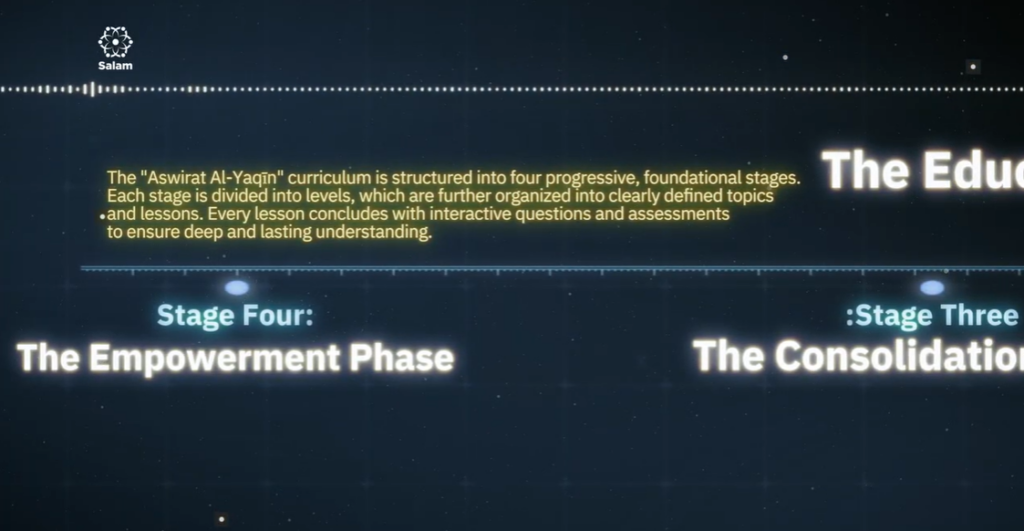
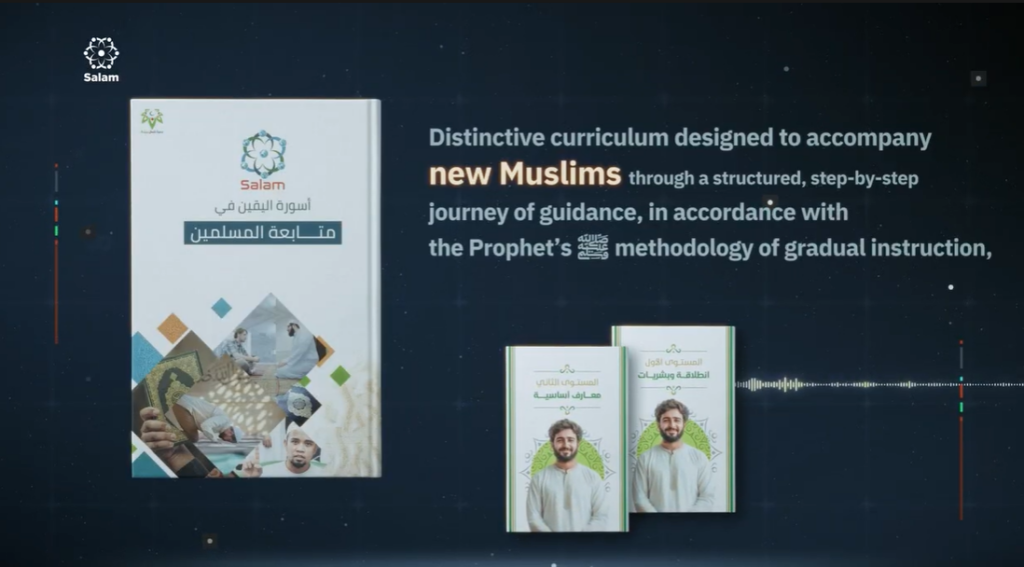
For those who have already embraced Islam and are looking for structured guidance on what comes next, the Salam Center invites you to join the Asawirat Al-Yaqeen (Bracelets of Certainty) program — a complete, four-stage post-conversion curriculum designed to build your faith from the ground up:
- Stage One — The Foundation: Learn the pillars of Islam, the meaning of the Shahada, and the essential acts of worship
- Stage Two — The Construction Phase: Deepen your understanding of Iman, repentance, and the life of the Prophet (PBUH)
- Stage Three — The Consolidation Phase: Develop your moral character and navigate practical life rulings as a Muslim
- Stage Four — The Empowerment Phase: Engage contemporary challenges, strengthen your theological foundations, and build your life roadmap
The program has guided 114,588 new Muslims across 140 countries. It is structured, compassionate, and built entirely around your growth.
Reach out directly to the Salam Center team to start the Asawirat Al-Yaqeen (Bracelets of Certainty) program for FREE.
Conclusion
European conversion to Islam is driven by intellectual conviction, not social influence. Tens of thousands annually choose Islam after serious engagement with its theology — finding in tawhid, the Quran, and the Prophet’s example answers that secular Europe cannot provide.
Women constitute the majority of European converts, drawn by Islam’s clear moral framework and the spiritual dignity it confers. Academic researchers, including scholars at Malmö University, confirm that spiritual depth — not marriage or social pressure — is the primary driver of women’s conversion across France, Germany, and the UK.
The Islamic model of community, complete ethical guidance, and coherent metaphysical worldview addresses the crisis of meaning that defines post-modern European society. For those who search with sincerity, Islam offers not an escape from reason but its fullest satisfaction.
Frequently Asked Questions
How many Europeans are converting to Islam each year?
Estimates from research bodies including the Pew Research Center and the Open Doors network suggest between 50,000 and 100,000 Europeans convert to Islam annually. France records among the highest numbers, with estimates of 70,000 to 110,000 native French converts. Germany and the United Kingdom follow closely. These figures represent individuals with no prior Muslim heritage — Europeans who arrived at Islam through sincere personal inquiry.
Does Islam accept people from a Christian or atheist background?
Islam welcomes anyone who sincerely declares the Shahada — the testimony that there is no deity worthy of worship except Allah, and that Muhammad (PBUH) is His Messenger. Prior religious background is irrelevant. The Prophet (PBUH) said: "Islam wipes out whatever came before it." (Sahih Muslim) Every person who embraces Islam begins with a completely clean slate. The Salam Center’s Asawirat Al-Yaqeen (Bracelets of Certainty) program is specifically designed to support new Muslims from all backgrounds through their first years of practice. Contact the Salam Center team.
What do European converts say most surprised them about Islam?
The most common answer, documented across convert testimony research, is the completeness of Islam as a way of life. New Muslims consistently report that they expected a religion — a set of personal beliefs and rituals — and discovered instead an integrated system governing ethics, family, community, economics, and meaning simultaneously. The principles of Islam address every dimension of human existence. Many converts also describe the first experience of salah — the five daily prayers — as unexpectedly transformative: a structured, regular return to consciousness of Allah throughout each day.
How can I learn more about Islam or take my Shahada?
The Salam Platform provides structured, authentic, and intellectually serious resources for every stage of the journey — from the first sincere question to the structured post-conversion curriculum. If you are ready to embrace Islam, or simply want to speak with someone knowledgeable and supportive, reach out to the Salam Center directly. The team is available to answer your questions, walk you through the Shahada, and connect you with the Asawirat Al-Yaqeen (Bracelets of Certainty) program for ongoing guidance.
Curious about Islam?
Journey towards clarity and purpose. Our team is here to support you in your search for truth and spiritual guidance.
Embrace the Truth