Sunni Islam vs Shia Islam
| Key Takeaways |
| The Sunni–Shia split originated from a political dispute over leadership succession after the Prophet Muhammad (PBUH), but the differences between the two have since expanded into theological disagreements. |
| Sunni Islam holds that the Imam (political leader) is a human being chosen by the community through consultation (Shura), while Shia Islam considers the Imamate a divinely ordained pillar of religion. |
| Sunni Islam is the majority tradition, representing approximately 85–90% of the world’s 1.9 billion Muslims, and is the methodology of Ahlus Sunnah wal Jama’ah — the way of the Prophet (PBUH) and his Companions. |
| Shia theology attributes absolute infallibility (Isma) to twelve Imams, a doctrine with no basis in the Quran or the authenticated Sunnah, and one that mainstream Islamic scholarship considers a serious deviation. |
| Countries with Sunni majorities include Egypt, Saudi Arabia, Turkey, Indonesia, and Pakistan; Shia majorities are concentrated in Iran. |
Sunni Islam and Shia Islam — which is the original, authentic expression of the faith? Sunni Islam, the path of Ahlus Sunnah wal Jama’ah, represents the pure and complete Islam that the Prophet Muhammad (PBUH) transmitted to his Companions and they transmitted to the world.
The division between Sunni and Shia did not begin as a theological disagreement. It began as a political dispute: who should lead the Muslim community after the death of the Prophet (PBUH)? Over time, that political question generated profound doctrinal divergences — in creed, in law, in the very sources used to derive Islamic rulings.
How Did the Sunni–Shia Split Begin?
The word “Sunni” derives from Ahlus Sunnah wal Jama’ah — the People of the Prophetic Way and the United Community. The word “Shia” derives from Shiat Ali — the partisans, or faction, of Ali ibn Abi Talib (may Allah be pleased with him).
When the Prophet (PBUH) passed away in 11 AH (632 CE), the Muslim community selected Abu Bakr al-Siddiq (may Allah be pleased with him) as the first Caliph through the mechanism of Shura (consultation).
A minority believed that Ali ibn Abi Talib, the Prophet’s cousin and son-in-law, should have been designated leader. This minority became the nucleus of what is today called Shia Islam.
Critically, the dispute began as political — not doctrinal. Ali himself (may Allah be pleased with him) pledged allegiance to Abu Bakr, then to Umar, then to Uthman (may Allah be pleased with them all).
The subsequent theological architecture built around this political disagreement — the doctrine of the infallible Imam, the rejection of the Companions, the claim of hidden revelation — developed gradually over generations, shaped by political pressures and, as Sunni scholars document extensively, by the infiltration of foreign ideas into Islamic thought.
The 10 Differences Between Sunni and Shia Islam
While the dispute originated from a political question over succession, the resulting schism has since expanded into divergences that touch upon the nature of leadership, scriptural authority, and the status of the Prophet’s Companions.
1. The Imamate in Sunni Islam Is Political; in Shia Islam It Is a Pillar of Religion
This is the root difference from which all others flow. Sunni Islam holds that leadership of the Muslim community (the Caliphate) is a practical, political necessity — governed by Shura, by scholarly consensus, and by the conditions of competence and justice. The Caliph is a human being who can err, be advised, and be held accountable.
The great Sunni jurist and theologian Ibn Khaldun articulated this clearly in his Muqaddimah: the Caliphate exists to implement the Sharia and organize the affairs of the Muslim community.
Shia Islam — specifically the Ithna Ashariyya (Twelver) school — elevates the Imamate to a pillar of religion itself, ranking alongside or even above the Five Pillars.
Their foundational text, Usul al-Kafi by al-Kulayni, states that the earth cannot exist without an Imam, and that recognizing the Imam of one’s time is obligatory for salvation. This is a claim with no basis in the Quran or the authenticated Sunnah.
2. Sunni Islam Honors All the Companions; Shia Islam Rejects Most of Them
The principle of Adalah al-Sahabah — the uprightness of the Companions — is a cornerstone of Sunni Islam. The Companions carried the Quran in their hearts, transmitted the Sunnah to the world, and were attested to by Allah Himself:
وَالسَّابِقُونَ الْأَوَّلُونَ مِنَ الْمُهَاجِرِينَ وَالْأَنصَارِ وَالَّذِينَ اتَّبَعُوهُم بِإِحْسَانٍ رَّضِيَ اللَّهُ عَنْهُمْ وَرَضُوا عَنْهُ
“And the first forerunners [in the faith] among the Muhajireen and the Ansar and those who followed them with good conduct — Allah is pleased with them and they are pleased with Him.” (Quran 9:100)
Twelver Shia theology takes the opposite position. Mainstream Shia doctrine holds that the overwhelming majority of the Companions — including Abu Bakr, Umar, and Uthman — betrayed the Prophet (PBUH) by denying Ali the Caliphate. Their classical texts go further, with some attributing apostasy to these figures.
This is not a minor disagreement. Rejecting the Companions means rejecting the very transmitters of the Quran and the Sunnah.
It is a self-defeating theological position, because the texts that Shia Islam uses to argue its case were themselves transmitted by the very people it considers treacherous.
3. Sunni Islam Restricts Infallibility to Prophets; Shia Islam Extends It to Twelve Imams
Sunni creed, as systematized in works like Lum’at al-I’tiqad by Ibn Qudama al-Maqdisi and Al-Aqidah al-Tahawiyya by Imam al-Tahawi, is precise: infallibility (Isma) in the communication of divine revelation belongs exclusively to the Prophets and Messengers. Even the greatest Companions — even Ali ibn Abi Talib himself — are fallible human beings who may err and sin.
Shia doctrine attributes absolute infallibility (Isma mutlaqa) — encompassing freedom from all sin, error, and forgetfulness — to twelve Imams.
This doctrine creates a theological class that does not exist in Quranic revelation. It effectively places the Imams alongside — and in some Shia articulations, above — the Prophets in terms of sacred authority.
4. Sunni Hadith Sciences Are Built on Rigorous Authentication; Shia Sources Are Not
The Sunni scholarly tradition produced one of the most sophisticated documentary verification systems in human history. Sciences like Mustalah al-Hadith (Hadith terminology), Rijal al-Hadith (biography of narrators), and al-Jarh wal-Ta’dil (criticism and evaluation of narrators) were developed across generations by scholars like Imam al-Bukhari, Imam Muslim, Imam al-Nasa’i, and others, to protect the Prophetic tradition from fabrication.
Shia Islam relies almost exclusively on narrations transmitted through its twelve Imams or a handful of Companions who supported Ali — rejecting the vast transmission network of the Sahaba. Their primary canonical collection, Usul al-Kafi, contains thousands of narrations that leading Shia scholars themselves — including al-Majlisi in Mir’at al-Uqul — acknowledge are weak or unreliable by their own evaluative standards.
The consequence: a parallel religious system built not on what the Prophet (PBUH) actually said to the Ummah, but on what later figures claimed the Imams said in private.
5. Sunni Islam Has a Fixed Scriptural Canon; Shia Islam Contains Claims of Quranic Alteration
The Quran that 1.9 billion Muslims recite today is the same Quran compiled under the Caliph Uthman ibn Affan (may Allah be pleased with him) and preserved through the Companions. Sunni Islam affirms categorically that the Quran is complete, preserved, and unaltered — grounded in the divine promise:
إِنَّا نَحْنُ نَزَّلْنَا الذِّكْرَ وَإِنَّا لَهُ لَحَافِظُونَ
“Indeed, it is We who sent down the Quran and indeed, We will be its guardian.” (Quran 15:9)
A significant strand in some classical Shia thought holds that the Quran was altered to remove verses about Ali’s designation. While many contemporary Shia scholars distance themselves from this position, it appears in some classical Shia texts.
This alleged tampering with the Word of Allah is a grave claim that Sunni scholarship categorically rejects.
To understand the Sunni understanding of what the Quran is and why Muslims believe in it, these are essential readings.
Learn More About Islam
Discover the beauty, teachings, and wisdom of Islam in a clear and welcoming way. Start exploring and deepen your understanding today.
Learn More6. Sunni Theology Maintains the Absolute Uniqueness of Allah; Shia Practice Risks Blurring That Line
Sunni Islam’s understanding of the nature of Allah is grounded in strict Tawhid (monotheism): Allah alone is worshipped, supplicated, and sought for intercession. No created being — no Prophet, no saint, no Imam — is called upon in prayer.
Popular Shia practice in many communities involves du’a (supplication) directed to the Imams, seeking their intercession as independent intermediaries. Shrines of Imams become sites of veneration that, from the Sunni scholarly perspective — as explained by Sheikh al-Islam Ibn Taymiyya in Majmu’ al-Fatawa and elaborated by Ibn al-Qayyim in Ighatha al-Lahfan — replicate the very polytheistic practices that the Prophet (PBUH) came to abolish. God in Islam is One, unique, and approached directly.
“And when My servants ask you about Me — indeed I am near. I respond to the call of the caller when he calls upon Me.” (Quran 2:186)
7. Sunni Islam Forbids Lying; Shia Islam Institutionalizes Taqiyya
Sunni Islam permits a Muslim to conceal his faith only under genuine, mortal compulsion — and even then, the heart must remain firm. This is the Quranic exception referenced in Surah Al-Nahl (16:106). It is a narrow dispensation, not a doctrine.
Shia jurisprudence elevates Taqiyya — the deliberate concealment of one’s true beliefs — to a near-permanent religious duty. This doctrine makes genuine dialogue between Sunni and Shia Muslims structurally difficult: if one party may systematically conceal their real positions, the foundation of authentic exchange is removed.
8. Sunni Islam Observes Fixed Rites; Shia Islam Institutionalizes Mourning Rituals with No Prophetic Basis
Sunni religious practice — prayer five times daily, Zakat, fasting in Ramadan, Hajj — is entirely grounded in the Quran and authenticated Sunnah, with scholarly consensus as the third source.
Shias share the same Sunni religious practice mentioned above, but Shia religious culture contains practices that have no basis in the Prophetic Sunnah, the most conspicuous being the rituals of Ashura — chest-beating, self-flagellation, and bloodletting to mourn the martyrdom of Husayn ibn Ali (may Allah be pleased with him) at Karbala.
The Prophet (PBUH) explicitly prohibited self-harm in grief, as recorded in Sahih al-Bukhari:
“He is not of us who strikes his cheeks, tears his clothing, or cries with the cry of the days of ignorance.”
Sunni Muslims honor Husayn (may Allah be pleased with him) deeply. His martyrdom is a tragedy of Islamic history. Honoring him requires following the Sunnah — not innovating rituals the Prophet (PBUH) forbade.
9. Sunni Islam and Shia Islam Differ on Jurisprudence
Sunni jurisprudence is organized around four major legal schools: the Hanafi, Maliki, Shafi’i, and Hanbali madhhabs — all rooted in the Quran, the Sunnah of the Prophet (PBUH), and the practices of the Companions. These schools agree on fundamentals while differing on secondary matters within a recognized framework.
Shia jurisprudence — the Ja’fari school — permits temporary marriage (Mut’ah), which was definitively prohibited by the Prophet (PBUH) according to narrations in Sahih Muslim, and derives its rulings from sources that Sunni scholarship does not recognize as authentic.
10. Shia Islam Contains Doctrines of Return and Occultation Absent from Sunni Belief
Twelver Shia theology holds that the twelfth Imam, Muhammad ibn al-Hasan al-Askari, entered a state of Ghaybah (occultation) in 874 CE — first a “minor occultation” and then a “major occultation” in 941 CE — and that he remains alive in hiding, to return at the end of times.
This doctrine is entirely absent from Quranic revelation and the authenticated Sunnah. Furthermore, classical Shia theology includes the doctrine of Raj’a — the physical return of past Imams and key Companions to the world before the Day of Judgment for a settling of accounts.
Sunni theology, grounded in the Quran’s clear teachings on death and resurrection, has no place for such beliefs.
The eschatology of Islam — the return of Jesus (PBUH), the emergence of the Mahdi, the final Hour — is fully and clearly established in the authenticated Sunnah without any need for invented supplementary doctrines.
Comparing Sunni and Shia Beliefs: A Reference Table
| Dimension | Sunni Islam | Twelver Shia Islam |
| Nature of Imamate | Political institution; elected by Shura. Not a pillar of religion. | Divine pillar of religion; designated by Allah through the Prophet (PBUH). |
| The Companions | All honored and trusted as righteous transmitters of Islam. | Majority considered to have betrayed Ali; some texts call them apostates. |
| Infallibility (Isma) | Belongs to Prophets only, in conveying divine revelation. | Attributed to twelve Imams — absolute freedom from sin and error. |
| Hadith Sources | Rigorously authenticated collections (Bukhari, Muslim, etc.) via the Sahaba. | Transmitted via Imams only; Sahaba narrations largely rejected. |
| Quran | Complete, preserved, and unaltered — as promised by Allah in 15:9. | Some Shia classical texts claim verses were removed. |
| Taqiyya (Concealment) | Narrow exception under mortal compulsion only. | Elevated to a near-permanent duty; described as “nine-tenths of religion.” |
| Prayer Combination | Five prayers at their distinct times, with limited combination in travel/illness. | Five prayers routinely combined into three sessions daily. |
| Mut’ah (Temp. Marriage) | Prohibited permanently by the Prophet (PBUH). Sahih Muslim 1406a. | Considered lawful and meritorious Shia jurisprudence. |
| Ashura Rituals | Voluntary fast. Self-harm in grief explicitly forbidden by the Prophet (PBUH). | Includes chest-beating and self-flagellation to mourn Husayn’s martyrdom. |
| Hidden Imam | No Quranic or Sunnah basis for a living hidden Imam. | 12th Imam believed to be in occultation since 874 CE, awaiting return. |
Sunni Islam vs Shia Islam: Which Countries Follow Which?
The Sunni Muslim world spans every continent and the full spectrum of human cultures — a testament to the universal character of the Islam brought by the Prophet (PBUH). Shia Islam, by contrast, is geographically concentrated, having been institutionalized as state religion in Iran following the Safavid dynasty’s forced conversion of a predominantly Sunni population beginning in the sixteenth century.
Sunni-majority countries include Egypt, Turkey, Saudi Arabia, Jordan, Morocco, Algeria, Tunisia, Libya, Sudan, Mauritania, Senegal, Pakistan, Bangladesh, Indonesia, Malaysia, Afghanistan, the UAE, and most of the Gulf states. Sunni Muslims constitute approximately 85–90% of the world’s 1.8 billion Muslims.
Which Is More Conservative or Orthodox: Sunni or Shia Islam?
The framing of “conservative” versus “liberal” borrowed from Western political discourse does not map cleanly onto Islamic theological categories. The more precise question — which tradition is more orthodox, meaning more faithful to the original sources — has a clear scholarly answer: Sunni Islam.
Shia Islam introduced doctrines — the infallible Imam, the esoteric interpretation of texts, the occultation of a hidden Imam, the permissibility of Mut’ah — that have no basis in the Quran or the authenticated Sunnah.
Innovation (bid’ah) in religious matters is not a form of strictness; the Prophet (PBUH) warned in Sahih Muslim:
“Every innovation is misguidance, and every misguidance is in the Fire.”
Sunni Islam adheres to the Prophetic injunction to follow the path of the Prophet (PBUH) and his Companions — exactly as it was transmitted, neither adding nor subtracting. That is orthodoxy in its truest sense.
Why Sunni Islam Represents Authentic Islam?
The question of which tradition better reflects the original Islam of the Prophet (PBUH) is answerable — and the answer rests on three pillars.
1. The chain of transmission in Sunni Islam
The Quran was compiled by Abu Bakr al-Siddiq (may Allah be pleased with him) and standardized by Uthman ibn Affan (may Allah be pleased with him). The Sunnah was preserved and transmitted by thousands of Companions across the Islamic world.
Rejecting the Companions means rejecting the very vessels through which both the Quran and the Sunnah reached humanity. It is a position that, taken to its logical conclusion, undermines the foundations of all Islamic knowledge.
2. The sciences of preservation in Sunni Islam
No tradition in Islamic history developed the tools to protect revealed knowledge with the rigor of Sunni Islamic scholarship.
Academic institutions have dedicated centuries to verifying and transmitting the authenticated Prophetic legacy that Sunni Islam rests upon.
Read Also: The Creation Story in Islam and Christianity
3. The testimony of the Quran itself
The Quran attests to the righteousness of the Companions (9:100), commands following the Messenger’s way (4:59 and 4:80), and promises the preservation of the revelation (15:9).
The architecture of Sunni belief aligns perfectly with these Quranic declarations. Shia theology requires rejecting what the Quran explicitly affirms — the trustworthiness of those whom Allah declared His pleasure with.
The principle articulated in the Islamic sciences is clear: al-Islam huwa al-Quran wal-Sunnah al-sahiha — Islam is the Quran and the authenticated Sunnah.
Sunni Islam is the tradition that has preserved both, authenticated both, and transmitted both without corruption.
Read Also: Islam vs. Christianity
Learn More About Islam
Discover the beauty, teachings, and wisdom of Islam in a clear and welcoming way. Start exploring and deepen your understanding today.
Learn MoreRead Also: Islam vs Buddhism
Learn More Authentic Knowledge About Islam with Salam
If this article has raised questions — about Islam, about faith, about what it means to believe — the Salam Center is here to walk that journey with you.
Explore the Salam Platform for in-depth, scholarly articles on Islamic belief, practice, and spirituality.
Browse the Salam blog for a full library of resources for seekers and new Muslims alike.
Reach out directly if you have a specific question, if you are considering entering Islam, or if you simply want to speak with someone knowledgeable and compassionate.
Read Also: Islam vs Hinduism

Read Also: Islam vs Judaism
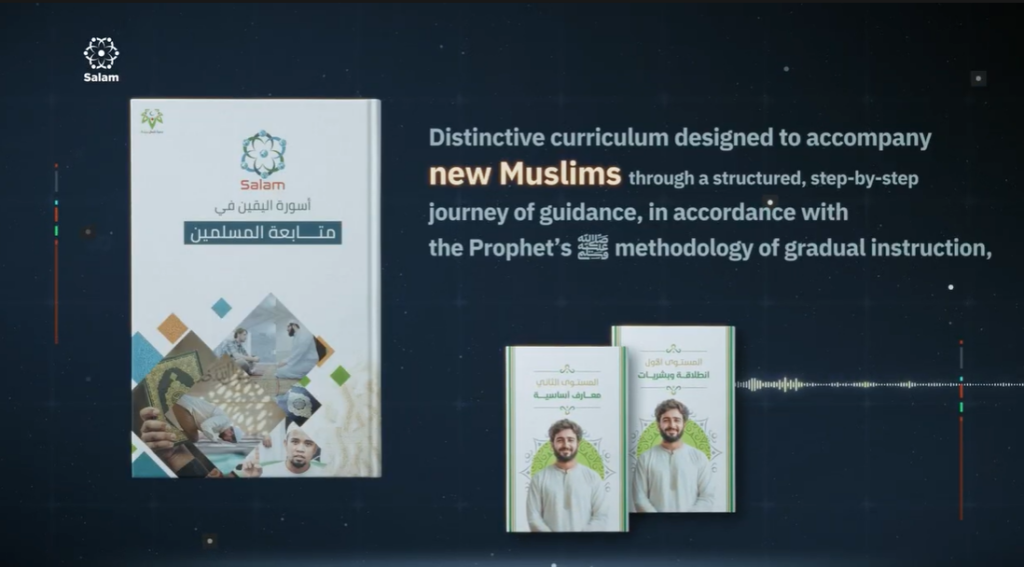
For those who have already taken their Shahada, the Salam Center invites you to enroll in the Asawirat Al-Yaqeen (Bracelets of Certainty) program — a structured, four-stage post-conversion curriculum built on the pure creed of Ahlus Sunnah wal Jama’ah:
- Stage One: The Foundation — the pillars of Islam, the meaning of the Shahada, purification, and prayer
- Stage Two: The Construction Phase — the pillars of Iman, fasting, Zakat, Hajj, and sincere repentance
- Stage Three: The Consolidation Phase — spiritual nurturing, moral character, practical life rulings
- Stage Four: The Empowerment Phase — contemporary issues, theological foundations, and a life roadmap from Surah Al-Asr
The program has already guided 114,588 new Muslims across 140 countries. Graduation rates exceed 63% through all four stages, with 41.3% achieving an “excellent” grade. Join a global community of believers walking the path of Yaqeen — certain faith.
Reach out directly to the Salam Center team to start the Asawirat Al-Yaqeen (Bracelets of Certainty) program for FREE.
Summary
Sunni Islam and Shia Islam diverge on questions central to the religion — the nature of Islamic leadership, the status of the Companions, the sources of law, and the boundaries of human infallibility. Sunni Islam, as the path of Ahlus Sunnah wal Jama’ah, preserves the Quran and the authenticated Sunnah through the generation that Allah chose to carry them, resting on a chain of transmission that fourteen centuries of scholarship has verified and protected.
Shia theology introduced doctrines absent from the Quran and the authenticated Prophetic tradition — the infallible Imam, the hidden twelfth Imam, and Taqiyya as a religious duty.
Frequently Asked Questions
What is the main difference between Sunni Islam and Shia Islam?
The foundational difference is the question of leadership (Imamate). Sunni Islam holds that the Muslim Caliph is a political leader chosen by the community; Shia Islam treats the Imamate as a divine pillar of religion, believing Allah designated Ali ibn Abi Talib and eleven descendants as infallible guides. All other theological divergences between the two flow from this core dispute.
Sunni Islam vs. Shia Islam: Which is Better?
Sunni Islam is better than Shia Islam. Sunni Islam represents the authentic, preserved Islam of the Prophet Muhammad (PBUH) and his Companions. It rests on the Quran and rigorously authenticated Sunnah, transmitted by the generation Allah commended in Quran 9:100. Shia Islam introduced doctrines — the infallible Imam, Taqiyya, and the hidden twelfth Imam — absent from both the Quran and the authenticated Prophetic tradition.
Which is more orthodox — Sunni or Shia Islam?
Sunni Islam is the more orthodox tradition. It preserves the Quran and the Sunnah through the authenticated transmissions of the Companions, whom Allah commended in Quran 9:100. Shia Islam introduced doctrines — the infallible Imam, the hidden twelfth Imam, and Taqiyya as a religious duty — that have no basis in the Quran or the authenticated Sunnah recognized by the Prophet’s (PBUH) generation.
Which tradition follows the Prophet Muhammad (PBUH) more closely — Sunni or Shia?
Sunni Islam follows the Prophet (PBUH) most closely because it relies on the Companions’ transmission of the Quran and Sunnah — the very people the Prophet (PBUH) charged with carrying his message. Shia Islam rejects most Companions as betrayers, which logically undermines the authenticity of every Islamic text it simultaneously claims to follow.
Curious about Islam?
Journey towards clarity and purpose. Our team is here to support you in your search for truth and spiritual guidance.
Embrace the Truth