
Joseph in Islam vs. Christianity
| Key Takeaways |
| Prophet Yusuf is honored in Islam as a Messenger of Allah who received direct revelation, while Christianity remembers Joseph as a righteous patriarch rather than a prophet in the revelatory sense. |
| Surah Yusuf (Quran 12) narrates the story in a single unbroken sequence, while Genesis spreads the same events across fourteen chapters (37–50). |
| Both scriptures agree that Joseph resisted the seduction of his master’s wife, though the Quran adds a direct declaration of his innocence and Allah’s protection over him (Quran 12:24). |
| Islamic theology holds that Yusuf, as a Prophet, was protected from the sin his master’s wife sought — a doctrine known as ismah — which shapes how Muslims read the episode differently than how it is read in Christian tradition. |
Joseph appears in both the Quran and the Bible — but the two accounts diverge sharply on who he was, why his story was told, and what it proves about Allah. In Islam, Yusuf (peace be upon him) is a Prophet who received wahy, direct revelation, and whose trials demonstrate divine protection over those Allah chooses for prophethood.
In Christianity, Joseph is remembered as a patriarch of extraordinary faith and forgiveness, but not as one who received scripture or was sent with a message to a nation.
What is the story of Joseph in Islam and Christianity?
Yusuf ibn Ya’qub ibn Ishaq ibn Ibrahim — Joseph, son of Jacob, son of Isaac, son of Abraham — is one of the few figures the Quran and the Bible narrate in comparable detail. The Quran devotes an entire surah, Chapter 12, to his life from beginning to end, calling it “the best of stories” (Quran 12:3). This is unusual; most prophetic accounts in the Quran are scattered across several chapters, referenced in fragments tied to different lessons.
Yusuf’s account instead unfolds as a single continuous narrative, and classical scholars note it was revealed after a Jewish questioner in Makkah asked the Prophet Muhammad (PBUH) what he knew of Joseph’s history — a detail the Quran itself addresses directly.
The Genesis account spans a wider stretch of scripture, from chapter 37 through chapter 50, weaving Joseph’s story into the broader Israelite migration into Egypt.
Both accounts trace the same skeleton: a favored son, prophetic dreams, jealous brothers, betrayal, slavery in Egypt, a false accusation, imprisonment, dream interpretation, rise to power, and reunion with his family. The skeleton is shared. The theology built on top of it is not.
1. The dream and the warning of jealousy is the same in the Islamic and Christian narratives
Both scriptures open Yusuf’s story with the same dream: eleven stars, the sun, and the moon bowing before him. In the Quran, Yusuf tells his father directly:
إِذْ قَالَ يُوسُفُ لِأَبِيهِ يَا أَبَتِ إِنِّي رَأَيْتُ أَحَدَ عَشَرَ كَوْكَبًا وَالشَّمْسَ وَالْقَمَرَ رَأَيْتُهُمْ لِي سَاجِدِينَ
“[Of these stories mention] when Joseph said to his father, ‘O my father, indeed I have seen [in a dream] eleven stars and the sun and the moon; I saw them prostrating to me.'” (Quran 12:4)
His father, Prophet Ya’qub (peace be upon him), immediately recognizes the prophetic weight of the dream and warns him:
قَالَ يَا بُنَيَّ لَا تَقْصُصْ رُؤْيَاكَ عَلَىٰ إِخْوَتِكَ فَيَكِيدُوا لَكَ كَيْدًا ۖ إِنَّ الشَّيْطَانَ لِلْإِنسَانِ عَدُوٌّ مُّبِينٌ
“He said, ‘O my son, do not relate your vision to your brothers or they will contrive against you a plan. Indeed Satan, to man, is a manifest enemy.'” (Quran 12:5)
Genesis records nearly the identical dream in almost identical detail. In the ESV rendering of Genesis 37, Joseph tells his brothers directly rather than his father alone, and his father Jacob rebukes him openly, asking whether the whole family will really bow before him — a rebuke the brothers hear, which deepens their resentment.
The difference is subtle but meaningful: the Quran frames Ya’qub’s caution as private, protective wisdom — shielding Yusuf from provoking envy — while Genesis has Joseph share the dream with the brothers themselves, which becomes the spark that hardens their hatred.
Islamic theology reads Ya’qub’s discernment here as evidence of his own prophetic insight, consistent with the broader Islamic understanding of faith in Islam as something built on knowledge transmitted through the prophetic line — not guesswork.
2. The betrayal by Joseph’s brothers in the Quran and the Bible
Both accounts agree the brothers conspired against Yusuf out of jealousy, and both agree they threw him into a well rather than killing him outright. The Quran narrates the brothers’ scheming with unusual psychological detail:
اقْتُلُوا يُوسُفَ أَوِ اطْرَحُوهُ أَرْضًا يَخْلُ لَكُمْ وَجْهُ أَبِيكُمْ وَتَكُونُوا مِن بَعْدِهِ قَوْمًا صَالِحِينَ
“Kill Joseph or cast him out to [another] land; the countenance of your father will [then] be only for you, and you will be after that a righteous people.” (Quran 12:9)
One brother intervenes, proposing the well instead of murder — a mercy that becomes the hinge of the entire story:
قَالَ قَائِلٌ مِّنْهُمْ لَا تَقْتُلُوا يُوسُفَ وَأَلْقُوهُ فِي غَيَابَتِ الْجُبِّ يَلْتَقِطْهُ بَعْضُ السَّيَّارَةِ إِن كُنتُمْ فَاعِلِينَ
“Said a speaker among them, ‘Do not kill Joseph but throw him into the bottom of the well; some travelers will pick him up—if you would do [something].'” (Quran 12:10)
Genesis tells the same turning point through Reuben, and later Judah, who separately argue for selling Joseph rather than killing him, motivated by both conscience and profit. In both traditions, the brothers then deceive their father with a bloodied garment, claiming a wolf devoured him.
Where the two accounts sharply diverge is in what happens inside the well. The Quran adds a detail absent from Genesis entirely — that Allah spoke to Yusuf while he was at the bottom of the well:
وَأَوْحَيْنَا إِلَيْهِ لَتُنَبِّئَنَّهُم بِأَمْرِهِمْ هَٰذَا وَهُمْ لَا يَشْعُرُونَ
“And We inspired to him, ‘You will surely inform them [someday] about this affair of theirs while they do not perceive [your identity].'” (Quran 12:15)
This is a small phrase with enormous theological weight in the Islamic reading: it establishes that Yusuf’s prophethood, or at least Allah’s direct communication with him, began during his darkest moment — not after his rise to power.
Christianity has no equivalent moment; Joseph’s dreams are treated as premonitions given to him earlier, not as ongoing communication sustained through his trial.
Learn More About Islam
Discover the beauty, teachings, and wisdom of Islam in a clear and welcoming way. Start exploring and deepen your understanding today.
Learn More3. Joseph’s slavery in Egypt and the temptation between Islam and Christianity
This section carries the most theologically sensitive divergence in the entire comparison, and it deserves precision rather than vague gesturing.
The Quran and the Bible agree, without contradiction, that Yusuf/Joseph resisted his master’s wife and remained innocent. This point is sometimes misrepresented in popular retellings, so it is worth stating plainly: the Bible does not depict Joseph sinning. In Genesis, Joseph refuses her advances outright and states his reasoning in explicit moral terms:
“How then can I do this great wickedness and sin against God?” (Genesis 39:9, ESV)
When she corners him physically, he flees, leaving his garment behind rather than remain — the same detail preserved in the Quran.
The Quran narrates the same episode but frames Yusuf’s resistance within its doctrine of prophetic protection:
وَرَاوَدَتْهُ الَّتِي هُوَ فِي بَيْتِهَا عَن نَّفْسِهِ وَغَلَّقَتِ الْأَبْوَابَ وَقَالَتْ هَيْتَ لَكَ ۚ قَالَ مَعَاذَ اللَّهِ ۖ إِنَّهُ رَبِّي أَحْسَنَ مَثْوَايَ ۖ إِنَّهُ لَا يُفْلِحُ الظَّالِمُونَ
“And she, in whose house he was, sought to seduce him. She closed the doors and said, ‘Come, you.’ He said, ‘[I seek] the refuge of Allah. Indeed, he is my master, who has made good my residence. Indeed, wrongdoers will not succeed.'” (Quran 12:23)
The following verse is the one most often cited — and most often mistranslated by careless summaries — so it deserves its exact wording:
وَلَقَدْ هَمَّتْ بِهِ ۖ وَهَمَّ بِهَا لَوْلَا أَن رَّأَىٰ بُرْهَانَ رَبِّهِ ۚ كَذَٰلِكَ لِنَصْرِفَ عَنْهُ السُّوءَ وَالْفَحْشَاءَ ۚ إِنَّهُ مِنْ عِبَادِنَا الْمُخْلَصِينَ
“And she certainly determined [to seduce] him, and he would have inclined to her had he not seen the proof of his Lord. And thus [it was] that We should avert from him evil and immorality. Indeed, he was of Our chosen servants.” (Quran 12:24)
The verse’s own conclusion is the key to reading it correctly: Allah states He averted evil from Yusuf, and calls him one of “Our chosen servants” — not one who sinned. This reflects the doctrine of ismah, the protection Allah grants His Prophets from committing the deliberate, major transgressions that would compromise their prophetic mission.
Classical commentators, including Ibn Kathir, transmit this verse alongside its conclusion rather than in isolation, and modern scholarship on tafsir has specifically scrutinized and set aside a small number of weak, unverified Isra’iliyyat narrations — reports absorbed from Jewish sources without a sound chain of transmission — that once circulated with more dramatic, unsupported embellishments of this scene.
Mainstream Ahl al-Sunnah scholarship does not build doctrine on those weak reports; it reads the verse as the verse concludes: Yusuf was protected, and he did not sin.
4. The false accusation and imprisonment of Joseph
Both accounts agree that the wife, caught in her own scheme, turned the accusation against Yusuf, and that he was imprisoned despite his innocence. The Quran adds a courtroom-like scene absent from Genesis: an infant witness (or, in some readings, a household member) testifies to whose garment was torn from which direction, proving Yusuf’s innocence to the household even before imprisonment. Genesis has no equivalent testimony scene; Joseph is simply believed guilty and jailed.
Perhaps the most striking divergence in this section is what the Quran records years later, when the truth is finally forced into the open. After Yusuf rises to power and the wife is confronted publicly, she confesses without being coerced:
قَالَتِ امْرَأَتُ الْعَزِيزِ الْآنَ حَصْحَصَ الْحَقُّ أَنَا رَاوَدتُّهُ عَن نَّفْسِهِ وَإِنَّهُ لَمِنَ الصَّادِقِينَ
“The wife of al-‘Azeez said, ‘Now the truth has become evident. It was I who sought to seduce him, and indeed, he is of the truthful.'” (Quran 12:51)
This confession, from the accuser herself, has no parallel scene in Genesis. Genesis lets Joseph’s innocence stand implicitly, proven by his conduct and God’s blessing on his subsequent life, but never stages a formal retraction from Potiphar’s wife.
5. Joseph’s Rise to power and interpreting dreams
Both scriptures agree Joseph interpreted Pharaoh’s dream of seven fat cows devoured by seven lean ones, correctly predicting seven years of abundance followed by seven years of famine, and both agree this earned him a position of high authority in Egypt.
The Quran has Yusuf request the position directly, framing his competence as a matter of trustworthy stewardship:
قَالَ اجْعَلْنِي عَلَىٰ خَزَائِنِ الْأَرْضِ ۖ إِنِّي حَفِيظٌ عَلِيمٌ
“[Joseph] said, ‘Appoint me over the storehouses of the land. Indeed, I will be a knowing guardian.'” (Quran 12:55)
Genesis presents the appointment as Pharaoh’s own initiative, recognizing that no one else possesses the discernment Joseph has shown. In both traditions, Yusuf’s rise is framed as a direct consequence of Allah’s — or, in the Christian framing, God’s providence — vindicating him after years of unjust suffering.
This shared theme of trials preceding elevation echoes the broader Islamic teaching found in Islamic principles, where patience and trust in Allah’s decree are treated as foundational to a believer’s character.
6. Reunion, forgiveness, and Joseph’s family’s arrival in Egypt in Islam and Christianity
This is the section where the two scriptures converge most closely in tone, even while differing in staging. Genesis records Joseph’s emotional collapse upon revealing himself:
“I am Joseph, your brother, whom you sold into Egypt… do not be grieved or angry with yourselves… God sent me before you to preserve life.” (Genesis 45:3–5)
The Quran records a parallel moment of forgiveness, delivered with equal grace but distinct wording, when the brothers finally stand before Yusuf and admit their guilt:
قَالَ لَا تَثْرِيبَ عَلَيْكُمُ الْيَوْمَ يَغْفِرُ اللَّهُ لَكُمْ ۖ وَهُوَ أَرْحَمُ الرَّاحِمِينَ
“He said, ‘No blame will there be upon you today. Allah will forgive you; and He is the most merciful of the merciful.'” (Quran 12:92)
Both prophets attribute the entire ordeal to a higher purpose rather than holding a grudge — this is the emotional and theological climax both traditions were building toward. The staging differs slightly: Genesis places the reunion in two acts (a testing phase with Benjamin, then the revelation), while the Quran compresses the final recognition into a shorter, more concentrated scene, followed later by Ya’qub regaining his sight through Yusuf’s shirt — a miracle detail unique to the Quranic account and absent from Genesis.
Why does the Quran retell a story already found in the Bible?
The Quran directly answers this question within the surah itself, and the answer is central to how Muslims understand why do Muslims believe in the Quran. Twice, Allah states that Prophet Muhammad (PBUH) had no access to this history before it was revealed to him:
ذَٰلِكَ مِنْ أَنبَاءِ الْغَيْبِ نُوحِيهِ إِلَيْكَ ۖ وَمَا كُنتَ لَدَيْهِمْ إِذْ أَجْمَعُوا أَمْرَهُمْ وَهُمْ يَمْكُرُونَ
“That is from the news of the unseen which We reveal to you, [O Muhammad]. And you were not with them when they put together their plan while they were conspiring.” (Quran 12:102)
And at the surah’s opening:
نَحْنُ نَقُصُّ عَلَيْكَ أَحْسَنَ الْقَصَصِ بِمَا أَوْحَيْنَا إِلَيْكَ هَٰذَا الْقُرْآنَ وَإِن كُنتَ مِن قَبْلِهِ لَمِنَ الْغَافِلِينَ
“We relate to you, [O Muhammad], the best of stories in what We have revealed to you of this Qur’an although you were, before it, among the unaware.” (Quran 12:3)
Islamic scholarship reads this not as a retelling drawn from earlier scripture, but as an independent revelation confirming and, in places, correcting the transmitted history — consistent with the broader Islamic position on what the Quran says about other religions, and on how Islam views other religions more generally: earlier scriptures carried genuine revelation, but the Quran stands as the final, preserved correction.
Read Also: Mary in Islam vs Christianity
Learn More About Islam
Discover the beauty, teachings, and wisdom of Islam in a clear and welcoming way. Start exploring and deepen your understanding today.
Learn MoreLearn More Authentic Knowledge About Prophets with Salam
If Yusuf’s story stirred something in you — the patience, the forgiveness, the quiet trust in a plan larger than any single trial — there is more waiting for you.
Explore the Salam Platform for deeper study into the lives of the Prophets and the foundations of Islamic belief.
Read more reflections on the Salam blog, where new articles are added regularly for seekers and new Muslims alike.
Have a specific question, or wondering what it means to enter Islam? Reach out directly — our team is ready to listen, guide, and welcome you.

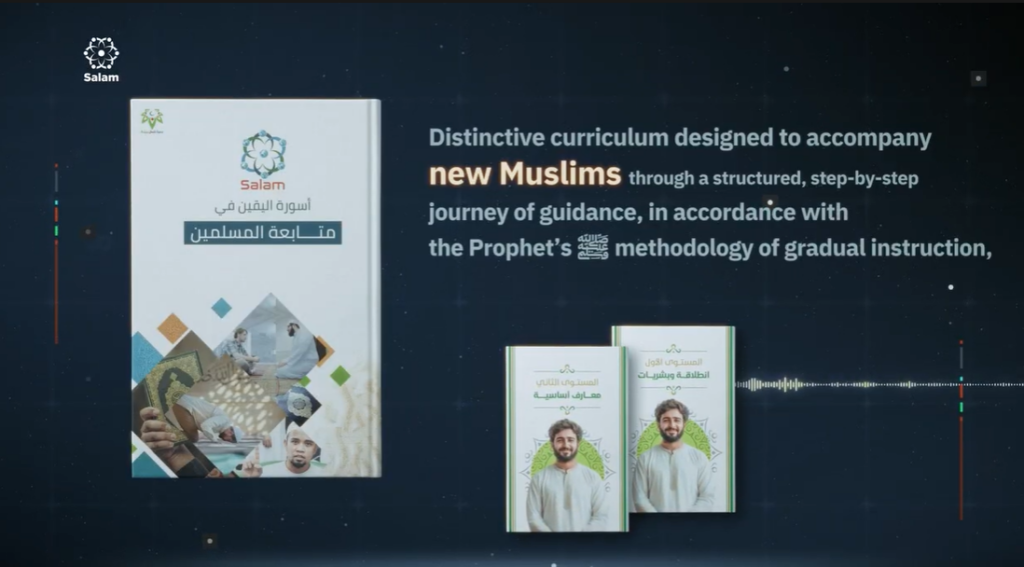
For those who have already taken their shahada, the Salam Center team walks alongside new Muslims through Asawirat Al-Yaqeen (Bracelets of Certainty), a structured four-stage program built for exactly this stage of the journey:
- Foundational knowledge of prayer, purification, and the pillars of faith
- Guidance through repentance and the life of the Prophet Muhammad (PBUH)
- Etiquette, family rulings, and daily life as a Muslim
- Advanced study of contemporary questions and the creed of Ahlus Sunnah wal Jama’ah
Reach out directly to the Salam Center team to start the Asawirat Al-Yaqeen (Bracelets of Certainty) program for FREE.
Summary
Yusuf’s account stands as one of the clearest windows into how Islam and Christianity read the same historical figure through different theological lenses. Both scriptures preserve his innocence, his forgiveness, and his rise from slavery to power with striking consistency.
Where they part is doctrine, not incident: the Quran frames every trial as evidence of prophetic protection and direct revelation, while Genesis frames the same events through providence and patriarchal faith — two distinct claims about who Yusuf truly was.
Frequently Asked Questions
Is Yusuf considered a prophet in Islam the way Joseph is in Christianity?
Yes and no. Islam explicitly designates Yusuf a prophet who received direct revelation (Quran 12:15, 12:102), while Christianity honors Joseph as a righteous patriarch guided by God through dreams, without the formal prophetic office attributed to figures like Isaiah or Jeremiah.
Does the Bible say Joseph sinned with Potiphar’s wife?
No. Genesis states Joseph refused her advances outright, calling it “great wickedness” and fleeing the house (Genesis 39:9–12). Both scriptures agree on his innocence in this episode.
What does Quran 12:24 actually mean about Yusuf’s intent?
The verse states Allah “averted from him evil and immorality” and calls him one of “Our chosen servants” (Quran 12:24) — the verse’s own conclusion affirms his protection, not a sin committed, consistent with the Sunni doctrine of prophetic ismah.
Why is Surah Yusuf called “the best of stories”?
The Quran uses this description in its opening verse, Quran 12:3, referring to its complete, single-surah narration — unique among prophetic accounts in the Quran, which are typically distributed across multiple chapters.
Curious about Islam?
Journey towards clarity and purpose. Our team is here to support you in your search for truth and spiritual guidance.
Embrace the Truth