What Does the Quran Say About Other Religions?
| Key Takeaways |
| The Quran acknowledges that Allah sent prophets and scriptures to all nations before the final revelation of Islam. |
| Islam recognizes the original Judaism and Christianity as earlier revelations from the same divine source, referring to their followers as “People of the Book.” |
| The Quran teaches that all authentic prophetic messages shared one core — the worship of Allah alone and the rejection of all false deities. |
| While Islam affirms earlier religions’ divine origin, it holds that their scriptures were altered over time and that the Quran is the final, preserved revelation. |
| The Quran permits respectful coexistence and justice toward non-Muslims while maintaining that Islam is the complete and final religion accepted by Allah. |
| Muslims are commanded to believe in all previous prophets and scriptures as an article of faith — rejecting them would constitute disbelief. |
To understand what the Quran says about other religions, you have to first understand how Islam views the history of revelation itself. Allah did not leave humanity without guidance before Prophet Muhammad (PBUH). Every nation received a messenger. Every people was given a path back to their Creator.
The diversity of religions on earth, from an Islamic perspective, does not indicate that Allah revealed contradictory truths — it reflects a long chain of divine guidance that culminated in the Quran. As the Quran states:
وَلَقَدْ بَعَثْنَا فِي كُلِّ أُمَّةٍ رَّسُولًا أَنِ اعْبُدُوا اللَّهَ وَاجْتَنِبُوا الطَّاغُوتَ
“And We certainly sent into every nation a messenger, [saying], ‘Worship Allah and avoid taghut.'” (Quran 16:36)
This single verse establishes the entire Islamic lens on world religions: they did not emerge from human imagination alone. They began as divine truth — and Islam came to complete and preserve that truth in its final, uncorrupted form.
1. The Quran Says Every Prophet Carried One Message of Worshipping Allah Alone
The Quran’s most foundational statement about all religions — including the earliest — is that every authentic prophet brought the same core message: pure monotheism (Tawhid).
Pure monotheism (Tawhid) is the thread that runs from Prophet Adam through Noah, Abraham, Moses, Jesus, and finally Muhammad (peace be upon them all).
The differences between religions are not differences in the fundamental call to worship Allah, but differences in the specific laws (sharia) and practices that Allah revealed to suit each community’s time and circumstances. The call to Tawhid, however, was never altered.
وَمَا أَرْسَلْنَا مِن قَبْلِكَ مِن رَّسُولٍ إِلَّا نُوحِي إِلَيْهِ أَنَّهُ لَا إِلَٰهَ إِلَّا أَنَا فَاعْبُدُونِ
“And We sent not before you any messenger except that We revealed to him that there is no deity except Me, so worship Me.” (Quran 21:25)
This is why faith in Islam requires believing in all of Allah’s prophets — not just Muhammad (PBUH). Denying any one of them is a rejection of the divine chain of revelation.
Learn More About Islam
Discover the beauty, teachings, and wisdom of Islam in a clear and welcoming way. Start exploring and deepen your understanding today.
Learn More2. The Quran’s Recognition of the People of the Book
The Quran gives a special category to the followers of Judaism and Christianity, calling them Ahl al-Kitab — the People of the Book.
The Quran speaks directly to the People of the Book in dozens of verses. It affirms the Torah (Tawrah) given to Moses (PBUH) and the Gospel (Injeel) given to Jesus (PBUH) as originally divine in their source.
إِنَّا أَنزَلْنَا التَّوْرَاةَ فِيهَا هُدًى وَنُورٌ
“Indeed, We sent down the Torah, in which was guidance and light.” (Quran 5:44)
And of the Gospel:
وَقَفَّيْنَا عَلَىٰ آثَارِهِم بِعِيسَى ابْنِ مَرْيَمَ مُصَدِّقًا لِّمَا بَيْنَ يَدَيْهِ مِنَ التَّوْرَاةِ ۖ وَآتَيْنَاهُ الْإِنجِيلَ فِيهِ هُدًى وَنُورٌ
“And We sent, following in their footsteps, Jesus, the son of Mary, confirming that which came before him in the Torah; and We gave him the Gospel, in which was guidance and light.” (Quran 5:46)
The Quran’s affirmation of earlier scriptures applies to their original, unaltered form — and that the current texts of the Torah and Gospel contain additions, deletions, and distortions introduced by human hands over centuries.
3. The Quran’s Position on Alteration of Earlier Scriptures
The Quran does not dismiss Judaism and Christianity. It explains why their current forms diverge from the original message. The term used in the Quran for this process is tahrif — distortion or alteration.
فَبِمَا نَقْضِهِم مِّيثَاقَهُمْ لَعَنَّاهُمْ وَجَعَلْنَا قُلُوبَهُمْ قَاسِيَةً ۖ يُحَرِّفُونَ الْكَلِمَ عَن مَّوَاضِعِهِ
“So for their breaking of the covenant We cursed them and made their hearts hard. They distort words from their [proper] usages.” (Quran 5:13)
This is precisely why the Quran was preserved — Allah Himself guaranteed its protection. As the Quran declares:
إِنَّا نَحْنُ نَزَّلْنَا الذِّكْرَ وَإِنَّا لَهُ لَحَافِظُونَ
“Indeed, it is We who sent down the Quran and indeed, We will be its guardian.” (Quran 15:9)
For those who want to understand the Quran’s unique status and preservation in detail, the Salam Platform’s dedicated resource on what Muslims believe about the Quran addresses this comprehensively — including why Muslims consider it categorically different from all other existing scriptures.
4. The Quran Says Islam is the Final and Complete Religion
The Quran is clear that Islam — the religion of submission to Allah alone — is not one option among many equal paths. It is the complete and final expression of the one religion that Allah revealed to all prophets, brought to its completion through Muhammad (PBUH).
الْيَوْمَ أَكْمَلْتُ لَكُمْ دِينَكُمْ وَأَتْمَمْتُ عَلَيْكُمْ نِعْمَتِي وَرَضِيتُ لَكُمُ الْإِسْلَامَ دِينًا
“This day I have perfected for you your religion and completed My favor upon you and have approved for you Islam as religion.” (Quran 5:3)
And the Quran states explicitly:
وَمَن يَبْتَغِ غَيْرَ الْإِسْلَامِ دِينًا فَلَن يُقْبَلَ مِنْهُ وَهُوَ فِي الْآخِرَةِ مِنَ الْخَاسِرِينَ
“And whoever desires other than Islam as religion — never will it be accepted from him, and he, in the Hereafter, will be among the losers.” (Quran 3:85)
Imam Al-Nawawi (d. 676 AH), one of the great Shafi’i scholars of creed and fiqh, affirmed in his foundational works that this verse applies to those who receive the message of the Prophet Muhammad (PBUH) clearly and reject it.
The Quran’s call is to recognize that the chain of revelation has closed, the proof has been established, and the final guide — the Prophet (PBUH) — has come.
5. The Quran on Polytheism and Shirk
While the Quran treats the People of the Book with a distinct category of engagement, it addresses polytheism (shirk) in far more direct terms. Associating partners with Allah is described as the one sin that will not be forgiven if a person dies in that state.
إِنَّ اللَّهَ لَا يَغْفِرُ أَن يُشْرَكَ بِهِ وَيَغْفِرُ مَا دُونَ ذَٰلِكَ لِمَن يَشَاءُ
“Indeed, Allah does not forgive association with Him, but He forgives what is less than that for whom He wills.” (Quran 4:48)
This theological clarity is not aggression — it is honesty. The Quran invites all people, including polytheists, to reflect and return to the pure worship of their Creator.
The Salam Platform’s article on polytheism and on monotheism explore this distinction in depth, showing how Islam’s insistence on Tawhid is the most liberating and rational call in human history.
6. Justice and Coexistence With Followers of Other Religion in the Quran
Affirming Islam’s finality does not mean hostility toward those who differ. The Quran explicitly commands Muslims to deal justly and kindly with non-Muslims who do not fight them or drive them from their homes.
لَّا يَنْهَاكُمُ اللَّهُ عَنِ الَّذِينَ لَمْ يُقَاتِلُوكُمْ فِي الدِّينِ وَلَمْ يُخْرِجُوكُم مِّن دِيَارِكُمْ أَن تَبَرُّوهُمْ وَتُقْسِطُوا إِلَيْهِمْ ۚ إِنَّ اللَّهَ يُحِبُّ الْمُقْسِطِينَ
“Allah does not forbid you from those who do not fight you because of religion and do not expel you from your homes — from being righteous toward them and acting justly toward them. Indeed, Allah loves those who act justly.” (Quran 60:8)
Imam Ibn al-Qayyim Al-Jawziyyah (d. 751 AH), in Ahkam Ahl al-Dhimma, dedicated extensive scholarship to how Muslims are to interact with non-Muslim communities under Islamic governance — with justice, protection, and clear rights.
This is not a modern accommodation; it is foundational Islamic jurisprudence grounded directly in the Quran and Sunnah.
This principle of just coexistence also runs through the Salam Platform’s dedicated exploration of how Islam views other religions, which examines the practical and theological dimensions of Muslim-non-Muslim relations across history.
Learn More About Islam
Discover the beauty, teachings, and wisdom of Islam in a clear and welcoming way. Start exploring and deepen your understanding today.
Learn MoreRead Also: Does the Quran Say Men and Women Are Equal?
7. The Quran’s Call to Common Ground With the People of the Book
One of the most striking verses in the Quran regarding other religions is a direct invitation to Jews and Christians — not an argument, but a call to shared ground.
قُلْ يَا أَهْلَ الْكِتَابِ تَعَالَوْا إِلَىٰ كَلِمَةٍ سَوَاءٍ بَيْنَنَا وَبَيْنَكُمْ أَلَّا نَعْبُدَ إِلَّا اللَّهَ وَلَا نُشْرِكَ بِهِ شَيْئًا
“Say, ‘O People of the Scripture, come to a word that is equitable between us and you — that we will not worship except Allah and not associate anything with Him.'” (Quran 3:64)
This verse, which the Prophet (PBUH) sent in letters to rulers of neighboring kingdoms, demonstrates that Islam’s approach to engagement with other faiths is rooted in intellectual honesty and the invitation to the clearest truth — not force, coercion, or contempt.
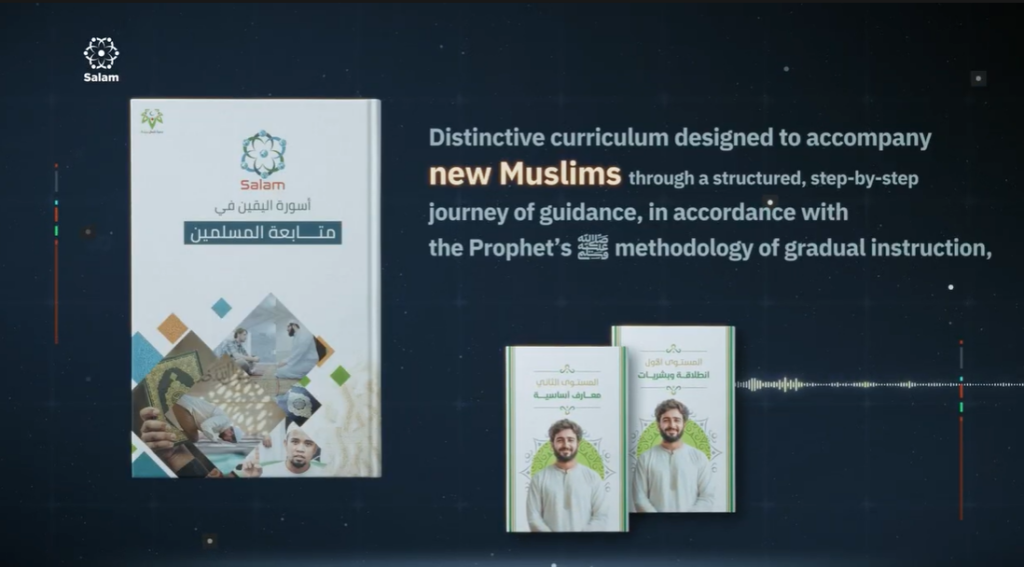
The approach to Da’wah that flows from verses like this shapes everything the Salam Center does — including the Asawirat Al-Yaqeen (Bracelets of Certainty) curriculum, which guides new Muslims through a structured understanding of these very theological realities, building firm certainty from the ground up.
Reach out directly to the Salam Center team to start the Asawirat Al-Yaqeen (Bracelets of Certainty) program for FREE.
Read Also: What Does the Quran Say About Homosexuality?
Read Also:What Does the Quran Say About Women?
Explore More Authentic Knowledge About Islam & Quran with Salam
If this article has opened a question that you want to explore further, you are in the right place.
The Salam Platform exists to offer sincere, evidence-grounded answers to the questions that matter most — about faith, religion, and the meaning of existence.
Visit the Salam blog for in-depth articles on Islamic beliefs, prophets, the Quran, ethics, and much more.
If you have a personal question, want guidance on entering Islam, or simply want to speak with someone, reach out directly — the Salam Center team is here.
Read Also: When the Quran Calls Mary “Sister of Aaron”
For new Muslims, the Asawirat Al-Yaqeen (Bracelets of Certainty) program is a structured post-conversion journey designed to build firm, lasting faith:
- Four progressive stages — from foundational pillars of Islam to advanced creed, ethics, and life rulings
- Therapeutic methodology — compassionate language that nurtures the heart while engaging the mind
- Implemented with over 114,000 new Muslims across 140 countries
- Interactive assessments at each level to consolidate understanding
- Available in multiple languages and accessible through a growing digital platform
Reach out directly to the Salam Center team to start the Asawirat Al-Yaqeen (Bracelets of Certainty) program for FREE.
Summary
The Quran presents a unified view of religious history: all prophets carried the call to Tawhid, earlier scriptures were divine in origin but altered over time, and Islam arrived as the final, preserved, and complete revelation. Muslims are obligated to believe in all prophets and earlier scriptures as an article of faith, while recognizing the Quran as the only uncorrupted divine word remaining.
Allah’s justice underlies the entire framework — no people were left without guidance, and no one is held accountable beyond what the clear divine message established. This is why the Quran calls not for hostility toward other religions but for honest engagement, justice in dealings, and a confident invitation to the common ground of worshipping Allah alone.
Frequently Asked Questions
Does the Quran say that Islam is the only true religion?
The Quran states clearly that Islam — submission to Allah alone — is the religion accepted by Him, and that it represents the completion of the same monotheistic message sent to all prophets. Quran 3:85 specifies that no other path will be accepted after the final message has been delivered. Islam’s scholars of Ahlus Sunnah affirm this as established creed.
What does the Quran say about Jesus and Christianity?
The Quran honors Jesus (PBUH) as one of the greatest prophets, born miraculously of the Virgin Mary, given the Gospel, and sent to the Children of Israel with signs and wisdom. The Quran does not recognize the Christian doctrines of the Trinity or divine sonship, holding these to be later human additions that departed from Jesus’s own original monotheistic teaching.
Does the Quran consider Jews and Christians to be enemies of Islam?
The Quran designates Jews and Christians as People of the Book — a category of respect acknowledging their earlier divine revelation. The Quran commands Muslims to engage them justly and to debate them only in the best manner (Quran 29:46). Hostility is not a Quranic default; justice is. Opposition arises only in the context of active aggression or persecution, not mere religious difference.
Does the Quran say anything about polytheistic religions?
The Quran addresses shirk — associating partners with Allah — as the gravest theological error, describing it as the one sin Allah will not forgive if a person dies upon it (Quran 4:48). Yet the Quran’s response to polytheism is rational invitation and reasoned argument, not contempt. It calls all people to reflect on creation and return to the pure worship of their Creator, as God in Islam is the one Creator shared by all humanity.
Curious about Islam?
Journey towards clarity and purpose. Our team is here to support you in your search for truth and spiritual guidance.
Embrace the Truth