
Where in the Quran Does It Say Music Is Haram?
| Key Takeaways |
| The Quran does not name music explicitly haram in a single direct verse, but Surah Luqman 31:6 has been understood by many companions and scholars as referring to it. |
| Sahih al-Bukhari 5590 lists musical instruments (ma’azif) alongside adultery and alcohol as things some of the Prophet’s followers would wrongly try to legalize. |
| Scholars of the four Sunni schools largely classify musical instruments as haram, while permitting the daf (hand drum) on specific occasions like Eid and weddings. |
| A minority of respected scholars, including Ibn Hazm, held that instrumental music is permissible when free of sinful content. |
Is music haram in the Quran? The honest answer is that no verse names music by word and declares it forbidden outright. The ruling on music in Islam rests mainly on interpretation of Surah Luqman 31:6, combined with hadiths from Sahih al-Bukhari, and this combination has led the majority of classical scholars to rule instrumental music impermissible while carving out clear exceptions.
Is Music Haram in the Quran?
No single ayah in the Quran uses the word “music” and declares it forbidden by name. However, the Quran addresses the issue through the concept of lahw al-hadith — distracting speech or amusement — in Surah Luqman, and the majority of early Muslim scholars, drawing on the interpretations of companions like Ibn Mas’ud, Ibn Abbas, and Jabir, understood this phrase to include music that pulls a person away from the remembrance of Allah.
The companions closest to the Prophet (PBUH) did not read this verse in isolation. Ibn Mas’ud, when asked about the meaning of lahw al-hadith, swore by Allah that the phrase referred to singing. This interpretation, recorded in the tafsir tradition, shaped how later scholars approached the verse.
It also matters to clarify what the ayah does condemn specifically: buying or pursuing distraction with the intent to mislead people from the path of Allah, not casual sound in general. This distinction is why scholars diverged on exactly how far the ruling extends.
Where in the Quran Does It Say Music Is Haram?
No verse states “music is haram” using that exact wording. The relevant evidence is Surah Luqman, verse 6, understood through the companions’ explanations and reinforced by hadith. Below is a breakdown of the textual foundation.
The Verse of Lahw al-Hadith Explains the Core Prohibition
وَمِنَ النَّاسِ مَن يَشْتَرِي لَهْوَ الْحَدِيثِ لِيُضِلَّ عَن سَبِيلِ اللَّهِ بِغَيْرِ عِلْمٍ وَيَتَّخِذَهَا هُزُوًا ۚ أُولَٰئِكَ لَهُمْ عَذَابٌ مُّهِينٌ
“And of the people is he who buys the amusement of speech to mislead [others] from the way of Allah without knowledge and who takes it in ridicule. Those will have a humiliating punishment.” (Quran 31:6)
This verse was revealed regarding a Meccan trader who purchased Persian tales and songs specifically to distract people from listening to the Quran.
Ibn Kathir’s tafsir records that the businessman used a singing servant girl to lure people away from gatherings where the Quran was recited.
The Historical Context Behind the Revelation Shapes Its Scope
The circumstances of revelation (asbab al-nuzul) show that the verse targeted a deliberate campaign to drown out Quranic recitation with entertainment.
This context is why many scholars restrict the strictest reading of the verse to amusement pursued with the intent to mislead, while others, following the majority of companions and successors, apply it more broadly to any lahw — music included — that leads to heedlessness of Allah’s remembrance regardless of stated intent.
The Term Lahw Al Hadith Carries Broader Meaning in Classical Tafsir
Classical exegetes such as those cited in Ma’arif al-Quran note that the majority of companions, successors (Tabi’in), and commentators applied lahw al-hadith generally to anything that induces heedlessness toward worship, including music accompanied by instruments and frivolous or obscene storytelling.
What Do Authentic Hadiths Say About Music?
Since the Quran does not use explicit vocabulary for music, the hadith literature carries the weight of clarifying the ruling in practical terms. Several narrations in the most trusted collections address musical instruments directly.
Sahih Al Bukhari Lists Musical Instruments Among Things Wrongly Made Lawful
“From among my followers there will be some people who will consider illegal sexual intercourse, the wearing of silk, the drinking of alcoholic drinks and the use of musical instruments, as lawful.” (Sahih al-Bukhari 5590)
Scholars such as Ibn al-Qayyim explained this hadith proves two things: first, the Prophet’s (PBUH) wording that these people would “permit” musical instruments implies they were not permitted to begin with; second, ma’azif is grouped alongside things unambiguously forbidden, such as zina and alcohol, which signals a shared ruling.
Ibn Taymiyyah similarly stated that this hadith indicates ma’azif — a term Arabic-language scholars define as musical instruments — are haram.
It should be noted honestly that this hadith is transmitted in Bukhari’s Sahih in a mu’allaq (suspended chain) form at that specific point, which led scholars like Ibn Hazm to question its use as standalone proof.
Ibn al-Qayyim and later Sheikh al-Albani, however, documented supporting chains through al-Tabarani and al-Bayhaqi that they judged authentic, treating the hadith as sound.
The Duff Was Permitted on Specific Joyful Occasions
“Musical instruments of Satan near the Prophet?” — Abu Bakr’s objection when he found two young girls singing beside Aisha on the day of Eid, to which the Prophet replied, “Leave them.” (Sahih al-Bukhari 949)
A separate narration confirms this took place with a duff, a simple hand drum, and specifically on the days of Eid and the days of Mina.
The Prophet (PBUH) explained to Abu Bakr, “Leave them, for these days are the days of Eid,” permitting unaccompanied singing by young girls and the daf on days of communal celebration.
Scholars use this hadith to establish that the general prohibition of instruments does not extend to the daf when used on legitimate occasions of joy such as Eid, weddings, and the return of a traveler, so long as the content and setting remain free of sin.
Read Also: What Does the Quran Say About Dogs?
How Do the Four Sunni Schools Rule on Musical Instruments?
The overwhelming majority of classical jurists across all four Sunni madhabs ruled musical instruments haram, basing this on the combination of Surah Luqman 31:6 as understood by the companions, and the hadith of Sahih al-Bukhari 5590.
Ibn al-Qayyim documented that similar prohibitive narrations were also attributed to companions including Sahl ibn Sa’d, Imran ibn Husayn, Abdullah ibn Amr, Ibn Abbas, Abu Hurayrah, and Ali ibn Abi Talib.
Read Also: What Does the Quran Say About Jesus’s Death?
Why Does the Quran Address Distraction Rather Than Sound Itself?
The underlying concern in Surah Luqman is heedlessness — ghaflah — not sound as a physical phenomenon. The Quran consistently centers its guidance on the state of the heart and its orientation toward Allah, which is why the ayah discusses purchasing distraction “to mislead from the way of Allah” rather than condemning rhythm or melody as inherently evil substances.
This reflects the broader Quranic pattern found throughout discussions of how Islam views the nature of Allah and human accountability, where actions are judged by their effect on a person’s remembrance of their Creator and their sincerity of intention.
Read Also: What Does the Quran Say About Parents?
Learn More About Islam
Discover the beauty, teachings, and wisdom of Islam in a clear and welcoming way. Start exploring and deepen your understanding today.
Learn MoreExplore More With Salam
Questions about Islamic rulings often lead to deeper questions about faith itself. If this topic raised more questions for you, we would love to walk through them together.
Browse more articles on the Salam blog covering Quranic beliefs, the life of Prophet Muhammad (PBUH), and comparative faith topics.
Reach out directly — our team is ready to listen, guide, and welcome you.

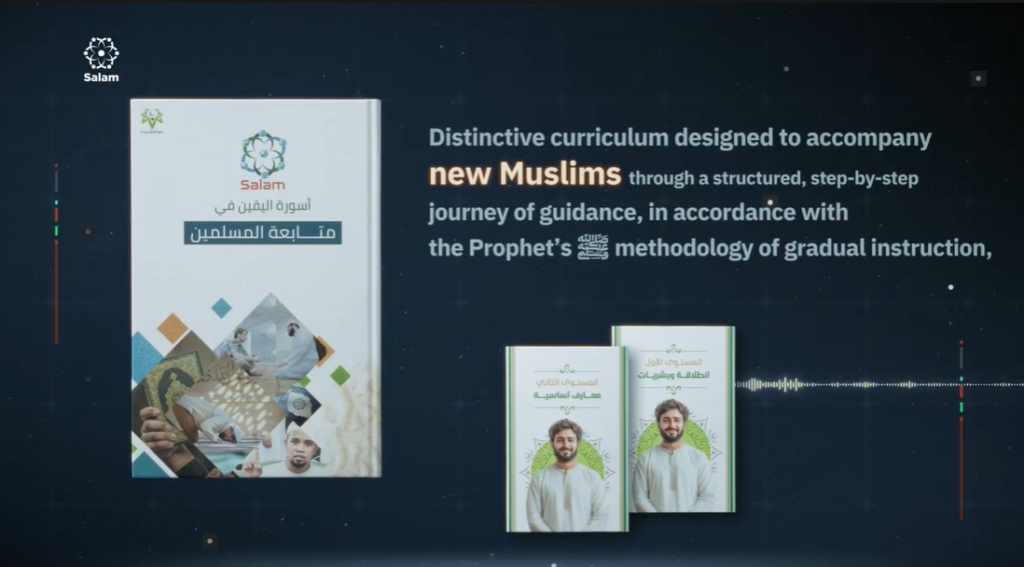
New to Islam and looking for structured guidance? The Salam Center‘s Asawirat Al-Yaqeen (Bracelets of Certainty) program offers:
- A four-stage learning path covering foundational worship, repentance, the Seerah, and daily Islamic life
- One-on-one mentorship style support tailored to new Muslims
- Practical rulings taught with compassion, not just theory
- A global community of learners across 140 countries
Reach out directly if you have personal questions, want guidance on entering Islam, or wish to join the program.
Reach out directly to the Salam Center team to start the Asawirat Al-Yaqeen (Bracelets of Certainty) program for FREE.
Summary
Music’s status in Islam draws from Surah Luqman 31:6 and its companion-based interpretation, reinforced by Sahih al-Bukhari’s hadith grouping musical instruments with clearly forbidden acts. The daf remains a well-documented exception for joyful occasions.
Scholarly opinion on instrumental music spans from majority prohibition to conditional permission among respected jurists like Ibn Hazm. Sincere seekers are encouraged to study primary sources directly and consult qualified scholars for personal guidance.
Frequently Asked Questions
Does the Quran explicitly say the word “music” is haram?
No. The Quran does not use the word music directly; the ruling is derived from Surah Luqman 31:6, which condemns lahw al-hadith (distracting amusement), understood by companions like Ibn Mas’ud to include singing and music.
Are musical instruments haram according to Sahih al-Bukhari?
Sahih al-Bukhari 5590 lists musical instruments (ma’azif) alongside adultery and alcohol as things some people would wrongly legalize, which most scholars interpret as clear evidence of prohibition.
Curious about Islam?
Journey towards clarity and purpose. Our team is here to support you in your search for truth and spiritual guidance.
Embrace the Truth