
What Does the Quran Say About Jesus’s Death?
| Key Takeaways |
| The Quran states in Surah An-Nisa 4:157 that Jesus was neither killed nor crucified, but that it was made to appear so to those who claimed otherwise. |
| According to Surah Al-Imran 3:55, Allah raised Jesus to Himself, meaning Jesus is alive and was saved from crucifixion. |
| Allah caused someone else to resemble Jesus, and that person was crucified in his place. |
| Muslims honor Jesus (Isa) as a prophet and the Messiah, though Islam rejects his crucifixion and divinity. |
| The Quran’s account differs from mainstream Christian belief, which holds that Jesus died on the cross and was resurrected. |
The Quran teaches that Jesus, son of Mary, did not die by crucifixion. Instead, Allah raised him alive to the heavens, sparing him from the death his enemies intended. This single point marks one of the sharpest theological divides between Islam and Christianity, and it shapes how Muslims understand prophethood, divine protection, and the nature of Allah’s justice.
Seekers exploring Islam often ask this question early, since it touches directly on who Jesus was and what happened to him. The Quran addresses it directly, without ambiguity, in two key passages that this article examines closely, alongside their historical context and their connection to Islamic belief about the end times.
What Does the Quran Say About Jesus’s Death?
The Quran explicitly denies that Jesus died by crucifixion, stating instead that Allah raised him and that another person was made to resemble him. This teaching appears in Surah An-Nisa, addressing the claims of those who boasted about killing the Messiah.
وَقَوْلِهِمْ إِنَّا قَتَلْنَا الْمَسِيحَ عِيسَى ابْنَ مَرْيَمَ رَسُولَ اللَّهِ وَمَا قَتَلُوهُ وَمَا صَلَبُوهُ وَلَٰكِن شُبِّهَ لَهُمْ
“And [for] their saying, ‘Indeed, we have killed the Messiah, Jesus, the son of Mary, the messenger of Allah.’ And they did not kill him, nor did they crucify him; but [another] was made to resemble him to them.” (Quran 4:157)
This verse responds directly to a historical claim. It does not merely correct a detail; it overturns the entire premise that Jesus’s enemies succeeded in ending his life. The Arabic phrase “shubbiha lahum” indicates that the resemblance, or confusion, was made to happen to the onlookers, not that Jesus himself changed form.
Learn More About Islam
Discover the beauty, teachings, and wisdom of Islam in a clear and welcoming way. Start exploring and deepen your understanding today.
Learn MoreHow Does the Quran Say Jesus Died?
The Quran states that Jesus did not die in the way his enemies intended; instead, Allah raised him to Himself before any harm could reach him. This is described in Surah Al-Imran using the term “tawaffa,” which classical Arabic lexicons and Quranic exegesis treat as encompassing both the sense of “taking” and “raising.”
إِذْ قَالَ اللَّهُ يَا عِيسَىٰ إِنِّي مُتَوَفِّيكَ وَرَافِعُكَ إِلَيَّ وَمُطَهِّرُكَ مِنَ الَّذِينَ كَفَرُوا
“[Mention] when Allah said, ‘O Jesus, indeed I will take you and raise you to Myself and purify you from those who disbelieve…'” (Quran 3:55)
The meaning of “tawaffa” in this context
The word tawaffa is used elsewhere in the Quran to mean sleep, the ending of a set term, or death, depending on context. In this verse, the pairing with “raise you to Myself” (wa rafi’uka ilayya) leads the majority of Ahlus Sunnah wal Jama’ah scholars to understand it as Allah lifting Jesus bodily, sparing him from crucifixion altogether — not as a description of ordinary death.
Does the Quran Say Jesus is Alive?
Yes, the Quran affirms that Jesus is alive, having been raised bodily to Allah rather than dying on the cross. This belief is a settled point of creed among Ahlus Sunnah wal Jama’ah, tied directly to the prophetic narrations about the end of time.
The hadith evidence for Jesus’s return
The Prophet Muhammad (PBUH) spoke of Jesus’s second coming as one of the major signs preceding the Day of Judgment. This narration is recorded in Sahih al-Bukhari:
“By Him in Whose Hands my soul is, surely the son of Mary will soon descend amongst you and will judge mankind justly; he will break the Cross and kill the pigs and there will be no Jizya.” (Sahih al-Bukhari 3448)
A parallel and more detailed account appears in Sahih Muslim, describing how Jesus will descend near Damascus during the time of the Dajjal (the Antichrist):
“…it would be at this very time that Allah would send Jesus, son of Mary, and he will descend at the white minaret in the eastern side of Damascus… He would then search for him until he would catch hold of him at the gate of Ludd and would kill him.” (Sahih Muslim 2937a)
Read Also: What Does the Quran Say About Dogs?
Why does Jesus’s return matter in Islamic eschatology?
If Jesus had truly died at the time of the crucifixion attempt, this future descent recorded in authentic hadith would have no basis. Jesus’s continued life, affirmed by both Quran and Sunnah, is the foundation for this eschatological role. Jesus returns not as a new prophet with a new message, but as a follower of the final revelation brought by Prophet Muhammad (PBUH), reinforcing the unity of the prophetic mission described in Islam’s account of what the Quran says about other religions.
Read Also: What Does the Quran Say About Parents?
How The Islamic Account Differs From The Christian Account Of The Crucifixion?
Mainstream Christian doctrine holds that Jesus was crucified, died, and was resurrected on the third day, a belief central to Christian soteriology. The Quran’s account removes the death event entirely, replacing it with divine rescue and elevation. This is not a minor variation in narrative detail; it reflects two fundamentally different views of how Allah relates to His messengers under threat.
Readers exploring this divergence in more depth may find it useful to compare the broader theological frameworks in Islam vs. Christianity, which addresses questions of scripture, prophethood, and salvation side by side.
The same tension surfaces in discussions of what Muslims believe about the Quran as the final, unaltered word of Allah, superseding earlier scriptural transmissions on disputed points like this one.
Read Also: Where in the Quran Does It Say Music Is Haram?
Learn More About Islam
Discover the beauty, teachings, and wisdom of Islam in a clear and welcoming way. Start exploring and deepen your understanding today.
Learn MoreContinue Exploring the Truth About Jesus in Islam
Questions about Jesus, the Quran, and the foundations of Islamic belief deserve careful, honest answers — and this is only the beginning of the conversation.
Explore more theological topics on the Salam Platform
Read further reflections on the Salam blog
Reach out directly — our team is ready to listen, guide, and welcome you.

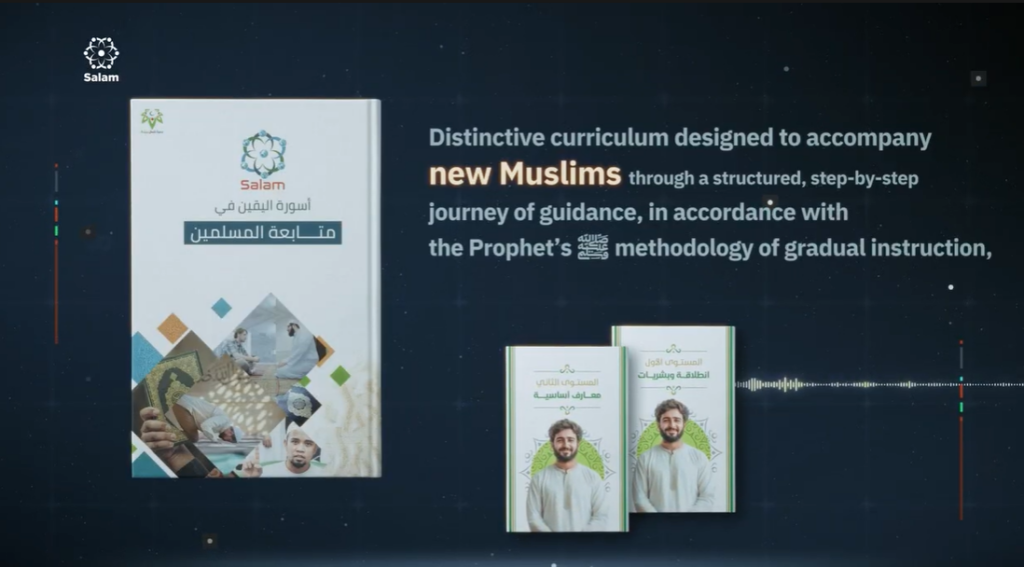
For those who have already embraced Islam or are considering the journey, the Salam Center offers structured post-conversion guidance through the Asawirat Al-Yaqeen (Bracelets of Certainty) program, including:
- A four-stage curriculum covering foundational worship, creed, repentance, the Seerah, personal etiquette, and practical life rulings
- Personalized support from the Salam Center team throughout the learning journey
- Interactive lessons designed for clarity and steady progress, available in multiple languages
Reach out directly to the Salam Center team to start the Asawirat Al-Yaqeen (Bracelets of Certainty) program for FREE.
Summary
The Quran states plainly that Jesus was neither killed nor crucified, and that Allah raised him to Himself rather than allowing his enemies to succeed. This belief connects directly to the Sunnah’s teaching that Jesus remains alive and will return before the Day of Judgment.
This account distinguishes Islamic theology from mainstream Christian belief regarding the crucifixion and resurrection. Understanding this distinction offers seekers a clearer, evidence-based foundation for exploring Islam’s view of prophethood, revelation, and divine protection.
Frequently Asked Questions
Did Jesus die on the cross according to Islam?
No. Islam teaches that Jesus was not killed or crucified; Allah raised him to Himself, and someone else was made to resemble him to those who sought his death (Quran 4:157).
Is Jesus alive in heaven according to the Quran?
Yes. The Quran states that Allah raised Jesus to Himself, and hadith in Sahih al-Bukhari and Sahih Muslim confirm he remains alive and will return before the Day of Judgment.
Who was crucified instead of Jesus in Islamic belief?
The Quran does not name the individual made to resemble Jesus. Scholars have offered various historical explanations, but the Quran itself leaves the identity unspecified, focusing only on Jesus’s rescue.
Will Jesus return again according to Islamic teaching?
Yes. Authentic hadith describe Jesus descending near Damascus before the Day of Judgment, where he will confront the Dajjal and establish justice (Sahih Muslim 2937a).
Does Islam consider Jesus a prophet or the son of Allah?
Islam considers Jesus a prophet and the Messiah, but firmly rejects the belief that he is the son of Allah, upholding strict Monotheism as the core of Islamic creed.
Curious about Islam?
Journey towards clarity and purpose. Our team is here to support you in your search for truth and spiritual guidance.
Embrace the Truth