
What Does the Quran Say About Lying?
| Key Takeaways |
| The Quran directly links lying to disbelief, stating that only those who reject Allah’s signs invent falsehood (Quran 16:105). |
| Surah Al-Baqarah describes lying as a disease of the heart that Allah allows to intensify in those who practice it (Quran 2:10). |
| Avoiding false statement is paired with avoiding idol worship in Surah Al-Hajj, placing dishonest speech alongside the gravest sins (Quran 22:30). |
| Surah As-Saf condemns the specific lie of saying what one does not do, calling it deeply hateful to Allah (Quran 61:2-3). |
The Quran treats lying as a grave moral and spiritual failing, tying it directly to the condition of a person’s heart and their relationship with Allah. Across multiple surahs, Allah describes lying not as an isolated bad habit but as evidence of an underlying sickness — a symptom of disbelief, hypocrisy, or arrogance.
The Quran does not treat all falsehood equally; it distinguishes between the everyday lie, the deliberate fabrication against Allah Himself, and the hypocrisy of claiming faith while concealing rejection.
What unites these categories is a consistent theme: truthful speech is inseparable from sound faith, and dishonest speech corrodes it.
1. The Quran describes lying as a disease of the heart
There is a sickness that grows the more it is indulged, and the Quran uses this exact image to describe habitual lying.
فِي قُلُوبِهِم مَّرَضٌ فَزَادَهُمُ اللَّهُ مَرَضًا وَلَهُمْ عَذَابٌ أَلِيمٌ بِمَا كَانُوا يَكْذِبُونَ
“In their hearts is disease, so Allah has increased their disease; and for them is a painful punishment because they [habitually] used to lie.” (Quran 2:10)
Rather than treating dishonesty as a neutral act, Allah frames it as something that actively damages a person’s inner state, worsening with repetition until it becomes part of their character.
2. Only those who reject the signs of Allah invent falsehood
This verse draws a direct line between lying and the refusal to believe. It is not framed as a minor character flaw but as something rooted in the denial of divine truth itself — the fabrication of falsehood becomes, in a sense, the natural output of a heart that has already rejected guidance.
إِنَّمَا يَفْتَرِي الْكَذِبَ الَّذِينَ لَا يُؤْمِنُونَ بِآيَاتِ اللَّهِ وَأُولَٰئِكَ هُمُ الْكَاذِبُونَ
“They only invent falsehood who do not believe in the verses of Allah, and it is those who are the liars.” (Quran 16:105)
This verse sits within a broader discussion of revelation and its rejection, a theme also explored in why do Muslims believe in the Quran, which examines how belief in divine speech shapes a believer’s relationship with truth itself.
3. Avoiding false statement stands alongside avoiding idol worship
During the description of the rites of Hajj, Allah pairs two commands that might initially seem unrelated: shunning idols and shunning false speech. Placed together, this pairing signals that dishonest words are not treated as a lesser offense — they belong in the same category of things a believer must actively avoid.
فَاجْتَنِبُوا الرِّجْسَ مِنَ الْأَوْثَانِ وَاجْتَنِبُوا قَوْلَ الزُّورِ
“So avoid the uncleanliness of idols and avoid false statement.” (Quran 22:30)
Classical commentary on this ayah, including the tafsir tradition associated with Ibn Kathir, notes that “false statement” (qawl al-zur) in this context encompasses lying, false testimony, and slander broadly — not a single narrow category of speech.
This connects to broader questions about how Islam principles shape a believer’s conduct, discussed in Islam principles.
Learn More About Islam
Discover the beauty, teachings, and wisdom of Islam in a clear and welcoming way. Start exploring and deepen your understanding today.
Learn MoreRead Also: Can You Read the Quran on Your Period?
4. Those who fabricate lies against Allah will face blackened faces
The Quran reserves some of its most vivid imagery for a specific and severe category of lying: fabricating falsehood attributed to Allah Himself. This includes false claims about revelation, false religious rulings presented as divine command, or attributing statements to Allah that He did not make.
The consequence described is visible and public — a physical sign of the inner corruption caused by the lie.
وَيَوْمَ الْقِيَامَةِ تَرَى الَّذِينَ كَذَبُوا عَلَى اللَّهِ وُجُوهُهُم مُّسْوَدَّةٌ أَلَيْسَ فِي جَهَنَّمَ مَثْوًى لِّلْمُتَكَبِّرِينَ
“And on the Day of Resurrection you will see those who lied against Allah [with] their faces blackened. Is there not in Hell a residence for the arrogant?” (Quran 39:60)
This verse illustrates a broader principle in faith in Islam: that truthfulness about Allah’s nature and revelation carries a weight distinct from ordinary honesty, a topic developed further in faith in Islam and how does Islam view the nature of God.
Read Also: What Does the Quran Say About Life?
5. Saying what you do not do is deeply hateful to Allah
Not every lie involves a false statement about the past or present. The Quran also condemns a subtler form of dishonesty — making claims or promises about future actions with no real intention of following through.
Surah As-Saf addresses this directly, singling out the gap between speech and action as something Allah finds deeply objectionable.
يَا أَيُّهَا الَّذِينَ آمَنُوا لِمَ تَقُولُونَ مَا لَا تَفْعَلُونَ كَبُرَ مَقْتًا عِندَ اللَّهِ أَن تَقُولُوا مَا لَا تَفْعَلُونَ
“O you who have believed, why do you say what you do not do? Great is hatred in the sight of Allah that you say what you do not do.” (Quran 61:2-3)
Classical exegetes, including in the Ma’arif al-Qur’an tradition, explain that this verse specifically targets false claims about future intentions — vowing to act without genuine resolve to follow through, which the Quran treats as a serious breach of integrity between word and deed.
Read Also: What Does the Quran Say About Love and Relationships?
6. Allah commands believers to be with the truthful
Allah instructs believers to remain in the company of truthful people as a direct expression of piety. In Surah At-Tawbah, Allah says:
يَا أَيُّهَا الَّذِينَ آمَنُوا اتَّقُوا اللَّهَ وَكُونُوا مَعَ الصَّادِقِينَ
“O you who have believed, fear Allah and be with those who are true.” (Quran 9:119)
This verse was revealed in the context of the believers who told the Prophet (PBUH) the truth about their failure to join a military expedition, rather than fabricating an excuse. Their honesty, though initially costly, led to their eventual forgiveness.
The verse establishes a principle that goes beyond individual conduct — it calls believers to build their entire social circle around truthful people, since character is shaped by companionship.
This connects to a broader theme addressed in Islamic teaching on faith in Islam: truthfulness is not treated as an isolated virtue but as a fruit of genuine belief.
A heart anchored in taqwa (God-consciousness) naturally gravitates toward honesty, because it recognizes that Allah witnesses every word spoken.
Read Also: Does the Quran Say Muhammad (PBUH) Was the First Muslim?
Learn More About Islam
Discover the beauty, teachings, and wisdom of Islam in a clear and welcoming way. Start exploring and deepen your understanding today.
Learn MoreGet Guidance And Support From Salam Platform
If these verses raised questions of your own, you are not alone — and you do not have to sit with them by yourself.
Browse more articles on the Salam blog for deeper explanations of Quranic teachings, Islamic belief, and the questions seekers ask most often.
Curious about the bigger picture of Islamic faith? The Salam Platform has a full library organized by topic.
Thinking about entering Islam, or simply want to talk something through with a real person? Reach out directly — no pressure, just conversation.

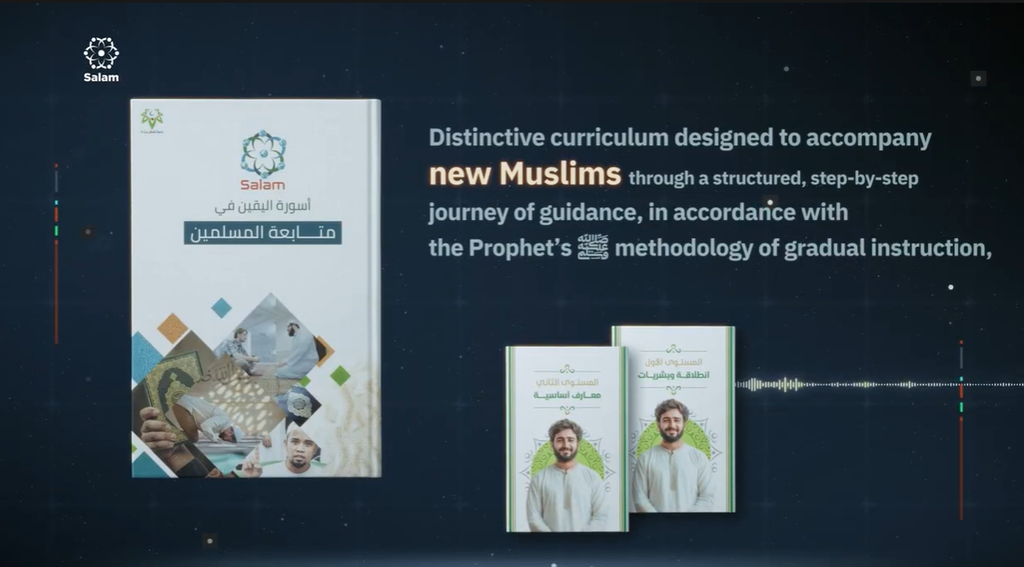
For those who have already taken their shahada, the Salam Center team offers Asawirat Al-Yaqeen (Bracelets of Certainty), a structured four-stage program built for new Muslims:
- Stage One lays the foundation — prayer, purification, and the meaning of the Shahada
- Stage Two builds on it — repentance, and the life of the Prophet Muhammad (PBUH)
- Stage Three strengthens daily practice — etiquette, family life, and everyday rulings
- Stage Four equips you to engage bigger questions with clarity and confidence
Reach out directly to the Salam Center team to start the Asawirat Al-Yaqeen (Bracelets of Certainty) program for FREE.
Summary
The Quran addresses lying through five key verses that together frame honesty as inseparable from genuine faith. From describing dishonesty as a disease of the heart to warning of blackened faces for those who fabricate lies against Allah, the message stays consistent throughout Islamic scripture.
Truthfulness in Islam extends beyond avoiding outright falsehood — it demands consistency between belief, speech, and action. Anyone exploring these teachings can find deeper guidance through Salam Center‘s resources and its Asawirat Al-Yaqeen program.
Frequently Asked Questions
Is lying a sin in Islam?
Yes, lying is considered a sin in Islam. The Quran links it directly to disbelief in Quran 16:105, stating that only those who reject Allah’s signs invent falsehood, placing dishonest speech among the gravest spiritual failings.
What does the Quran say about lying to protect someone?
The Quran’s core verses on lying (2:10, 16:105, 22:30) address falsehood generally without carving out broad exceptions in the text itself. Scholarly discussions of narrow exceptions typically draw from hadith rather than these Quranic verses directly.
Does the Quran say lying leads to Hell?
The Quran warns that those who fabricate lies against Allah will appear with blackened faces on the Day of Resurrection, with Hell described as the fitting abode for the arrogant, according to Quran 39:60.
Curious about Islam?
Journey towards clarity and purpose. Our team is here to support you in your search for truth and spiritual guidance.
Embrace the Truth