
What Does the Quran Say About Forcing Religion on Others?
The Quran forbids forcing religion on anyone. The verse “There shall be no compulsion in [acceptance of] the religion” (Quran 2:256) stands as one of the clearest legal and theological statements in the entire text. This ayah has shaped Islamic law, the treatment of religious minorities under Muslim rule, and the everyday conduct of Da’wah for over fourteen centuries.
Anyone researching what does the Quran say about other religions will find this principle woven throughout the text, not confined to a single passage.
What Does the Quran Say About Forcing Religion on Others?
The Quran states in Surah Al-Baqarah that religion cannot be imposed by force, and this ruling has never been abrogated or softened by later revelation. The verse reads:
لَا إِكْرَاهَ فِي الدِّينِ ۖ قَد تَّبَيَّنَ الرُّشْدُ مِنَ الْغَيِّ
“There shall be no compulsion in [acceptance of] the religion. The right course has become clear from the wrong.” (Quran 2:256)
No one is to be forced into becoming Muslim, since Islam’s proofs are plain enough that coercion is unnecessary — those whom Allah guides will embrace faith with sincerity, while forcing an unwilling heart accomplishes nothing of spiritual value.
This reading is not a modern reinterpretation shaped by outside pressure. It reflects how Ahlus Sunnah wal Jama’ah scholarship has understood the verse since the earliest generations.
Why was this verse revealed?
Classical sources report that some companions among the Ansar (the Helpers of Medina) had raised children among Jewish tribes because of an earlier vow, and when those tribes were expelled from Medina, the parents wondered whether to force their children back into Islam.
Allah revealed this verse in response, and scholars note that although the immediate occasion was specific, the ruling itself applies generally — a principle captured in the classical maxim that legal weight rests on the wording’s generality, not the narrowness of its occasion.
Learn More About Islam
Discover the beauty, teachings, and wisdom of Islam in a clear and welcoming way. Start exploring and deepen your understanding today.
Learn MoreDoes Islam Allow Forced Conversion to Islam?
No single verse or authentic hadith permits forcing a person to accept Islam against their will. The Quran repeatedly frames belief as a matter of the heart, not something achievable through coercion. Consider:
وَلَوْ شَاءَ رَبُّكَ لَآمَنَ مَن فِي الْأَرْضِ كُلُّهُمْ جَمِيعًا ۚ أَفَأَنتَ تُكْرِهُ النَّاسَ حَتَّىٰ يَكُونُوا مُؤْمِنِينَ
“And had your Lord willed, those on earth would have believed – all of them entirely. Then, [O Muhammad], would you compel the people in order that they become believers?” (Quran 10:99)
This ayah makes the theology explicit: Allah could have created every human being as a believer, but chose instead to grant free will regarding faith in Islam.
If the Creator Himself did not compel universal belief, no human being — not even Prophet Muhammad (PBUH) — carries that authority. A companion verse reinforces the same point:
وَقُلِ الْحَقُّ مِن رَّبِّكُمْ ۖ فَمَن شَاءَ فَلْيُؤْمِن وَمَن شَاءَ فَلْيَكْفُرْ ۚ إِنَّا أَعْتَدْنَا لِلظَّالِمِينَ نَارًا أَحَاطَ بِهِمْ سُرَادِقُهَا ۚ وَإِن يَسْتَغِيثُوا يُغَاثُوا بِمَاءٍ كَالْمُهْلِ يَشْوِي الْوُجُوهَ ۚ بِئْسَ الشَّرَابُ وَسَاءَتْ مُرْتَفَقًا
“And say, “The truth is from your Lord, so whoever wills – let him believe; and whoever wills – let him disbelieve.” Indeed, We have prepared for the wrongdoers a fire whose walls will surround them. And if they call for relief, they will be relieved with water like murky oil, which scalds [their] faces. Wretched is the drink, and evil is the resting place.'” (Quran 18:29)
What Was the Prophet Muhammad’s Role in Spreading Islam?
The Quran defines Prophet Muhammad’s (PBUH) mission as conveying the message, not enforcing belief. Allah addresses him directly:
فَذَكِّرْ إِنَّمَا أَنتَ مُذَكِّرٌ لَّسْتَ عَلَيْهِم بِمُصَيْطِرٍ
“So remind, [O Muhammad]; you are only a reminder. You are not over them a controller.” (Quran 88:21-22)
This distinction matters enormously for anyone exploring how did Muhammad become the prophet of Islam and what that role actually entailed. A reminder informs; a controller compels.
The Quran assigns the Prophet (PBUH) the first role explicitly, and denies him the second. This same spirit carried into his daily conduct with people, as recorded in authentic hadith.
Read Also: What Does the Quran Say About Forgiveness?
How did the Prophet treat people who disagreed with him?
The Prophet Muhammad (PBUH) consistently instructed his companions to ease people toward faith rather than pressure them into it. He told his companions:
“Make things easy for the people, and do not make it difficult for them, and make them calm, and do not repulse them.” (Sahih al-Bukhari 6125)
This hadith, narrated by Anas ibn Malik and agreed upon by both Sahih al-Bukhari and Sahih Muslim, captures the therapeutic, patient method that defined the Prophet’s approach to anyone encountering Islam for the first time — whether a new inquirer, a hesitant heart, or an outright skeptic.
Read Also: Does the Quran Say to Follow Hadith?
How Does the Principle of Not Forcing Religion on Others Apply to Non-Muslims Living Under Islamic Rule?
Islamic history documents concrete cases where this Quranic principle governed real governance, not just theological discussion. When a Christian delegation from Najran visited the Prophet (PBUH) in Medina, he permitted them to pray according to their own rite inside his mosque and drew up a covenant guaranteeing their communities’ right to practice their faith without interference.
This episode is frequently cited by scholars examining how does Islam view other religions as a practical demonstration of Quranic principle translated into policy, centuries before international frameworks on religious liberty existed.
Read Also: Does the Quran Say to Follow Prophet Muhammad?
Learn More About Islam
Discover the beauty, teachings, and wisdom of Islam in a clear and welcoming way. Start exploring and deepen your understanding today.
Learn MoreReady to Explore Further?
Questions about Islam deserve honest, evidence-grounded answers — and the journey doesn’t end with one article.
Continue exploring on the Salam Platform
Read more reflections on the Salam blog
Curious about entering Islam, or want to walk through these questions with someone directly?
Reach out directly — our team is ready to listen, guide, and welcome you.

Reach out directly — the Salam Center team welcomes:
- Questions about Islamic belief, practice, or specific verses
- Guidance for anyone considering entering Islam
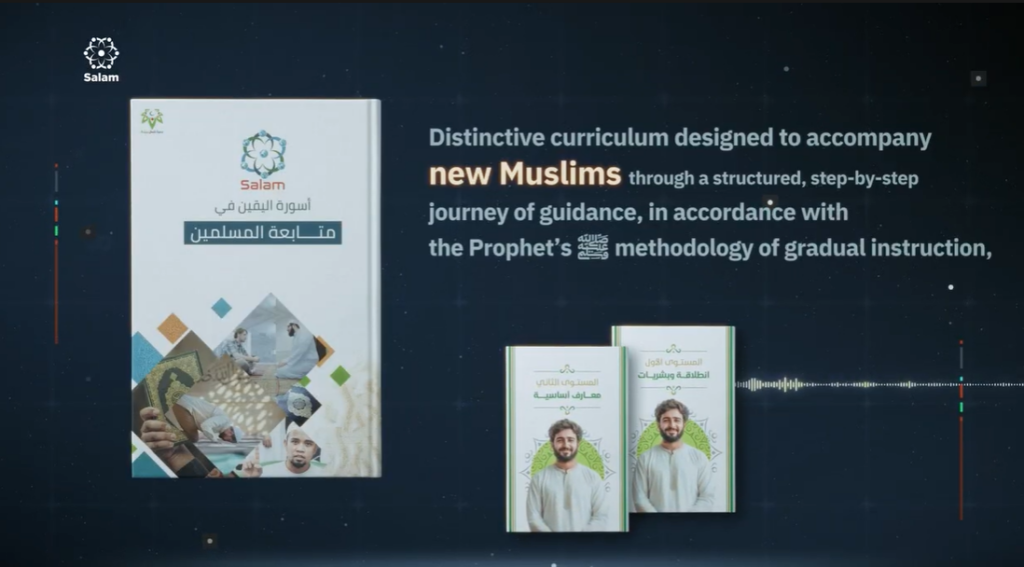
- Enrollment in Asawirat Al-Yaqeen (Bracelets of Certainty), a four-stage program built for new Muslims covering foundational worship, repentance, the Prophet’s biography, moral etiquette, and practical daily rulings
- General inquiries about the Salam Center’s mission and resources
Reach out directly to the Salam Center team to start the Asawirat Al-Yaqeen (Bracelets of Certainty) program for FREE.
Summary
The Quran forbids forcing religion on anyone, grounding this ruling in verse 2:256 and reinforced across Surah Yunus, Al-Kahf, Al-Ghashiyah, and Al-Kafirun. Prophet Muhammad’s (PBUH) role was conveying truth, never compelling belief.
Historical practice, including the Najran covenant, confirms Muslims applied this principle in governance. Genuine faith, the Quran insists, only holds value when a person embraces it freely and willingly.
Frequently Asked Questions
Does the Quran really say there is no compulsion in religion?
Yes. Quran 2:256 states directly, “There shall be no compulsion in [acceptance of] the religion.” Classical commentator Ibn Kathir explains this means no one may be forced to become Muslim, since Islam’s truth is self-evident and does not require coercion.
Did the Prophet Muhammad force people to convert to Islam?
No. The Quran describes him as “only a reminder” who is “not over them a controller” (Quran 88:21-22). Authentic hadith show he instructed companions to ease people toward faith, never to pressure or repel them.
How did early Muslims treat non-Muslims under their rule?
Historically, communities like the Christians of Najran received covenants protecting their right to worship freely under the Prophet’s own agreement, reflecting the Quranic principle in practical governance rather than theory alone.
Why does Islam forbid forced conversion if it believes it holds the truth?
The Quran insists that sincere faith must come from conviction, not pressure. Forcing belief produces outward compliance without inner sincerity, which Quran 2:256 and 10:99 both treat as spiritually meaningless.
Curious about Islam?
Journey towards clarity and purpose. Our team is here to support you in your search for truth and spiritual guidance.
Embrace the Truth