What Does the Quran Say About Love and Relationships?
| Key Takeaways |
| The Quran presents love as a signed proof of Allah’s design, most explicitly in Surah Ar-Rum 30:21, which links marital love to tranquility and mercy. |
| Marital love in the Quran rests on three linked concepts: sakan (tranquility), mawaddah (affection), and rahmah (mercy), not on passion alone. |
| Surah Al-Baqarah 2:187 describes spouses as “garments” for one another, a metaphor for closeness, protection, and mutual honesty. |
| The Quran extends love beyond marriage to parents, kin, and fellow believers, framing all these bonds as forms of worship when rightly ordered. |
The Quran does not treat love as an abstract feeling to be admired from a distance. The Quran treats love as a structured, purposeful bond that Allah Himself places between people — between spouses, between parent and child, between believers, and ultimately between the servant and his Lord.
This distinction matters, because it reframes love not as something humans stumble into by chance, but as a divine sign meant to be reflected upon.
Surah Ar-Rum 30:21 calls the love between spouses one of the signs (ayat) of Allah’s power, placed in the same category as the creation of the heavens and the earth.
What does the Quran say about love and relationships?
The Quran describes love in relationships as a deliberate act of divine mercy rather than a random human emotion. In Surah Ar-Rum 30:21, Allah states that He created spouses “that you may find tranquility in them” and placed between them mawaddah (affection) and rahmah (mercy).
This single verse establishes the Quranic model for marital love: it begins with tranquility, grows through affection, and matures into mercy that endures beyond the intensity of early attraction.
Beyond marriage, the Quran commands love and good treatment toward parents (17:23–24), frames the community of believers as brothers bound by mutual care (49:10), and consistently ties human love back to the love of Allah as its source and its highest expression.
Nowhere does the Quran present love as self-justifying; it is always oriented toward righteousness, restraint, and accountability before Allah.
Because these themes touch on the very structure of belief, understanding them properly connects naturally to the broader nine principles of Islam, which frame how a Muslim’s relationships fit within the wider architecture of faith.
1. Allah Placed Tranquility, Affection, and Mercy Between Spouses
Marriage in the Quran is not described as a contract that happens to include affection. It is described as a sign of Allah’s power in which affection and mercy are deliberately placed by Him.
This verse is the most frequently cited Quranic statement on marital love, and for good reason: it names three distinct stages — rest, love, and compassion — that together describe how a healthy marriage is meant to mature over time.
وَمِنْ آيَاتِهِ أَنْ خَلَقَ لَكُم مِّنْ أَنفُسِكُمْ أَزْوَاجًا لِّتَسْكُنُوا إِلَيْهَا وَجَعَلَ بَيْنَكُم مَّوَدَّةً وَرَحْمَةً ۚ إِنَّ فِي ذَٰلِكَ لَآيَاتٍ لِّقَوْمٍ يَتَفَكَّرُونَ
“And of His signs is that He created for you from yourselves mates that you may find tranquillity in them; and He placed between you affection and mercy. Indeed in that are signs for a people who give thought.” (Quran 30:21)
2. Spouses Are Described in the Quran as Garments for One Another
The Quran uses the image of clothing to describe the closeness expected between husband and wife. A garment covers, protects, and stays near the body — and this is precisely the intimacy the Quran assigns to marriage.
The metaphor also implies mutual honesty: just as clothing conceals what should not be exposed, spouses are meant to guard one another’s dignity and privacy rather than expose each other’s faults.
هُنَّ لِبَاسٌ لَّكُمْ وَأَنتُمْ لِبَاسٌ لَّهُنَّ
“They are clothing for you and you are clothing for them.” (Quran 2:187)
Learn More About Islam
Discover the beauty, teachings, and wisdom of Islam in a clear and welcoming way. Start exploring and deepen your understanding today.
Learn More3. Kindness to Parents Is Paired Directly With Worship of Allah
The Quran places good treatment of parents immediately after the command to worship Allah alone, a placement classical scholars have long noted is not accidental. Love for parents is framed as an act of humility and mercy, not mere obligation.
The verse instructs believers to lower themselves before their parents “out of mercy,” making tenderness — not just financial support — the standard of righteous treatment.
وَاخْفِضْ لَهُمَا جَنَاحَ الذُّلِّ مِنَ الرَّحْمَةِ وَقُل رَّبِّ ارْحَمْهُمَا كَمَا رَبَّيَانِي صَغِيرًا
“And lower to them the wing of humility out of mercy and say, ‘My Lord, have mercy upon them as they brought me up [when I was] small.'” (Quran 17:24)
4. Believers Are Described as a Single Brotherhood Bound by Mutual Care
Quranic love is not confined to the household. The Quran describes all believers as brothers to one another, a bond that carries real obligations of reconciliation and mercy.
This verse was revealed in the context of resolving disputes between Muslims, showing that brotherhood in Islam is an active responsibility, not a passive sentiment — love here means intervening for the sake of peace.
إِنَّمَا الْمُؤْمِنُونَ إِخْوَةٌ فَأَصْلِحُوا بَيْنَ أَخَوَيْكُمْ ۚ وَاتَّقُوا اللَّهَ لَعَلَّكُمْ تُرْحَمُونَ
“The believers are but brothers, so make settlement between your brothers. And fear Allah that you may receive mercy.” (Quran 49:10)
5. Allah Loves Those Who Are Constantly Repentant and Loves Those Who Purify Themselves
The Quran does not describe Allah’s love as unconditional affection detached from conduct. Allah’s love is explicitly connected to specific actions: turning back to Him in repentance and striving for purity. This matters for how Muslims understand love itself — human love, at its best, mirrors this pattern of being earned through sincerity rather than assumed automatically.
إِنَّ اللَّهَ يُحِبُّ التَّوَّابِينَ وَيُحِبُّ الْمُتَطَهِّرِينَ
“Sahih International: Indeed, Allah loves those who are constantly repentant and loves those who purify themselves.” (Quran 2:222)
Read Also: What Does the Quran Say About Life?
6. Following the Prophet Is the Proof of Loving Allah
The Quran does not let love of Allah remain a private claim without evidence. A person’s love for Allah is measured by whether they follow the Prophet Muhammad (PBUH), not by the strength of their feeling alone.
This verse was revealed in response to people who claimed a deep love for Allah while worshipping idols they believed would bring them closer to Him.
The Quran rejects that logic directly: real love produces obedience, and obedience is what draws Allah’s love and forgiveness in return.
قُلْ إِن كُنتُمْ تُحِبُّونَ اللَّهَ فَاتَّبِعُونِي يُحْبِبْكُمُ اللَّهُ وَيَغْفِرْ لَكُمْ ذُنُوبَكُمْ ۗ وَاللَّهُ غَفُورٌ رَّحِيمٌ
“Say, [O Muhammad], “If you should love Allah, then follow me, [so] Allah will love you and forgive you your sins. And Allah is Forgiving and Merciful.”‘” (Quran 3:31)
This verse is the standard against which every other bond mentioned in this article is measured.
The tranquility between spouses, the mercy owed to parents, the brotherhood among believers — all of it is meant to be shaped by following the Prophet’s example, which is why the Quran ties even romantic and familial love back to obedience rather than leaving it as sentiment alone.
Read Also: Does the Quran Say Muhammad (PBUH) Was the First Muslim?
How Does the Quran Distinguish Love From Passion?
A recurring misconception among newcomers to Islamic texts is that Quranic love language is purely legal or transactional. The verses above show otherwise: sakan (tranquility), mawaddah (affection), and rahmah (mercy) are emotional and spiritual terms, not clauses in a contract.
Classical exegesis on Surah Ar-Rum, including commentary transmitted through scholars such as Ibn Kathir, distinguishes these three words as separate phases of a relationship — tranquility comes first as the calm of companionship, affection develops through shared life, and mercy sustains the bond once youthful intensity naturally settles.
This layered understanding also explains why the Quran resists reducing love to attraction alone. Passion fades; the Quran instead builds marital love on a foundation that is meant to deepen with time.
Read Also: What Does the Quran Say About Lying?
Learn More About Islam
Discover the beauty, teachings, and wisdom of Islam in a clear and welcoming way. Start exploring and deepen your understanding today.
Learn MoreDiscover More About Faith, Certainty, and the Journey to Islam
Curious to go deeper into what the Quran teaches about love, marriage, and the bonds that hold a Muslim life together?
Explore more reflections and evidence-based articles on the Salam Platform
Read further breakdowns of Quranic themes on the Salam blog
Have a specific question about a verse, a ruling, or your own journey? Reach out directly — the Salam Center team welcomes sincere questions at any stage.
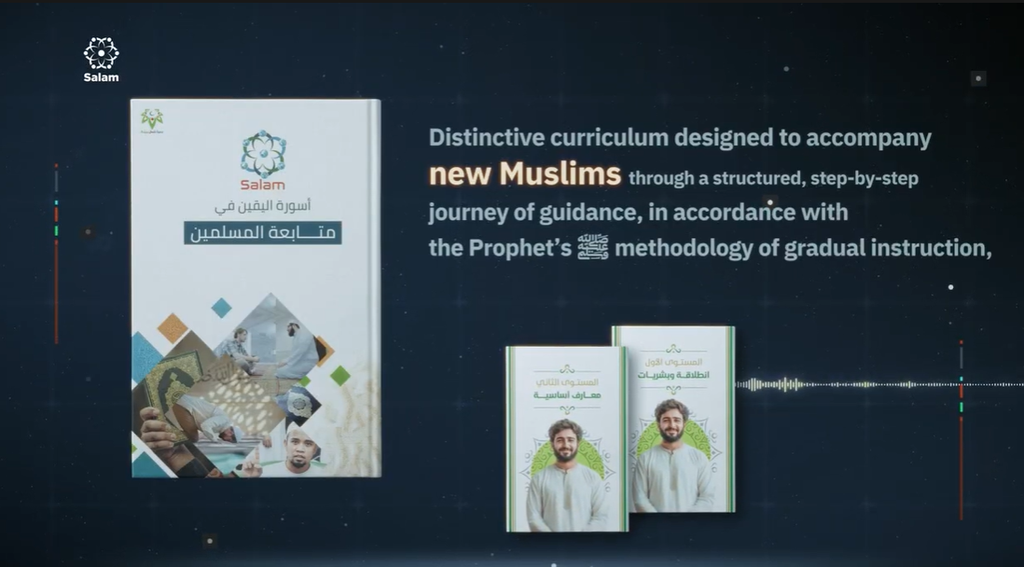
If you’re a new Muslim looking for structured guidance on family, marriage, and daily life, the Asawirat Al-Yaqeen (Bracelets of Certainty) program was built for exactly this:
- A four-stage curriculum moving from foundational belief to practical family and community rulings
- Lessons on marriage, parenting, and interaction ethics grounded in the Quran and Sunnah
- Guidance shaped by the creed of Ahlus Sunnah wal Jama’ah, taught with patience and care
Reach out directly to the Salam Center team to start the Asawirat Al-Yaqeen (Bracelets of Certainty) program for FREE.
Summary
The Quran roots love in divine intention rather than chance, describing marital affection as a deliberate sign placed by Allah and paired with tranquility and mercy. This same framework extends outward to parents and to the broader community of believers.
Understanding these verses in their original Arabic and authentic translation gives seekers and new Muslims a clearer, more confident picture of how Islam actually treats human relationships — not as regulated obligations, but as reflections of divine mercy.
Frequently Asked Questions
Does the Quran talk about romantic love?
Yes. Surah Ar-Rum 30:21 directly describes the love (mawaddah) and mercy (rahmah) Allah places between spouses as one of His signs, framing romantic and marital love as intentional rather than incidental. It is the Quran’s clearest statement on the subject.
What is the most quoted Quran verse about marriage?
Surah Ar-Rum 30:21 is the most widely cited marriage verse in the Quran. It describes spouses finding tranquility in one another, with affection and mercy placed between them by Allah, and is commonly recited at Muslim weddings.
What does the “garment” verse in the Quran mean?
Surah Al-Baqarah 2:187 compares spouses to garments for one another, symbolizing closeness, protection, and the mutual duty to guard each other’s honor and privacy, much as clothing shields and stays near the body.
Does the Quran only discuss love in marriage?
No. The Quran also commands loving treatment of parents (17:23–24) and describes all believers as brothers bound by mutual mercy (49:10), extending the concept of love well beyond the marital relationship.
Curious about Islam?
Journey towards clarity and purpose. Our team is here to support you in your search for truth and spiritual guidance.
Embrace the Truth