
The Story of Abraham Sacrificing His Son in the Quran
| Key Takeaways |
| The story of Abraham sacrificing his son in the Quran appears in Surah As-Saffat, verses 99 through 113, and centers on Prophet Ibrahim’s willingness to obey a divine command. |
| The mainstream position among Ahlus Sunnah wal Jama’ah scholars, including Ibn Kathir, holds that the son commanded to be sacrificed was Ismail, not Isaac. |
| Allah tested Ibrahim through a dream, and dreams of the prophets carry the weight of revelation and divine command. |
| Both father and son submitted to Allah’s will before the sacrifice was ever carried out, an act the Quran describes as a clear trial. |
| Allah ransomed Ismail with a great sacrifice, an event Muslims commemorate every year through the ritual of Qurbani on Eid al-Adha. |
| The Quran describes this event as a manifest test that Ibrahim passed, earning him the title of Khalilullah, the close friend of Allah. |
The willingness of a father to sacrifice his own son at the command of Allah is one of the most searching tests recorded anywhere in scripture. In the Quran, this test belongs to Prophet Ibrahim (peace be upon him), and it stands as the origin point for one of the two great Eid celebrations Muslims observe today.
The narrative unfolds across fifteen verses in Surah As-Saffat, moving from Ibrahim’s prayer for a righteous son to the dramatic moment of submission on both sides, and finally to Allah’s merciful intervention.
1. Prophet Ibrahim Prayed for a Righteous Son
Before the trial of sacrifice could occur, Ibrahim first had to receive the son who would be tested alongside him. This context matters, because it frames what follows as the fulfillment of a specific prayer rather than an arbitrary command.
After Allah rescued Ibrahim from the fire lit by his own people, he made a supplication asking for a child of righteousness, setting in motion the events that would define the rest of his life.
This moment also marks what many scholars identify as the first Hijrah for the sake of faith, a physical and spiritual departure from a land of disbelief.
وَقَالَ إِنِّي ذَاهِبٌ إِلَىٰ رَبِّي سَيَهْدِينِ
“And [then] he said, ‘Indeed, I will go to [where I am ordered by] my Lord; He will guide me.'” (Quran 37:99)
رَبِّ هَبْ لِي مِنَ الصَّالِحِينَ
“My Lord, grant me [a child] from among the righteous.” (Quran 37:100)
2. Allah Answered Ibrahim’s Prayer With Glad Tidings of a Forbearing Son
Allah did not leave the prayer unanswered. The Quran describes the response as glad tidings of a boy characterized by forbearance, a trait that becomes essential later in the story when the son must bear the weight of an unimaginable command.
فَبَشَّرْنَاهُ بِغُلَامٍ حَلِيمٍ
“So We gave him good tidings of a forbearing boy.” (Quran 37:101)
This verse establishes the son’s temperament before he ever speaks a word, preparing the reader for the composure he will show in the verses that follow.
3. Prophet Ibrahim Saw a Dream Commanding Him to Sacrifice His Son
The central test of the story begins here, and its form matters as much as its content. Allah communicated this command to Ibrahim through a dream, and in the case of the prophets, a dream carries the authority of direct revelation rather than mere suggestion.
Prophet Ibrahim did not receive an angel’s visit or an audible voice for this particular command; the vision itself was binding, which is why he treated it with such absolute seriousness.
فَلَمَّا بَلَغَ مَعَهُ السَّعْيَ قَالَ يَا بُنَيَّ إِنِّي أَرَىٰ فِي الْمَنَامِ أَنِّي أَذْبَحُكَ فَانظُرْ مَاذَا تَرَىٰ
“And when he reached with him [the age of] exertion, he said, ‘O my son, indeed I have seen in a dream that I [must] sacrifice you, so see what you think.'” (Quran 37:102)
This is also the verse where the son, by this point old enough to walk and work alongside his father, is brought directly into the conversation as a participant rather than a passive subject.
Learn More About Islam
Discover the beauty, teachings, and wisdom of Islam in a clear and welcoming way. Start exploring and deepen your understanding today.
Learn More4. The Son Responded With Complete Submission to Allah’s Command
The boy’s response demonstrates that submission to Allah was not something imposed on him against his will, but something he embraced as fully as his father did.
He asks his father to carry out what he has been commanded, and he adds a promise of steadfastness that is conditioned entirely on Allah’s will, reflecting the Islamic concept of relying on Allah even in the face of death.
قَالَ يَا أَبَتِ افْعَلْ مَا تُؤْمَرُ ۖ سَتَجِدُنِي إِن شَاءَ اللَّهُ مِنَ الصَّابِرِينَ
“He said, ‘O my father, do as you are commanded. You will find me, if Allah wills, of the steadfast.'” (Quran 37:102)
5. Father and Son Both Submitted Before the Sacrifice Was Attempted
This verse captures the physical culmination of the test, the exact instant before the command would have been carried out. The Arabic word used here, aslama, is the same root from which the word Islam itself derives, meaning submission to Allah, and its use in this verse is deliberate.
فَلَمَّا أَسْلَمَا وَتَلَّهُ لِلْجَبِينِ
“And when they had both submitted and he put him down upon his forehead,” (Quran 37:103)
Both Ibrahim and his son had already submitted internally through their words in the previous verses; this verse shows that submission translated into concrete action, with Ibrahim positioning his son for the sacrifice.
6. Allah Called Out to Ibrahim at the Decisive Moment
At the precise moment when the sacrifice was about to be carried out, Allah’s intervention arrived. This call from Allah interrupts the action mid-motion, addressing Ibrahim directly by name, a detail that underscores the personal and intimate nature of the relationship between Allah and His prophet.
وَنَادَيْنَاهُ أَن يَا إِبْرَاهِيمُ
“We called to him, ‘O Abraham,'” (Quran 37:104)
The verse is brief, but its placement in the narrative, arriving exactly when the test has reached its peak, is what gives it its dramatic and theological weight.
7. Allah Declared That Ibrahim Had Fulfilled the Vision
Here the purpose of the entire test becomes explicit. Allah confirms that Ibrahim has already fulfilled what the dream required of him, meaning the test was completed through his intention and willingness to obey, not through the physical completion of the act itself.
قَدْ صَدَّقْتَ الرُّؤْيَا ۚ إِنَّا كَذَٰلِكَ نَجْزِي الْمُحْسِنِينَ
“You have fulfilled the vision.” Indeed, We thus reward the doers of good. (Quran 37:105)
This is a foundational point in Islamic theology regarding trials: Allah judges the sincerity of submission, and the outcome of a test can be shaped by His mercy once that sincerity has been proven.
8. The Quran Names This Event a Clear and Manifest Trial
The Quran pauses here to state plainly what the reader has just witnessed. This verse functions as a direct commentary from Allah on the nature of the test, removing any ambiguity about its severity and confirming that it was designed to be the clearest possible demonstration of faith.
إِنَّ هَٰذَا لَهُوَ الْبَلَاءُ الْمُبِينُ
“Indeed, this was the clear trial.” (Quran 37:106)
The word used, bala, refers to a trial specifically intended to reveal what lies within a person, and few trials in the Quran match this one in intensity.
9. Allah Ransomed the Son With a Great Sacrifice
This is the verse from which the entire ritual of Qurbani, or animal sacrifice, draws its origin. Allah substituted the son with a great sacrifice, understood by the overwhelming majority of early scholars to have been a ram, sparing the boy’s life while still honoring the completed intention of obedience.
وَفَدَيْنَاهُ بِذِبْحٍ عَظِيمٍ “And We ransomed him with a great sacrifice,” (Quran 37:107)
According to the tafsir of Ibn Kathir, the horns of this very ram were reportedly preserved inside the Kaaba for generations, witnessed by companions including Abdullah ibn Abbas, until they were lost during the siege of Abdullah ibn al-Zubayr.
Learn More About Islam
Discover the beauty, teachings, and wisdom of Islam in a clear and welcoming way. Start exploring and deepen your understanding today.
Learn More10. Allah Preserved Ibrahim’s Legacy Among Later Generations
Beyond the immediate rescue of the son, Allah promised Ibrahim something that would outlast his own lifetime. This verse guarantees that Ibrahim’s story, his obedience, and his name would be remembered with honor by every generation that followed, a promise that has been fulfilled across more than fourteen centuries of Islamic history and remains visible in the annual observance of Eid al-Adha.
وَتَرَكْنَا عَلَيْهِ فِي الْآخِرِينَ
“And We left for him [favorable mention] among later generations:” (Quran 37:108)
11. Peace Was Declared Upon Ibrahim by Allah Himself
This short verse functions almost like a divine seal placed on the entire episode. Allah pronounces peace directly upon Ibrahim, a greeting of honor reserved in the Quran for the most beloved of His prophets, confirming that the trial had elevated his status rather than diminished him in any way.
سَلَامٌ عَلَىٰ إِبْرَاهِيمَ
“Peace upon Abraham.” (Quran 37:109)
12. Allah Confirmed This as the Standard for Rewarding the Righteous
The Quran generalizes the lesson of Ibrahim’s trial into a universal principle at this point. This verse repeats language used earlier in the passage, reinforcing that the reward Ibrahim received was not an isolated exception but a model for how Allah treats anyone who demonstrates sincere excellence, or ihsan, in their obedience.
إِنَّا كَذَٰلِكَ نَجْزِي الْمُحْسِنِينَ
“Indeed, We thus reward the doers of good.” (Quran 37:110)
Read Also: The Story of Prophet Joseph in Islam According to the Quran
13. Ibrahim Was Affirmed as a Believing Servant of Allah
This verse closes the immediate narrative of the sacrifice by affirming Ibrahim’s core identity. Allah describes him plainly as one of His believing servants, a title that in the Quran carries the highest possible weight, since it defines a person’s relationship to Allah not through lineage or status but through sincere faith.
إِنَّهُ مِنْ عِبَادِنَا الْمُؤْمِنِينَ
“Indeed, he was of Our believing servants.” (Quran 37:111)
Read Also: Jinn in Quran
14. Allah Gave Ibrahim Glad Tidings of a Second Son, Ishaq
Immediately after the account of the sacrifice concludes, the Quran announces a second child for Ibrahim, this time by name.
وَبَشَّرْنَاهُ بِإِسْحَاقَ نَبِيًّا مِّنَ الصَّالِحِينَ
“And We gave him good tidings of Isaac, a prophet from among the righteous.” (Quran 37:112)
This verse is significant for the question of which son was nearly sacrificed, since Ishaq (Isaac) is introduced here as a separate glad tiding after the sacrifice narrative has already closed, a sequencing that the majority of Ahlus Sunnah wal Jama’ah scholars, including Ibn Kathir, cite as evidence that the earlier unnamed son was Ismail rather than Ishaq.
Ibn Abbas and Ibn Umar, among the earliest authorities on Quranic interpretation, held this same position.
Read Also: Dajjal in the Quran
15. Allah Blessed Ibrahim and Ishaq With Righteous and Wayward Descendants
The story closes on a note that spans generations, acknowledging both the blessing given to Ibrahim’s lineage and the reality that not every descendant would walk a righteous path.
This final verse extends Ibrahim’s story beyond his own lifetime, connecting it to the prophetic line that would eventually include Ishaq’s descendants, among them Prophet Muhammad’s family tree tracing back to Ibrahim through the line of Ismail.
وَبَارَكْنَا عَلَيْهِ وَعَلَىٰ إِسْحَاقَ ۚ وَمِن ذُرِّيَّتِهِمَا مُحْسِنٌ وَظَالِمٌ لِّنَفْسِهِ مُبِينٌ
“And We blessed him and Isaac. But among their descendants is the doer of good and the clearly unjust to himself.” (Quran 37:113)
Read Also: Prophets in the Quran
Learn More About Islam
Discover the beauty, teachings, and wisdom of Islam in a clear and welcoming way. Start exploring and deepen your understanding today.
Learn MoreContinue Exploring Islam With Salam
This story sits at the heart of what Muslims believe about obedience, mercy, and the nature of Allah Himself. There is more to discover.
Curious about how the Quran itself has been preserved and transmitted since this story was first revealed? Explore the history of the Quran.
Wondering how Ibrahim’s legacy connects to Prophet Muhammad (PBUH)? Read about the Prophet’s family tree tracing back to Abraham.
Browse more reflections and teachings on the Salam blog whenever you’re ready.
Have a personal question about faith, submission, or the stories of the prophets? Reach out directly — our team is ready to listen without judgment.

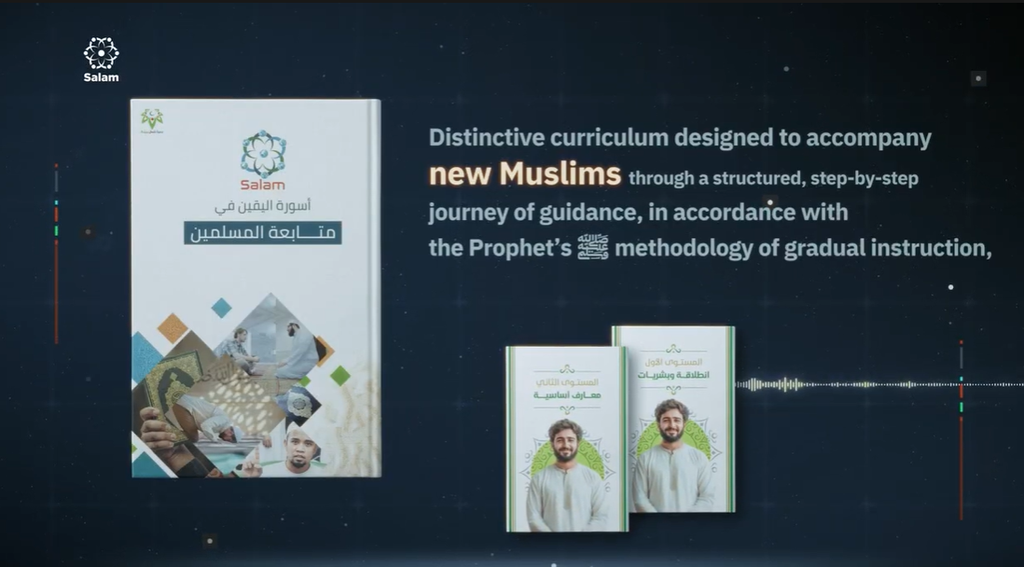
Thinking about the next step in your own journey? The Salam Center offers the Asawirat Al-Yaqeen (Bracelets of Certainty) program, a free, structured four-stage curriculum for new Muslims:
- Stage One: Shahada, purification, and the foundations of prayer
- Stage Two: The pillars of Iman, fasting, and Zakat
- Stage Three: Repentance, character, and the Seerah of the Prophet (PBUH)
- Stage Four: Contemporary questions and a life roadmap rooted in the Quran
Already reaching 114,588 new Muslims across 140 countries, the program meets you exactly where you are.
Reach out directly to the Salam Center team to start the Asawirat Al-Yaqeen (Bracelets of Certainty) program for FREE.
Summary
Ibrahim’s trial in Surah As-Saffat moves from a father’s prayer for righteous offspring to a son’s willing submission before an unimaginable command. Allah’s mercy transformed the test into the origin of Eid al-Adha’s sacrifice ritual, observed by Muslims worldwide.
This story remains a living lesson in obedience and trust, connecting directly to Ibrahim’s title as Khalilullah. Salam Center invites every seeker to explore this legacy further and ask their own questions along the way.
Frequently Asked Questions
Was it Ismail or Isaac that Ibrahim was commanded to sacrifice?
The dominant position among Ahlus Sunnah wal Jama’ah scholars holds it was Ismail, since Quran 37:112 introduces Isaac by name only after the sacrifice narrative concludes, a sequence early authorities like Ibn Abbas cited as decisive.
Where in the Quran is the story of Abraham’s sacrifice found?
The story appears in Surah As-Saffat, verses 99 through 113 (Quran 37:99-113). It covers Ibrahim’s prayer for a son, the dream commanding sacrifice, both parties’ submission, and Allah’s ransom of the boy with a great sacrifice.
Why did Allah replace the son with an animal sacrifice?
Allah declared that Ibrahim had already fulfilled the vision through his sincere intention and willingness to obey (Quran 37:105), then ransomed the son with a great sacrifice (Quran 37:107), showing mercy after the test of faith was proven complete.
How does this story connect to Eid al-Adha today?
Muslims commemorate this event by slaughtering an animal after the Eid prayer, following the Prophet Muhammad’s (PBUH) instruction recorded in Sahih al-Bukhari 5545. The ritual reenacts Ibrahim’s obedience and Allah’s mercy toward Ismail.
Was this command communicated through a dream or direct revelation?
It came through a dream, as stated in Quran 37:102. For prophets, visions carry the weight of binding revelation, which is why Ibrahim treated the command with the same seriousness as any direct instruction from Allah.
Curious about Islam?
Journey towards clarity and purpose. Our team is here to support you in your search for truth and spiritual guidance.
Embrace the Truth