
Dajjal in the Quran
The word “Dajjal” does not appear directly in the Quran text, but the Prophet Muhammad (PBUH) linked protection from him explicitly to Surah Al-Kahf. Sahih Muslim records that memorizing the first ten verses of Surah Al-Kahf shields a believer from the trial of the Dajjal.
Scholars of Ahlus Sunnah wal Jama’ah, including Ibn Kathir, treat the Dajjal’s reality as established through authentic Hadith even though the Quran does not name him outright. The Prophet (PBUH) described the Dajjal as one-eyed, with the word “Kafir” written between his eyes, visible to every believer.
Muslims are taught to seek refuge from the trial of the Dajjal in every single prayer, during the final tashahhud.
Does the Quran mention Dajjal directly?
No, the specific word “Dajjal” does not appear anywhere in the Quran. But absence of a term is not absence of the reality it describes. The Prophet Muhammad (PBUH) himself drew the connection between the Quran and the Dajjal, teaching his companions that a specific surah offers direct protection from this trial — even though that surah never uses the word.
Imam Ibn Kathir, in his tafsir of Surah Al-Kahf, recorded a narration through Imam Ahmad from Abu Ad-Darda (may Allah be pleased with him) in which the Prophet (PBUH) said that whoever memorizes the first ten verses of Surah Al-Kahf will be protected from the Dajjal — a hadith also recorded by Imam Muslim.
This narration is the anchor point for how Ahlus Sunnah wal Jama’ah understands the Quran-Dajjal relationship: the Quran does not narrate Dajjal story, but it arms the believer against him.
الْحَمْدُ لِلَّهِ الَّذِي أَنزَلَ عَلَىٰ عَبْدِهِ الْكِتَابَ وَلَمْ يَجْعَل لَّهُ عِوَجًا
“[All] praise is [due] to Allah, who has sent down upon His Servant the Book and has not made therein any deviance.” (Quran 18:1)
This opening verse of Surah Al-Kahf sets the tone for everything the Prophet (PBUH) later connected to it.
The surah is straight, free of crookedness — and that clarity is precisely the antidote the Dajjal cannot counter, since his entire nature is deception.
Who is the Dajjal?
The Dajjal, often rendered “Al-Masih ad-Dajjal” or the False Messiah, is described in authentic Hadith as the greatest trial to face humanity before the Day of Judgment. His name comes from the Arabic root د-ج-ل (dajl), meaning deception or falsehood — he is, by definition, the deceiver.
Dajjal is not a metaphor or a symbol in Sunni theology; he is a real individual who will appear near the end of time, claiming divine power he does not possess.
The Prophet (PBUH) warned every generation of Muslims about Dajjal with unusual urgency. Anas ibn Malik (may Allah be pleased with him) reported that the Prophet (PBUH) said,
“No prophet was sent but that he warned his followers against the one-eyed liar. Beware! He is blind in one eye, and your Lord is not so, and there will be written between his eyes the word Kafir” (Sahih al-Bukhari 7408).
Every prophet before Muhammad (PBUH) is recorded as having cautioned their people about this figure, which signals how central this trial is across the entire prophetic chain, not just the final message.
This ties into how Islam frames monotheism as the defining test the Dajjal will exploit — he will demand worship, and only a firm grasp of Tawheed protects against that demand.
Learn More About Islam
Discover the beauty, teachings, and wisdom of Islam in a clear and welcoming way. Start exploring and deepen your understanding today.
Learn MoreWhat does the Dajjal look like in the Hadith description?
The physical description of the Dajjal is remarkably specific and consistent across multiple authentic narrations, unlike vague apocalyptic imagery found in other traditions. He will be blind in one eye, and the word “Kafir” — disbeliever — will be legibly written on his forehead.
Anas ibn Malik reported that Allah’s Messenger (PBUH) said the Dajjal is blind of one eye, with the word “Kafir” written between his eyes, spelled letter by letter so every Muslim, literate or not, will be able to read it (Sahih Muslim 2933c). Allah has made the Dajjal’s falsehood legible to the ordinary believer, removing any excuse for confusion.
Nawwas ibn Sam’an’s lengthy narration in Sahih Muslim adds further texture — the Dajjal will be a young man with tightly curled hair, and his one functioning eye will resemble a floating grape.
He will roam the earth for forty days, though the Prophet (PBUH) clarified that one of those days will feel like a year, another like a month, another like a week, with the rest passing normally.
Believers are instructed to estimate their prayer times proportionally during that period rather than abandon regular worship.
What powers will the Dajjal claim and how will he deceive people?
The Dajjal’s danger lies not in brute force but in convincing illusion. He will be granted temporary, limited abilities by Allah as a test for humanity — not because he possesses genuine divine power. Dajjal will attempt to imitate miracles associated with Prophet Isa (peace be upon him), such as appearing to heal the sick, and he will command elements to obey him in ways that mimic divine authority.
Hudhaifa ibn al-Yaman (may Allah be pleased with him) reported that the Prophet (PBUH) described two rivers accompanying the Dajjal — one that will appear as fire and another that will appear as water.
The Prophet (PBUH) instructed believers that whoever encounters this should drink from what looks like fire, because it will actually be safe water, while what appears as water will be the harmful one. This single hadith captures the entire nature of the trial: appearances will be inverted, and only prior knowledge protects a person from choosing wrongly.
This is precisely why the Quran-Sunnah link through Surah Al-Kahf matters so much practically.
The surah’s own narratives — the People of the Cave who held firm to truth against a deceptive society, the man with two gardens who mistook temporary wealth for permanent security, and Musa’s (Moses) journey with Khidr that teaches humility before hidden wisdom — all rehearse the exact discernment skills needed to resist the Dajjal’s illusions.
Readers exploring what Muslims believe about the Quran will find this pattern repeated: the Quran teaches principles that apply across situations rather than issuing narrow, single-use warnings.
Read Also: Jinn in Quran
How are Muslims taught to protect themselves from the Dajjal?
Protection from the Dajjal is not left to chance or personal effort alone in Sunni practice — it is built directly into the five daily prayers. Every Muslim is taught to seek refuge in Allah from the trial of the Dajjal during the final tashahhud, before ending each prayer with salam.
Abu Huraira (may Allah be pleased with him) reported that the Prophet (PBUH) said,
“When any one of you completes the last tashahhud, he should seek refuge with Allah from four trials: the torment of Hell, the torment of the grave, the trial of life and death, and the mischief of Masih ad-Dajjal” (Sahih Muslim 588b).
Aisha (may Allah be pleased with her) also narrated that she heard the Prophet (PBUH) seeking refuge from the Dajjal’s affliction within his own prayer, confirming this was not a onetime instruction but the Prophet’s (PBUH) consistent personal practice.
Alongside this daily supplication, the second layer of protection is memorization. Abu Darda (may Allah be pleased with him) reported that the Prophet (PBUH) said,
“If anyone learns by heart the first ten verses of the Surah al-Kahf, he will be protected from the Dajjal” (Sahih Muslim 809a).
Other authentic narrations mention the last ten verses, and some scholars, out of precaution, recommend memorizing both sets.
A separate narration in Sunan ad-Darimi instructs believers who actually encounter the Dajjal in his lifetime to recite the opening verses of Al-Kahf directly over him, describing this recitation as protection from his specific trial.
Read Also: Prophets in the Quran
Who will defeat the Dajjal according to Islamic teaching?
The Dajjal’s reign of deception ends decisively, and this ending connects the Islamic view of the end times to the Islamic view of Prophet Isa (peace be upon him). Prophet Isa will descend near a white minaret east of Damascus, pursue the Dajjal to the gate of Ludd, and kill him, according to the detailed narration recorded in Sunan ad-Darimi and echoed in the longer hadith of Nawwas ibn Sam’an in Sahih Muslim.
This is a central point where Islamic eschatology diverges sharply from other traditions’ end-times narratives, and readers curious about the broader theological picture may find the comparison in Islam vs. Christianity useful for understanding exactly where the frameworks align and where they part ways.
It is worth being precise here, since confusion on this point is common even among Muslims: Isa (peace be upon him) in Islamic belief was neither crucified nor did he die on the cross. He was raised to Allah, and his return before the Day of Judgment — including his role in ending the Dajjal’s trial — is part of the broader Islamic understanding of the nature of Allah as the sole possessor of ultimate authority over life, death, and resurrection.
The Dajjal’s claim to divinity collapses the instant a true prophet of Allah confronts him, which is itself a theological statement: falsehood cannot stand before truth once truth actually arrives.
Read Also: The Story of Abraham Sacrificing His Son in the Quran
Learn More About Islam
Discover the beauty, teachings, and wisdom of Islam in a clear and welcoming way. Start exploring and deepen your understanding today.
Learn MoreDiscover More About Faith, Certainty, and the Journey to Islam
If the story of the Dajjal has raised deeper questions about the Quran, the Sunnah, or how Islamic belief holds together as a whole, you’re not alone — and you don’t have to sort through it by yourself.
The Salam Center team built this platform specifically for people asking exactly these kinds of questions, whether you’re simply curious or standing at the edge of a much bigger decision.
Browse more topics like this one on the Salam blog, where questions about Islamic belief, the Quran, and the Prophet’s life are addressed with the same evidence-based approach.
Reach out directly — our team is ready to listen, guide, and welcome you.

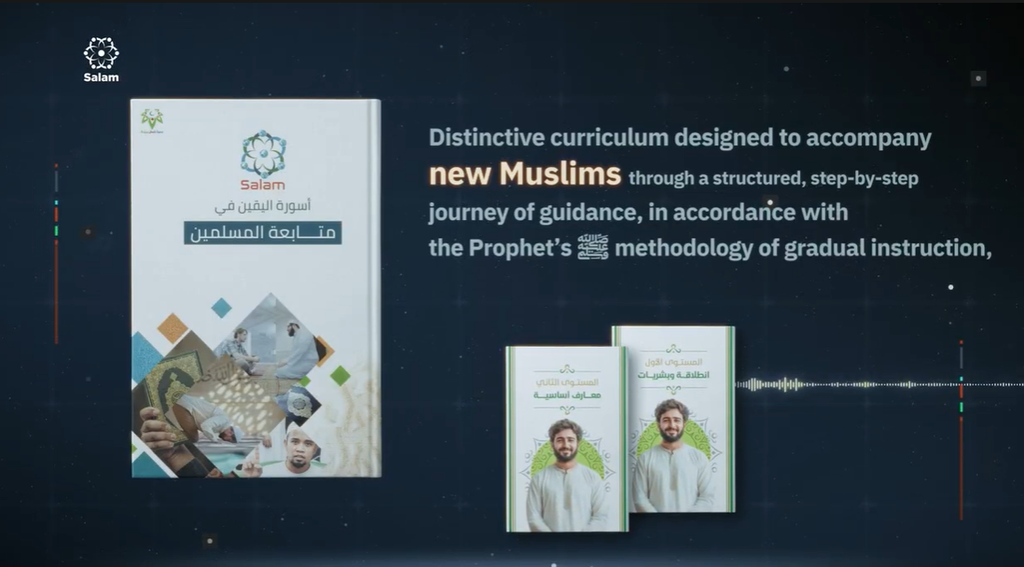
If you’re newly Muslim or preparing to take that step, the Asawirat Al-Yaqeen (Bracelets of Certainty) program was designed for you. It’s a structured, four-stage journey that walks you through:
- The foundations of faith, prayer, and purification
- Repentance and the life of Prophet Muhammad (PBUH)
- Character, etiquette, and everyday Islamic rulings
- Contemporary questions and a life roadmap rooted in the Quran
Have a specific question about the Dajjal, the end times, or anything else?
Reach out directly to the Salam Center team to start the Asawirat Al-Yaqeen (Bracelets of Certainty) program for FREE.
Summary
The Quran never names the Dajjal directly, yet the Prophet Muhammad (PBUH) tied protection from him firmly to Surah Al-Kahf’s opening verses. Authentic Hadith supplies his description, his trials, and the daily prayer refuge every believer recites against him.
Prophet Isa’s promised return to defeat the Dajjal near Damascus anchors this entire narrative within the broader Islamic understanding of divine authority and prophetic succession. Memorizing Al-Kahf and seeking refuge in prayer remain the practical shields every generation of Muslims has relied upon.
Frequently Asked Questions
Is Dajjal mentioned by name in the Quran?
No. The word “Dajjal” does not appear in the Quran text. His reality is established through authentic Hadith, particularly Sahih Muslim and Sahih al-Bukhari, while the Quran’s Surah Al-Kahf is explicitly linked by the Prophet (PBUH) to protection from him.
What does Dajjal mean in Arabic?
Dajjal comes from the Arabic root meaning “deception” or “lie.” It functions almost as a title — “the Deceiver” — describing his fundamental nature rather than serving as a personal name in the ordinary sense.
Which Surah protects from Dajjal?
Surah Al-Kahf, specifically its first ten verses, according to Sahih Muslim 809a. Some narrations mention the last ten verses instead, and many scholars recommend memorizing both as a precaution.
Who will kill the Dajjal in Islam?
Prophet Isa (peace be upon him) will descend near Damascus, pursue the Dajjal to the gate of Ludd, and kill him, according to hadith recorded in Sunan ad-Darimi and the detailed narration of Nawwas ibn Sam’an in Sahih Muslim.
How long will Dajjal remain on earth?
Forty days total, though the Prophet (PBUH) specified that one day will feel like a year, one like a month, one like a week, with the remaining days passing at a normal pace, per the hadith of Nawwas ibn Sam’an in Sahih Muslim.
Curious about Islam?
Journey towards clarity and purpose. Our team is here to support you in your search for truth and spiritual guidance.
Embrace the Truth