Mary in the Quran
| Key Takeaways |
| Mary, called Maryam in Arabic, is the only woman named directly in the Quran and the only one to have an entire surah, Surah Maryam (Chapter 19), named after her. |
| The Quran describes Maryam as chosen and purified by Allah above all women of her time, a status confirmed in Surah Al-Imran 3:42. |
| Allah blew of His spirit into Maryam, and she conceived Prophet Isa (Jesus) without any human father, as stated in Surah At-Tahrim 66:12. |
| Islam honors Maryam as one of the most righteous women in creation while firmly rejecting the belief that Isa is the son of Allah. |
| The Quran’s account of Maryam shares narrative elements with the Bible yet differs sharply on Isa’s nature, a distinction central to how Islam views other religions. |
Mary holds an extraordinary place in the Quran — she is honored as one of the purest women in all creation, though never as anything other than a righteous human being. Her story appears across multiple chapters of the Quran, most famously in Surah Maryam, the nineteenth chapter, which bears her name and tells of her seclusion, her trial, and the miraculous birth of her son.
Muslims regard her with a depth of reverence that surprises many newcomers to Islam, precisely because the Quran devotes more verses to her than the New Testament does in some accounts.
Maryam Is the Only Woman Named Directly in the Quran
Among every woman mentioned across the 114 chapters of the Quran, Maryam is the sole woman referred to by her actual name. Other significant women — the wife of Prophet Ibrahim, the mother of Musa, the Queen of Sheba — appear through description or title, never by a given name written explicitly in the text.
How Many Times Does Mary’s Name Appear in the Quran?
Maryam name appears roughly thirty-four times throughout the Quran, a frequency that itself signals her elevated standing among the righteous.
This distinction ties directly into the honor Allah reserved for her lineage. The Quran opens her story in Surah Al-Imran by recounting the vow made by her mother, the wife of Imran, who dedicated the child in her womb to the service of the Sacred Precinct before even knowing whether the child would be a boy or a girl.
That act of devotion set the stage for a life that the Quran would later describe using language reserved for no other woman in the text.
The Angels Declared Mary Chosen Above All Women
The Quran records a direct address from the angels to Maryam that leaves no ambiguity about her rank. This declaration places her above every other woman who lived in her era, an honor tied to her purity, her devotion, and her unwavering worship.
وَإِذْ قَالَتِ الْمَلَائِكَةُ يَا مَرْيَمُ إِنَّ اللَّهَ اصْطَفَاكِ وَطَهَّرَكِ وَاصْطَفَاكِ عَلَىٰ نِسَاءِ الْعَالَمِينَ
“And [mention] when the angels said, ‘O Mary, indeed Allah has chosen you and purified you and chosen you above the women of the worlds.'” (Quran 3:42)
This selection was not incidental. Prophet Muhammad (PBUH) affirmed her exceptional status in an authenticated narration preserved in Sahih al-Bukhari, where he named her alongside Asiyah, the wife of Pharaoh, as one of only two women in history who reached the highest level of righteous perfection:
“Many men reached the level of perfection, but no woman reached such a level except Mary, the daughter of `Imran and Asia, the wife of Pharaoh.” (Sahih al-Bukhari 3433)
Learn More About Islam
Discover the beauty, teachings, and wisdom of Islam in a clear and welcoming way. Start exploring and deepen your understanding today.
Learn MoreMaryam Withdrew in Seclusion When The Angel Appeared to Her
Surah Maryam opens the account of her pregnancy with a scene of quiet withdrawal rather than public spectacle. She left her family and retreated to a private place facing east, seeking distance and stillness. It was there, behind a screen she had placed for privacy, that an angel appeared to her in the form of a well-proportioned man.
وَاذْكُرْ فِي الْكِتَابِ مَرْيَمَ إِذِ انتَبَذَتْ مِنْ أَهْلِهَا مَكَانًا شَرْقِيًّا
“And mention, [O Muhammad], in the Book [the story of] Mary, when she withdrew from her family to a place toward the east.” (Quran 19:16)
Her immediate reaction to the stranger’s appearance reveals the depth of her God-consciousness. Rather than assuming safety, she sought refuge in Allah first, before the angel had even spoken his message.
قَالَتْ إِنِّي أَعُوذُ بِالرَّحْمَٰنِ مِنكَ إِن كُنتَ تَقِيًّا
“She said, ‘Indeed, I seek refuge in the Most Merciful from you, [so leave me], if you should be fearing of Allah.'” (Quran 19:18)
The Angel Announced a Pure Son Conceived Without a Father
Once Maryam understood the angel carried a divine message, he delivered news that would reshape the course of her life entirely. He told her Allah had granted her a righteous son, a announcement that left her astonished given her unmarried state and her guarded chastity.
قَالَ إِنَّمَا أَنَا رَسُولُ رَبِّكِ لِأَهَبَ لَكِ غُلَامًا زَكِيًّا
“He said, ‘I am only the messenger of your Lord to give you [news of] a pure boy.'” (Quran 19:19)
Her response captures a natural human confusion given the circumstances of her life, since she had never been touched by any man.
قَالَتْ أَنَّىٰ يَكُونُ لِي غُلَامٌ وَلَمْ يَمْسَسْنِي بَشَرٌ وَلَمْ أَكُ بَغِيًّا
“She said, ‘How can I have a boy while no man has touched me and I have not been unchaste?'” (Quran 19:20)
Allah’s answer settled the matter with a single principle that runs throughout the Quran’s treatment of divine power: nothing is difficult for Him when He wills a thing into being.
This same principle anchors how Islam views the nature of God as absolute in power over creation, unbound by ordinary causation. The full verse confirms:
قَالَ كَذَٰلِكِ قَالَ رَبُّكِ هُوَ عَلَيَّ هَيِّنٌ وَلِنَجْعَلَهُ آيَةً لِّلنَّاسِ وَرَحْمَةً مِّنَّا وَكَانَ أَمْرًا مَّقْضِيًّا
“He said, ‘Thus [it will be]; your Lord says, “It is easy for Me, and We will make him a sign to the people and a mercy from Us. And it is a matter [already] decreed.”‘” (Quran 19:21)
Allah Blew of His Spirit Into Maryam Without Any Human Father
The conception of Isa stands as one of the clearest signs in the Quran of Allah’s unlimited power over creation. Two separate chapters confirm this miracle in nearly identical language, underscoring how central this event is to Islamic belief about both Maryam and her son.
وَمَرْيَمَ ابْنَتَ عِمْرَانَ الَّتِي أَحْصَنَتْ فَرْجَهَا فَنَفَخْنَا فِيهِ مِن رُّوحِنَا وَصَدَّقَتْ بِكَلِمَاتِ رَبِّهَا وَكُتُبِهِ وَكَانَتْ مِنَ الْقَانِتِينَ
“And [the example of] Mary, the daughter of ‘Imran, who guarded her chastity, so We blew into [her garment] through Our angel, and she believed in the words of her Lord and His scriptures and was of the devoutly obedient.” (Quran 66:12)
A parallel verse in Surah Al-Anbiya repeats the same miraculous account, confirming that Maryam and her son together became a sign for every nation that would come to hear their story.
This event forms one of the strongest pieces of theological evidence Muslims cite when discussing Christianity, since it affirms the virgin birth as a genuine miracle while rejecting any notion of divine sonship attached to it.
The Quran treats the miracle itself and the theological conclusion drawn from it as two entirely separate matters — one a historical sign, the other a doctrinal boundary that protects monotheism.
The Pregnancy Brought Real Human Hardship, Not Ease
Nothing in the Quran’s account suggests Maryam’s pregnancy was free of ordinary human difficulty. She withdrew to a remote place as her time approached, and the pains of labor pushed her toward the trunk of a palm tree in visible distress.
فَأَجَاءَهَا الْمَخَاضُ إِلَىٰ جِذْعِ النَّخْلَةِ قَالَتْ يَا لَيْتَنِي مِتُّ قَبْلَ هَٰذَا وَكُنتُ نَسْيًا مَّنسِيًّا
“And the pains of childbirth drove her to the trunk of a palm tree. She said, ‘Oh, I wish I had died before this and was in oblivion, forgotten.'” (Quran 19:23)
This moment of raw vulnerability humanizes her completely within the Quranic narrative.
She was not spared pain, confusion, or fear despite her elevated status; rather, Allah met her distress with immediate comfort, providing a stream of water beneath her and instructing her to shake the palm trunk for fresh, ripe dates to sustain her.
The Infant Isa Spoke From The Cradle To Defend His Mother
When Maryam returned to her people carrying her newborn son, they accused her instantly of an act unbecoming of her family’s righteous reputation, invoking the memory of her father and mother’s piety. Rather than arguing on her own behalf, Maryam simply pointed toward the infant in her arms, letting Allah’s miracle answer the accusation directly.
فَأَشَارَتْ إِلَيْهِ ۖ قَالُوا كَيْفَ نُكَلِّمُ مَن كَانَ فِي الْمَهْدِ صَبِيًّا
So she pointed to him. They said, “How can we speak to one who is in the cradle a child?” (Quran 19:29)
The people’s confusion was immediate, since speaking to an infant seemed absurd. Then came the miracle that silenced every accusation against her.
قَالَ إِنِّي عَبْدُ اللَّهِ آتَانِيَ الْكِتَابَ وَجَعَلَنِي نَبِيًّا
“[Jesus] said, ‘Indeed, I am the servant of Allah. He has given me the Scripture and made me a prophet.'” (Quran 19:30)
This single verse carries the weight of the entire Islamic position on Isa’s identity. He identified himself in his very first words as a servant of Allah, not as Allah’s son, and not as divine in any sense.
The infant went on to describe his mission with clarity: prayer, charity, kindness toward his mother, and a peace granted to him at birth, at death, and at the resurrection.
This account differs sharply from the New Testament narrative and forms a central point of contrast in how Islam compares to Christianity on the nature of prophethood.
The Quran Firmly Rejects Divine Sonship For Isa
Immediately following the infant’s declaration, the Quran states a doctrinal conclusion with unmistakable force, closing any possibility of misreading Isa’s miraculous birth as evidence of divinity.
مَا كَانَ لِلَّهِ أَن يَتَّخِذَ مِن وَلَدٍ ۙ سُبْحَانَهُ ۚ إِذَا قَضَىٰ أَمْرًا فَإِنَّمَا يَقُولُ لَهُ كُن فَيَكُونُ
“It is not [befitting] for Allah to take a son; exalted is He! When He decrees an affair, He only says to it, ‘Be,’ and it is.” (Quran 19:35)
Allah created Isa through a direct command, the same command He used to bring Adam into existence from dust without either mother or father.
Islam therefore preserves the miracle of the virgin birth while firmly guarding the principle at the heart of faith in Islam — that Allah alone is deity, without partner, without offspring, and without equal. This distinction reflects one of the nine core principles of Islam that shape the entire creed.
Maryam And Her Son in the Quran Were Protected From Satan At Birth
Islamic tradition holds that every child born into humanity experiences a touch from Satan at the moment of birth, causing the newborn’s characteristic cry — with two exceptions. Prophet Muhammad (PBUH) explained this protection in a hadith recorded in Sahih al-Bukhari, connecting it directly to a supplication made by Maryam’s mother before her birth.
“No child is born but that Satan touches it when it is born whereupon it starts crying loudly because of being touched by Satan, except Mary and her son.” (Sahih al-Bukhari 3431)
This protection traces back to a prayer recorded earlier in Surah Al-Imran, where Maryam’s mother sought refuge for her daughter and her daughter’s future offspring from Satan before either had even been born.
Allah answered that supplication in full, granting both mother and son a shield that no other child in human history has received according to this narration.
Read Also: Gog and Magog in the Quran
Learn More About Islam
Discover the beauty, teachings, and wisdom of Islam in a clear and welcoming way. Start exploring and deepen your understanding today.
Learn MoreTake The Next Step Toward Understanding Islam
Maryam’s story is one thread in a much larger fabric of Islamic belief, and there is always more to explore.
Read more stories and reflections on the Salam blog.
Curious about the broader picture of Islamic belief? Visit the Salam Platform to explore articles on faith, the Quran, and the Prophets.
Have a specific question about Maryam, Isa, or Islam in general? Reach out directly — the Salam Center team welcomes sincere questions without judgment.

Considering Islam for yourself, or newly embraced the faith? The Salam Center for Da’wah and Dialogue offers guided support through every stage:
- Personalized guidance on entering Islam, whenever you feel ready
- General inquiries about Islamic belief, practice, or history, answered with patience and care
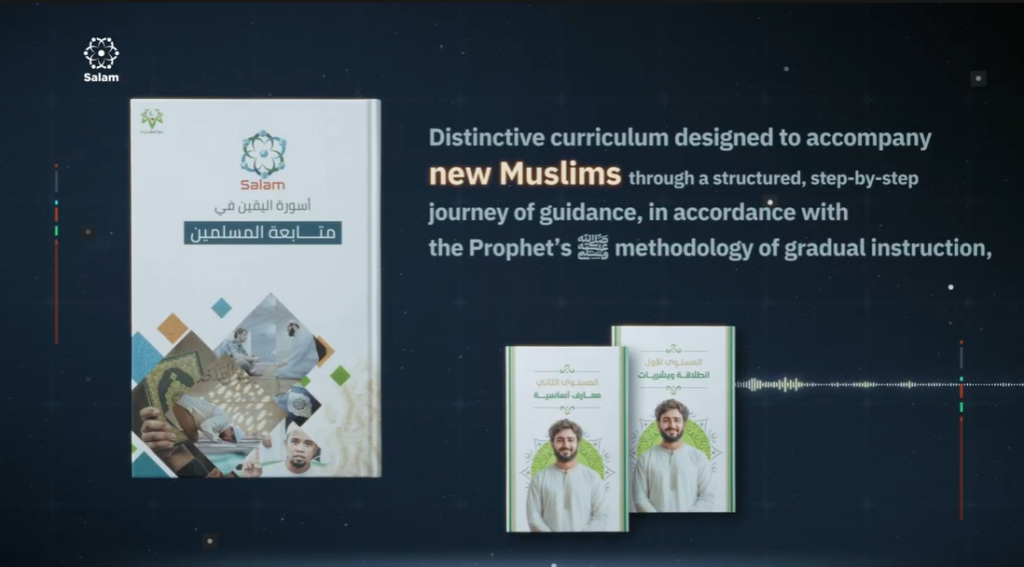
Enrollment in Asawirat Al-Yaqeen (Bracelets of Certainty), a four-stage curriculum built specifically for new Muslims
- Stage One covers foundational worship: the Shahada, prayer, and purification
- Stage Two addresses repentance and the biography of Prophet Muhammad (PBUH)
- Stage Three covers etiquette, family rulings, and daily life guidance
- Stage Four explores contemporary issues and a complete life roadmap
Reach out directly to the Salam Center team to start the Asawirat Al-Yaqeen (Bracelets of Certainty) program for FREE.
Summary
Maryam stands alone in the Quran as the only woman named directly, honored across multiple chapters for her purity, chastity, and unwavering devotion to Allah. Her son Isa spoke from the cradle, declaring his role as a prophet and servant rather than any form of deity.
The miracle of the virgin birth demonstrates Allah’s complete power over creation while reinforcing, rather than contradicting, the foundational Islamic principle that Allah has no partners and no offspring. Her story continues to guide sincere seekers toward a fuller understanding of Islamic monotheism today.
Frequently Asked Questions
Is Mary mentioned in the Quran?
Yes, Mary — called Maryam in Arabic — is mentioned throughout the Quran and is the only woman named directly by name in the text. Surah Maryam, the 19th chapter, is devoted to her story, and she also appears prominently in Surah Al-Imran (3:42-47) and Surah At-Tahrim (66:12).
Do Muslims believe Mary was a virgin when she had Jesus?
Yes, the Quran explicitly states that Maryam conceived Isa without any man touching her, confirming her virginity at conception. Surah Maryam 19:20 records her own words: “How can I have a boy while no man has touched me and I have not been unchaste?”
Why does Islam not consider Jesus the son of God despite the virgin birth?
Islam holds that Isa’s miraculous birth demonstrates Allah’s power over creation, not his own divinity. Quran 19:35 states plainly that it is not befitting for Allah to take a son, since Allah creates simply by commanding “Be.”
What does the Quran say happened when Jesus was born?
The Quran describes Isa speaking as a newborn infant to defend his mother against accusations, declaring in Quran 19:30, “Indeed, I am the servant of Allah. He has given me the Scripture and made me a prophet.” This miracle silenced those who doubted Maryam’s righteousness.
Which chapter of the Quran is named after Mary?
Surah Maryam, the 19th chapter of the Quran with 98 verses, is named entirely after her. It recounts her seclusion, the angel’s announcement, her labor pains, and the infant Isa’s first words defending her honor.
Curious about Islam?
Journey towards clarity and purpose. Our team is here to support you in your search for truth and spiritual guidance.
Embrace the Truth