
The Shortest Surah in the Quran
| Key Takeaways |
| Surah Al-Kawthar (Chapter 108) is the shortest surah in the Quran, containing only three verses and ten Arabic words. |
| Three surahs — Al-Kawthar, Al-Asr, and An-Nasr — tie for the fewest verses at three ayat each, though Al-Kawthar has the fewest total words. |
| The ten shortest surahs in the Quran range from three to six verses and are concentrated in Juz Amma, the final section of the Quran. |
| Short surahs like Al-Fatiha, Al-Ikhlas, Al-Falaq, and An-Nas hold central roles in the five daily prayers (salah). |
| Salam Center teaches that a surah’s brevity carries no relation to its spiritual weight, since the Quran’s value rests in meaning, not length. |
Surah Al-Kawthar is the shortest surah in the Quran. It sits at chapter 108 of the Mushaf and contains only three verses, ten Arabic words, and forty-three letters — the smallest chapter by every conventional measure.
Two other surahs, Al-Asr and An-Nasr, also contain exactly three verses, which is why questions about “the shortest surah” sometimes produce more than one correct answer depending on how “shortest” gets measured.
What is the shortest surah in the Quran?
The shortest surah in the Quran is Surah Al-Kawthar, chapter 108, containing exactly three verses. It was revealed in Makkah during a period when the Prophet Muhammad (PBUH) faced open mockery from Quraysh leaders, including a taunt that he would be forgotten after his death since he had no surviving sons. Al-Kawthar answered that taunt directly, promising the Prophet (PBUH) abundant good — a promise fulfilled many times over in the reach of his message and his lasting legacy across the Ummah.
إِنَّا أَعْطَيْنَاكَ الْكَوْثَرَ فَصَلِّ لِرَبِّكَ وَانْحَرْ إِنَّ شَانِئَكَ هُوَ الْأَبْتَرُ
Inna a’taynaka al-kawthar. Fasalli lirabbika wanhar. Inna shani’aka huwa al-abtar.
“Indeed, We have granted you, [O Muhammad], al-Kawthar. So pray to your Lord and sacrifice [to Him alone]. Indeed, your enemy is the one cut off.” (Al-Kawthar 108:1–3)
By verse count alone, Al-Asr (103) and An-Nasr (110) tie with Al-Kawthar at three verses each. What separates them is word count: Al-Kawthar uses ten words total, while Al-Asr uses fourteen and An-Nasr uses more still. Classical Quranic scholarship has long used word and letter counts as a secondary measure precisely because verse-count ties are common among the short Makkan surahs found in the final juz of the Quran. This is the same juz that forms the foundation of the Salam Center’s teaching approach, since new Muslims typically begin memorization with these chapters before moving to longer material — a principle rooted in the same gradual method Islam applies to faith itself, building conviction step by step rather than all at once.
10 shortest surahs in the Quran
Some surahs with more verses actually use fewer words than surahs with fewer verses, since Arabic sentence length varies independent of how a passage is divided into ayat.
This is precisely the nuance Wikipedia notes about Al-Ikhlas, which has four verses yet fewer words than the three-verse An-Nasr.
1. Surah Al-Kawthar is the shortest by word count as well as verse count
Chapter 108 tops both rankings, at three verses and ten words. No surah in the Quran uses fewer Arabic words to convey a complete message.
إِنَّا أَعْطَيْنَاكَ الْكَوْثَرَ فَصَلِّ لِرَبِّكَ وَانْحَرْ إِنَّ شَانِئَكَ هُوَ الْأَبْتَرُ
Inna a’taynaka al-kawthar. Fasalli lirabbika wanhar. Inna shani’aka huwa al-abtar.
“Indeed, We have granted you, [O Muhammad], al-Kawthar. So pray to your Lord and sacrifice [to Him alone]. Indeed, your enemy is the one cut off.” (Al-Kawthar 108:1–3)
Word count offers a useful secondary measure precisely because several surahs tie on verse count. Al-Kawthar’s ten words settle any ambiguity, confirming its position at the top of both lists simultaneously.
2. Surah Al-Asr holds second place with fourteen words across three verses
Chapter 103’s brevity in word count matches its brevity in verses, making it the second-shortest surah under either measure.
وَالْعَصْرِ إِنَّ الْإِنْسَانَ لَفِي خُسْرٍ إِلَّا الَّذِينَ آمَنُوا وَعَمِلُوا الصَّالِحَاتِ وَتَوَاصَوْا بِالْحَقِّ وَتَوَاصَوْا بِالصَّبْرِ
Wal-asr. Inna al-insana lafi khusr. Illa alladhina amanu wa’amilu al-salihati watawasaw bilhaqqi watawasaw bilsabr.
“By time, indeed mankind is in loss, except for those who have believed and done righteous deeds and advised each other to truth and advised each other to patience.” (Al-Asr 103:1–3)
Fourteen words carry a complete ethical system: loss as the default human condition, and four conditions — belief, righteous deeds, mutual encouragement to truth, mutual encouragement to patience — that reverse it.
Few passages in any scripture compress that much structure into so little language.
Learn More About Islam
Discover the beauty, teachings, and wisdom of Islam in a clear and welcoming way. Start exploring and deepen your understanding today.
Learn More3. Surah Al-Ikhlas ranks third with fifteen words despite having four verses
Chapter 112 demonstrates that verse count and word count do not always move together. Although Al-Ikhlas has one more verse than An-Nasr, it uses four fewer words, placing it ahead of An-Nasr on this list even though the two switch positions on the verse-count ranking.
قُلْ هُوَ اللَّهُ أَحَدٌ اللَّهُ الصَّمَدُ لَمْ يَلِدْ وَلَمْ يُولَدْ وَلَمْ يَكُنْ لَهُ كُفُوًا أَحَدٌ
Qul huwa Allahu ahad. Allahu al-samad. Lam yalid walam yulad. Walam yakun lahu kufuwan ahad.
“Say, ‘He is Allah, [who is] One, Allah, the Eternal Refuge. He neither begets nor is born, nor is there to Him any equivalent.'” (Al-Ikhlas 112:1–4)
This is one reason word count matters as a separate measure: verse divisions in the Quran follow rhythm and meaning, not a fixed word quota, so a surah can pack more content into fewer, denser verses. Al-Ikhlas does exactly that with the doctrine of Tawhid, a subject explored further in what Islam teaches about the nature of Allah.
4. Surah Quraysh takes fourth place with seventeen words across four verses
Chapter 106 sits between the three-word-count leaders and the mid-range short surahs, using seventeen words to recall Quraysh’s trading security.
لِإِيلَافِ قُرَيْشٍ إِيلَافِهِمْ رِحْلَةَ الشِّتَاءِ وَالصَّيْفِ فَلْيَعْبُدُوا رَبَّ هَٰذَا الْبَيْتِ الَّذِي أَطْعَمَهُمْ مِنْ جُوعٍ وَآمَنَهُمْ مِنْ خَوْفٍ
Li’ilafi quraysh. Ilafihim rihlata al-shitai walsayf. Falya’budu rabba hadha albayt. Alladhi at’amahum min ju’in waamanahum min khawf.
“For the accustomed security of the Quraysh, their accustomed security [in] the caravan of winter and summer, let them worship the Lord of this House, who has fed them, [saving them] from hunger and made them safe, [saving them] from fear.” (Quraysh 106:1–4)
Despite its historical specificity — addressing one tribe’s trade routes directly — the surah’s underlying argument applies broadly: material security is a reason for gratitude and worship, not self-sufficiency. This connects to a wider pattern across Meccan revelation of moving from a specific circumstance toward a universal principle.
5. Surah An-Nasr places fifth with nineteen words across three verses
Chapter 110 uses more words than its verse count alone would suggest, since its third verse runs longer than either of the first two.
إِذَا جَاءَ نَصْرُ اللَّهِ وَالْفَتْحُ وَرَأَيْتَ النَّاسَ يَدْخُلُونَ فِي دِينِ اللَّهِ أَفْوَاجًا فَسَبِّحْ بِحَمْدِ رَبِّكَ وَاسْتَغْفِرْهُ إِنَّهُ كَانَ تَوَّابًا
Idha jaa nasru Allahi wal-fath. Wara’ayta al-nasa yadkhuluna fi dini Allahi afwaja. Fasabbih bihamdi rabbika wastaghfirhu innahu kana tawwaba.
“When the victory of Allah has come and the conquest, and you see the people entering into the religion of Allah in multitudes, then exalt [Him] with praise of your Lord and ask forgiveness of Him. Indeed, He is ever Accepting of repentance.” (An-Nasr 110:1–3)
An-Nasr ties for second place in the verse-count ranking but drops to fifth by word count, illustrating exactly why the two measures produce different orderings.
Its longer third verse, describing gratitude and repentance in detail, adds enough length to shift its position.
6. Surah An-Nas takes sixth place with twenty words across six verses
Chapter 114, the final surah in the Mushaf, needs six verses to complete its message but does so in only twenty words — fewer than several shorter-verse-count surahs.
قُلْ أَعُوذُ بِرَبِّ النَّاسِ مَلِكِ النَّاسِ إِلَٰهِ النَّاسِ مِنْ شَرِّ الْوَسْوَاسِ الْخَنَّاسِ الَّذِي يُوَسْوِسُ فِي صُدُورِ النَّاسِ مِنَ الْجِنَّةِ وَالنَّاسِ
Qul a’udhu birabbi al-nas. Maliki al-nas. Ilahi al-nas. Min sharri al-waswasi al-khannas. Alladhi yuwaswisu fi suduri al-nas. Mina al-jinnati wal-nas.
“Say, ‘I seek refuge in the Lord of mankind, the Sovereign of mankind, the God of mankind, from the evil of the retreating whisperer, who whispers [evil] into the breasts of mankind, from among the jinn and mankind.'” (An-Nas 114:1–6)
An-Nas forms the second half of Al-Mu’awwidhatayn together with Al-Falaq, and its structure repeats the phrase “mankind” across three consecutive attributes of Allah before naming the specific evil it seeks protection from — the whispering of Shaytan, whether from jinn or from other people.
7. Surah Al-Fil ties for seventh place with twenty-three words across five verses
Chapter 105 recounts the destruction of Abraha’s army in twenty-three words, tying with Al-Falaq for this position on the list.
أَلَمْ تَرَ كَيْفَ فَعَلَ رَبُّكَ بِأَصْحَابِ الْفِيلِ أَلَمْ يَجْعَلْ كَيْدَهُمْ فِي تَضْلِيلٍ وَأَرْسَلَ عَلَيْهِمْ طَيْرًا أَبَابِيلَ تَرْمِيهِمْ بِحِجَارَةٍ مِنْ سِجِّيلٍ فَجَعَلَهُمْ كَعَصْفٍ مَأْكُولٍ
Alam tara kayfa fa’ala rabbuka bi’ashabi alfil. Alam yaj’al kaydahum fi tadlil. Waarsala ‘alayhim tayran ababil. Tarmihim bihijaratin min sijjil. Faja’alahum ka’asfin ma’kul.
“Have you not considered, [O Muhammad], how your Lord dealt with the companions of the elephant? Did He not make their plan into misguidance? And He sent against them birds in flocks, striking them with stones of hard clay, and He made them like eaten straw.” (Al-Fil 105:1–5)
The surah’s narrative economy is notable: twenty-three words recount an entire military campaign, its defeat, and the specific method of that defeat, without a single wasted term.
8. Surah Al-Falaq ties for seventh place with twenty-three words across five verses
Chapter 113 matches Al-Fil’s word count exactly, though the two surahs share nothing else in subject matter.
قُلْ أَعُوذُ بِرَبِّ الْفَلَقِ مِنْ شَرِّ مَا خَلَقَ وَمِنْ شَرِّ غَاسِقٍ إِذَا وَقَبَ وَمِنْ شَرِّ النَّفَّاثَاتِ فِي الْعُقَدِ وَمِنْ شَرِّ حَاسِدٍ إِذَا حَسَدَ
Qul a’udhu birabbi alfalaq. Min sharri ma khalaq. Wamin sharri ghasiqin idha waqab. Wamin sharri alnaffathati fi al’uqad. Wamin sharri hasidin idha hasad.
“Say, ‘I seek refuge in the Lord of daybreak, from the evil of that which He created, and from the evil of darkness when it settles, and from the evil of the blowers in knots, and from the evil of an envier when he envies.'” (Al-Falaq 113:1–5)
Al-Falaq’s five verses each add a distinct category of protection, building outward from general evil to the specific dangers of darkness, sorcery, and envy — a structure that uses its word count with clear purpose rather than repetition.
9. Surah Al-Ma’un takes ninth place with twenty-five words across seven verses
Chapter 107 needs the most verses of any surah on this list — seven — yet stays under twenty-five words total, describing the connection between denying faith and neglecting the vulnerable.
أَرَأَيْتَ الَّذِي يُكَذِّبُ بِالدِّينِ فَذَٰلِكَ الَّذِي يَدُعُّ الْيَتِيمَ وَلَا يَحُضُّ عَلَىٰ طَعَامِ الْمِسْكِينِ فَوَيْلٌ لِلْمُصَلِّينَ الَّذِينَ هُمْ عَنْ صَلَاتِهِمْ سَاهُونَ الَّذِينَ هُمْ يُرَاءُونَ وَيَمْنَعُونَ الْمَاعُونَ
Ara’ayta alladhi yukadhdhibu bialddin. Fadhalika alladhi yadu’u alyatim. Wala yahuddu ‘ala ta’ami almiskin. Fawaylun lilmusallin. Alladhina hum ‘an salatihim sahun. Alladhina hum yura’un. Wayamna’una alma’un.
“Have you seen the one who denies the Recompense? For that is the one who drives away the orphan, and does not encourage the feeding of the poor. So woe to those who pray, [but] who are heedless of their prayer, those who make a show [of their deeds], and withhold [simple] assistance.” (Al-Ma’un 107:1–7)
Al-Ma’un links neglect of orphans and the poor directly to hollow or performative prayer, making the connection between social responsibility and sincere worship explicit rather than implied.
10. Surah Al-Kafirun with twenty-seven words across six verses
Chapter 109 closes out the ten shortest surahs by word count, using twenty-seven words to draw a firm line between belief and disbelief.
قُلْ يَا أَيُّهَا الْكَافِرُونَ لَا أَعْبُدُ مَا تَعْبُدُونَ وَلَا أَنْتُمْ عَابِدُونَ مَا أَعْبُدُ وَلَا أَنَا عَابِدٌ مَا عَبَدْتُمْ وَلَا أَنْتُمْ عَابِدُونَ مَا أَعْبُدُ لَكُمْ دِينُكُمْ وَلِيَ دِينِ
Qul ya ayyuha alkafirun. La a’budu ma ta’budun. Wala antum ‘abiduna ma a’bud. Wala ana ‘abidun ma ‘abadtum. Wala antum ‘abiduna ma a’bud. Lakum dinukum waliya din.
“Say, ‘O disbelievers, I do not worship what you worship. Nor are you worshippers of what I worship. Nor will I be a worshipper of what you worship. Nor will you be worshippers of what I worship. For you is your religion, and for me is my religion.'” (Al-Kafirun 109:1–6)
Its repetitive structure — restating the same rejection from slightly different angles across six verses — is itself the point.
Repetition in Quranic Arabic frequently signals emphasis rather than redundancy, and here it reinforces the finality of the boundary being drawn
Learn More About Islam
Discover the beauty, teachings, and wisdom of Islam in a clear and welcoming way. Start exploring and deepen your understanding today.
Learn More20 short surahs in the Quran
Continuing from the top 10, the following seven surahs pick up where Al-Kafirun left off. These rankings move further from Juz Amma’s most commonly memorized surahs and into territory where several surahs sit close together in length.
11. Surah Ash-Sharh ties Al-Kafirun with twenty-seven words across eight verses
Chapter 94 was revealed to reassure the Prophet Muhammad (PBUH) during an early period of hardship, promising that ease follows every difficulty.
أَلَمْ نَشْرَحْ لَكَ صَدْرَكَ وَوَضَعْنَا عَنْكَ وِزْرَكَ الَّذِي أَنْقَضَ ظَهْرَكَ وَرَفَعْنَا لَكَ ذِكْرَكَ فَإِنَّ مَعَ الْعُسْرِ يُسْرًا إِنَّ مَعَ الْعُسْرِ يُسْرًا فَإِذَا فَرَغْتَ فَانْصَبْ وَإِلَىٰ رَبِّكَ فَارْغَبْ
Alam nashrah laka sadrak. Wawada’na ‘anka wizrak. Alladhi anqada thahrak. Warafa’na laka thikrak. Fa-inna ma’a al’usri yusra. Inna ma’a al’usri yusra. Fa-itha faraghta fansab. Wa-ila rabbika farghab.
“Did We not expand for you, [O Muhammad], your breast? And We removed from you your burden, which had weighed upon your back, and raised high for you your repute. For indeed, with hardship [will be] ease. Indeed, with hardship [will be] ease. So when you have finished [your duties], then stand up [for worship]. And to your Lord direct [your] longing.” (Ash-Sharh 94:1–8)
Its central phrase — that ease accompanies hardship — repeats twice in successive verses, a structure Islamic scholars have long read as a promise of double relief for every single difficulty faced. This surah is frequently paired with the preceding Surah Ad-Duha, since tradition holds both were revealed during the same difficult period of early prophethood.
12. Surah At-Takathur with twenty-eight words across eight verses
Chapter 102 addresses the human obsession with accumulation — wealth, status, competition — and how that obsession blinds people until death itself interrupts it.
أَلْهَاكُمُ التَّكَاثُرُ حَتَّىٰ زُرْتُمُ الْمَقَابِرَ كَلَّا سَوْفَ تَعْلَمُونَ ثُمَّ كَلَّا سَوْفَ تَعْلَمُونَ كَلَّا لَوْ تَعْلَمُونَ عِلْمَ الْيَقِينِ لَتَرَوُنَّ الْجَحِيمَ ثُمَّ لَتَرَوُنَّهَا عَيْنَ الْيَقِينِ ثُمَّ لَتُسْأَلُنَّ يَوْمَئِذٍ عَنِ النَّعِيمِ
Alhakumu alttakathur. Hatta zurtumu almaqabir. Kalla sawfa ta’lamun. Thumma kalla sawfa ta’lamun. Kalla law ta’lamuna ‘ilma alyaqin. Latarawunna aljahim. Thumma latarawunnaha ‘ayna alyaqin. Thumma latus’alunna yawma’ithin ‘ani alna’im.
“Competition in [worldly] increase diverts you, until you visit the graveyards. No! You are going to know. Then no! You are going to know. No! If you only knew with knowledge of certainty… You will surely see the Hellfire. Then you will surely see it with the eye of certainty. Then you will surely be questioned that Day about pleasure.” (At-Takathur 102:1–8)
Its repeated warning — “you are going to know” — appears twice before the surah reveals what that knowledge actually is.
This structure of delayed revelation mirrors the surah’s subject: people chase accumulation without confronting what it costs them until confrontation becomes unavoidable.
13. Surah Al-Masad with twenty-nine words across five verses
Chapter 111 names a real historical opponent of the Prophet Muhammad (PBUH) directly, a level of specificity unmatched elsewhere in the Quran.
تَبَّتْ يَدَا أَبِي لَهَبٍ وَتَبَّ مَا أَغْنَى عَنْهُ مَالُهُ وَمَا كَسَبَ سَيَصْلَى نَارًا ذَاتَ لَهَبٍ وَامْرَأَتُهُ حَمَّالَةَ الْحَطَبِ فِي جِيدِهَا حَبْلٌ مِنْ مَسَدٍ
Tabbat yada abi lahabin watabb. Ma aghna ‘anhu maluhu wama kasab. Sayasla naran dhata lahab. Wamra’atuhu hammalata alhatab. Fi jidiha hablun min masad.
“May the hands of Abu Lahab be ruined, and ruined is he. His wealth will not avail him or that which he gained. He will [enter to] burn in a Fire of [blazing] flame. And his wife [as well] – the carrier of firewood. Around her neck is a rope of [twisted] fiber.” (Al-Masad 111:1–5)
Historical accounts describe Abu Lahab as one of the most vocal opponents of the early Muslim community. The surah’s specificity — condemning a real individual by his historically documented epithet — reflects the Quran’s willingness to engage directly with named events and people from the Prophet’s lifetime.
14. Surah Al-Qadr with approximately thirty words across five verses
Chapter 97 describes Laylat al-Qadr, the night Quranic revelation began, and Muslims widely observe it during the final ten nights of Ramadan.
إِنَّا أَنْزَلْنَاهُ فِي لَيْلَةِ الْقَدْرِ وَمَا أَدْرَاكَ مَا لَيْلَةُ الْقَدْرِ لَيْلَةُ الْقَدْرِ خَيْرٌ مِنْ أَلْفِ شَهْرٍ تَنَزَّلُ الْمَلَائِكَةُ وَالرُّوحُ فِيهَا بِإِذْنِ رَبِّهِمْ مِنْ كُلِّ أَمْرٍ سَلَامٌ هِيَ حَتَّى مَطْلَعِ الْفَجْرِ
Inna anzalnahu fi laylati alqadr. Wama adraka ma laylatu alqadr. Laylatu alqadri khayrun min alfi shahr. Tanazzalu almalaikatu waalrruhu fiha bi’idhni rabbihim min kulli amr. Salamun hiya hatta matla’i alfajr.
“Indeed, We sent the Qur’an down during the Night of Decree. And what can make you know what is the Night of Decree? The Night of Decree is better than a thousand months. The angels and the Spirit descend therein by permission of their Lord for every matter. Peace it is until the emergence of dawn.” (Al-Qadr 97:1–5)
Its final line describes peace lasting from dusk until dawn, distinguishing this single night from every other night in the year in both mercy and reward according to the tradition’s understanding of the ayah.
15. Surah Al-Humazah with thirty-three words across nine verses
Chapter 104 warns against slander and backbiting, condemning those who mock others while placing false confidence in accumulated wealth.
وَيْلٌ لِكُلِّ هُمَزَةٍ لُمَزَةٍ الَّذِي جَمَعَ مَالًا وَعَدَّدَهُ يَحْسَبُ أَنَّ مَالَهُ أَخْلَدَهُ كَلَّا لَيُنْبَذَنَّ فِي الْحُطَمَةِ وَمَا أَدْرَاكَ مَا الْحُطَمَةُ نَارُ اللَّهِ الْمُوقَدَةُ الَّتِي تَطَّلِعُ عَلَى الْأَفْئِدَةِ إِنَّهَا عَلَيْهِمْ مُؤْصَدَةٌ فِي عَمَدٍ مُمَدَّدَةٍ
Waylun likulli humazatin lumazah. Alladhi jama’a malan wa’addadah. Yahsabu anna malahu akhladah. Kalla layunbadhanna fi alhutamah. Wama adraka ma alhutamah. Naru Allahi almuqadah. Allati tattali’u ‘ala al-af’idah. Innaha ‘alayhim mu’sadah. Fi ‘amadin mumaddadah.
“Woe to every scorner and mocker, who collects wealth and [continuously] counts it. He thinks that his wealth will make him immortal. No! He will surely be thrown into the Crusher. And what can make you know what is the Crusher? It is the fire of Allah, [eternally] fueled, which mounts directed at the hearts. Indeed, Hellfire will be closed down upon them, in extended columns.” (Al-Humazah 104:1–9)
The surah pairs two forms of harm — verbal cruelty toward others and misplaced trust in wealth — and treats them as connected failures rather than separate sins, since both stem from the same underlying arrogance.
16. Surah At-Tin with thirty-four words across eight verses
Chapter 95 opens with oaths sworn by the fig, the olive, Mount Sinai, and Makkah, before affirming that Allah created humanity in the best possible form.
وَالتِّينِ وَالزَّيْتُونِ وَطُورِ سِينِينَ وَهَٰذَا الْبَلَدِ الْأَمِينِ لَقَدْ خَلَقْنَا الْإِنْسَانَ فِي أَحْسَنِ تَقْوِيمٍ ثُمَّ رَدَدْنَاهُ أَسْفَلَ سَافِلِينَ إِلَّا الَّذِينَ آمَنُوا وَعَمِلُوا الصَّالِحَاتِ فَلَهُمْ أَجْرٌ غَيْرُ مَمْنُونٍ فَمَا يُكَذِّبُكَ بَعْدُ بِالدِّينِ أَلَيْسَ اللَّهُ بِأَحْكَمِ الْحَاكِمِينَ
Wa-alttini waalzzaytun. Watoori sinin. Wahatha albaladi al-amin. Laqad khalaqna al-insana fi ahsani taqwim. Thumma radadnahu asfala safilin. Illa allathina amanu wa’amilu alssalihati falahum ajrun ghayru mamnun. Fama yukaththibuka ba’du bialddin. Alaysa Allahu bi-ahkami alhakimin.
“By the fig and the olive, and [by] Mount Sinai, and [by] this secure city [Makkah], We have certainly created man in the best of stature; then We return him to the lowest of the low, except for those who believe and do righteous deeds, for they will have a reward uninterrupted. So what yet causes you to deny the Recompense? Is not Allah the most just of judges?” (At-Tin 95:1–8)
The oaths at the surah’s opening are widely understood to reference locations tied to earlier prophets — the fig and olive to the region of Prophet Isa (Jesus), Mount Sinai to Prophet Musa (Moses), and the secure city to Makkah and Prophet Muhammad (PBUH) — connecting the surah’s argument about human dignity to a continuous chain of prophetic guidance.
17. Surah Al-Qari’ah with thirty-six words across eleven verses
Chapter 101 opens with a rhetorical structure repeated across several Quranic surahs about the end times, asking a question and then answering it with escalating intensity.
الْقَارِعَةُ مَا الْقَارِعَةُ وَمَا أَدْرَاكَ مَا الْقَارِعَةُ يَوْمَ يَكُونُ النَّاسُ كَالْفَرَاشِ الْمَبْثُوثِ وَتَكُونُ الْجِبَالُ كَالْعِهْنِ الْمَنْفُوشِ فَأَمَّا مَنْ ثَقُلَتْ مَوَازِينُهُ فَهُوَ فِي عِيشَةٍ رَاضِيَةٍ وَأَمَّا مَنْ خَفَّتْ مَوَازِينُهُ فَأُمُّهُ هَاوِيَةٌ وَمَا أَدْرَاكَ مَا هِيَهْ نَارٌ حَامِيَةٌ
Alqari’ah. Ma alqari’ah. Wama adraka ma alqari’ah. Yawma yakunu alnnasu kalfarashi almabthuth. Watakunu aljibalu kal’ihni almanfush. Fa-amma man thaqulat mawazinuh. Fahuwa fi ‘ishatin radiyah. Wa-amma man khaffat mawazinuh. Fa-ummuhu hawiyah. Wama adraka ma hiyah. Narun hamiyah.
“The Striking Calamity. What is the Striking Calamity? And what can make you know what is the Striking Calamity? It is the Day when people will be like moths, dispersed, and the mountains will be like wool, fluffed up. Then as for one whose scales are heavy [with good deeds], he will be in a pleasant life. But as for one whose scales are light, his refuge will be an abyss. And what can make you know what that is? It is a Fire, intensely hot.” (Al-Qari’ah 101:1–11)
This surah shares its opening structure with the much longer Surah Al-Haqqah, a rhetorical pattern where naming an event and then repeatedly asking what it means builds dread before the answer arrives.
18. Surah Az-Zalzalah ties for fifteenth place with thirty-six words across eight verses
Chapter 99 describes the earth’s final earthquake as the moment every human deed, however small, becomes visible.
إِذَا زُلْزِلَتِ الْأَرْضُ زِلْزَالَهَا وَأَخْرَجَتِ الْأَرْضُ أَثْقَالَهَا وَقَالَ الْإِنْسَانُ مَا لَهَا يَوْمَئِذٍ تُحَدِّثُ أَخْبَارَهَا بِأَنَّ رَبَّكَ أَوْحَىٰ لَهَا يَوْمَئِذٍ يَصْدُرُ النَّاسُ أَشْتَاتًا لِيُرَوْا أَعْمَالَهُمْ فَمَنْ يَعْمَلْ مِثْقَالَ ذَرَّةٍ خَيْرًا يَرَهُ وَمَنْ يَعْمَلْ مِثْقَالَ ذَرَّةٍ شَرًّا يَرَهُ
Idha zulzilati al-ardu zilzalaha. Wa-akhrajati al-ardu athqalaha. Waqala al-insanu ma laha. Yawma-ithin tuhaddithu akhbaraha. Bi-anna rabbaka awha laha. Yawma-ithin yasduru alnnasu ashtatan liyuraw a’malahum. Faman ya’mal mithqala tharratin khayran yarah. Waman ya’mal mithqala tharratin sharran yarah.
“When the earth is shaken with its [final] earthquake, and the earth discharges its burdens, and man says, ‘What is [wrong] with it?’ That Day, it will report its news, because your Lord has commanded it. That Day, people will depart separated [into categories] to be shown [the result of] their deeds. So whoever does an atom’s weight of good will see it, and whoever does an atom’s weight of evil will see it.” (Az-Zalzalah 99:1–8)
Its closing two verses are frequently cited as a complete statement of divine justice on their own: that no deed, regardless of scale, escapes record or consequence.
19. Surah Al-Adiyat ranks seventeenth with forty words across eleven verses
Chapter 100 opens with an oath describing charging war-horses before shifting to a rebuke of human ingratitude toward Allah.
وَالْعَادِيَاتِ ضَبْحًا فَالْمُورِيَاتِ قَدْحًا فَالْمُغِيرَاتِ صُبْحًا فَأَثَرْنَ بِهِ نَقْعًا فَوَسَطْنَ بِهِ جَمْعًا إِنَّ الْإِنْسَانَ لِرَبِّهِ لَكَنُودٌ وَإِنَّهُ عَلَىٰ ذَٰلِكَ لَشَهِيدٌ وَإِنَّهُ لِحُبِّ الْخَيْرِ لَشَدِيدٌ أَفَلَا يَعْلَمُ إِذَا بُعْثِرَ مَا فِي الْقُبُورِ وَحُصِّلَ مَا فِي الصُّدُورِ إِنَّ رَبَّهُمْ بِهِمْ يَوْمَئِذٍ لَخَبِيرٌ
Waal’adiyati dabha. Faalmuriyati qadha. Faalmughirati subha. Faatharna bihi naq’a. Fawasatna bihi jam’a. Inna al-insana lirabbihi lakanud. Wa-innahu ‘ala thalika lashahid. Wa-innahu lihubbi alkhayri lashadid. Afala ya’lamu itha bu’thira ma fi alqubur. Wahussila ma fi alssudur. Inna rabbahum bihim yawma-ithin lakhabir.
“By the racers, panting, and the producers of sparks [when] striking, and the chargers at dawn, stirring up thereby [clouds of] dust, arriving thereby in the center collectively, indeed mankind, to his Lord, is ungrateful. And indeed, he is to that a witness. And indeed he is, in love of wealth, intense. But does he not know that when the contents of the graves are scattered and that within the breasts is obtained, indeed, their Lord, that Day, with them, is [Fully] Acquainted?” (Al-Adiyat 100:1–9)
The oath sequence at the start uses vivid, sensory imagery — panting horses, sparking hooves, dust clouds at dawn — a stylistic feature common to early Meccan revelation, where natural and worldly imagery frequently precedes the surah’s core moral argument.
20. Surah Ad-Duha with forty words across eleven verses
Chapter 93 was revealed to comfort the Prophet Muhammad (PBUH) after a temporary pause in revelation left him anxious about whether Allah had abandoned him.
وَالضُّحَىٰ وَاللَّيْلِ إِذَا سَجَىٰ مَا وَدَّعَكَ رَبُّكَ وَمَا قَلَىٰ وَلَلْآخِرَةُ خَيْرٌ لَكَ مِنَ الْأُولَىٰ وَلَسَوْفَ يُعْطِيكَ رَبُّكَ فَتَرْضَىٰ أَلَمْ يَجِدْكَ يَتِيمًا فَآوَىٰ وَوَجَدَكَ ضَالًّا فَهَدَىٰ وَوَجَدَكَ عَائِلًا فَأَغْنَىٰ فَأَمَّا الْيَتِيمَ فَلَا تَقْهَرْ وَأَمَّا السَّائِلَ فَلَا تَنْهَرْ وَأَمَّا بِنِعْمَةِ رَبِّكَ فَحَدِّثْ
Waaldduha. Waallayli itha saja. Ma wadda’aka rabbuka wama qala. Walal-akhiratu khayrun laka mina al-oola. Walasawfa yu’tika rabbuka fatarda. Alam yajidka yatiman fa-awa. Wawajadaka dallan fahada. Wawajadaka ‘a-ilan fa-aghna. Fa-amma alyatima fala taqhar. Wa-amma alssa-ila fala tanhar. Wa-amma bini’mati rabbika fahaddith.
“By the morning brightness, and [by] the night when it covers with darkness, your Lord has not forsaken you, [O Muhammad], nor has He detested [you]. And the Hereafter is better for you than the first [life]. And your Lord is going to give you, and you will be satisfied. Did He not find you an orphan and give [you] refuge? And He found you lost and guided [you], and He found you poor and made [you] self-sufficient. So as for the orphan, do not oppress [him]. And as for the petitioner, do not repel [him]. But as for the favor of your Lord, report [it].” (Ad-Duha 93:1–11)
Its second half moves from consoling the Prophet Muhammad (PBUH) directly into a set of practical instructions: care for orphans, do not turn away those who ask for help, and speak openly of Allah’s favor.
This progression from personal reassurance to social responsibility appears throughout the shorter Meccan surahs, connecting comfort in faith to concrete ethical conduct.
Read Also: What Is the Last Surah of the Quran?
What is 33 in short surahs relevant to prayer?
The phrase “33 short surahs for prayer” is not a formally named collection in Islamic scholarship the way Al-Mu’awwidhatayn or Juz Amma are. It most commonly describes the practical set of surahs from Juz Amma — roughly the last thirty-plus chapters of the Quran — that Muslims memorize first because these are the surahs most frequently recited during the five daily prayers.
New Muslims are typically guided to memorize these shorter chapters early, since even a single surah beyond Al-Fatiha is required in most units of prayer.
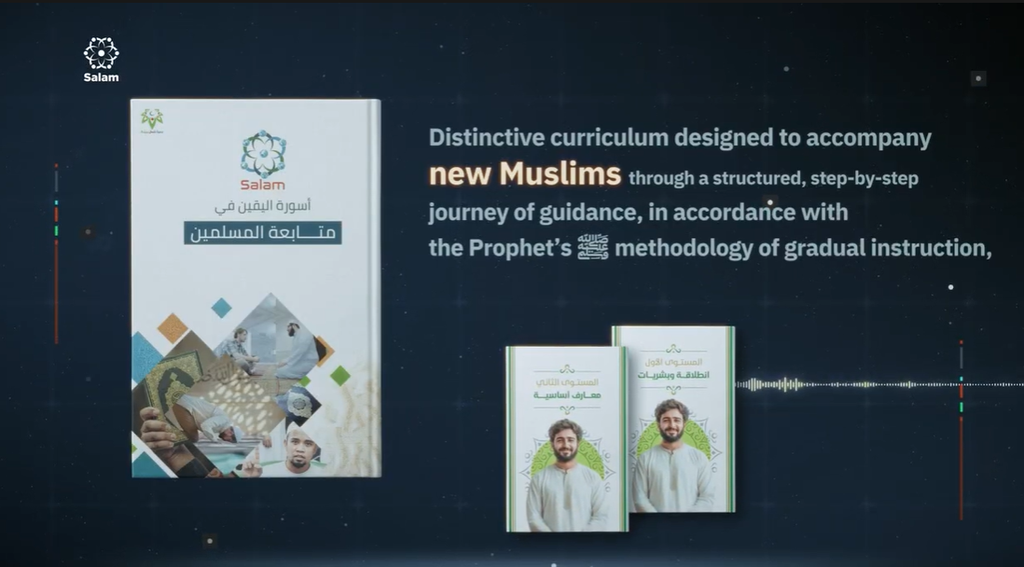
This is the sequencing the Salam Center’s Asawirat Al-Yaqeen (Bracelets of Certainty) program follows in its Level 1 curriculum, where practical rulings for salah are introduced alongside the foundational surahs a new Muslim needs to pray correctly from day one.
Read Also: What Is the Longest Ayah in the Quran?
Why do short surahs matter for salah and daily worship?
Every unit (rak’ah) of the five daily prayers requires the recitation of Al-Fatiha, and in most units a second surah follows it.
Short surahs make this practical, since they can be recited without extended pause and are accessible to memorize even for someone encountering Arabic for the first time.
Surahs Al-Ikhlas, Al-Falaq, and An-Nas in particular carry additional significance beyond convenience: the Prophet Muhammad (PBUH) is reported to have recited Al-Falaq and An-Nas together as protection, and Al-Ikhlas holds a reward equivalent, in meaning, to one-third of the entire Quran.
This practical role connects directly to a beginner’s understanding of what Muslims believe about the Quran as a text meant for living recitation, not only silent study — and to why Muslims hold conviction in the Quran’s preservation exactly as it was revealed, letter for letter, across fourteen centuries.
Read Also: What Is the Longest Surah in the Quran?
Learn More About Islam
Discover the beauty, teachings, and wisdom of Islam in a clear and welcoming way. Start exploring and deepen your understanding today.
Learn MoreLearn More Authentic Knowledge About Islam & Quran with Salam
Questions about the Quran often open the door to deeper ones — about Allah, about the Prophet Muhammad (PBUH), about what it means to build a life around Yaqeen, or certainty of faith.
Explore more articles on the Salam Platform for structured, honest answers to sincere questions about Islam.
Visit the Salam blog for ongoing content across Islamic belief, the Prophet’s biography, and the Quran’s history.
If you are exploring Islam personally, or have questions about entering the faith, reach out directly — the Salam Center team responds with care and without pressure.

For those who have already taken their shahada, the Salam Center’s Asawirat Al-Yaqeen (Bracelets of Certainty) program offers a structured four-stage path forward:
- Foundational knowledge of prayer, purification, and the pillars of Islam
- Guided study of Iman, zakat, fasting, and the rites of Hajj
- Support through repentance and knowledge of the Prophet’s life
- Practical life rulings covering family, trade, and daily conduct
General inquiries, guidance requests, and questions about joining the program are all welcome through the Salam Center.
Reach out directly to the Salam Center team to start the Asawirat Al-Yaqeen (Bracelets of Certainty) program for FREE.
Summary
Surah Al-Kawthar holds the distinction of the shortest chapter in the Quran at three verses, though Al-Asr and An-Nasr share that same verse count. Together with seven other brief surahs, these chapters anchor the daily prayers Muslims perform five times each day.
Short length never signals reduced meaning in the Quran — Al-Ikhlas and Al-Asr prove that concentrated verses can carry complete theological weight. New Muslims are encouraged to begin memorization here, building a foundation of Yaqeen one surah at a time.
Frequently Asked Questions
What is the shortest surah in the Quran?
Surah Al-Kawthar (chapter 108) is the shortest surah in the Quran, containing three verses, ten words, and forty-three letters. Two other surahs, Al-Asr and An-Nasr, also have three verses but use more words, making Al-Kawthar the shortest by every standard measure combined.
What are the three shortest surahs in the Quran?
The three shortest surahs by verse count are Al-Kawthar (108), Al-Asr (103), and Al-Ikhlas (112). Al-Kawthar edges out the other two as the overall shortest once word and letter counts are factored in alongside verse count.
What are the ten shortest surahs in the Quran?
The ten shortest surahs, ranked by verse count, are Al-Kawthar, Al-Asr, An-Nasr, Al-Ikhlas, Quraysh, Al-Qadr, Al-Fil, Al-Masad, Al-Falaq, and Al-Kafirun. These range from three to six verses each and are concentrated almost entirely within Juz Amma, the Quran’s final section.
Why are short surahs important for prayer?
Short surahs are recited after Al-Fatiha in the five daily prayers (salah), making them essential for every practicing Muslim to memorize. Surahs like Al-Ikhlas, Al-Falaq, and An-Nas are recited especially often due to both their brevity and their protective, foundational content.
Does a surah’s length reflect its importance in Islam?
No, a surah’s length has no bearing on its spiritual or theological weight. Surah Al-Ikhlas, at only four verses, is described in authentic Hadith as equal in meaning to one-third of the Quran, demonstrating that meaning, not length, determines a surah’s significance.
Curious about Islam?
Journey towards clarity and purpose. Our team is here to support you in your search for truth and spiritual guidance.
Embrace the Truth