
What Is the Longest Ayah in the Quran?
| Key Takeaways |
| The longest ayah in the Quran is verse 282 of Surah Al-Baqarah, known as Ayat al-Dayn (the Verse of Debt). |
| Ayat al-Dayn contains roughly 128 words and 540 letters in the original Arabic text, spanning a full page in most printed copies of the Mushaf. |
| The verse was revealed in Al-Madinah and establishes the Islamic legal foundation for documenting debts, contracts, and witnessed financial agreements. |
The longest ayah in the Quran is verse 282 of Surah Al-Baqarah, widely known as Ayat al-Dayn, or the Verse of Debt. It runs to roughly 128 words in Arabic — long enough to occupy a full page in most standard copies of the Mushaf, dwarfing nearly every other single verse in the text.
What is the longest ayah in the Quran?
The longest ayah in the Quran is Surah Al-Baqarah, verse 282, known as Ayat al-Dayn (the Verse of Debt). It contains approximately 128 words and 540 letters in Arabic, making it the single most extensive verse among the Quran’s 6,236 ayat. The verse instructs believers to put debts in writing, use scribes and witnesses, and act with fairness whenever money changes hands on a deferred basis.
For context, most Quranic verses run a single line or a short passage. Even Ayat al-Kursi (2:255), often called the greatest verse in the Quran for its description of Allah’s majesty, contains only about 57 words — less than half the length of Ayat al-Dayn. The debt verse stands apart structurally as well as thematically: it is the longest verse within Al-Baqarah, which is itself the longest surah in the Quran at 286 verses.
This detail matters for anyone researching what do Muslims believe about the Quran as a complete, practical guide to life. A text this comprehensive does not reserve its most extended treatment for abstract theology alone. It gives equal, sustained attention to how believers are meant to conduct themselves in the marketplace.
Longest ayat in Quran in Arabic spans a full page of the Mushaf
In its original Arabic, Ayat al-Dayn is long enough to fill an entire page in most standard printings of the Quran, including the widely used Uthmani script Mushaf. Scholars who have counted its components describe it as containing roughly 128 words and 540 letters, figures echoed consistently across Quranic statistical studies and tafsir literature.
“يَا أَيُّهَا الَّذِينَ آمَنُوا إِذَا تَدَايَنتُم بِدَيْنٍ إِلَىٰ أَجَلٍ مُّسَمًّى فَاكْتُبُوهُ ۚ وَلْيَكْتُب بَّيْنَكُمْ كَاتِبٌ بِالْعَدْلِ ۚ وَلَا يَأْبَ كَاتِبٌ أَن يَكْتُبَ كَمَا عَلَّمَهُ اللَّهُ ۚ فَلْيَكْتُبْ وَلْيُمْلِلِ الَّذِي عَلَيْهِ الْحَقُّ وَلْيَتَّقِ اللَّهَ رَبَّهُ وَلَا يَبْخَسْ مِنْهُ شَيْئًا ۚ فَإِن كَانَ الَّذِي عَلَيْهِ الْحَقُّ سَفِيهًا أَوْ ضَعِيفًا أَوْ لَا يَسْتَطِيعُ أَن يُمِلَّ هُوَ فَلْيُمْلِلْ وَلِيُّهُ بِالْعَدْلِ ۚ وَاسْتَشْهِدُوا شَهِيدَيْنِ مِن رِّجَالِكُمْ ۖ فَإِن لَّمْ يَكُونَا رَجُلَيْنِ فَرَجُلٌ وَامْرَأَتَانِ مِمَّن تَرْضَوْنَ مِنَ الشُّهَدَاءِ أَن تَضِلَّ إِحْدَاهُمَا فَتُذَكِّرَ إِحْدَاهُمَا الْأُخْرَىٰ ۚ وَلَا يَأْبَ الشُّهَدَاءُ إِذَا مَا دُعُوا ۚ وَلَا تَسْأَمُوا أَن تَكْتُبُوهُ صَغِيرًا أَوْ كَبِيرًا إِلَىٰ أَجَلِهِ ۚ ذَٰلِكُمْ أَقْسَطُ عِندَ اللَّهِ وَأَقْوَمُ لِلشَّهَادَةِ وَأَدْنَىٰ أَلَّا تَرْتَابُوا ۖ إِلَّا أَن تَكُونَ تِجَارَةً حَاضِرَةً تُدِيرُونَهَا بَيْنَكُمْ فَلَيْسَ عَلَيْكُمْ جُنَاحٌ أَلَّا تَكْتُبُوهَا ۗ وَأَشْهِدُوا إِذَا تَبَايَعْتُمْ ۚ وَلَا يُضَارَّ كَاتِبٌ وَلَا شَهِيدٌ ۚ وَإِن تَفْعَلُوا فَإِنَّهُ فُسُوقٌ بِكُمْ ۗ وَاتَّقُوا اللَّهَ ۖ وَيُعَلِّمُكُمُ اللَّهُ ۗ وَاللَّهُ بِكُلِّ شَيْءٍ عَلِيمٌ ﴿٢٨٢﴾” (Quran 2:282)
To put that scale in perspective, twenty entire surahs in the Quran are shorter than this single verse. Surah Al-Kawthar, the shortest chapter in the Quran, contains only 10 words in total.
That comparison alone illustrates something important about Quranic style: length in the Quran is not decorative. It is deployed precisely where precision is needed, and compressed sharply where a single phrase carries enough weight, as with the shortest verses describing scenes of Paradise or moments of divine command.
This structural variation — long legal verses beside brief, evocative ones — reflects the Quran’s internal coherence as a text addressing the nature of God, human conduct, and the unseen world within a single, unified revelation.
Read Also: What Is the First Surah in the Quran?
Learn More About Islam
Discover the beauty, teachings, and wisdom of Islam in a clear and welcoming way. Start exploring and deepen your understanding today.
Learn MoreRead Also: Do You Need Wudu to Read Quran?
Longest ayah in the Quran translation reveals its legal purpose
Reading the English rendering of Ayat al-Dayn makes its purpose immediately clear. The verse opens with a direct address to believers before laying out a full procedure for documenting debt.
“O you who have believed, when you contract a debt for a specified term, write it down. And let a scribe write [it] between you in justice. Let no scribe refuse to write as Allah has taught him. So let him write and let the one who has the obligation dictate. And let him fear Allah, his Lord, and not leave anything out of it. But if the one who has the obligation is of limited understanding or weak or unable to dictate himself, then let his guardian dictate in justice. And bring to witness two witnesses from among your men. And if there are not two men [available], then a man and two women from those whom you accept as witnesses – so that if one of the women errs, then the other can remind her. And let not the witnesses refuse when they are called upon. And do not be [too] weary to write it, whether it is small or large, for its [specified] term. That is more just in the sight of Allah and stronger as evidence and more likely to prevent doubt between you, except when it is an immediate transaction which you conduct among yourselves. For [then] there is no blame upon you if you do not write it. And take witnesses when you conclude a contract. Let no scribe be harmed or any witness. For if you do so, indeed, it is [grave] disobedience in you. And fear Allah. And Allah teaches you. And Allah is Knowing of all things. (282)” (Quran 2:282)
From that opening command, the verse continues at length. It instructs that a scribe should write the agreement in justice, that no scribe should refuse to record what Allah has taught him to write, and that the person taking on the debt should dictate the terms honestly, fearing Allah and leaving nothing out.
It addresses what happens if the debtor cannot dictate independently, requires two witnesses, permits a man and two women to serve as witnesses in specific circumstances so that memory can be corroborated, and closes by describing this entire process as more just, more solid as evidence, and more likely to prevent doubt between people.
For readers exploring why Muslims believe in the Quran as revealed guidance rather than a philosophical text, this verse offers a clear example: it solves a real, recurring human problem with precision rather than leaving it to custom.
Read Also: What Is the Last Surah of the Quran?
Longest ayat in Quran meaning centers on justice in financial dealings
The core meaning of Ayat al-Dayn is that documenting debt protects both parties and prevents future disputes. The verse repeatedly returns to the language of justice — commanding that the scribe write “in justice,” that the debtor dictate “in justice,” and that witnesses be chosen fairly.
It states plainly that writing things down is more just before Allah, more solid as evidence, and closer to preventing doubt.
Classical commentators have understood this verse as establishing several enduring principles rather than a single narrow rule.
- Debts with a fixed term should be recorded in writing, not left to memory or informal trust alone.
- A neutral scribe, rather than either party to the debt, should record the terms to preserve fairness.
- Witnesses corroborate the transaction, protecting against later disagreement or forgetfulness.
- Immediate, on-the-spot transactions carry an exception, since the verse itself notes there is no blame in not writing down a transaction conducted and completed there and then.
- The entire process exists to safeguard trust between people, not to imply suspicion of the believer’s honesty.
This last point matters. The verse is often misunderstood as reflecting distrust between Muslims.
Its actual function is closer to insurance against ordinary human forgetfulness and the friction that unrecorded money matters so often create between friends, family members, and business partners.
That framing connects directly to broader Quranic teaching on transactional honesty, discussed further in relation to Islam’s core principles of fairness and accountability.
Read Also: What Is the Longest Surah in the Quran?
Why does financial law appear within a book of faith?
A reader encountering Islam for the first time might reasonably ask why a scripture concerned with worship, the afterlife, and prophecy would devote its longest single verse to loan documentation. The answer lies in how Islam defines faith itself. Iman is not confined to belief and ritual; it extends into how a person treats another person’s wealth, time, and trust.
The Prophet Muhammad (PBUH) did not merely transmit this command in theory. Authentic hadith literature records that he personally engaged in exactly the kind of transaction the verse describes.
Sahih al-Bukhari narrates on the authority of Aisha (RA) that the Prophet (PBUH) bought food on credit from a Jewish merchant and pledged his iron armor as security for the debt (Sahih al-Bukhari 2386).
This single narration carries significant weight for anyone studying the biography of Prophet Muhammad. It shows that the legislation of Ayat al-Dayn was not an abstract rule imposed from a distance.
The Prophet (PBUH) himself operated within a pluralistic Madinan economy, transacted with a non-Muslim trading partner, and modeled exactly the kind of documented, secured financial dealing the verse commands. Faith and commerce were never treated as separate spheres in his example.
Read Also: The Shortest Surah in the Quran
Learn More About Islam
Discover the beauty, teachings, and wisdom of Islam in a clear and welcoming way. Start exploring and deepen your understanding today.
Learn MoreYour Path to Deeper Authentic Knowledge Starts Here with Salam
Questions like this one often open the door to bigger ones — about how the Quran was preserved, why Muslims trust its authenticity, or what daily life as a Muslim actually looks like. Salam Center exists to walk through exactly these questions with patience and without judgment.
Explore more on the Salam Platform for structured, evidence-based answers to sincere questions about Islam.
Read further reflections and explainers on the Salam blog.
Reach out directly — our team is ready to listen, guide, and welcome you.

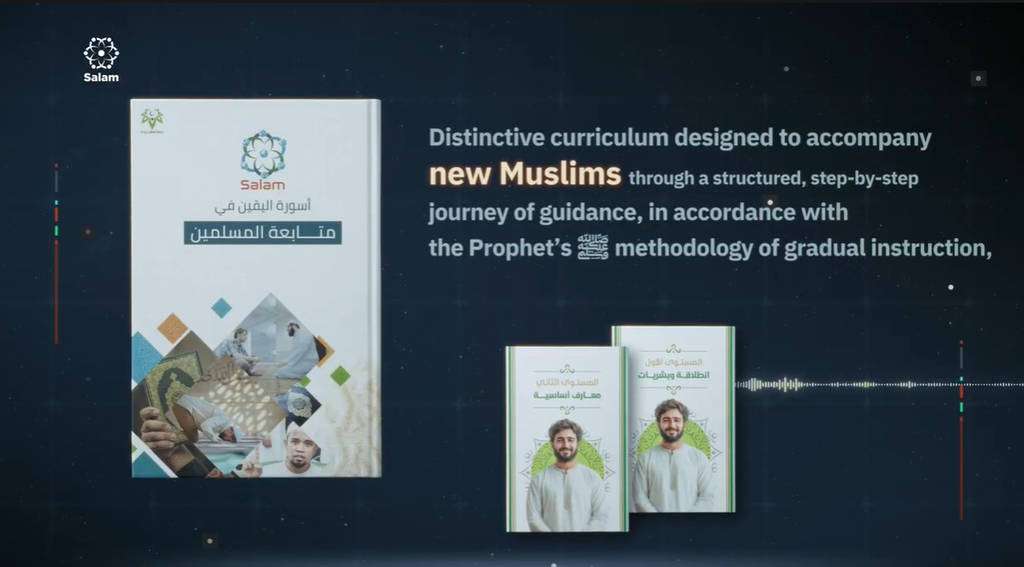
For those who have already taken their shahada or are considering it, the Asawirat Al-Yaqeen (Bracelets of Certainty) program offers a structured path forward:
- A four-stage curriculum moving from foundational knowledge to lived confidence in faith
- Lessons on prayer, purification, fasting, and the pillars of Islam from the very first level
- Guidance on repentance, the Seerah of the Prophet (PBUH), and daily life rulings as students progress
- A track record spanning over 114,000 new Muslims across 140 countries
- Available for anyone seeking steady, gradual, well-grounded growth after entering Islam
Reach out directly to the Salam Center team to start the Asawirat Al-Yaqeen (Bracelets of Certainty) program for FREE.
Summary
Ayat al-Dayn, verse 282 of Surah Al-Baqarah, stands as the Quran’s longest single verse at roughly 128 words, legislating written, witnessed debt agreements. Its placement within a cluster of financial verses reflects a consistent Quranic emphasis on documented fairness.
The Prophet Muhammad’s own recorded credit transaction, preserved in Sahih al-Bukhari, grounds this legislation in lived example rather than distant theory. Together, these sources show Islamic law addressing everyday commerce with the same seriousness given to matters of belief.
Frequently Asked Questions
What is the longest ayah in the Quran?
The longest ayah in the Quran is verse 282 of Surah Al-Baqarah, called Ayat al-Dayn, containing approximately 128 words and 540 letters. It legislates the documentation and witnessing of debt agreements between believers.
Why is the longest verse in the Quran about debt?
Islam treats financial honesty as part of faith itself, not a separate secular matter. The verse’s length reflects the seriousness Islam places on justice in transactions, reinforced by the Prophet Muhammad’s (PBUH) own recorded credit dealings in Sahih al-Bukhari.
In which surah is the verse of debt, Ayat al-Dayn, found?
Ayat al-Dayn is found in Surah Al-Baqarah, specifically verse 282, near the chapter’s close among a sequence of verses addressing debt, hardship, and financial mercy revealed during the Madinan period.
Curious about Islam?
Journey towards clarity and purpose. Our team is here to support you in your search for truth and spiritual guidance.
Embrace the Truth