
What Is the First Surah in the Quran?
| Key Takeaways |
| Al-Fatihah, meaning “The Opening,” is the first surah of the Quran and consists of seven verses. |
| The very first verses revealed were the opening verses of Surah Al-‘Alaq |
| The Prophet Muhammad (PBUH) described Al-Fatihah as the greatest surah in the Quran in an authentic hadith recorded in Sahih al-Bukhari. |
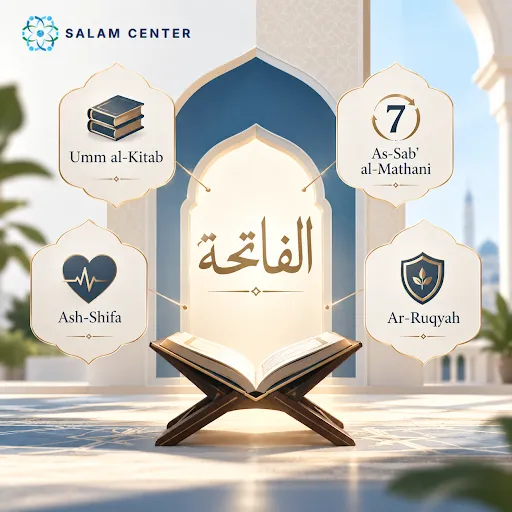
| Al-Fatihah is also known as Umm al-Kitab (“Mother of the Book”) and as-Sab’ al-Mathani (“the Seven Oft-Repeated Verses”). |
| Muslims recite Al-Fatihah in every unit (rak’ah) of the five daily prayers, making it the most repeated chapter in Islamic worship. |
| The surah centers on praising Allah, affirming His lordship over all creation, and asking for guidance to the straight path. |
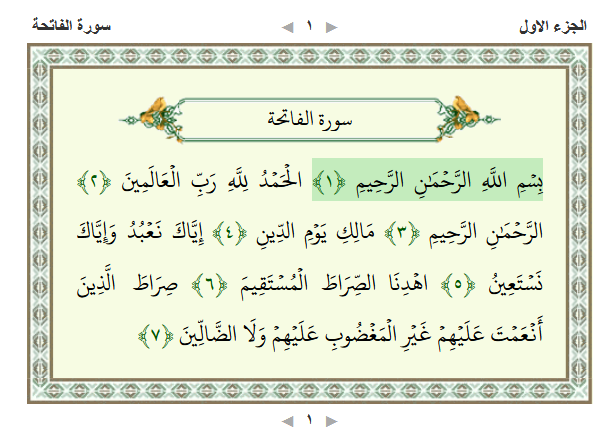
The first surah in the Quran is Al-Fatihah, “The Opening.” It contains just seven verses, yet Muslims recite it more than any other chapter in the Quran — multiple times a day, in every prayer, from the moment a person first learns to pray.
Its brevity is deceptive. In those seven lines sit the foundations of what a Muslim believes about Allah, about worship, and about the path a human being is meant to walk.
What Is the First Surah in the Quran by Position in the Mushaf?
The first surah in the Quran is Al-Fatihah, a seven-verse chapter revealed in Makkah that opens the entire scripture. Its name means “The Opening” in Arabic, and it functions exactly as the name suggests: an entrance into the Quran’s core themes before the longer, more detailed surahs that follow.
Al-Fatihah is a concise prayer — praise of Allah, an acknowledgment of His sovereignty, and a plea for guidance along the straight path.
It is not simply positioned first in the Quran’s arrangement; it is also the chapter every Muslim recites in every unit of every prayer, which is why it holds a place in daily worship that no other surah shares.
What is The First Surah Revealed in the Quran?
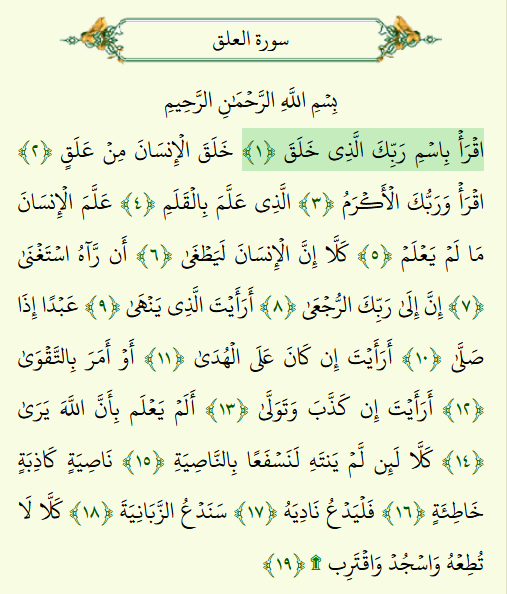
The very first verses revealed were the opening verses of Surah Al-‘Alaq. A distinction matters here that many readers overlook: Al-Fatihah is the first surah by position in the Quran’s written arrangement (the mushaf), but it is not the first surah Allah revealed to Prophet Muhammad (PBUH).
The order in which the Quran is arranged today follows a sequence taught to the Prophet (PBUH) by divine instruction, not the chronological order in which the revelations descended.
The overwhelming majority of scholars — based on the well-known hadith of Aisha (may Allah be pleased with her) recorded in Sahih al-Bukhari and Sahih Muslim — hold that the very first verses revealed were the opening verses of Surah Al-‘Alaq, beginning with the command:
اقْرَأْ بِاسْمِ رَبِّكَ الَّذِي خَلَقَ
“Read in the Name of your Lord Who created.” (Quran 96:1)
This revelation came to the Prophet (PBUH) in the Cave of Hira, delivered by the angel Jibril (Gabriel). It marks the actual beginning of the Quran’s revelation, not Al-Fatihah’s position on the page.
A minority of early scholars held that Al-Fatihah was revealed first — but classical commentators explain that this view most likely refers to Al-Fatihah being the first surah revealed in complete form, all seven verses delivered together at once, rather than the first revelation of any kind.
The opening verses of Al-‘Alaq, by contrast, were only the first few verses of that surah; the rest of it — like several other early surahs — was completed later.
So the intent behind Al-Fatihah’s placement is not about revelation chronology at all. It reflects its role as an introduction and summary — the surah best suited to open the reader’s encounter with the Quran, regardless of when it was revealed relative to other chapters.
Why Does Al-Fatihah Open the Quran?
Al-Fatihah’s placement at the beginning of the Quran is not accidental to its content. The surah functions as a summary of the Quran’s major themes — monotheism, the relationship between the Creator and His creation, and the request for guidance that the rest of the Quran goes on to answer.
بِسْمِ اللَّهِ الرَّحْمَٰنِ الرَّحِيمِ
“In the Name of Allah—the Most Compassionate, Most Merciful.” (Quran 1:1)
This opening line sets the tone for the entire book: everything that follows is framed as coming from a Being described first and foremost through mercy. The second verse continues that framing.
الْحَمْدُ لِلَّهِ رَبِّ الْعَالَمِينَ ٱلرَّحْمَـٰنِ ٱلرَّحِيمِ
“All praise is for Allah—Lord of all worlds, the Most Compassionate, Most Merciful,” (Quran 1:2-3)
This verse establishes a principle central to Islamic beliefs about the nature of God: Allah is described as Lord of “all worlds,” not of one nation, one people, or one era. The claim is universal from the very first page.
The remaining verses move from praise into supplication:
مَالِكِ يَوْمِ الدِّينِ
“Master of the Day of Judgment.” (Quran 1:4)
إِيَّاكَ نَعْبُدُ وَإِيَّاكَ نَسْتَعِينُ
“You ˹alone˺ we worship and You ˹alone˺ we ask for help.” (Quran 1:5)
اهْدِنَا الصِّرَاطَ الْمُسْتَقِيمَ صِرَٰطَ ٱلَّذِينَ أَنْعَمْتَ عَلَيْهِمْ غَيْرِ ٱلْمَغْضُوبِ عَلَيْهِمْ وَلَا ٱلضَّآلِّينَ
“Guide us along the Straight Path, the Path of those You have blessed—not those You are displeased with, or those who are astray.” (Quran 1:6-7)
This final plea for guidance is the surah’s closing request, and it is the reason Al-Fatihah is sometimes described as a conversation between the worshipper and Allah — praise given, then a request made in return.
Understanding this exchange is part of grasping what Muslims believe about the Quran as a whole: a book meant to be lived with, not only read.
Learn More About Islam
Discover the beauty, teachings, and wisdom of Islam in a clear and welcoming way. Start exploring and deepen your understanding today.
Learn MoreWhat Are The Names and Titles of Al-Fatihah?
Al-Fatihah carries more honorific names than perhaps any other surah, each reflecting a different dimension of its significance:
- Umm al-Kitab (“Mother of the Book”) — because it contains the essence of the entire Quran in condensed form.
- As-Sab’ al-Mathani (“The Seven Oft-Repeated Verses”) — a name drawn directly from the Quran’s own description of the surah, referring to its constant repetition in prayer.
- Ash-Shifa (“The Cure”) and Ar-Ruqyah (“The Remedy”) — names tied to its recorded use as a means of seeking healing and protection.
These are not informal nicknames. They appear in classical scholarship on the Quran’s sciences and reflect the surah’s unmatched status among the 114 chapters.
The Prophetic Hadith on Al-Fatihah’s Rank
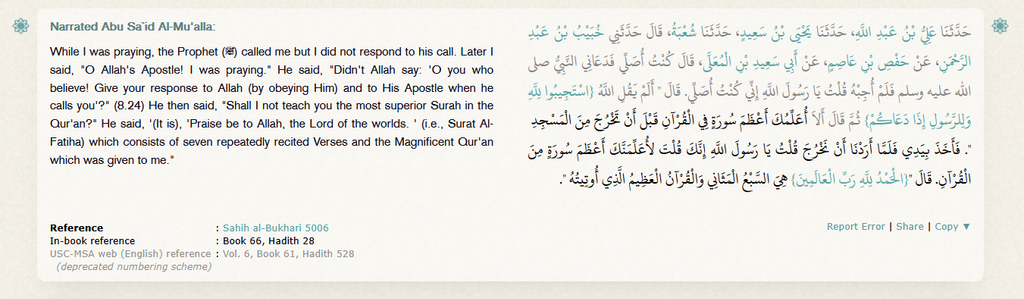
The surah’s importance is not simply inferred from its position — it is stated explicitly by Prophet Muhammad (PBUH) himself. In a hadith recorded in Sahih al-Bukhari, the companion Abu Sa’id Al-Mu’alla narrates that the Prophet (PBUH) told him he would teach him “the greatest surah in the Qur’an” before he left the mosque.
When reminded, the Prophet (PBUH) identified it as Al-Fatihah, describing it as “the seven repeatedly recited verses and the Magnificent Qur’an” given to him.
This narration is one of the clearest pieces of textual evidence for Al-Fatihah’s rank. It is not a matter of scholarly opinion or later tradition — it is a direct statement attributed to the Prophet (PBUH) himself, preserved in one of the two most authenticated hadith collections in Islam.
Al-Fatihah’s Role in Daily Prayer
Every Muslim who prays recites Al-Fatihah in every single rak’ah (unit) of every prayer, whether obligatory or voluntary.
A hadith found in Sahih al-Bukhari and Sahih Muslim states that prayer performed without reciting Al-Fatihah is not considered valid. This requirement means the surah is repeated dozens of times daily by over a billion people — a scale of repetition no other text in human history matches.
This daily recitation connects directly to the broader structure of Islamic principles, where prayer (salah) stands as one of the central pillars of practice, and faith in Islam is expressed as much through consistent worship as through belief itself.
Learn More About Islam
Discover the beauty, teachings, and wisdom of Islam in a clear and welcoming way. Start exploring and deepen your understanding today.
Learn MoreLearn More About Faith, Certainty, and the Journey to Islam
If Al-Fatihah has raised questions about what the Quran teaches more broadly, there is more to explore.
Learn more on the Salam blog about the Quran, its history, and its place in Islamic life.
Curious about the bigger picture — who Allah is in Islam, or how the Quran came to be? Visit the Salam Platform to keep exploring.
Have a specific question, or want to talk to someone directly about faith, guidance, or taking your next step? Reach out directly — this is always open, whatever stage you’re at.

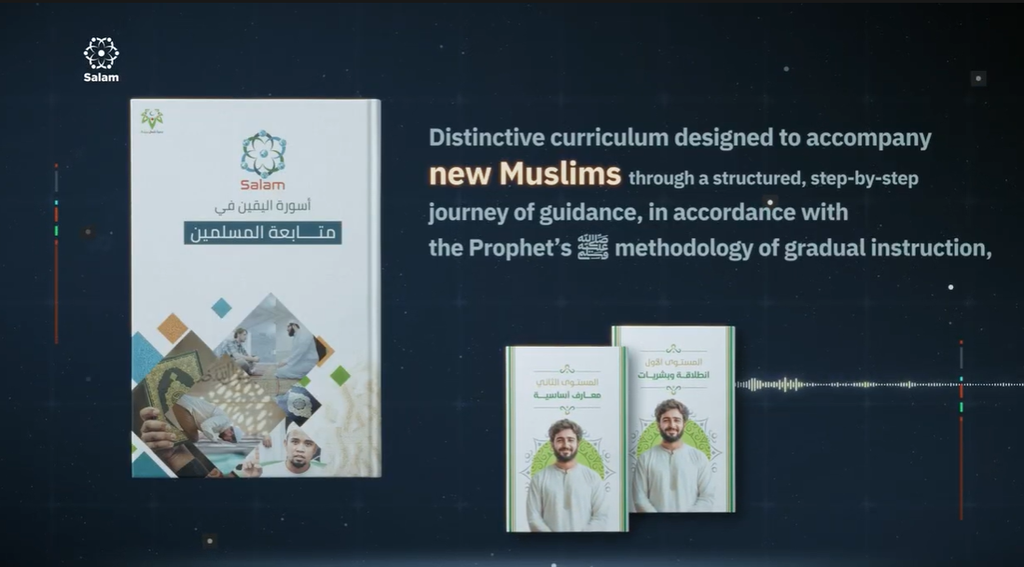
For those who have already taken their shahada and want a structured next step, the Salam Center team offers the Asawirat Al-Yaqeen (Bracelets of Certainty) program:
- A progressive four-stage learning path built for new Muslims
- Starts with the essentials — prayer, purification, the core of faith
- Moves through the Prophet’s life, daily rulings, and grounding in belief
- Designed to connect you with community, not just information
Reach out directly to the Salam Center team to start the Asawirat Al-Yaqeen (Bracelets of Certainty) program for FREE.
Summary
Al-Fatihah opens the Quran with seven verses that summarize praise of Allah, His universal lordship, and a request for guidance along the straight path. Its recitation anchors every unit of Islamic prayer worldwide.
Named “the greatest surah” by Prophet Muhammad (PBUH) himself in an authenticated hadith, Al-Fatihah carries a rank matched by no other chapter, making it the natural starting point for understanding the Quran.
Frequently Asked Questions
What does Al-Fatihah mean in English?
Al-Fatihah means “The Opening” in Arabic. The name reflects its position as the first chapter of the Quran and its function as an introduction to the scripture’s central themes: Allah’s oneness, mercy, and the request for guidance.
How many verses does Al-Fatihah have?
Al-Fatihah has seven verses. This count is why it is also called “as-Sab’ al-Mathani,” or “the Seven Oft-Repeated Verses,” a name mentioned in the Quran itself (Quran 15:87).
Is Al-Fatihah a Meccan or Medinan surah?
Al-Fatihah is classified by the majority of scholars as a Meccan surah, meaning it was revealed to Prophet Muhammad (PBUH) in Makkah before his migration to Madinah.
Why is Al-Fatihah recited in every prayer?
Al-Fatihah is recited in every rak’ah because the Prophet Muhammad (PBUH) taught that prayer is not valid without it, a ruling preserved in Sahih al-Bukhari and Sahih Muslim. It functions as the core supplication of Islamic prayer.
What is the theme of Surah Al-Fatihah?
Al-Fatihah’s theme is the relationship between the worshipper and Allah: praise of His mercy and lordship, acknowledgment that He alone is worshipped, and a direct request for guidance to the straight path.
Curious about Islam?
Journey towards clarity and purpose. Our team is here to support you in your search for truth and spiritual guidance.
Embrace the Truth