
Islam’s Teachings on an Eye for an Eye
| Key Takeaways |
| Islam’s teachings on an eye for an eye come from Quran 5:45, which describes the law given to the Children of Israel in the Torah and affirmed within Islamic legal principles. |
| The Quranic principle of Qisas requires exact equivalence in punishment and forbids any excess, rooted in Quran 2:178 and 17:33. |
| Islam actively encourages forgiveness over retaliation, promising that the person who pardons is honored by Allah rather than diminished. |
| The tooth-breaking case of Ar-Rubayyi bint an-Nadr, recorded in Sahih al-Bukhari, shows the Prophet Muhammad (PBUH) personally applying this law with total fairness. |
| Retaliation in Islam is a right the victim’s family holds and may waive — never a private license for anyone to take justice into their own hands. |
| The Quran states that this law of equal retribution preserves life rather than destroying it, given for a people of understanding in Quran 2:179. |
Islam’s teachings on an eye for an eye affirm the principle of equal retribution — but wrap it inside a legal system so precise that revenge, in the way most people picture it, has no room to survive.
The phrase “an eye for an eye” comes directly from the Quran, in a verse describing the law revealed to the Children of Israel in the Torah. Islam did not invent this principle from nothing.
What does Islam teach about an eye for an eye?
Islam teaches that an eye for an eye is a legitimate legal principle affirmed in the Quran, but one governed by strict conditions of equivalence, judicial process, and encouragement toward forgiveness. The verse most directly tied to this phrase is Quran 5:45, part of Surah Al-Ma’idah:
وَكَتَبْنَا عَلَيْهِمْ فِيهَا أَنَّ النَّفْسَ بِالنَّفْسِ وَالْعَيْنَ بِالْعَيْنِ وَالْأَنفَ بِالْأَنفِ وَالْأُذُنَ بِالْأُذُنِ وَالسِّنَّ بِالسِّنِّ وَالْجُرُوحَ قِصَاصٌ
“And We ordained for them therein a life for a life, an eye for an eye, a nose for a nose, an ear for an ear, a tooth for a tooth, and for wounds is legal retribution.” (Quran 5:45)
This single verse contains the entire foundation of what non-Muslims and new Muslims alike refer to when they ask about this teaching.
Allah describes it as a law “ordained for them” — the Children of Israel — within the Torah, and Islamic scholarship holds that this principle of proportionate justice carries forward as a recognized foundation within Islamic Qisas (retributive justice) law.
It is never presented as a license for arbitrary revenge. It is presented as a ceiling, not a floor — a maximum a wronged party may claim, never an obligation they must enforce, and never a doorway a bystander may walk through uninvited.
1. The principle of exact equivalence governs every act of retaliation
Islam’s law of Qisas does not simply permit retaliation. Islam’s law demands that any retaliation match the original harm with total precision — nothing more, nothing approximate. This is the defining feature that separates the Quranic teaching from vigilante justice or disproportionate revenge.
Quran 16:126 states the principle plainly:
وَإِنْ عَاقَبْتُمْ فَعَاقِبُوا بِمِثْلِ مَا عُوقِبْتُم بِهِ ۖ وَلَئِن صَبَرْتُمْ لَهُوَ خَيْرٌ لِّلصَّابِرِينَ
“And if you punish [an enemy, O believers], punish with an equivalent of that with which you were harmed. But if you are patient – it is better for those who are patient.” (Quran 16:126)
Islamic scholars have long noted that this verse was revealed after the brutal mutilation of the Prophet’s uncle Hamzah at the Battle of Uhud, when some companions wished to respond with disproportionate cruelty. The verse restrained them to exact equivalence — nothing beyond what was suffered.
That historical context matters. It shows Qisas functioning as a limit imposed in the very moment vengeance felt justified, not as encouragement toward it.
Quran 17:33 reinforces the same restraint, this time regarding the taking of life itself:
وَلَا تَقْتُلُوا النَّفْسَ الَّتِي حَرَّمَ اللَّهُ إِلَّا بِالْحَقِّ ۗ وَمَن قُتِلَ مَظْلُومًا فَقَدْ جَعَلْنَا لِوَلِيِّهِ سُلْطَانًا فَلَا يُسْرِف فِّي الْقَتْلِ
“And do not kill the soul which Allah has forbidden, except by right. And whoever is killed unjustly – We have given his heir authority, but let him not exceed limits in [the matter of] taking life.” (Quran 17:33)
The wording is deliberate. Authority is given to the victim’s heir — not to any Muslim who feels moved to act, and not to a crowd.
And even that authorized heir is commanded not to exceed the limit, meaning the killer’s life is what may be claimed, nothing extra, no torture, no mutilation, no punishment of anyone beyond the one guilty party.
Learn more about faith in Islam and how divine law shapes every dimension of a believer’s conduct.
Learn More About Islam
Discover the beauty, teachings, and wisdom of Islam in a clear and welcoming way. Start exploring and deepen your understanding today.
Learn More2. Qisas applies specifically to intentional murder and bodily injury
The Quranic law of retribution addresses two distinct categories: unlawful killing and deliberate physical injury — both requiring exact proportionality in judgment. Quran 2:178 lays the foundation for the murder category:
يَا أَيُّهَا الَّذِينَ آمَنُوا كُتِبَ عَلَيْكُمُ الْقِصَاصُ فِي الْقَتْلَى
“O you who have believed, prescribed for you is legal retribution for those murdered.” (Quran 2:178)
The very next verse explains the wisdom behind the entire system, and it is worth reading slowly:
وَلَكُمْ فِي الْقِصَاصِ حَيَاةٌ يَا أُولِي الْأَلْبَابِ لَعَلَّكُمْ تَتَّقُونَ
“And there is for you in legal retribution [saving of] life, O you [people] of understanding, that you may become righteous.” (Quran 2:179)
Classical commentators, including Ibn Kathir, explain this verse through simple logic: when a potential killer knows with certainty that an equivalent punishment awaits him, he is deterred before acting.
The law protects life precisely by holding a firm consequence over the one who would take it. Far from being a system built on cruelty, Qisas is framed by the Quran itself as a mechanism of hayah — life — for the whole of society.
This connects directly to how Islam views the nature of god as one whose laws are always rooted in wisdom and mercy, never in arbitrary severity.
3. The Prophet Muhammad applied the law of an eye for an eye with complete impartiality
The clearest demonstration of how “an eye for an eye” functions in practice comes from an authenticated incident recorded in Sahih al-Bukhari, involving a young Ansari girl and a broken tooth. Anas ibn Malik narrated that his aunt, Ar-Rubayyi bint an-Nadr, broke the front tooth of a girl during a dispute. The girl’s family sought Qisas — the exact same injury in return — and refused all offers of compensation.
The case was brought before the Prophet Muhammad (PBUH), who ordered that retaliation be carried out.
Anas ibn an-Nadr, Ar-Rubayyi’s brother, pleaded on her behalf, swearing she would not have her tooth broken. The Prophet’s (PBUH) response settled the matter without hesitation:
“O Anas! The Book of Allah ordains retaliation.” (Sahih al-Bukhari)
This single sentence carries enormous weight. The Prophet (PBUH) did not bend the law for a family close to him — Anas ibn an-Nadr was among his most devoted companions, a man who would later be martyred at Uhud.
Personal closeness played no role in the judgment. The law of Qisas applied to everyone with identical force.
What resolved the case in the end was not the Prophet (PBUH) softening the ruling, but the girl’s own family voluntarily choosing to accept compensation and forgive — a resolution the law always leaves fully open to them.
4. Islam consistently prioritizes forgiveness over the exercise of retaliation
While Qisas grants a legitimate right to equal retaliation, the Quran and Sunnah repeatedly steer believers toward forgiveness as the spiritually superior path. This is not a minor footnote attached to the law — it appears within the very verse that establishes it. Quran 5:45 continues directly after describing the law of “an eye for an eye”:
فَمَن تَصَدَّقَ بِهِ فَهُوَ كَفَّارَةٌ لَّهُ
“But whoever gives [up his right as] charity, it is an expiation for him.” (Quran 5:45)
Waiving the right to retaliate is described here as an act of charity so significant that it atones for the sins of the one who forgives.
The Prophet Muhammad (PBUH) reinforced this teaching directly, in a narration recorded by Imam Muslim:
“Charity does not decrease wealth, no one forgives another except that Allah increases his honor.” (Sahih Muslim 2588)
Notice the precise wording — Allah increases the honor of the one who forgives. Forgiveness is framed not as weakness or as surrendering a claim to justice, but as an elevation.
This teaching dismantles the common assumption that Islamic law is built around vengeance.
The legal right to Qisas exists to protect victims and deter crime; the spiritual encouragement toward forgiveness exists to heal what the law alone cannot. Both operate together, and neither cancels the other.
Read Also: How Did The Teachings Of Islam Spread?
5. Retaliation requires judicial process and belongs only to the victim’s family
Under Islamic law, no individual may carry out retaliation independently — the right belongs exclusively to the victim or their legal heirs, and its execution requires the authority of a qualified judge. This is the detail most frequently lost when the phrase “an eye for an eye” is used outside its proper context.
Quran 17:33 already established that authority over a killing case rests with the wali — the victim’s heir — and even then, that authority carries the explicit warning against exceeding its limits.
The case of Ar-Rubayyi bint an-Nadr illustrates the same structure for bodily injury: the girl’s family did not act on their own.
They brought the matter to the Prophet Muhammad (PBUH), who functioned as judge, and it was his ruling that authorized the retaliation, not the family’s private decision to enforce it themselves.
This judicial requirement exists for exactly the reason one would expect: to prevent exactly the kind of spiraling, disproportionate cycles of revenge that plagued pre-Islamic Arabian tribal custom, where a single killing could ignite generations of retaliatory bloodshed between families.
Islam’s teachings on an eye for an eye replaced that chaos with a single, verifiable, judicially supervised claim — precise, bounded, and closed once satisfied or forgiven.
Learn More About Islam
Discover the beauty, teachings, and wisdom of Islam in a clear and welcoming way. Start exploring and deepen your understanding today.
Learn MoreYour Path to Deeper Authentic Knowledge Starts Here with Salam
Have more questions about how Islamic law balances justice and mercy? The Salam Center team welcomes them all.
Browse the Salam blog for more articles on Islamic beliefs, the Quran, and the life of the Prophet Muhammad (PBUH).
Reach out directly if you have a personal question, are considering entering Islam, or want guidance on where to begin.

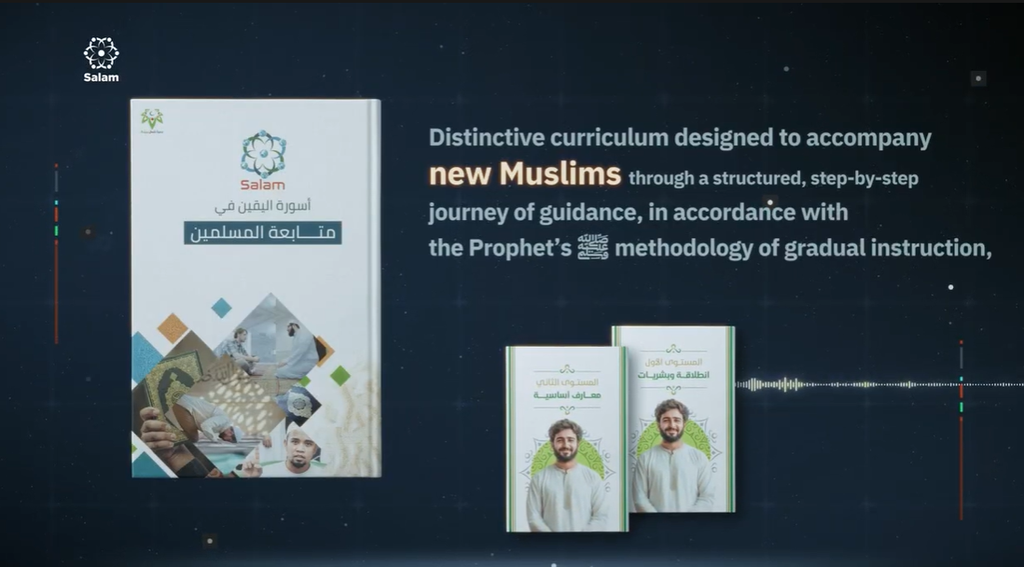
Curious about structured learning after taking the Shahada? The Asawirat Al-Yaqeen (Bracelets of Certainty) program offers new Muslims a guided path forward:
- A four-stage curriculum moving from foundational pillars through advanced contemporary issues
- Rooted in the creed of Ahlus Sunnah wal Jama’ah with gradual, structured instruction
- Covers prayer, fasting, repentance, the Seerah, daily life rulings, and more
- Available to learners in 140 countries through ongoing translation and development
Whatever brought you here — a sincere question, a search for clarity, or the beginning of your own journey — someone is ready to talk with you.
Reach out directly to the Salam Center team to start the Asawirat Al-Yaqeen (Bracelets of Certainty) program for FREE.
Summary
Islam’s teachings on an eye for an eye rest on Quran 5:45 and require exact proportionality, never excess, applying strictly through judicial process to the victim’s rightful claim.
Forgiveness stands as the spiritually preferred response, promised divine honor, while the law itself exists to deter violence and protect life across society.
Frequently Asked Questions
Does Islam really teach “an eye for an eye”?
Yes. Quran 5:45 describes the law of exact retribution — “a life for a life, an eye for an eye” — as revealed within the Torah and affirmed within Islamic legal tradition, though always governed by strict conditions of proportionality and the encouragement to forgive.
Can any Muslim personally carry out an eye for an eye?
No. Retaliation under Qisas belongs only to the victim or their legal heirs and requires the ruling of a qualified judge, as shown when the Prophet Muhammad (PBUH) personally authorized the case in Sahih al-Bukhari 2703.
Is forgiveness better than retaliation in Islam?
Yes. The Prophet Muhammad (PBUH) taught that “no one forgives another except that Allah increases his honor” (Sahih Muslim 2588), and Quran 5:45 describes waiving retaliation as an act of charity that expiates sin.
Does the law of Qisas apply only to murder?
No. Quran 5:45 extends the principle to deliberate bodily injuries — eyes, noses, ears, teeth, and wounds — while Quran 2:178 addresses the specific case of intentional killing, each requiring the same exact proportionality.
Why does Islam call retaliation a way of preserving life?
Quran 2:179 states there is “[saving of] life” in the law of retribution, because certain knowledge of an equal consequence deters potential killers before they act, protecting society rather than merely punishing after harm occurs.
Curious about Islam?
Journey towards clarity and purpose. Our team is here to support you in your search for truth and spiritual guidance.
Embrace the Truth