
What Does the Quran Say About Women?
| Key Takeaways |
| The Quran establishes the full spiritual equality of women and men before Allah, with identical rewards and accountability for righteous deeds. |
| Women’s rights in the Quran include the right to own property, inherit, receive a dowry (mahr), and enter contracts — rights codified over fourteen centuries ago. |
| Islam’s Quran grants women legal personhood fully independent of their male relatives, a revolutionary concept at the time of revelation. |
| Quranic principles governing women reflect a comprehensive framework of justice, mercy, and human dignity. |
The Quran addresses women with directness, dignity, and legal specificity — and has done so for over fourteen centuries. When Allah revealed guidance to Prophet Muhammad (PBUH), it addressed women as full moral agents, independent legal persons, and equal inheritors of Paradise.
Long before modern legal systems recognized women’s right to own property or enter contracts independently, the Quran had already enshrined these rights with divine authority.
1. Spiritual Equality Between Men and Women Is Foundational in the Quran
The Quran’s position on women begins with an unambiguous declaration of spiritual parity. In Surah Al-Ahzab, Allah addresses believing men and women side by side in a passage of remarkable breadth:
إِنَّ الْمُسْلِمِينَ وَالْمُسْلِمَاتِ وَالْمُؤْمِنِينَ وَالْمُؤْمِنَاتِ وَالْقَانِتِينَ وَالْقَانِتَاتِ
“Indeed, the Muslim men and Muslim women, the believing men and believing women, the obedient men and obedient women…” (Quran 33:35)
The verse continues through ten paired qualities — patience, charity, fasting, chastity, remembrance of Allah — and concludes that Allah has prepared for all of them forgiveness and a great reward.
Every quality is stated twice: once for men, once for women. The parallelism is deliberate and theologically precise.
This is reinforced in Surah Al-Nahl:
مَنْ عَمِلَ صَالِحًا مِّن ذَكَرٍ أَوْ أُنثَىٰ وَهُوَ مُؤْمِنٌ فَلَنُحْيِيَنَّهُ حَيَاةً طَيِّبَةً
“Whoever does righteousness, whether male or female, while he is a believer — We will surely cause him to live a good life.” (Quran 16:97)
Righteousness has no gender qualification in the Quran. The reward of a good life in this world and the next is extended to both equally.
2. The Quran Grants Women Comprehensive Legal and Financial Rights
Among the most concrete expressions of women’s dignity in the Quran is the granting of independent legal and financial rights. In the seventh century, when women across most of the world were legally invisible — unable to own property, inherit, or enter contracts in their own names — the Quran established otherwise.
لِّلرِّجَالِ نَصِيبٌ مِّمَّا تَرَكَ الْوَالِدَانِ وَالْأَقْرَبُونَ وَلِلنِّسَاءِ نَصِيبٌ مِّمَّا تَرَكَ الْوَالِدَانِ وَالْأَقْرَبُونَ
“For men is a share of what the parents and close relatives leave, and for women is a share of what the parents and close relatives leave.” (Quran 4:7)
This verse gave women a legally mandated inheritance share at a time when daughters were frequently denied any portion of family wealth. The inheritance system detailed later in Surah An-Nisa specifies exact shares — a codified legal framework, not a vague moral aspiration.
On the right to property earned through work, Surah An-Nisa is equally clear:
وَلَا تَتَمَنَّوْا مَا فَضَّلَ اللَّهُ بِهِ بَعْضَكُمْ عَلَىٰ بَعْضٍ ۚ لِّلرِّجَالِ نَصِيبٌ مِّمَّا اكْتَسَبُوا ۖ وَلِلنِّسَاءِ نَصِيبٌ مِّمَّا اكْتَسَبْنَ
“And do not wish for that by which Allah has made some of you exceed others. For men is a share of what they have earned, and for women is a share of what they have earned.” (Quran 4:32)
A woman’s earnings belong to her. Her husband has no automatic legal claim over them. This financial independence is structural in Quranic law.
Learn More About Islam
Discover the beauty, teachings, and wisdom of Islam in a clear and welcoming way. Start exploring and deepen your understanding today.
Learn More3. The Quran Protects Women Within Marriage Through Specific Divine Commands
Marriage in the Quran is described with a profound moral vocabulary. The relationship between spouses is not one of dominance and submission — it is a mutual covenant built on tranquility, mercy, and love:
وَمِنْ آيَاتِهِ أَنْ خَلَقَ لَكُم مِّنْ أَنفُسِكُمْ أَزْوَاجًا لِّتَسْكُنُوا إِلَيْهَا وَجَعَلَ بَيْنَكُم مَّوَدَّةً وَرَحْمَةً
“And of His signs is that He created for you from yourselves mates that you may find tranquility in them; and He placed between you affection and mercy.” (Quran 30:21)
The word used — sakinah (tranquility) — describes a deep emotional and spiritual rest. Marriage in the Quran is a refuge, and both spouses are its builders.
The Quran also mandates the mahr (dowry) — a financial gift from husband to wife that belongs to her alone:
وَآتُوا النِّسَاءَ صَدُقَاتِهِنَّ نِحْلَةً
“And give the women [upon marriage] their bridal gifts graciously.” (Quran 4:4)
The mahr is not a bride price paid to her family. It is hers, unconditionally, as a symbol of the husband’s commitment and her independent financial standing within the marriage.
On conduct within marriage, the Quran describes spouses as garments for one another
— “They are clothing for you and you are clothing for them” (Quran 2:187)
— an image of mutual protection, covering, and closeness.
4. The Quran Honors Motherhood with Unmatched Reverence
The status of mothers in the Quran and Sunnah is among the clearest expressions of how Islam honors women. Allah links gratitude to mothers directly to gratitude to Himself:
وَوَصَّيْنَا الْإِنسَانَ بِوَالِدَيْهِ حَمَلَتْهُ أُمُّهُ وَهْنًا عَلَىٰ وَهْنٍ
“And We have enjoined upon man [care] for his parents. His mother carried him, [increasing her] in weakness upon weakness.” (Quran 31:14)
The physical reality of pregnancy and nursing is acknowledged explicitly — not as a burden to be minimized, but as a sacrifice that commands gratitude and honor from every child born.
The Hadith tradition deepens this. A man came to Prophet Muhammad (PBUH) and asked: “Who is most deserving of my good companionship?” The Prophet (PBUH) replied three times: “Your mother” — and only on the fourth answer named the father. This narration, recorded in Sahih Bukhari, places the mother in a position of singular honor within the family structure.
5. Women’s Rights in the Quran Include the Right to Be Heard, to Dispute, and to Seek Justice
The Quran does not ask women to endure injustice in silence. Surah Al-Mujadila — “She Who Pleads” — opens with a woman presenting her case directly to Allah after her husband used an unjust pre-Islamic divorce formula against her:
قَدْ سَمِعَ اللَّهُ قَوْلَ الَّتِي تُجَادِلُكَ فِي زَوْجِهَا وَتَشْتَكِي إِلَى اللَّهِ
“Certainly has Allah heard the speech of the one who argues with you, [O Muhammad], concerning her husband and directs her complaint to Allah.” (Quran 58:1)
Allah heard her. The surah was then revealed, abolishing the unjust practice entirely. This woman’s complaint did not go unacknowledged — it changed Islamic law. The very name of the surah immortalizes her act of speaking up.
The right to seek khul’ (divorce initiated by the wife) is similarly grounded in the Quran (2:229). A woman is not permanently bound to a marriage she cannot bear. She has a legal avenue, recognized and protected by divine revelation.
6. The Quran Addresses Women Directly as Independent Moral Agents
One of the most powerful and frequently overlooked aspects of Quranic revelation is that Allah addresses women directly. Not through their husbands. Not through their fathers. Directly.
Surah Al-Mumtahanah (60:12) records the Prophet (PBUH) receiving the pledge of believing women personally — a public, formal act of individual commitment to Islam.
Surah An-Nur (24:31) commands believing women in their own right.
Surah Al-Ahzab (33:35), cited above, addresses women as a category of believers with their own standing before Allah.
This direct address is theologically significant. It affirms that every woman’s faith, deeds, and accountability are her own — not mediated through a male guardian. She stands before Allah as herself.
7. The Quran’s View of Women Reflects the Justice and Wisdom of Allah
Every ruling in the Quran regarding women flows from a single source: the perfect knowledge and perfect justice of Allah. The Quran states:
أَلَا يَعْلَمُ مَنْ خَلَقَ وَهُوَ اللَّطِيفُ الْخَبِيرُ
“Does He who created not know, while He is the Subtle, the Acquainted?” (Quran 67:14)
The framework that governs women’s lives in Islam — from inheritance shares to marriage rights, from the honor of motherhood to the right to dispute injustice — was not designed by a patriarchal culture. It was revealed by the Creator of men and women alike, who knows both with complete precision.
Differences between men and women in certain legal rulings are not signs of lesser worth. They reflect complementary roles, physical realities, and contextual justice.
The man who inherits a larger share carries a financial obligation to support the women of his family — an obligation the woman does not bear. The balance, when understood in full, reflects a wisdom that human legal systems are still attempting to approximate.
Read Also: What Does the Quran Say About Alcohol?
Learn More About Islam
Discover the beauty, teachings, and wisdom of Islam in a clear and welcoming way. Start exploring and deepen your understanding today.
Learn MoreRead Also: What Does the Quran Say About Homosexuality?
Explore Further Authentic Knowledge About Islam & Quran with Salam
If what you’ve read here has opened a door — or answered a question you’ve been carrying — the Salam Platform is here to walk further with you.
The Salam blog covers a wide range of topics on Islamic belief, practice, and life — all written with the same commitment to authenticity and care.
Whether you want to understand Islam more deeply, have specific questions about women in Islam, or are considering taking your shahada — reach out directly and someone from the Salam Center team will respond with knowledge and warmth.
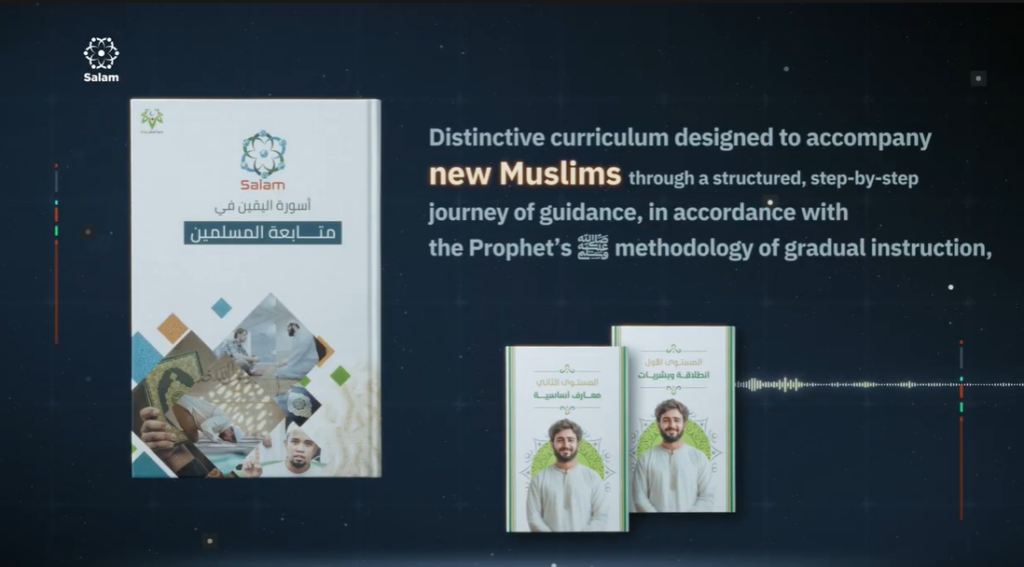
For those who have already entered Islam, the Asawirat Al-Yaqeen (Bracelets of Certainty) program offers a structured path forward:
- A progressive four-stage curriculum built on authentic Islamic knowledge
- Coverage of creed, worship, character, and practical life rulings
- Lessons in the language of yaqeen — certainty that settles the heart
- Implemented with over 114,000 new Muslims across 140 countries
- Currently expanding into a multilingual smart application and interactive website
- Open to all new Muslims seeking structured, compassionate guidance after conversion
You are not alone on this path.
Reach out directly to the Salam Center team to start the Asawirat Al-Yaqeen (Bracelets of Certainty) program for FREE.
Summary
The Quran addresses women as spiritually equal to men before Allah, granting them independent inheritance rights, financial ownership, marriage protections, and the direct right to seek justice — all codified in revelation over fourteen centuries before comparable legal frameworks emerged elsewhere. These rights reflect the comprehensive justice of Islamic belief.
Quranic guidance on women flows from Allah’s perfect knowledge of human nature, not from cultural negotiation. Each ruling — whether on motherhood’s honor, the mahr, or a woman’s right to be heard — forms part of a coherent divine framework that the Sunnah of Prophet Muhammad (PBUH) demonstrates and protects.
Frequently Asked Questions
What does the Quran say about women’s rights?
The Quran grants women the right to own property, inherit from family, receive a mandatory dowry (mahr), initiate divorce (khul’), enter contracts, and seek legal redress. Surah An-Nisa (4:7, 4:32) explicitly assigns women independent financial shares — rights revealed in the seventh century C.E.
Does the Quran say men and women are equal?
The Quran affirms full spiritual equality between men and women before Allah. Surah Al-Ahzab (33:35) lists ten parallel qualities for both genders and promises identical rewards. Differences in certain legal rulings reflect complementary roles and responsibilities — not a hierarchy of human worth.
What does the Quran say about mothers?
The Quran commands gratitude toward mothers in language tied directly to gratitude toward Allah, acknowledging the hardship of pregnancy and nursing explicitly (31:14). Prophet Muhammad (PBUH) named the mother three times when asked who deserves the most companionship, as recorded in Sahih Bukhari.
Does Islam allow women to speak up and seek justice?
Surah Al-Mujadila (58:1) opens with Allah affirming that He heard a woman who complained about an unjust practice — and that surah abolished the practice entirely. The Quran also preserves the right of women to initiate divorce (khul’) in Surah Al-Baqarah (2:229), protecting women from permanent entrapment in harmful marriages.
What does the Quran say about women in marriage?
Marriage in the Quran is described as a relationship of tranquility (sakinah), affection (mawaddah), and mercy (rahmah) (30:21). Both spouses are described as garments for one another (2:187). The wife’s mahr belongs solely to her, and the husband bears the financial obligation of providing for the household — a balance of rights and responsibilities.
Curious about Islam?
Journey towards clarity and purpose. Our team is here to support you in your search for truth and spiritual guidance.
Embrace the Truth