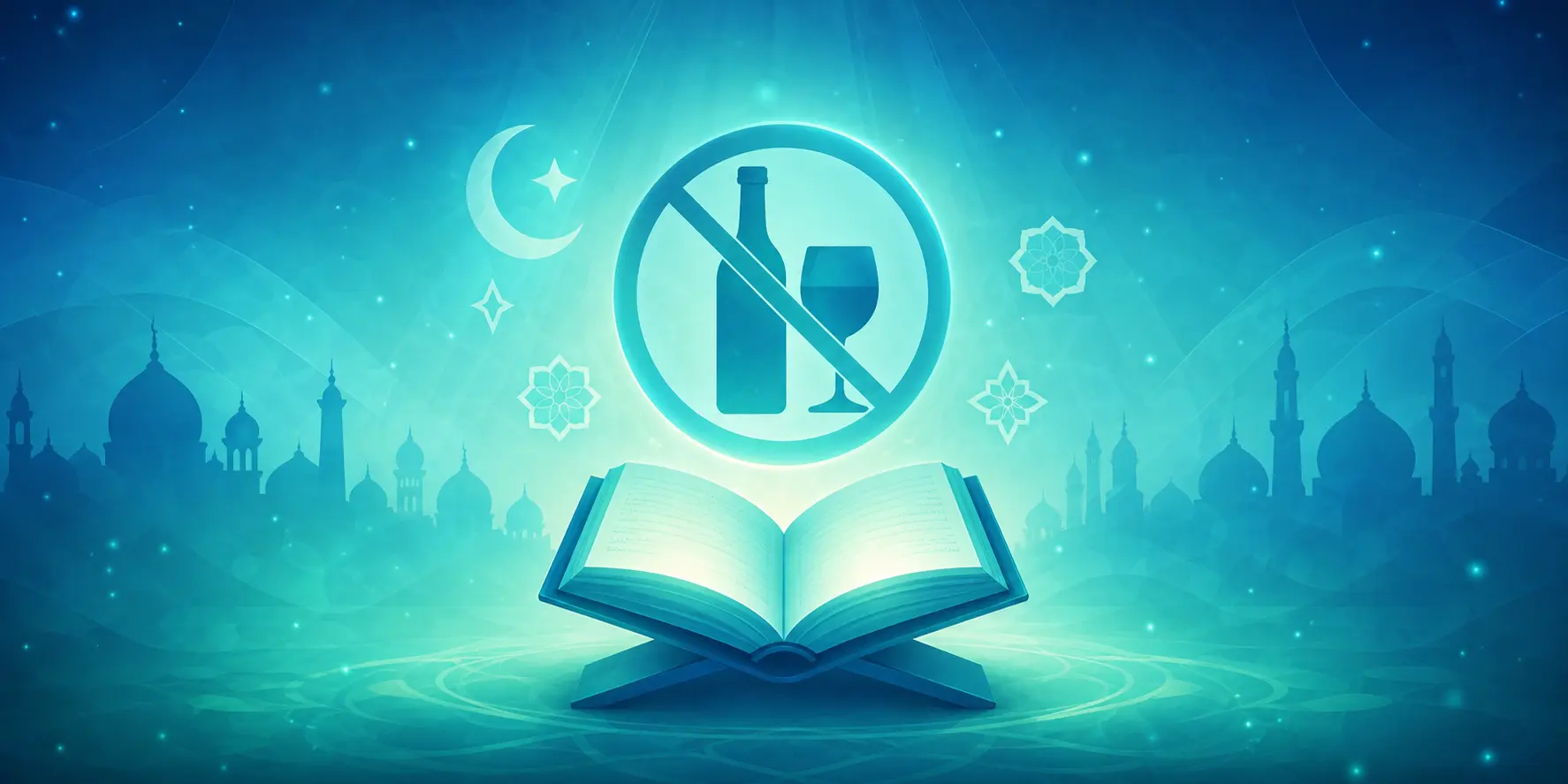
What Does the Quran Say About Alcohol?
| Key Takeaways |
| The Quran prohibits alcohol through a gradual three-stage revelation, culminating in a complete and permanent ban. |
| Allah describes alcohol as containing both benefit and harm, but declares its harm greater than its benefit. |
| Intoxicants are classified in the Quran as an “abomination from the work of Satan,” making avoidance an act of faith. |
| Islamic scholarship unanimously agrees that all intoxicating substances fall under the same Quranic ruling, regardless of quantity or type. |
The Quran prohibits alcohol completely and permanently. This is not a secondary ruling or a matter of scholarly disagreement — it stands among the most clearly established prohibitions in Islam, delivered in the words of Allah Himself across multiple revelations.
For anyone wondering what the Quran actually says, the answer is both direct and layered: alcohol is forbidden, its harms outweigh its benefits, and abandoning it is presented as a mark of gratitude, faith, and sound reason.
1. The Three-Stage Revelation of the Alcohol Prohibition in the Quran
What makes the Quranic approach to this prohibition remarkable is how it was delivered. Rather than issuing an abrupt command, Allah guided the early Muslim community through a progressive revelation — three distinct stages, each building upon the last — until the complete prohibition was established.
Understanding this progression reveals not just a ruling, but a divine wisdom in guiding the human soul toward what is right.
Stage One: Acknowledging Harm Alongside Benefit
The first Quranic reference to alcohol appeared in Surah Al-Baqarah. Allah did not yet issue a prohibition but began by planting a crucial seed of awareness:
يَسْأَلُونَكَ عَنِ الْخَمْرِ وَالْمَيْسِرِ ۖ قُلْ فِيهِمَا إِثْمٌ كَبِيرٌ وَمَنَافِعُ لِلنَّاسِ وَإِثْمُهُمَا أَكْبَرُ مِن نَّفْعِهِمَا
“They ask you about wine and gambling. Say, ‘In them is great sin and [yet, some] benefit for people. But their sin is greater than their benefit.'” (Quran 2:219)
This verse is remarkable in its intellectual honesty. Islam, as a way of life rooted in truth, does not pretend that alcohol has no worldly uses.
Trade, social familiarity, and temporary pleasure were real aspects of pre-Islamic Arab life. Yet Allah’s framing is decisive: the harm outweighs the benefit.
For reflective people, this alone was sufficient to begin distancing themselves. Some companions of the Prophet (PBUH) stopped drinking after this verse alone.
Stage Two: Prohibiting Prayer While Intoxicated
The second stage arrived in Surah An-Nisa, long before the final prohibition:
يَا أَيُّهَا الَّذِينَ آمَنُوا لَا تَقْرَبُوا الصَّلَاةَ وَأَنتُمْ سُكَارَىٰ حَتَّىٰ تَعْلَمُوا مَا تَقُولُونَ
“O you who have believed, do not approach prayer while you are intoxicated until you know what you are saying.” (Quran 4:43)
Since the prescribed prayers occur five times daily, this ruling effectively confined any permissible drinking to an extremely narrow window. The practical implication was clear: a Muslim who prays cannot be a regular drinker.
Sobriety and worship became inseparable. The community was being shaped — spiritually and practically — for what was coming.
Stage Three: The Complete and Final Prohibition of Alcohol in the Quran
The decisive revelation came in Surah Al-Ma’idah:
يَا أَيُّهَا الَّذِينَ آمَنُوا إِنَّمَا الْخَمْرُ وَالْمَيْسِرُ وَالْأَنصَابُ وَالْأَزْلَامُ رِجْسٌ مِّنْ عَمَلِ الشَّيْطَانِ فَاجْتَنِبُوهُ لَعَلَّكُمْ تُفْلِحُونَ
“O you who have believed, indeed, intoxicants, gambling, [sacrificing on] stone altars [to other than Allah], and divining arrows are but defilement from the work of Satan, so avoid it that you may be successful.” (Quran 5:90)
The verse that followed immediately reinforced it:
إِنَّمَا يُرِيدُ الشَّيْطَانُ أَن يُوقِعَ بَيْنَكُمُ الْعَدَاوَةَ وَالْبَغْضَاءَ فِي الْخَمْرِ وَالْمَيْسِرِ وَيَصُدَّكُمْ عَن ذِكْرِ اللَّهِ وَعَنِ الصَّلَاةِ ۖ فَهَلْ أَنتُم مُّنتَهُونَ
“Satan only wants to cause between you animosity and hatred through intoxicants and gambling and to avert you from the remembrance of Allah and from prayer. So will you not desist?” (Quran 5:91)
When the companions heard these verses recited they immediately poured out whatever alcohol remained in their possession. The streets of Madinah reportedly ran with it. The command had arrived — and a community shaped by two prior stages of revelation responded with immediate, complete compliance.
Read Also: What Does the Quran Say About Female Education?
Learn More About Islam
Discover the beauty, teachings, and wisdom of Islam in a clear and welcoming way. Start exploring and deepen your understanding today.
Learn More2. The Quran Calls Alcohol “Rijs” — Filth and Defilement
The word used in Surah Al-Ma’idah is رِجْسٌ (rijs) — a term conveying moral filth, spiritual corruption, and ritual impurity. The Quran uses this word for things that are fundamentally incompatible with the state of a believer. Alcohol is placed in the same category as idolatrous practices, not arbitrarily, but because of what it does to human perception, will, and relationship with Allah.
The placement of khamr (intoxicants) alongside the mention of Satan’s work is a deliberate signal: intoxication weakens the human intellect, the very faculty through which a person recognizes truth, fulfills obligations, and maintains faith. Impairing the mind is, in essence, a blow to the foundations of belief itself.
Read Also: What Does the Quran Say About Hijab
3. The Social Dimension of Alcohol’s Prohibition in the Quran
The Quran’s prohibition of alcohol is not framed solely as a personal health ruling. Surah Al-Ma’idah 5:91 explicitly identifies two social catastrophes that alcohol enables: the seeding of enmity and hatred between people, and the severing of the human connection to Allah’s remembrance and prayer.
These two outcomes — fractured human relationships and severed divine connection — are presented as Satan’s twin objectives. The pairing is telling. A person cut off from prayer loses their spiritual anchor.
A community poisoned by alcohol-fueled conflict loses its social cohesion. Islam’s understanding of human flourishing, grounded in the principles detailed across Islam’s core principles, is fundamentally communal: the individual cannot thrive in isolation, and the community cannot thrive when its bonds are corroded.
Contemporary research has consistently validated this Quranic insight. The World Health Organization’s Global Status Report on Alcohol and Health documents alcohol’s role in violence, family breakdown, and social disorder across cultures and continents — a modern confirmation of a truth stated over fourteen centuries ago.
Read Also: When the Quran Calls Mary “Sister of Aaron”
Does the Quran Mention Wine in Paradise?
The Quran does describe rivers of wine in the afterlife — but explicitly distinguishes this wine from the wine of this world:
لَا فِيهَا غَوْلٌ وَلَا هُمْ عَنْهَا يُنزَفُونَ
“No bad effect is there in it, nor from it will they be intoxicated.” (Quran 37:47)
This verse clarifies that the wine of Paradise carries none of the properties that make worldly alcohol harmful — no intoxication, no cognitive impairment, no moral corruption. The two are alike only in name.
Muslim scholars across generations have understood this as divine confirmation that the harm inherent in worldly alcohol is precisely what makes it prohibited — and that in the perfection of the afterlife, that harm is absent entirely.
Read Also: Does the Quran Say Men and Women Are Equal?
Is Alcohol Prohibited in Small Amounts According to the Quran?
The Quran’s prohibition in Surah Al-Ma’idah 5:90 uses the word فَاجْتَنِبُوهُ (fajtanibuhu) — “so avoid it.” The verb ijtanaba means to keep to the side, to distance oneself entirely. It does not mean “reduce” or “moderate.” The linguistic construction is absolute avoidance, not reduction.
This reading, confirmed by the prophetic hadith that “what intoxicates in large quantities, a small quantity of it is also forbidden,” means the Quran does not recognize a safe threshold for alcohol consumption. The prohibition is categorical.
Read Also: What Does the Quran Say About Homosexuality?
Learn More About Islam
Discover the beauty, teachings, and wisdom of Islam in a clear and welcoming way. Start exploring and deepen your understanding today.
Learn MoreRead Also:What Does the Quran Say About Women?
Explore More Authentic Knowledge About Islam & Quran with Salam
If this article has opened a door of genuine curiosity about Islam — about its evidences, its wisdom, or its way of life — the Salam Center warmly invites you to walk further through it.
Browse the full library of articles on the Salam Platform covering belief, practice, and the profound answers Islam offers to life’s deepest questions.
Visit the Salam blog for more in-depth explorations of Quranic guidance, Islamic ethics, and practical knowledge for everyday life.
Reach out directly with your questions — whether you’re seeking clarity, considering Islam, or simply want to understand more.
Read Also: What Does the Quran Say About Other Religions?
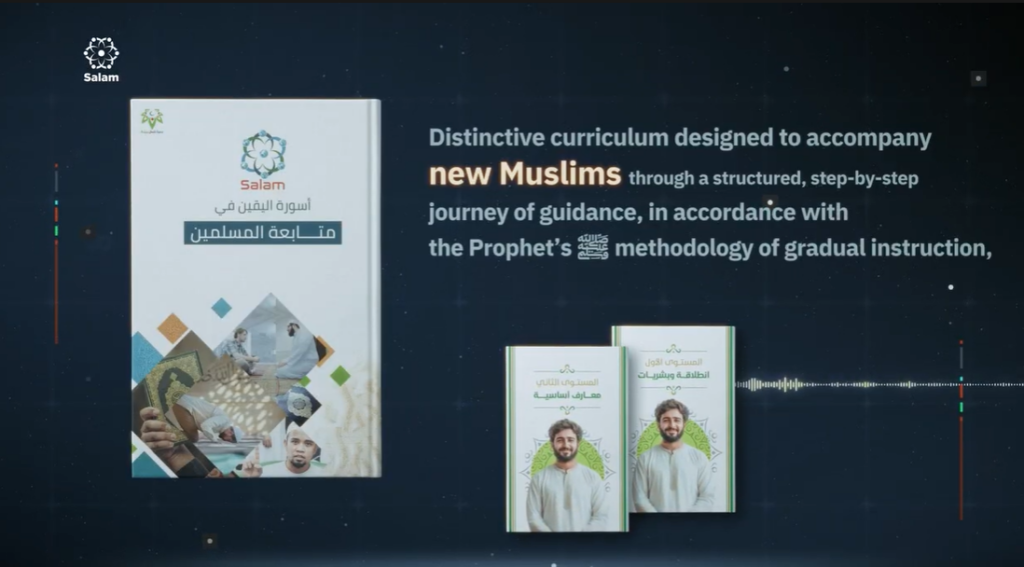
For those who have already taken their Shahada and are beginning their journey as Muslims, the Salam Center offers a structured, compassionate pathway through its Asawirat Al-Yaqeen (Bracelets of Certainty) program — a proven four-stage curriculum designed specifically for new Muslims:
- Stage One covers the foundations of faith, the meaning of the Shahada, and the essential pillars of worship including salah, wudu, and ghusl
- Stage Two deepens understanding of Iman, zakat, fasting, and the Hajj journey
- Stage Three guides you through sincere repentance, avoiding major sins, and the life of the Prophet (PBUH)
- Stage Four empowers you with knowledge of contemporary issues, Islamic identity, and a practical life roadmap
Over 114,588 new Muslims across 140 countries have completed this curriculum. The program uses therapeutic language that combines genuine care with intellectual depth — exactly what a new Muslim needs in the early years of faith.
Reach out directly to the Salam Center team to start the Asawirat Al-Yaqeen (Bracelets of Certainty) program for FREE.
Summary
The Quran’s position on alcohol unfolds across three revelations — from acknowledging its harm in Al-Baqarah, to restricting prayer while intoxicated in An-Nisa, to the absolute prohibition in Al-Ma’idah — reflecting a divine pedagogical wisdom that shaped the early Muslim community gradually and firmly.
Frequently Asked Questions
What verse in the Quran prohibits alcohol?
The complete prohibition of alcohol appears in Surah Al-Ma’idah, verses 90–91, where Allah declares intoxicants an abomination from the work of Satan and commands believers to avoid them entirely. This ruling was the final and definitive Quranic statement on alcohol, and it abrogated any prior permissibility.
Did the Quran ban alcohol all at once or gradually?
The Quran prohibited alcohol through three progressive stages: first acknowledging its harm outweighs its benefit (Al-Baqarah 2:219), then forbidding prayer while intoxicated (An-Nisa 4:43), and finally issuing the complete prohibition in Al-Ma’idah 5:90. This gradual approach reflected Allah’s wisdom in guiding a community deeply accustomed to alcohol toward full abandonment.
Is wine mentioned in the Quran as forbidden or permitted in Paradise?
The Quran describes wine in Paradise (Quran 37:47) but explicitly states it causes no intoxication or harm — distinguishing it entirely from worldly alcohol. Scholars unanimously understand this to confirm that it is the intoxicating and harmful properties of worldly wine that make it prohibited, not the name or substance alone.
Does the Quran forbid small amounts of alcohol too?
Yes. The Quranic command in Al-Ma’idah 5:90 uses the Arabic fajtanibuhu — a word meaning complete avoidance, with no threshold permitted. This is further confirmed by the authenticated prophetic hadith: “What intoxicates in large quantities, a small quantity of it is also forbidden,” recorded in authoritative collections and applied unanimously by all four major schools of Islamic jurisprudence.
Curious about Islam?
Journey towards clarity and purpose. Our team is here to support you in your search for truth and spiritual guidance.
Embrace the Truth