
How Did Muslims View the People of the Book?
| Key Takeaways |
| Muslims recognize Jews and Christians as “People of the Book” (Ahl al-Kitab) — recipients of divine revelation who preceded Islam. |
| The Quran explicitly names the disbelief of those who reject Prophet Muhammad (PBUH) after his message has reached them, including Jews and Christians. |
| Islam views the original scriptures of Jews and Christians as divinely revealed but subsequently altered and corrupted over time. |
| Despite theological disagreement, Islamic law grants People of the Book recognized rights, protections, and dignified treatment under Muslim governance. |
| Muslims are commanded to engage People of the Book through respectful dialogue, not coercion or contempt. |
| A Muslim man may marry a chaste Jewish or Christian woman — yet this ruling does not imply divine approval of their faith. |
How did Muslims view the People of the Book? The Islamic answer is both theologically precise and humanly nuanced. Muslims regard Jews and Christians as communities who received genuine divine revelation — the Torah given to Prophet Musa (Moses) and the Gospel given to Prophet Isa (Jesus), peace be upon them — yet who subsequently deviated from the original monotheism those prophets taught. This is the foundation of everything else.
The relationship Islam defines between Muslims and the People of the Book is layered: it holds firm on matters of creed while extending warmth, protection, and dignity in daily human dealings. Understanding these layers — without collapsing them into either hostility or false equivalence — is what this article offers.
1. Muslims Believe the People of the Book Received Authentic Divine Revelation Before Islam
The Quran affirms that Allah sent real scriptures to the communities of Banu Isra’il before the revelation of the Quran.
The Torah (Tawrah) was sent to Prophet Musa (PBUH), and the Gospel (Injil) was sent to Prophet Isa (PBUH). This is an article of faith in Islam — a Muslim cannot be a Muslim while rejecting it.
Allah says in the Quran:
إِنَّا أَنزَلْنَا التَّوْرَاةَ فِيهَا هُدًى وَنُورٌ
“Indeed, We sent down the Torah, in which was guidance and light.” (Quran 5:44)
This acknowledgment places Jews and Christians in a category entirely distinct from polytheists or those who received no revelation at all. They are not strangers to Allah’s address — they are, in origin, its recipients.
2. The Original Scriptures of Jews and Christians Were Altered and Corrupted Over Time
While affirming the divine origin of earlier scriptures, Islam also holds that those scriptures were not preserved in their original form.
Human hands introduced distortions — deletions, additions, and misinterpretations — into the texts over centuries. This is what the Quran calls tahrif (alteration).
Allah says:
فَوَيْلٌ لِّلَّذِينَ يَكْتُبُونَ الْكِتَابَ بِأَيْدِيهِمْ ثُمَّ يَقُولُونَ هَٰذَا مِنْ عِندِ اللَّهِ
“So woe to those who write the ‘scripture’ with their own hands, then say, ‘This is from Allah.'” (Quran 2:79)
This stands in sharp contrast to what Muslims believe about the Quran — a book preserved, letter by letter, under Allah’s direct guarantee.
The Quran’s own internal evidence of preservation, combined with the unbroken chain (tawatur) of its transmission, is among the reasons Muslims believe in the Quran as the final, uncorrupted word of Allah.
3. Those Among the People of the Book Who Reject Prophet Muhammad (PBUH) is a Disbeliever
This is a matter of settled Islamic creed, affirmed by the Quran, the authenticated Sunnah, and the consensus (ijma’) of Islamic scholars across all major schools of jurisprudence.
Allah says:
وَمَن يَبْتَغِ غَيْرَ الْإِسْلَامِ دِينًا فَلَن يُقْبَلَ مِنْهُ وَهُوَ فِي الْآخِرَةِ مِنَ الْخَاسِرِينَ
“And whoever desires other than Islam as religion — never will it be accepted from him, and he, in the Hereafter, will be among the losers.” (Quran 3:85)
The Prophet Muhammad (PBUH) made this explicitly personal:
“By Him in Whose hand is the soul of Muhammad, no one from this nation — whether Jew or Christian — hears of me and then dies without believing in what I was sent with, except that he will be among the people of the Fire.” (Sahih Muslim)
The Quran specifically addresses those who selectively accept some prophets while rejecting others:
إِنَّ ٱلَّذِينَ يَكْفُرُونَ بِٱللَّهِ وَرُسُلِهِۦ وَيُرِيدُونَ أَن يُفَرِّقُوا۟ بَيْنَ ٱللَّهِ وَرُسُلِهِۦ وَيَقُولُونَ نُؤْمِنُ بِبَعْضٍ وَنَكْفُرُ بِبَعْضٍ وَيُرِيدُونَ أَن يَتَّخِذُوا۟ بَيْنَ ذَٰلِكَ سَبِيلًا ﴿١٥٠﴾ أُو۟لَٰٓئِكَ هُمُ ٱلْكَٰفِرُونَ حَقًّا ۚ وَأَعْتَدْنَا لِلْكَٰفِرِينَ عَذَابًا مُّهِينًا
“Indeed, those who disbelieve in Allah and His messengers and wish to discriminate between Allah and His messengers and say, “We believe in some and disbelieve in others,” and wish to adopt a way in between – (150) Those are the disbelievers, truly. And We have prepared for the disbelievers a humiliating punishment.” (Quran 4:150–151)
The great Andalusian scholar and jurist Imam al-Qadi ‘Iyad, in his authoritative work Kitab al-Shifa, stated as part of his enumeration of what constitutes disbelief by consensus: one who does not declare the disbelief of Jews and Christians, or who doubts it, or who considers their religion valid — has himself disbelieved.
This position is further affirmed in Al-Iqna’ and its commentary from the Hanbali school, which similarly treats denial of the disbelief of Jews and Christians as an act of apostasy, on the grounds that it constitutes a rejection of the Quranic verse of Aal ‘Imran 3:85.
This ruling applies to those who have received the call of Islam clearly and knowingly rejected it.
As for those in remote circumstances who genuinely had no access to Islam’s message — Islamic scholars have differed on their precise status in the Hereafter, with the more supported view being that they will be tested on the Day of Resurrection.
In this present era of mass communication, however, such a condition of genuine unawareness is held by scholars to be exceedingly rare.
Have Questions About Islam?
Our team is ready to answer your questions clearly and respectfully. Ask freely and receive honest guidance.
Ask Us Now4. Claiming Allah Has a Son or Partner Constitutes Disbelief
The specific theological claims made within post-prophetic Judaism and Christianity — that Allah has a son, that the Messiah is divine, that Allah is one of three — are not treated by Islam as mere differences of interpretation.
They are treated as shirk (associating partners with Allah) and kufr (disbelief), named as such in the Quran directly.
Allah says:
لَّقَدْ كَفَرَ الَّذِينَ قَالُوا إِنَّ اللَّهَ هُوَ الْمَسِيحُ ابْنُ مَرْيَمَ
“They have certainly disbelieved who say that Allah is the Messiah, the son of Mary.” (Quran 5:72)
And regarding the Trinity:
لَّقَدْ كَفَرَ الَّذِينَ قَالُوا إِنَّ اللَّهَ ثَالِثُ ثَلَاثَةٍ
“They have certainly disbelieved who say, ‘Allah is the third of three.'” (Quran 5:73)
How Islam views the nature of Allah — as absolutely One, utterly unlike creation, beyond partnership or parenthood — makes these theological claims direct contradictions of tawhid, the cornerstone of Islamic monotheism.
Those who held to pure monotheism among earlier communities before distortion entered, and before the Prophet (PBUH) was sent, are held to a different standard than those who encountered the complete and preserved message of Islam.
Read also: Islam’s Views on Christianity and Christians
5. Promised Rewards in the Quran are for Monotheistic Jews and Christians Before Islam Only
A passage often raised is Allah’s statement in Surah al-Baqarah:
إِنَّ الَّذِينَ آمَنُوا وَالَّذِينَ هَادُوا وَالنَّصَارَىٰ وَالصَّابِئِينَ مَنْ آمَنَ بِاللَّهِ وَالْيَوْمِ الْآخِرِ وَعَمِلَ صَالِحًا فَلَهُمْ أَجْرُهُمْ عِندَ رَبِّهِمْ
“Indeed, those who believed and those who were Jews and Christians and Sabeans — whoever believed in Allah and the Last Day and did righteousness — will have their reward with their Lord.” (Quran 2:62)
Classical Islamic scholarship is unanimous that this verse addresses those who upheld genuine monotheism in their era — before the texts were corrupted and before the Prophet Muhammad (PBUH) was sent.
Those who accepted Allah alone without shirk, believed in the prophets sent to them, and lived before Islam’s final dispensation reached them are covered by this promise.
The condition is real: man amana billahi wal-yawm al-akhir — whoever truly believed in Allah and the Last Day.
One who attributed a son to Allah, or believed another being would judge humanity on Judgment Day, has not fulfilled this condition in substance.
6. Muslims Are Commanded to Engage the People of the Book Through Dignified, Respectful Dialogue
Far from treating theological disagreement as a license for hostility, Islam commands Muslims to argue with the People of the Book through the most excellent of means. This is not a diplomatic concession — it is a divine instruction.
Allah says:
وَلَا تُجَادِلُوا أَهْلَ الْكِتَابِ إِلَّا بِالَّتِي هِيَ أَحْسَنُ
“And do not argue with the People of the Scripture except in a way that is best.” (Quran 29:46)
The Quran also frames the invitation as one of convergence on shared ground:
قُلْ يَا أَهْلَ الْكِتَابِ تَعَالَوْا إِلَىٰ كَلِمَةٍ سَوَاءٍ بَيْنَنَا وَبَيْنَكُمْ أَلَّا نَعْبُدَ إِلَّا اللَّهَ
“Say, ‘O People of the Scripture, come to a word that is equitable between us and you — that we will not worship except Allah.'” (Quran 3:64)
This is the spirit of how Islam views other religions: with clarity on truth, and with grace in discourse. Creedal certainty and human dignity are not in tension in the Islamic framework — they coexist as twin obligations.
7. Muslims Are Obligated to Protect the Rights, Worship, and Dignity of the People of the Book
Islamic law (fiqh) developed a comprehensive framework for the protection of non-Muslims living under Muslim rule — known as the dhimmi system.
Their places of worship are not to be demolished. Their religious rites are not to be violated. Their property and lives carry legal protection.
The Prophet (PBUH) himself wrote to the Christians of Najran:
“To the people of Najran and its surrounding area: the protection of Allah and the covenant of Muhammad the Prophet — upon their persons, their religion, their land, their wealth, those absent and those present, their clan, and their churches. No bishop shall be removed from his position, and no monk from his monasticism.”
The great Hanbali jurist and scholar Ibn al-Qayyim al-Jawziyyah, in his work Zad al-Ma’ad, affirmed that People of the Book may enter Muslim mosques and even perform their prayers therein when circumstances call for it — demonstrating that the protection of their religious freedom was a practical, lived commitment in early Islam.
The Hanafi Imam al-Kasani, in Bada’i’ al-Sana’i’, articulated that wine is to the People of the Book as vinegar is to Muslims in terms of lawful property — meaning what is permitted in their religion is treated as protected property under Islamic governance. Muslims were prohibited from destroying it without cause.
Caliph Umar ibn al-Khattab (RA), in his famous will spoken as he lay wounded, instructed his successor to honor the covenant of the People of the Book — not to burden them beyond their capacity, and to fight to defend them.
The scholar and jurist Abu Yusuf, in his counsel to the Abbasid Caliph Harun al-Rashid, echoed this directly: “The Prophet (PBUH) said: Whoever wrongs a protected non-Muslim or burdens him beyond his capacity — I will be his opponent.” (Sunan Abi Dawud 3052)
Read also: Does Islam Think Jesus Is the Messiah? What Muslims Actually Believe
8. Muslims Are Permitted to Eat the Food of the People of the Book
This ruling surprises many. Islam permits the slaughtered meat of the People of the Book and allows a Muslim man to marry a chaste, free Jewish or Christian woman. Both rulings come from the same verse in Surah al-Ma’idah:
وَطَعَامُ الَّذِينَ أُوتُوا الْكِتَابَ حِلٌّ لَّكُمْ وَطَعَامُكُمْ حِلٌّ لَّهُمْ ۖ وَالْمُحْصَنَاتُ مِنَ الْمُؤْمِنَاتِ وَالْمُحْصَنَاتُ مِنَ الَّذِينَ أُوتُوا الْكِتَابَ مِن قَبْلِكُمْ
“The food of those who were given the Scripture is lawful for you, and your food is lawful for them. And lawful in marriage are chaste women from among the believers and chaste women from among those who were given the Scripture before you.” (Quran 5:5)
Immediately following this permission, the same verse states:
وَمَن يَكْفُرْ بِالْإِيمَانِ فَقَدْ حَبِطَ عَمَلُهُ وَهُوَ فِي الْآخِرَةِ مِنَ الْخَاسِرِينَ
“And whoever denies the faith — his work has become worthless, and he, in the Hereafter, will be among the losers.” (Quran 5:5)
The jurist Ibn al-Jawzi, in his classical Quranic commentary Zad al-Masir, recorded that this closing statement was revealed precisely because some women from the People of the Book reasoned that Allah’s permission for Muslims to marry them implied His approval of their religion.
The verse corrected this immediately: permission to marry is a legal facilitation, not theological endorsement. The One who permitted the marriage also declared the disbelief. Both statements stand, and neither cancels the other.
Islam did not permit marriage to just any non-Muslim woman — it specified chaste women from the People of the Book, distinguishing them from polytheists, who have no revealed scripture.
Read also: Do Muslims Believe Jesus Was a Prophet?
9. Showing Kindness and Fulfill Social Duties Toward the People of the Book in Everyday Life
The Prophet Muhammad (PBUH) died with his armor pledged as collateral to a Jewish merchant — a transaction he undertook deliberately, scholars note, to establish by practice that financial dealings with People of the Book are fully permissible for the Muslim community after him.
Visiting sick neighbors from among the People of the Book, offering gifts, engaging in trade, and maintaining neighborly relations are all affirmed in authenticated reports.
Ibn Najim al-Hanafi, in Al-Bahr al-Ra’iq, cited the hadith in which the Prophet (PBUH) rose to visit a Jewish neighbor who had fallen ill, sat at his bedside, and invited him to Islam — at which the dying man looked to his father for permission, accepted, and bore witness to the faith.
Some of the companions, upon slaughtering an animal, would instruct their household staff to begin distributing meat with their Jewish neighbor.
This is not merely anecdote — it is sunnah in practice. The core principles of Islam do not suspend human dignity and kindness at the boundary of theological difference. They demand both — together.
Have Questions About Islam?
Our team is ready to answer your questions clearly and respectfully. Ask freely and receive honest guidance.
Ask Us NowLearn More About Islam with Salam
If these reflections have stirred questions in your heart — or confirmed something you already sensed — you are welcome here.
The Salam Center exists for moments like this. We are a non-profit Islamic organization dedicated to supporting sincere seekers and new Muslims through a structured, compassionate journey toward firm faith.
Visit the Salam Platform to explore hundreds of articles on Islamic belief, law, history, and spirituality — written with clarity and care.
Read more on the Salam blog for thoughtful, evidence-grounded discussions on the questions that matter most.
If you have a personal question, want to learn about entering Islam, or simply want to connect with a knowledgeable guide, reach out directly — we are here.
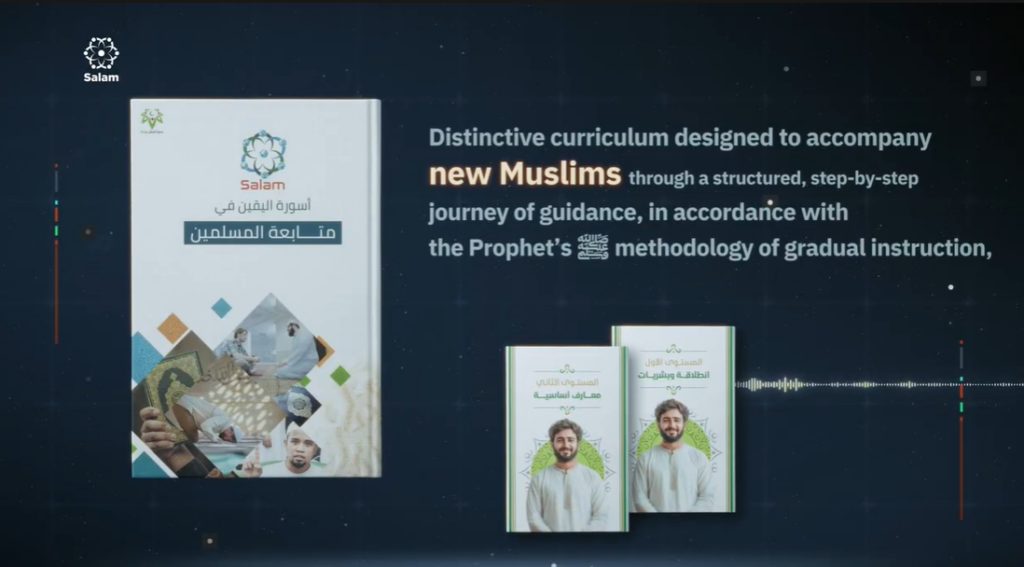
For new Muslims, the Salam Center offers Asawirat Al-Yaqeen (Bracelets of Certainty) — a structured four-stage curriculum designed specifically for the post-conversion journey. It has guided 114,588 new Muslims across 140 countries, and it is built on the methodology of gradual instruction and the pure creed of Ahlus Sunnah wal Jama’ah. The program includes:
- Stage One — The Foundation: Shahada, pillars of Islam, purification, and daily prayer
- Stage Two — The Construction Phase: The six pillars of Iman, fasting, zakat, and Hajj
- Stage Three — The Consolidation Phase: Repentance, the Prophet’s biography, and personal character
- Stage Four — The Empowerment Phase: Contemporary issues, theological evidence, and a life roadmap rooted in Surah Al-Asr
63.3% of enrolled students complete the full four stages. Ask us how to join.
Reach out directly to the Salam Center team to start the Asawirat Al-Yaqeen (Bracelets of Certainty) program for FREE.
Conclusion
Muslims recognize Jews and Christians as People of the Book — communities who received authentic divine revelation before Islam — yet hold that post-prophetic distortions in their scriptures and the rejection of Prophet Muhammad (PBUH) placed them outside the fold of accepted faith. The Quran and authenticated Sunnah establish this position as settled Islamic creed.
Islamic law simultaneously grants People of the Book extensive protections under Muslim governance: their places of worship are inviolable, their religious practices are legally protected, and their property and dignity carry binding safeguards — as affirmed by the Prophet (PBUH), the early caliphs, and classical Islamic jurisprudence across all schools.
Everyday Muslim life extends these principles further through permitted trade, lawful food, the possibility of marriage to chaste women of the Book, and the obligation of kind neighborly conduct — reflecting Islam’s consistent teaching that theological clarity and human dignity are never in conflict.
Frequently Asked Questions
Do Muslims consider Jews and Christians disbelievers?
According to the Quran and the authenticated Sunnah, yes — those among the People of the Book who have received the message of Prophet Muhammad (PBUH) clearly and do not embrace it are regarded as disbelievers (kuffar) in Islamic creed.
The Quran states directly: "And whoever desires other than Islam as religion — never will it be accepted from him."(Quran 3:85) The Prophet (PBUH) affirmed in Sahih Muslim that any Jew or Christian who hears of him and dies without believing in his message will be among the people of the Fire.
Does Islam teach hatred or mistreatment of Jews and Christians?
Islamic law mandates dignified, respectful treatment of People of the Book — in creed, in governance, and in daily human dealings. Allah commands Muslims to engage them only through the most excellent form of argument (Quran 29:46).
Under Muslim governance, their lives, wealth, worship spaces, and religious practices are legally protected. The Prophet (PBUH) warned: "Whoever wrongs a protected non-Muslim — I will be his opponent on the Day of Resurrection." Theological disagreement and human dignity are twin obligations in Islam — one does not cancel the other.
Can Muslims eat food prepared by Jews and Christians?
The food of the People of the Book — specifically their slaughtered meat — is lawful for Muslims, as stated explicitly in the Quran: "The food of those who were given the Scripture is lawful for you."(Quran 5:5)
This ruling applies to meat slaughtered in the name of Allah according to the conditions of halal slaughter as understood in the context of the People of the Book’s practice. Fish and other non-slaughtered foods carry no restriction. This permission coexists with the theological ruling on their disbelief — both were revealed together in the same passage.
Can a Muslim man marry a Jewish or Christian woman?
A Muslim man may marry a chaste, free Jewish or Christian woman, as permitted in Quran 5:5. This is a legal facilitation (taysir) — not an endorsement of her faith. The same verse that grants this permission closes with a declaration that those who reject true faith have nullified their deeds.
Imam Ibn al-Jawzi recorded that this closing statement was revealed specifically to prevent the mistaken inference that Allah’s permission to marry a woman of the Book implied approval of her religion. Many scholars consider such marriages discouraged when there is meaningful risk to the Muslim husband’s faith or the Islamic upbringing of children.
What did early Islamic caliphs say about the treatment of People of the Book?
The treatment of People of the Book under Muslim governance was taken as a serious covenantal obligation by the early caliphs. Umar ibn al-Khattab (RA), in his final will before death, specifically instructed his successor to fulfill the covenant with the People of the Book — not to burden them beyond their capacity and to defend them militarily if needed.
The Hanafi jurist Abu Yusuf, in his advisory letter to Caliph Harun al-Rashid, cited the Prophet’s hadith warning that he himself would argue against any Muslim who wronged a protected non-Muslim on the Day of Resurrection.
What does the Quran say about Christians being closest to Muslims in friendship?
Surah al-Ma’idah (5:82) states that among all people, those who call themselves Christians will be found closest in affection to the believers. Classical Quranic commentators explain this in context: the verses that follow describe people from among the Christians who, upon hearing the Quran, wept and immediately accepted faith — declaring themselves witnesses to its truth.
The affection referenced is toward those who responded positively to the Prophet’s call. The same passage closes with a declaration that those who disbelieved and rejected Allah’s signs will be companions of the Hellfire — establishing that proximity of disposition toward faith, not theological equivalence, is what the verse addresses.
Curious about Islam?
Journey towards clarity and purpose. Our team is here to support you in your search for truth and spiritual guidance.
Embrace the Truth