
Islam’s Views on Christianity and Christians
| Key Takeaways |
| Islam honors Jesus (Isa, peace be upon him) as a true prophet and messenger of Allah, and believing in him is a pillar of Islamic faith. |
| Muslims distinguish between original, revealed Christianity — which taught pure monotheism — and the later doctrines of the Trinity and divine sonship, which Islam rejects as distortions. |
| Christians who lived before the Prophet Muhammad (PBUH) and upheld sincere monotheism are considered believers in the Islamic framework. |
| Any Christian today who hears the message of Islam and rejects it is considered, in Islamic theology, to be outside the fold of salvation — based on explicit Quranic texts and authenticated Hadiths. |
| A Christian who embraces Islam receives a double reward, as the Prophet Muhammad (PBUH) explicitly stated. |
| Islam commands just and respectful treatment of christians as people |
Muslims believe in Jesus — as a prophet, a messenger, and one of the greatest human beings who ever lived. That belief is not optional or peripheral; denying Jesus (peace be upon him) would make a Muslim’s faith incomplete.
And yet, Islam and mainstream Christianity part ways on some of the most fundamental questions imaginable: Who is Jesus? What is the nature of Allah? Was the original Gospel preserved?
These are not small differences. Islam views on Christianity and Christians flow from a precise theological framework — one that honors the original divine message brought by Jesus while firmly rejecting the doctrines that accumulated around his name in the centuries that followed.
1. Islam Affirms That Jesus Was a True Prophet Sent by Allah
In Islamic belief, Jesus son of Mary (peace be upon him) was a genuine messenger of Allah, born miraculously of a virgin, given the Gospel (Injeel) as divine revelation, and sent specifically to the Children of Israel. The Quran states:
وَرَسُولًا إِلَىٰ بَنِي إِسْرَائِيلَ
“And [he will be] a messenger to the Children of Israel.” (Quran 3:49)
Belief in Jesus is listed alongside belief in Abraham, Moses, and all the prophets. Denying his prophethood would constitute disbelief in Islam. This is where the Islamic position begins — with profound reverence for the figure that Christianity also centers on, even while the two traditions understand that figure very differently.
The Quran describes Jesus as the Messiah, as a servant of Allah, as one who performed miracles by Allah’s permission, and as someone who will return before the Day of Judgment.
Muslims hold his mother, Mary (Maryam), in the highest esteem — an entire chapter of the Quran bears her name.
2. Islam Distinguishes Between Revealed Christianity and Its Later Distortions
Islam teaches that the original religion brought by Jesus was pure monotheism — the worship of one Allah, with no partners, no intermediaries, and no divine equals. This original message was continuous with what Moses brought before him and what Muhammad (PBUH) would confirm after him.
The Quran makes clear that Jesus himself commanded monotheism:
وَإِذْ قَالَ اللَّهُ يَا عِيسَى ابْنَ مَرْيَمَ أَأَنتَ قُلْتَ لِلنَّاسِ اتَّخِذُونِي وَأُمِّيَ إِلَٰهَيْنِ مِن دُونِ اللَّهِ ۖ قَالَ سُبْحَانَكَ مَا يَكُونُ لِي أَنْ أَقُولَ مَا لَيْسَ لِي بِحَقٍّ
“And [beware the Day] when Allah will say, ‘O Jesus, Son of Mary, did you say to the people, ‘Take me and my mother as deities besides Allah’?’ He will say, ‘Exalted are You! It was not for me to say that to which I have no right.'” (Quran 5:116)
Islam’s scholarly tradition, including the works of Ibn Kathir in his Tafsir Al-Quran Al-Adhim, documents how the original message of Jesus was gradually overlaid with Greek philosophical concepts, Roman pagan practices, and Jewish sectarian influences — culminating in the Council of Nicaea in 325 CE, where Trinitarian doctrine was institutionally formalized.
This council did not clarify Christian theology; it crystallized a deviation from the monotheism that Jesus actually preached. Understanding how Islam views other religions helps situate this analysis within the broader Islamic worldview.
Read also: Does Islam Think Jesus Is the Messiah? What Muslims Actually Believe
3. Islam Considers the Doctrine of the Trinity a Form of Shirk (Polytheism)
Among the clearest and most explicit statements in the Quran concern the doctrine that Allah is one of three — or that Jesus is Allah, or the son of Allah. These are not positions Islam treats as misguided interpretations of an otherwise sound faith. They are treated as disbelief.
لَّقَدْ كَفَرَ الَّذِينَ قَالُوا إِنَّ اللَّهَ ثَالِثُ ثَلَاثَةٍ ۘ وَمَا مِنْ إِلَٰهٍ إِلَّا إِلَٰهٌ وَاحِدٌ
“They have certainly disbelieved who say, ‘Allah is the third of three.’ And there is no god except one God.” (Quran 5:73)
لَّقَدْ كَفَرَ الَّذِينَ قَالُوا إِنَّ اللَّهَ هُوَ الْمَسِيحُ ابْنُ مَرْيَمَ
“They have certainly disbelieved who say that Allah is the Messiah, the son of Mary.” (Quran 5:72)
The word used — kafara (كفر) — is precise and carries theological weight in Islamic jurisprudence. To believe that Allah has a son, a co-equal, or a partner is the very definition of polytheism in Islam, regardless of the sincerity of the person holding that belief. Sincerity does not alter the theological category of the belief itself.
This connects directly to the Islamic understanding of the nature of Allah — absolute, indivisible, and entirely unlike His creation.
Have Questions About Islam?
Our team is ready to answer your questions clearly and respectfully. Ask freely and receive honest guidance.
Ask Us Now4. Islam Honors Christians Who Lived Before the Prophet Muhammad (PBUH) and Upheld Monotheism
The Islamic framework is not uniformly condemnatory toward Christians across all of history. The Quran itself draws a clear distinction.
Those who genuinely followed Jesus in his time — or in the period before the Prophet Muhammad (PBUH) was sent — and who maintained sincere monotheism, believed in Allah and the Last Day, and did righteous deeds, are affirmed as people of genuine faith:
إِنَّ ٱلَّذِينَ ءَامَنُوا۟ وَٱلَّذِينَ هَادُوا۟ وَٱلنَّصَٰرَىٰ وَٱلصَّٰبِـِٔينَ مَنْ ءَامَنَ بِٱللَّهِ وَٱلْيَوْمِ ٱلْـَٔاخِرِ وَعَمِلَ صَٰلِحًا فَلَهُمْ أَجْرُهُمْ عِندَ رَبِّهِمْ وَلَا خَوْفٌ عَلَيْهِمْ وَلَا هُمْ يَحْزَنُونَ
“Indeed, those who believed and those who were Jews or Christians or Sabeans [before Prophet Muhammad] – those [among them] who believed in Allah and the Last Day and did righteousness – will have their reward with their Lord, and no fear will there be concerning them, nor will they grieve.” (Quran 2:62)
The scholars of Tafsir, including Imam Al-Tabari in his monumental Jami’ Al-Bayan, explain that this verse applies to those who adhered to their prophet’s authentic teaching before later corruption took hold — and crucially, before the mission of Muhammad (PBUH) made following him obligatory for all of humanity.
A Christian who lived in that pre-prophetic era, embraced the true monotheism Jesus taught, and then later encountered the Prophet Muhammad (PBUH) and accepted Islam — that person receives two rewards, as the Prophet (PBUH) affirmed in an authenticated narration recorded by Sahih Bukhari.
Read also: Do Muslims Believe Jesus Was a Prophet?
5. Islam Views Christians Today Who Reject the Prophet Muhammad (PBUH) as Outside the Fold of Salvation
This is the position Islamic scholarship has consistently held — and it is stated plainly in the sources, not derived from historical antagonism or cultural friction. The Prophet Muhammad (PBUH) was sent to all of humanity, and his message supersedes all prior revelations.
The Prophet (PBUH) said:
“By the One in Whose hand is the soul of Muhammad, no one from this nation — whether Jew or Christian — hears of me and then dies without believing in what I was sent with, except that he will be among the people of the Fire.” — Sahih Muslim, Hadith 153
This Hadith is unambiguous. A Christian who has heard the message of Islam and understood it has, from the Islamic standpoint, received the full divine invitation. Declining it is not a neutral act.
This ruling is grounded in the same logic as all Islamic theology about prophethood: faith in Islam requires accepting each messenger Allah sent, culminating in the final Prophet.
The Quran affirms the same:
وَمَن يَبْتَغِ غَيْرَ الْإِسْلَامِ دِينًا فَلَن يُقْبَلَ مِنْهُ وَهُوَ فِي الْآخِرَةِ مِنَ الْخَاسِرِينَ
“And whoever desires other than Islam as religion — never will it be accepted from him, and he, in the Hereafter, will be among the losers.” (Quran 3:85)
The Islamic scholarly consensus (ijma’) on this point is unbroken. The Maliki jurist Qadi Iyad, in his foundational work Al-Shifa, stated that a Muslim who doubts the disbelief of those who follow non-Islamic religions has himself left the fold of Islam — so fundamental is this principle to Islamic theology.
Read also: How Did Muslims View the People of the Book?
6. Islam Recognizes That the Gospel Was Distorted and the Original Text Is Lost
Muslims believe that Allah revealed the Injeel (Gospel) to Jesus (peace be upon him) as a divine scripture. That original revelation, however, is not preserved in any existing text.
What the world knows as the Gospels are later human compositions — accounts written decades after Jesus, shaped by their authors’ understanding, theological agendas, and cultural environments, not dictated revelations from Allah.
This is not a polemical claim invented by Muslims; it is a point acknowledged within mainstream biblical scholarship itself.
What Islam adds is the theological framework: this corruption is why Allah ultimately sent the Quran — a final, preserved revelation that Allah Himself guaranteed would remain intact:
إِنَّا نَحْنُ نَزَّلْنَا الذِّكْرَ وَإِنَّا لَهُ لَحَافِظُونَ
“Indeed, it is We who sent down the Quran, and indeed, We will be its guardian.” (Quran 15:9)
The Quran confirms the Torah and Gospel as originally divine while also confirming their distortion. This is why Muslims believe in the Quran as the final, uncorrupted word of Allah — not as one book among equals, but as the decisive criterion.
7. Jesus Foretold the Coming of Prophet Muhammad (PBUH)
The Quran records that Jesus himself gave glad tidings of a messenger who would come after him:
وَإِذْ قَالَ عِيسَى ابْنُ مَرْيَمَ يَا بَنِي إِسْرَائِيلَ إِنِّي رَسُولُ اللَّهِ إِلَيْكُم مُّصَدِّقًا لِّمَا بَيْنَ يَدَيَّ مِنَ التَّوْرَاةِ وَمُبَشِّرًا بِرَسُولٍ يَأْتِي مِن بَعْدِي اسْمُهُ أَحْمَدُ
“And [mention] when Jesus, the son of Mary, said, ‘O children of Israel, indeed I am the messenger of Allah to you confirming what came before me of the Torah and bringing good tidings of a messenger to come after me, whose name is Ahmad.'” (Quran 61:6)
Ahmad is another name of the Prophet Muhammad (PBUH). Muslims therefore view the rejection of Muhammad (PBUH) by Christians as a contradiction even of what Jesus himself commanded. The Christian who sincerely loves and follows Jesus — in the Islamic understanding — should recognize Muhammad (PBUH) as the fulfillment of that prophetic lineage.
This means a Christian’s rejection of Muhammad (PBUH) is, from the Islamic theological standpoint, a rejection of Jesus’s own directive. The three Abrahamic missions — Moses, Jesus, Muhammad (peace be upon them all) — form one unbroken chain of divine guidance.
8. Islam Commands Just and Respectful Treatment of Christians as People
Islamic theology distinguishes between theological judgment and interpersonal conduct. A Christian being considered outside the fold of Islam does not mean Muslims are commanded to treat Christians with hostility, contempt, or injustice. The Quran is explicit:
لَّا يَنْهَاكُمُ اللَّهُ عَنِ الَّذِينَ لَمْ يُقَاتِلُوكُمْ فِي الدِّينِ وَلَمْ يُخْرِجُوكُم مِّن دِيَارِكُمْ أَن تَبَرُّوهُمْ وَتُقْسِطُوا إِلَيْهِمْ
“Allah does not forbid you from those who do not fight you because of religion and do not expel you from your homes — from being righteous toward them and acting justly toward them.” (Quran 60:8)
Christians living under Islamic governance historically were granted the status of dhimmis — protected peoples with legal rights, religious freedom within their communities, and a recognized civil standing.
The Prophet (PBUH) himself signed covenants of protection with Christian communities, documented in the famous Covenant of the Prophet with the Monks of Saint Catherine’s Monastery.
Theological disagreement and human dignity coexist in the Islamic framework. Muslims believe Christians are misguided in their core doctrines — and they also believe those same Christians deserve justice, honest invitation to Islam, and respectful engagement.
9. Islam Invites Christians to Return to the Pure Monotheism That Jesus Himself Taught
The Islamic invitation to Christians is not framed as abandoning Jesus. It is framed as truly following him. Jesus (peace be upon him) worshipped Allah alone, prostrated in prayer, forbade associating partners with Allah, and submitted his will entirely to his Lord — that is, he was, in the Islamic understanding, a Muslim in the truest sense of the word.
The Quran calls the People of the Book to a common ground:
قُلْ يَا أَهْلَ الْكِتَابِ تَعَالَوْا إِلَىٰ كَلِمَةٍ سَوَاءٍ بَيْنَنَا وَبَيْنَكُمْ أَلَّا نَعْبُدَ إِلَّا اللَّهَ وَلَا نُشْرِكَ بِهِ شَيْئًا
“Say, ‘O People of the Scripture, come to a word that is equitable between us and you — that we will not worship except Allah and not associate anything with Him.'” (Quran 3:64)
This is Islam’s standing invitation to every Christian: return to the pure faith of Abraham, of Moses, of Jesus — a faith that worships Allah alone, submits to His final messenger, and follows the uncorrupted guidance of the Quran. The door is open. The path is clear.
Islam’s Views on Christianity Predates and Transcends Historical Conflicts
A common misreading frames Islamic views on Christianity as a product of the Crusades, colonial grievances, or political competition. Islamic theology rejects this framing entirely.
The Islamic position on Christianity was established in the Quran and Sunnah — finalized before the Crusades by several centuries, before European colonialism by over a millennium.
The principles of Islam are not reactive. They are revealed. The same Quran that was recited in Makkah in the early 7th century contains the same theological assessments of Trinitarian Christianity that Muslims hold today. Historical events — however painful — neither created nor altered these positions.
This matters for honest dialogue. When a Muslim explains that Trinitarian Christianity constitutes disbelief (kufr) in Islamic theology, that statement comes from divine revelation — not from anger, cultural competition, or political memory.
And God in Islam is understood as absolutely one, utterly unique, and incomparable — a conception that makes the Trinity, by definition, irreconcilable with Islamic monotheism.
Have Questions About Islam?
Our team is ready to answer your questions clearly and respectfully. Ask freely and receive honest guidance.
Ask Us NowGain More Authentic Knowledge About Islam’s Views with Salam
If this article has opened questions for you — whether you are a seeker exploring Islam with genuine curiosity, someone comparing faiths, or a new Muslim looking to deepen your understanding — the Salam Center is here to walk with you.
Explore more on the Salam Platform — a growing library of carefully researched articles answering the most sincere questions about Islam, from theology to daily life.
Read more on the Salam Blog — where every piece is written with the curious and the committed in mind.
Have a specific question? Reach out directly — our team is ready to engage with honesty and warmth.

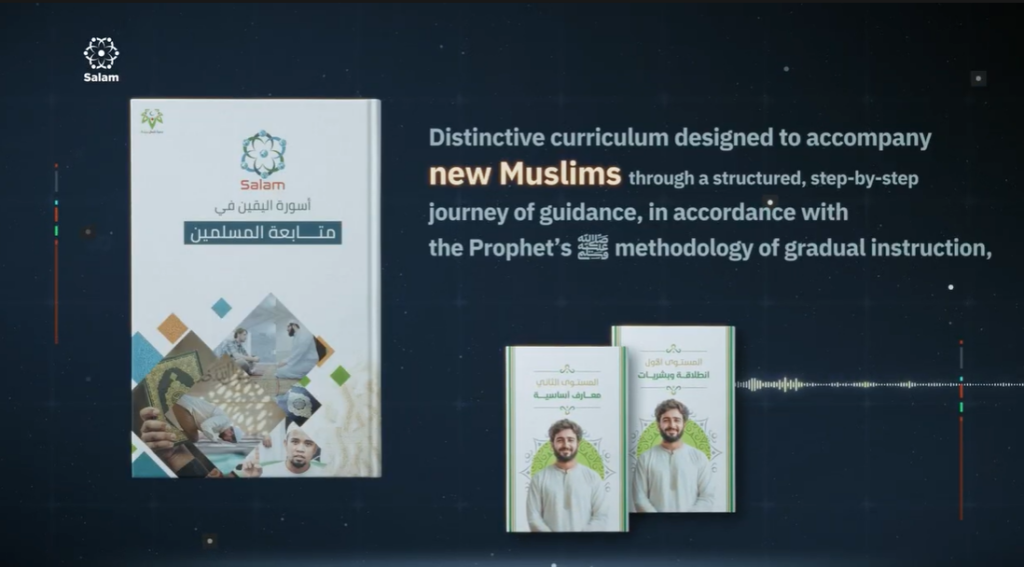
If you are a new Muslim seeking structured guidance, consider joining the Asawirat Al-Yaqeen (Bracelets of Certainty) program — the Salam Center‘s flagship curriculum designed specifically for you:
- Four progressive stages guiding you from the foundational pillars of Islam through advanced practical and theological knowledge
- Seven levels of structured learning, each building on the last — covering creed, worship, character, life rulings, and prophetic biography
- Implemented with over 114,000 new Muslims across 140 countries, with proven results
- Therapeutically designed content that nurtures both the mind and the heart
- Interactive and multilingual — currently being expanded into a smart application and website for learners worldwide
Reach out directly to the Salam Center team to start the Asawirat Al-Yaqeen (Bracelets of Certainty) program.
Conclusion
Islam’s view of Christians is not a single verdict but a layered theological framework built on Quranic revelation. Muslims honor Jesus as a true prophet while rejecting later Trinitarian doctrines as distortions of his original monotheistic message.
The Prophet Muhammad (PBUH) explicitly stated that any person — Jewish or Christian — who hears his message and dies without believing in it will be among those in the Fire. This ruling is grounded in authenticated Hadith and unanimous scholarly consensus, not historical grievance.
Every sincere Christian is invited in Islam to the same pure monotheism that Jesus himself embodied — the worship of Allah alone, with no partners. Embracing Islam means following the full and unbroken chain of divine guidance that runs from Abraham through Moses, Jesus, and finally Muhammad (peace be upon them all).
Frequently Asked Questions
Do Muslims believe that Jesus is a prophet?
Yes — belief in Jesus (peace be upon him) as a true prophet and messenger of Allah is an obligatory part of Islamic faith. The Quran mentions Jesus by name more than 25 times, describes his miraculous birth, his divine-given message, and his eventual return before the Day of Judgment.
A Muslim who denies the prophethood of Jesus has left the fold of Islam. What Muslims reject is any claim that Jesus is Allah, the son of Allah, or a divine being in any sense — positions the Quran explicitly identifies as disbelief.
Why do Muslims reject the Trinity?
The Quran addresses Trinitarian doctrine directly and firmly. The verse in Surah Al-Ma’idah (5:73) states that those who say Allah is the third of three have committed disbelief. Islamic theology understands Allah as absolutely one — indivisible, without partners, parents, or offspring.
The concept of a triune God is considered irreconcilable with the pure monotheism taught by every prophet, including Jesus himself. Muslims view the Trinity as a post-Jesus doctrinal development shaped by Greek philosophy and institutional church decisions, not by divine revelation.
Will Christians go to heaven according to Islam?
Islamic theology distinguishes between different categories of Christians. Those who lived before the Prophet Muhammad (PBUH) and upheld sincere monotheism — worshipping Allah alone and following Jesus’s authentic teaching — are considered believers in the Islamic framework and may attain salvation.
For Christians alive after the Prophet’s mission, the Islamic position is clear: those who hear the message of Islam and reject it will not be among the saved. This ruling comes directly from the Prophet Muhammad (PBUH) in an authenticated narration recorded in Sahih Muslim (Hadith 153).
Is Islam’s position on Christianity influenced by the Crusades or colonialism?
No. The Quran’s theological assessments of Trinitarian Christianity were revealed in the 7th century CE — centuries before the Crusades, and over a millennium before European colonialism.
The Islamic position on Christianity is grounded in divine revelation, not historical conflict. Muslims hold that these are eternal truths established by Allah, not reactions to political events. The Quranic verses addressing the People of the Book were addressed to Christians contemporary with the Prophet Muhammad (PBUH) himself.
Did Jesus foretell the Prophet Muhammad (PBUH) in Islam?
Yes. The Quran records Jesus (peace be upon him) giving explicit glad tidings of a messenger to come after him, whose name is Ahmad — a name of the Prophet Muhammad (PBUH). This appears in Surah As-Saf (61:6).
Muslims therefore view the Prophet Muhammad (PBUH) as the fulfillment of Jesus’s own prophecy, and the rejection of Muhammad (PBUH) by Christians as a contradiction of Jesus’s own directive. Following Jesus authentically, in the Islamic framework, leads to accepting Muhammad (PBUH).
How should Muslims treat Christians in daily life?
Islamic theology distinguishes between theological judgment and interpersonal conduct. The Quran commands Muslims to deal justly and with kindness toward non-Muslims who do not wage war against them (Quran 60:8).
The Prophet Muhammad (PBUH) entered into formal covenants of protection with Christian communities. Theological disagreement does not justify injustice, hostility, or disrespect. Muslims are commanded to invite Christians to Islam with wisdom and good counsel — and to treat them, in all worldly dealings, with honesty and fairness.
Curious about Islam?
Journey towards clarity and purpose. Our team is here to support you in your search for truth and spiritual guidance.
Embrace the Truth