Islam vs. Christianity – Full Guide
| Key Takeaways |
| Islam and Christianity are the world’s two largest religions, together accounting for more than half of the global population, yet they differ fundamentally on the nature of Allah, the identity of Jesus, and the authenticity of scripture. |
| Islam holds that the Quran is the final, unaltered word of Allah revealed to Prophet Muhammad (PBUH), while Christianity centers on the Bible, which Islamic scholarship maintains has undergone significant human alteration over centuries. |
| The Islamic doctrine of Tawhid — the absolute, undivided Oneness of Allah — directly contradicts the Christian doctrine of the Trinity, which Islam regards as a departure from original monotheism. |
| Both religions revere Jesus, known in Islam as ‘Isa (PBUH), but Islam affirms he was a mighty prophet and messenger — not divine, not crucified, and not the son of Allah. |
Do Islam and Christianity worship the same God? Are they simply two different paths to the same truth? Islam and Christianity diverge on the most essential theological questions — the nature of Allah, the identity and mission of Jesus (PBUH), the authority and integrity of scripture, and the path to salvation.
Islam is the final and complete revelation of the same message Allah sent to every prophet — including Abraham, Moses, and Jesus (peace be upon them all).
What is the difference between the Islamic and Christian concept of God?
Islam teaches that Allah is absolutely One — with no persons, no Trinity, and no co-equals. This is Tawhid: the foundational Islamic doctrine that Allah alone is divine, uncreated, and without any partner or offspring.
Christianity‘s mainstream doctrine holds that God is one Being existing as three co-equal, co-eternal persons — Father, Son, and Holy Spirit — known as the Trinity, codified at the Council of Nicaea in 325 CE.
Tawhid is the heart of Islamic belief and the first meaning of the Shahada: La ilaha illa Allah (There is no deity worthy of worship except Allah).
اللَّهُ لَا إِلَٰهَ إِلَّا هُوَ الْحَيُّ الْقَيُّومُ
“Allah — there is no deity except Him, the Ever-Living, the Sustainer of [all] existence.” (Quran 2:255)
قُلْ هُوَ اللَّهُ أَحَدٌ اللَّهُ الصَّمَدُ لَمْ يَلِدْ وَلَمْ يُولَدْ وَلَمْ يَكُن لَّهُ كُفُوًا أَحَدٌ
“Say, ‘He is Allah, [who is] One, Allah, the Eternal Refuge. He neither begets nor is born, nor is there to Him any equivalent.'” (Quran 112:1–4)
Islam regards the Trinity as a post-Jesus theological innovation that contradicts the original monotheistic message all prophets brought.
Islam rejects the Trinity categorically. The Quran addresses this directly:
لَّقَدْ كَفَرَ الَّذِينَ قَالُوا إِنَّ اللَّهَ ثَالِثُ ثَلَاثَةٍ ۚ وَمَا مِنْ إِلَٰهٍ إِلَّا إِلَٰهٌ وَاحِدٌ
“They have certainly disbelieved who say, ‘Allah is the third of three.’ And there is no god except one God.” (Quran 5:73)
For a detailed exploration of how Islam understands the Divine nature, the Salam platform’s article on how Islam views the nature of God provides a thorough treatment rooted in authentic Islamic sources.
The Concept of God in Islam vs. Christianity
| Doctrine | Islam | Christianity (Mainstream) |
| Nature of God | Absolute Oneness (Tawhid) — one Being, one Person | Trinity — one Being, three co-equal Persons |
| God as Father | Allah is Creator and Sustainer — not a literal Father | God is literally Father, the first person of the Trinity |
| God becoming human | Impossible — Allah is transcendent and unlike creation | Central doctrine — God incarnated as Jesus Christ |
| God having a son | Explicitly rejected (Quran 112:3) | Core belief — Jesus is the eternal Son of God |
| Basis of doctrine | Quran (7th century CE) — the direct word of Allah | Council of Nicaea (325 CE) and subsequent councils |
| Theological term | Tawhid (Oneness) | Trinity (Tri-unity) |
What does Islam say about Jesus compared to Christianity?
Islam affirms that Jesus (‘Isa ibn Maryam) was a mighty prophet and messenger of Allah, born miraculously of the Virgin Mary, and that he performed extraordinary miracles by Allah’s permission. Islam denies that he is divine, that he is the Son of Allah, or that he was crucified.
Christianity holds that Jesus is the Son of God, the second person of the Trinity, who was crucified, died, and rose again for the salvation of humanity.
Every Muslim is required to believe in and respect ‘Isa (PBUH) — but as a prophet, not as God.
The Quran states:
وَمَا قَتَلُوهُ وَمَا صَلَبُوهُ وَلَٰكِن شُبِّهَ لَهُمْ
“And they did not kill him, nor did they crucify him; but [another] was made to resemble him to them.” (Quran 4:157)
Islam teaches that ‘Isa (PBUH) was raised by Allah to the heavens and will return before the Day of Judgment. He is honored, loved, and revered — and any Muslim who disrespects him departs from the faith. But he is not divine, was not begotten, and does not share in the Divinity of Allah.
The Prophet Muhammad (PBUH) said:
“I am the closest of people to Jesus, son of Mary, in this world and the Hereafter. The prophets are brothers, with different mothers but one religion.” (Sahih al-Bukhari, Hadith 3442)
Jesus (‘Isa) in Islam vs. Christianity
| Question | Islam | Christianity (Mainstream) |
| Is Jesus divine? | No — Jesus is a prophet and messenger | Yes — he is God incarnate, the Son of God |
| Was Jesus crucified? | No — the Quran explicitly denies crucifixion (4:157) | Yes — the crucifixion is central to salvation |
| Was Jesus resurrected? | Not applicable — Jesus was raised alive to the heavens | Yes — the resurrection is the foundation of Christian faith |
| Virgin birth? | Yes — virgin birth is affirmed in the Quran (3:47) | Yes — affirmed in the Gospels |
| Performed miracles? | Yes — by Allah’s permission | Yes — described throughout the Gospels |
| Will Jesus return? | Yes — before the Day of Judgment | Yes — the Second Coming is a core Christian belief |
| Nature of Jesus | A human prophet, created being | Divine and human — fully God and fully man |
| Original message of Jesus | Pure monotheism (worshipping Allah alone) | Salvation through faith in his death and resurrection |
Have Questions About Islam?
Our team is ready to answer your questions clearly and respectfully. Ask freely and receive honest guidance.
Ask Us NowWhich is older — Islam or Christianity?
Christianity predates Islam by approximately six centuries as an organized historical religion, emerging in the first century CE. Islam emerged publicly in the 7th century CE with the prophethood of Muhammad (PBUH). However, Islam teaches that the message of Tawhid — worshipping Allah alone, without partners — is the original and eternal religion Allah sent through every prophet: Adam, Noah, Abraham, Moses, and Jesus (peace be upon them all).
Prophet Muhammad (PBUH) did not found a new religion but restored the final and uncorrupted form of the eternal divine message.
The age of a religion’s historical organization and the age of its theological message are two distinct questions.
إِنَّ الدِّينَ عِندَ اللَّهِ الْإِسْلَامُ
“Indeed, the religion in the sight of Allah is Islam.” (Quran 3:19)
In this framework, Islam is not a new religion that replaced Christianity. It is the final restoration and completion of the one true religion that preceded all human deviations.
Christianity, in the Islamic view, represents the authentic message of ‘Isa (PBUH) that was later altered by human hands over centuries — a claim supported by the textual history of the New Testament itself, which biblical scholars acknowledge underwent significant redaction.
Key Historical Milestones
| Event | Approximate Date | Significance |
| Prophet Ibrahim (Abraham) (PBUH) | ~2000 BCE | Called by Allah to pure Tawhid; ancestor of the Abrahamic lineage |
| Prophet Musa (Moses) (PBUH) and the Torah | ~1300 BCE | Revelation of the Tawrah; foundational covenant with Bani Isra’il |
| Prophet ‘Isa (Jesus) (PBUH) and the Injeel | ~4 BCE – 30 CE | Revelation of the Injeel; ministry of pure monotheism |
| Council of Nicaea | 325 CE | Formal codification of the Trinity doctrine in Christianity |
| Revelation of the Quran begins | 610 CE | First revelation to Prophet Muhammad (PBUH) in the Cave of Hira |
| Completion of the Quran | 632 CE | Final verse revealed; the Quran sealed as the final word of Allah |
| Compilation of the Uthmanic Mushaf | ~650 CE | Standardized written Quran distributed across the Muslim world |
| Compilation of Sahih al-Bukhari | ~846 CE | Imam al-Bukhari’s rigorous hadith collection formally compiled |
The Quran and the Bible: Scripture, Preservation, and Authenticity
The Quran is the direct, verbatim word of Allah as revealed to Prophet Muhammad (PBUH) through the Angel Jibril (Gabriel). The Quran was memorized by thousands of companions during the Prophet’s lifetime, written down simultaneously, and formally compiled into a standardized written text under Caliph Uthman (RA) within two decades of the Prophet’s death.
Today, every single Quran across the globe — in Indonesia, Nigeria, Morocco, or Canada — is identical to the last letter. The isnad (chain of transmission) connecting every recitation to the Prophet (PBUH) is unbroken.
The Salam platform’s article on what Muslims believe about the Quran and why Muslims believe in the Quran explain this preservation in more detail.
The Bible‘s textual history follows a very different trajectory. The Old Testament (Hebrew scriptures) and New Testament were written, collected, translated, and edited across many centuries by multiple human authors and councils.
Biblical scholars — including those at secular institutions like Harvard Divinity School — openly acknowledge that the New Testament gospels were written decades after Jesus (PBUH), that manuscripts differ in thousands of places, and that books were excluded from or added to the canon through ecclesiastical decisions.
Imam Ibn Hazm al-Andalusi (994–1064 CE), one of the foremost Muslim scholars of comparative religion, documented in his work Al-Fisal fi al-Milal wal-Ahwa’ wal-Nihal extensive evidence of contradictions and alterations within Biblical texts — a scholarly tradition that continues in Islamic academia today.
The Quran vs. the Bible
| Criterion | The Quran | The Bible |
| Source | Direct verbatim word of Allah, revealed to Muhammad (PBUH) | Inspired by God; written by multiple human authors over centuries |
| Language of original revelation | Arabic — preserved in its original language | Hebrew/Aramaic (OT) and Greek (NT) — no originals survive |
| Textual consistency | Identical worldwide — zero variant authorized texts | Thousands of manuscripts with documented variations |
| Memorization tradition | Huffaz (memorizers) in every generation since the Prophet (PBUH) | No comparable memorization tradition |
| Compilation history | Memorized and written during the Prophet’s life; compiled ~650 CE | Multiple authors; NT canon finalized ~4th century CE |
| Scholarly verification system | Isnad (chain of transmission) for every narration | No equivalent chain-of-custody system for authorship |
| Challenge of authenticity | The Quran challenges humanity to produce a comparable chapter (2:23) | No such standing challenge in the Biblical text |
| Islamic verdict | Final, complete, unaltered word of Allah | Original revelations to Moses and Jesus (PBUH) — later altered by human hands |
What are the main differences between Islam and Christianity?
The ten core differences between Islam and Christianity span theology, scripture, prophethood, salvation, law, and eschatology.
Islam affirms the absolute Oneness of Allah, denies the Trinity and the divinity of Jesus, rejects original sin, holds the Quran as the preserved word of Allah, and recognizes Muhammad (PBUH) as the final prophet.
Christianity affirms the Trinity, holds Jesus as divine, teaches salvation through his atoning death, and does not recognize Muhammad (PBUH) as a prophet. These distinctions are not peripheral — they define each religion’s entire theological framework.
10 differences between Islam and Christianity
| # | Topic | Islam | Christianity |
| 1 | Nature of Allah | Absolute Tawhid — One God, no partners or persons | Trinity — one God in three co-equal persons |
| 2 | Jesus (‘Isa) | Prophet and messenger — human, not divine | Son of God — fully divine and fully human |
| 3 | Crucifixion | Denied explicitly (Quran 4:157) | Central event of salvation |
| 4 | Original Sin | Rejected — humans born in purity (fitrah) | Inherited from Adam; requires redemption |
| 5 | Salvation | Faith, righteous deeds, and Allah’s mercy | Faith in Jesus’s atoning death and resurrection |
| 6 | Scripture | The Quran — verbatim word of Allah, perfectly preserved | The Bible — divinely inspired, written by human authors |
| 7 | Final Prophet | Muhammad (PBUH) — the Seal of the Prophets (Quran 33:40) | Jesus Christ — no prophet after him |
| 8 | Clergy / Intercession | No clergy; direct relationship between servant and Allah | Ordained clergy; priestly intercession (Catholic/Orthodox) |
| 9 | Religious Law | Sharia — comprehensive divine law governing all life | Separated from civic governance in most traditions |
| 10 | Afterlife description | Jannah and Jahannam — detailed in Quran and Sunnah | Heaven and Hell — described in scripture and tradition |
What do Islam and Christianity have in common?
Islam and Christianity share a common Abrahamic heritage and numerous foundational beliefs. Both affirm the existence of angels, the reality of prophethood and divine revelation, the virgin birth of Jesus (PBUH), the resurrection of the dead, and a final Day of Judgment where every soul is held accountable.
These shared beliefs reflect the common prophetic lineage that Islam explicitly recognizes — every prophet brought the same essential message of Tawhid.
Islam and Christianity Similarities Side by Side
| Shared Belief | Islam | Christianity |
| Abraham as patriarch | Yes — Ibrahim (PBUH), father of prophets | Yes — Abraham, father of faith |
| Moses as prophet | Yes — Musa (PBUH), given the Tawrah | Yes — Moses, given the Torah |
| Virgin birth of Jesus | Yes — affirmed in the Quran (3:47) | Yes — affirmed in the Gospels |
| Jesus performed miracles | Yes — by Allah’s permission | Yes — described throughout the Gospels |
| Existence of angels | Yes — six pillars of Iman include belief in angels | Yes — angels mentioned throughout the Bible |
| Resurrection of the dead | Yes — affirmed throughout the Quran | Yes — affirmed in the New Testament |
| Day of Judgment | Yes — Al-Qiyamah, detailed in Quran and Sunnah | Yes — the Last Judgment |
| Moral accountability | Yes — every soul answers before Allah | Yes — every soul answers before God |
| Prayer and worship | Yes — Salah five times daily and du’a | Yes — liturgical and personal prayer |
Evidence for Islam vs. Christianity: Which One Is True?
This is the question that matters most, and it deserves direct engagement rather than diplomatic deflection.
Islam’s truth rests on several interconnected pillars of evidence:
1. The Quran’s Miraculous Nature (I’jaz al-Quran):
The Quran itself challenges all of humanity and the jinn to produce even a single chapter comparable to it — a challenge that has stood unanswered for fourteen centuries.
وَإِن كُنتُمْ فِي رَيْبٍ مِّمَّا نَزَّلْنَا عَلَىٰ عَبْدِنَا فَأْتُوا بِسُورَةٍ مِّن مِّثْلِهِ
“And if you are in doubt about what We have sent down upon Our Servant [Muhammad], then produce a surah the like thereof.” (Quran 2:23)
2. Perfect Preservation:
As noted above, the Quran’s manuscript tradition is unmatched in the ancient world. Early Quranic manuscripts — such as those held in the Bibliothèque nationale de France and the Sana’a manuscripts — confirm the Quran’s textual stability across fourteen centuries.
3. The Prophet’s Character and the Impossibility of Fabrication:
A man raised in Arabia in the 7th century, without formal learning, produced a text containing allusions to embryology, cosmology, and oceanography that aligned with later scientific discovery.
The Prophet Muhammad (PBUH) gained nothing personally from his mission — he faced persecution, poverty, and war. The internal consistency of the Prophetic character over twenty-three years of revelation is itself a testimony.
4. Fulfilled Prophecies:
The Quran contains prophecies that were fulfilled historically — among them the Romans’ defeat and subsequent victory over Persia (Quran 30:2–4).
5. Unbroken Chain of Transmission:
The science of Hadith — developed uniquely by Muslim scholars including Imam al-Bukhari (810–870 CE) and Imam Muslim (815–875 CE) — produced a rigorous methodology for verifying every narration through chains of named, verified transmitters. No other civilization produced anything comparable.
For the foundational principles that define authentic Islamic belief, the Salam platform’s overview of Islam’s principles and the article on faith in Islam offer structured, source-grounded reading.
Evidence Comparison Table: Islam vs. Christianity
| Evidence Category | Islam | Christianity |
| Scripture preservation | Verbatim — identical worldwide, unbroken isnad | Thousands of manuscript variants; no original autographs |
| Authorship of scripture | Direct divine revelation through named transmitters | Anonymous or pseudonymous authors; written decades after events |
| Verification system | Rigorous isnad science (Bukhari, Muslim) — named chains to the source | No chain-of-custody system; council-based canon selection |
| Miraculous literary challenge | Standing challenge in the Quran (2:23) — unanswered 14 centuries | No comparable challenge |
| Fulfilled prophecies | Such as Romans’ victory (30:2–4); spread of Islam | Biblical prophecy — disputed interpretation; no equivalent external verification |
| Historical consistency of founder | 23 years of consistent revelation under persecution — no personal gain | Disciples scattered at crucifixion; accounts written by later followers |
| Scientific allusions | Embryology, oceanography, cosmology in 7th-century text | No comparable scientific specificity in contemporaneous religious text |
Read Also: The Creation Story in Islam and Christianity
What is the population of Islam vs. Christianity?
Christianity is currently the world’s largest religion with approximately 2.4 billion adherents. Islam is the second largest with approximately 1.9–2.0 billion adherents.
According to Pew Research Center projections, Islam is the fastest-growing major religion globally and is on track to equal or surpass Christianity in total population by the mid-21st century.
Population and Demographics Table: Islam vs. Christianity
| Category | Islam | Christianity |
| Current global population | ~1.9–2.0 billion | ~2.4 billion |
| Share of world population | ~25% | ~31% |
| Growth rate | Fastest-growing major religion globally | Slower growth; declining in Western Europe and North America |
| Geographic concentration | Middle East, South Asia, Southeast Asia, Sub-Saharan Africa | Europe, Americas, Sub-Saharan Africa |
| Median age of adherents | Younger — driving higher growth rates | Older median age in major Western Christian populations |
| Projected trajectory | Projected to equal Christianity by ~2050 (Pew Research) | Projected to remain largest through mid-century, then converge |
| Conversion trends | Significant conversion rates globally, especially in the West | Declining conversion in historically Christian countries |
Islam’s growth is driven both by conversion and by a younger average demographic in Muslim-majority regions. The Salam Center for Da’wah and Dialogue works directly with new Muslims across 140 countries, reflecting Islam’s global reach.
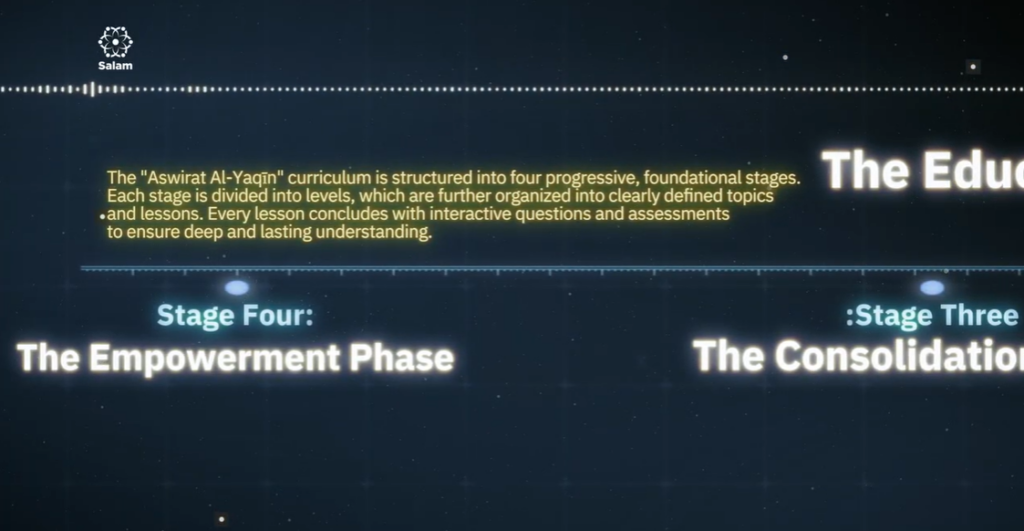
Population, of course, does not determine truth. But these numbers reflect a living, growing community of people who have examined the evidence and embraced Islam — and whose experience of the faith continues to grow through structured programs like the Asawirat Al-Yaqeen (Bracelets of Certainty) curriculum.
Reach out directly to the Salam Center team to start the Asawirat Al-Yaqeen (Bracelets of Certainty) program for FREE.
A Note to the Sincere Seeker
If you have reached this point in the article, you are asking the right questions. Islam does not ask you to abandon reason — it asks you to apply it honestly. The Quran repeatedly calls on human beings to reflect, to examine, to use their ‘aql (intellect).
أَفَلَا يَعْقِلُونَ
“Will they not then reason?” (Quran 36:68)
If you are comparing Islam and Christianity with sincerity, read the Quran directly. Examine the life of the Prophet Muhammad (PBUH) as recorded in authenticated Hadith collections.
Study the manuscript history of the Bible honestly. Sit with the theological questions rather than avoiding them. Allah guides those who sincerely seek His truth.
Read Also: Islam vs Hinduism
Have Questions About Islam?
Our team is ready to answer your questions clearly and respectfully. Ask freely and receive honest guidance.
Ask Us NowRead Also: Islam vs Buddhism
Continue Your Journey of Authentic Knowledge with Salam
If this article has opened a door, the Salam Center for Da’wah and Dialogue is here to walk alongside you.
Explore more in-depth articles on Islamic belief, evidence, and practice on the Salam Platform.
Read further on faith, scripture, and theology on the Salam blog.
Have specific questions about Islam? Want to speak with someone directly? Reach out to the Salam team — knowledgeable, compassionate, and ready to help.
Reach out directly — our team is ready to listen, guide, and welcome you.
Read Also: Islam vs Judaism
Read Also: Sunni Islam vs Shia Islam
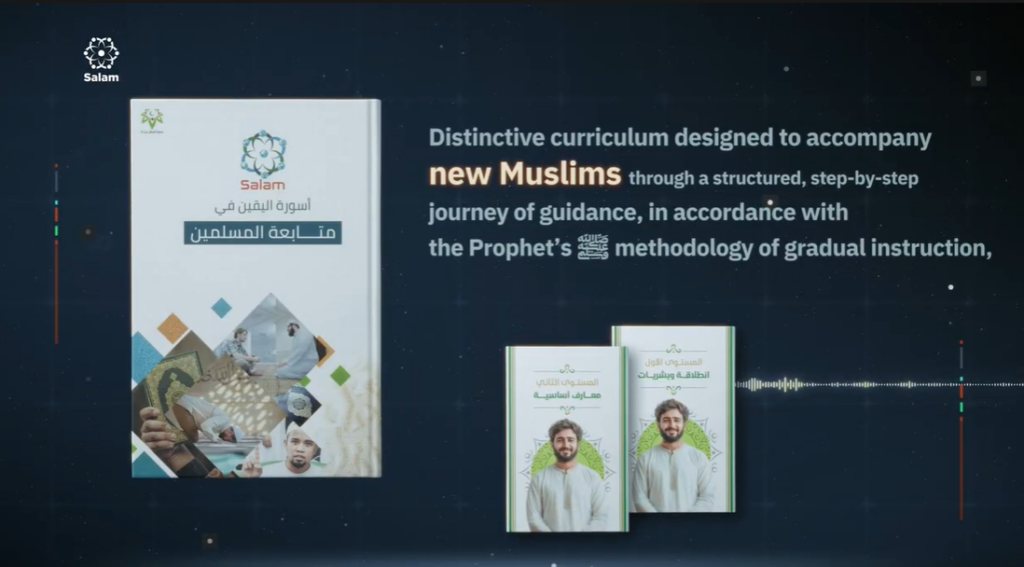
If you have embraced Islam or are seriously considering it, the Asawirat Al-Yaqeen (Bracelets of Certainty) program is designed precisely for you. This structured, four-stage curriculum has guided 114,588 new Muslims across 140 countries through a progressive, Quran- and Sunnah-rooted journey of knowledge and certainty. The program covers:
- Stage One: The Shahada, the pillars of Islam, wudu, salah, and the pillars of Iman
- Stage Two: Zakat, fasting, Hajj, and the biography of the Prophet (PBUH)
- Stage Three: Tawbah (repentance), character formation, and practical etiquette
- Stage Four: Contemporary issues, Islamic intellectual frameworks, and a life roadmap from Surah Al-Asr
The curriculum is compassionate in tone, rigorous in scholarship, and structured for real human lives. Reach out through the Salam Platform to begin.
Reach out directly to the Salam Center team to start the Asawirat Al-Yaqeen (Bracelets of Certainty) program for FREE.
Summary
Islam and Christianity diverge on the most essential questions of theology: the absolute Oneness of Allah versus the Trinitarian doctrine, and the prophetic status of ‘Isa (PBUH) versus his claimed divinity. These distinctions define each tradition’s entire understanding of Allah, salvation, and scripture.
The Quran’s unmatched textual preservation through an unbroken isnad, its standing challenge to produce a comparable chapter, and the rigorous Hadith verification system of Imam al-Bukhari and Imam Muslim together form a uniquely robust evidential foundation — one that the Bible’s complex and contested manuscript history cannot match.
Frequently Asked Questions
Is Islam older than Christianity, or is Christianity older than Islam?
Christianity as a distinct religion emerged in the first century CE, approximately six centuries before Islam’s public emergence in the 7th century CE with the prophethood of Muhammad (PBUH). However, Islam’s theological self-understanding extends far beyond its historical appearance. The Quran teaches that Islam — defined as submission to Allah alone — is the original religion Allah revealed to every prophet, from Adam through Abraham, Moses, and Jesus (peace be upon them all).
What does Islam say about Jesus compared to Christianity?
Islam affirms that Jesus (‘Isa ibn Maryam) was one of the greatest prophets and messengers of Allah — born miraculously of the Virgin Maryam, given the Injeel (Gospel), and capable of performing extraordinary miracles by Allah’s permission. Islam denies that he is divine, that he is the Son of Allah, or that he was crucified.
What is the Islamic view of the Bible?
Islam teaches that the original Torah (Tawrah) revealed to Prophet Moses (PBUH) and the original Gospel (Injeel) revealed to Prophet Jesus (PBUH) were genuine divine revelations, but these scriptures underwent alteration — through intentional human changes and the errors of translation, selection, and transmission over centuries — such that they no longer exist in their original revealed form.
What does Islam say about salvation, compared to Christianity?
Islam teaches that salvation — entry into Jannah (Paradise) — comes through sincere faith in Allah and His Messenger (PBUH), righteous deeds, and ultimately Allah’s mercy. Every human being is born in a state of fitrah (natural purity), free of inherited sin. When a person sins, they turn directly to Allah in sincere tawbah (repentance), and Allah accepts it — without any priestly mediation or sacrificial intermediary.
Curious about Islam?
Journey towards clarity and purpose. Our team is here to support you in your search for truth and spiritual guidance.
Embrace the Truth