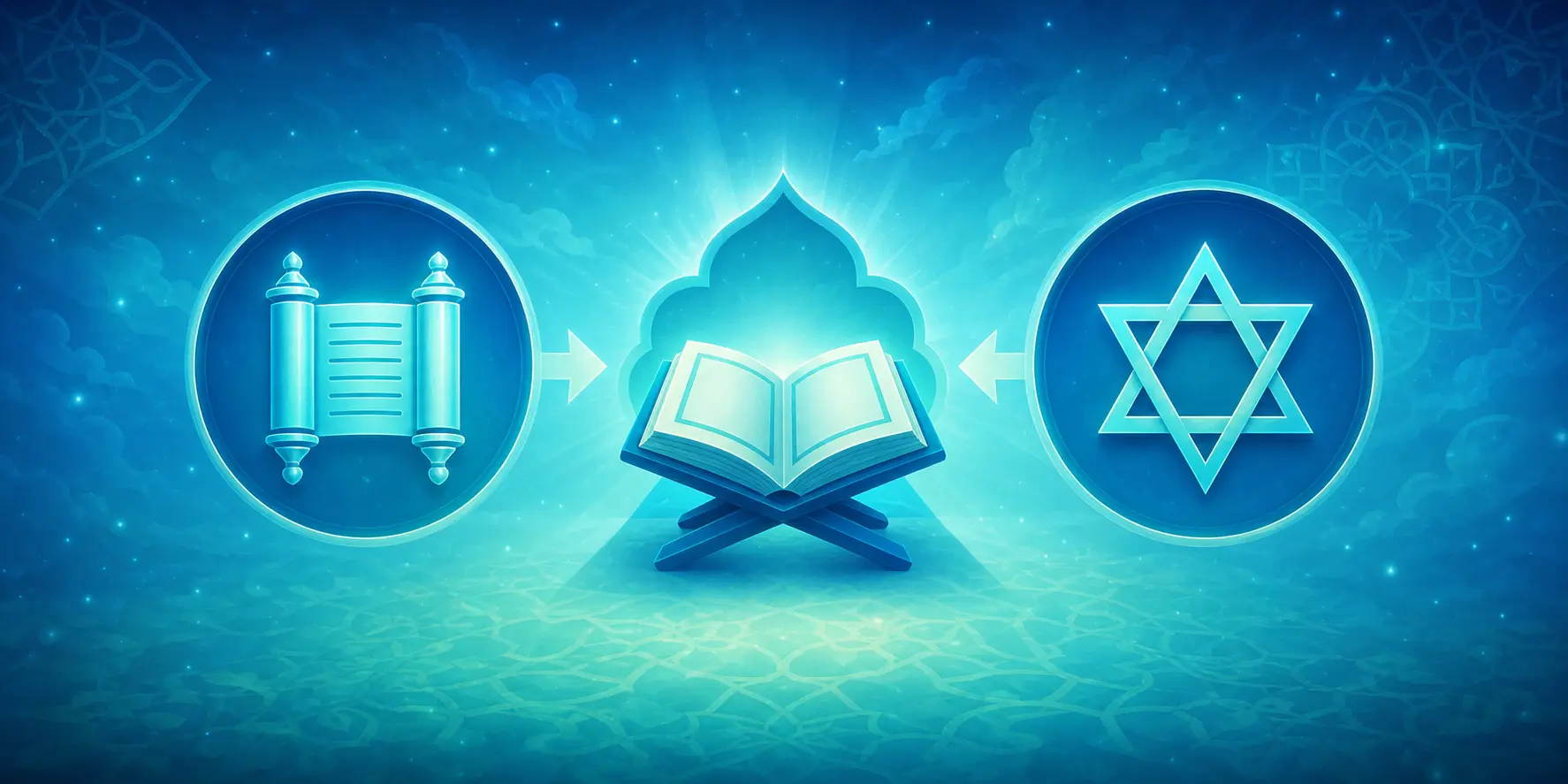
Does the Quran Have the Old Testament?
| Key Takeaways |
| The Quran does not contain the Old Testament. |
| Muslims believe Allah revealed the Torah (Tawrah) to Prophet Musa (Moses) and the Psalms (Zabur) to Prophet Dawud (David) — both of which are now considered altered from their original revelation. |
| The Quran is the only divinely protected scripture remaining in its original form. |
The Quran does not contain the Old Testament — but its relationship with that scripture, and with all previous divine revelations, is far deeper and more theologically significant than a simple yes or no can capture.
Allah sent a series of revelations to a series of prophets throughout human history. The Torah revealed to Musa (Moses), the Psalms revealed to Dawud (David), and the Gospel revealed to ‘Isa (Jesus) all came from the same divine source as the Quran. What changed across centuries was not the source, but the preservation of those texts by human hands.
Does the Quran Have the Old Testament?
No, the Quran does not contain the Old Testament as a text embedded within it. The Old Testament, in its current form, is a collection of books that Jews and Christians consider scripture. Muslims do not treat the Bible’s current text as a fully preserved divine revelation.
What the Quran does contain is confirmation of the divine origin of previous scriptures alongside a thorough theological framework for understanding why those earlier texts can no longer be relied upon as they once were.
Allah says in the Quran:
وَأَنزَلْنَا إِلَيْكَ الْكِتَابَ بِالْحَقِّ مُصَدِّقًا لِّمَا بَيْنَ يَدَيْهِ مِنَ الْكِتَابِ وَمُهَيْمِنًا عَلَيْهِ
“And We have revealed to you the Book in truth, confirming that which preceded it of the Scripture and as a guardian over it.” (Quran 5:48)
This verse establishes a dual role for the Quran: musaddiq (confirming) and muhaymin (guardian/overseer). It confirms the divine source behind the Torah and the Gospel, while simultaneously overseeing, correcting, and superseding them. This is the Islamic doctrinal position in one verse.
The Quran’s confirmation, however, is not an endorsement of the current Old Testament text, the Torah and Injil (Gospel) as they exist today have undergone tahrif — alteration, both in wording and in meaning — carried out through human transmission across centuries.
What the Quran shares with the Old Testament, then, is not its text but its message in origin: the oneness of Allah, moral accountability, prophethood, and the judgment of souls. Those shared themes are echoes of one source.
What Does Islam Teach About the Torah and the Law of Musa?
The Quran mentions the Torah (Tawrah) dozens of times, treating it as a genuine revelation from Allah given to Prophet Musa (Moses, peace be upon him). Allah describes it as:
إِنَّا أَنزَلْنَا التَّوْرَاةَ فِيهَا هُدًى وَنُورٌ
“Indeed, We sent down the Torah, in which was guidance and light.” (Quran 5:44)
This verse was not speaking of the Torah in its present form but of the original revelation as it was sent. That distinction is pivotal in Islamic theology. The original Torah was divine; its current form has been subject to centuries of human editing, translation, and, according to Islamic belief, deliberate alteration.
The concept of tahrif — textual corruption — is not a polemical invention in Islamic thought. It is a Quranic concept. Allah addresses the People of the Book directly:
فَوَيْلٌ لِّلَّذِينَ يَكْتُبُونَ ٱلْكِتَٰبَ بِأَيْدِيهِمْ ثُمَّ يَقُولُونَ هَٰذَا مِنْ عِندِ ٱللَّهِ لِيَشْتَرُوا۟ بِهِۦ ثَمَنًا قَلِيلًا ۖ فَوَيْلٌ لَّهُم مِّمَّا كَتَبَتْ أَيْدِيهِمْ وَوَيْلٌ لَّهُم مِّمَّا يَكْسِبُونَ
“So woe to those who write the “scripture” with their own hands, then say, “This is from Allah,” in order to exchange it for a small price. Woe to them for what their hands have written and woe to them for what they earn.'” (Quran 2:79)
Contemporary Biblical scholarship has documented extensive evidence of editorial layers, redactional additions, and compositional inconsistencies in the Old Testament texts.
Learn More About Islam
Discover the beauty, teachings, and wisdom of Islam in a clear and welcoming way. Start exploring and deepen your understanding today.
Learn MoreDoes the Quran Have the New Testament?
No, the Quran does not contain the New Testament as a text embedded within it. The Quran affirms the revelation given to ‘Isa ibn Maryam (Jesus son of Mary), peace be upon him, calling it the Injil (Gospel). But what is meant by the Injil in the Quran is the original revelation sent directly to ‘Isa — a scripture that Muslims believe is not preserved in the New Testament gospels that exist today.
Allah says:
وَقَفَّيْنَا عَلَىٰٓ ءَاثَٰرِهِم بِعِيسَى ٱبْنِ مَرْيَمَ مُصَدِّقًا لِّمَا بَيْنَ يَدَيْهِ مِنَ ٱلتَّوْرَىٰةِ ۖ وَءَاتَيْنَٰهُ ٱلْإِنجِيلَ فِيهِ هُدًى وَنُورٌ وَمُصَدِّقًا لِّمَا بَيْنَ يَدَيْهِ مِنَ ٱلتَّوْرَىٰةِ وَهُدًى وَمَوْعِظَةً لِّلْمُتَّقِينَ
“And We sent, following in their footsteps, Jesus, the son of Mary, confirming that which came before him in the Torah; and We gave him the Gospel, in which was guidance and light and confirming that which preceded it of the Torah as guidance and instruction for the righteous.” (Quran 5:46)
The Gospel in the Quran’s sense is not Matthew, Mark, Luke, or John. Those are accounts written by companions and followers of Jesus in the decades after his mission, in Greek — a language he did not speak. The Injil the Quran references was the direct divine word delivered through ‘Isa himself. That text has not survived intact.
This is why the Quran, not the Bible, functions as the theological reference point for Muslims regarding ‘Isa.
For those exploring how Islam view other religions, the Islamic position does not deny the prophetic missions of Moses or Jesus — it denies that their current scriptures faithfully represent the original revelations given to them.
Does the Quran Have the Ten Commandments?
The Ten Commandments are among the most well-known elements of the Old Testament, revealed to Musa on Mount Sinai. The Quran does not present a numbered list of ten commandments as a distinct unit, but the moral and theological principles they embody (except the fourth commandment of Sabbath day) appear throughout the Quran explicitly and with force.
The Quran prohibits shirk (associating partners with Allah) with greater doctrinal precision than the First Commandment. It commands honoring one’s parents:
وَقَضَىٰ رَبُّكَ أَلَّا تَعْبُدُوا إِلَّا إِيَّاهُ وَبِالْوَالِدَيْنِ إِحْسَانًا
“And your Lord has decreed that you worship none except Him, and that you be good to parents.” (Quran 17:23)
The Quran prohibits murder, theft, false testimony, and transgression against others’ property and dignity — all within its broader moral framework.
What differs is the structure: the Quran does not present morality as a numbered list but weaves ethical commandments into narrative, legal discourse, and direct divine address throughout its 114 chapters.
Scholars noted that the moral constants across divine revelations — monotheism, honoring parents, prohibiting murder and theft — reflect the unified nature of Allah’s guidance to humanity across prophets and ages.
The Quran is not a repetition of the Ten Commandments; it is their completion and their final authoritative form.
Is the Quran the Old Testament?
No, the Quran and the Old Testament are distinct in every formal sense: language, structure, historical context, mode of revelation, and scope.
The Quran was revealed in Arabic to Prophet Muhammad (PBUH) over approximately 23 years, beginning in 610 CE. It is not a narrative history like much of the Old Testament, nor a legal code alone, nor a collection of psalms. The Quran is a unique genre of divine address — direct speech from Allah to humanity — combining theology, law, ethics, narrative, prophecy, and spiritual cultivation in a single unified text.
The Quran’s preservation is also categorically different. Allah guaranteed its protection:
إِنَّا نَحْنُ نَزَّلْنَا الذِّكْرَ وَإِنَّا لَهُ لَحَافِظُونَ
“Indeed, it is We who sent down the Reminder, and indeed, We will be its guardian.” (Quran 15:9)
This divine guarantee has a tangible historical reality. Millions of Muslims have memorized the Quran in its entirety in every generation since the time of the Prophet (PBUH) — a living chain of preservation that has no parallel in any other scripture’s history.
The Old Testament, by contrast, exists in multiple manuscript traditions with documented textual variants, and no comparable mechanism of memorized preservation.
To understand what makes the Quran uniquely trustworthy, the Salam platform’s article on why Muslims believe in the Quran addresses this directly with both textual and rational arguments.
Do Muslims Believe the Bible Is a Revealed Scripture?
Muslims believe the Bible contains traces of original divine revelation — specifically the Torah and Gospel in their original forms — but do not regard the Bible as it currently exists as a reliably preserved divine text. This position is not dismissive of Biblical history; it is a theologically grounded stance rooted in the Quran’s own testimony about the alteration of previous scriptures.
The Salam platform’s dedicated exploration of whether Muslims believe the Bible provides a more detailed treatment of this important question, including the Islamic scholarly tradition’s engagement with Biblical textual criticism and the doctrinal distinctions that matter most for understanding Islam’s position on Christian and Jewish scripture.
Read Also: The Quran vs. The Torah
Learn More About Islam
Discover the beauty, teachings, and wisdom of Islam in a clear and welcoming way. Start exploring and deepen your understanding today.
Learn MoreRead Also: The Difference Between the Quran and the Bible
Explore More Authentic Knowledge With the Salam Platform
If this article has opened doors to questions you want to pursue further, the Salam Center is here to walk with you at every step.
Browse the Salam platform for articles spanning Islamic belief, practice, the lives of the prophets, and the intellectual case for Islam across every major question a sincere seeker encounters.
Visit the Salam blog for topic-specific guides written with the same commitment to authenticity and clarity.
Reach out directly if you have a personal question, want to learn more about entering Islam, or simply want to have a real conversation with someone who understands the journey.
Read Also: When Was the Bible Written Compared to the Quran?
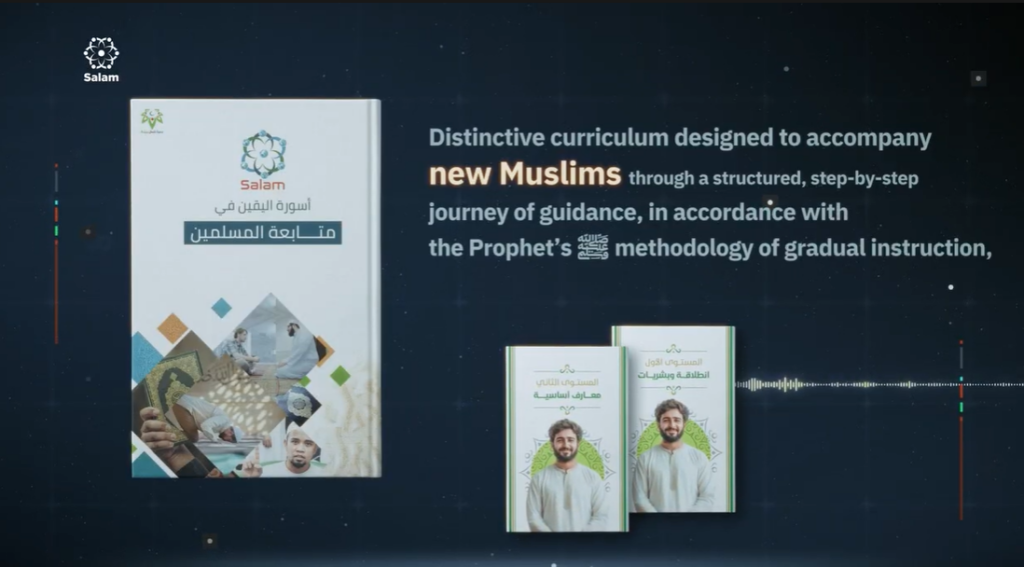
For new Muslims ready to build a structured foundation of knowledge and practice, the Asawirat Al-Yaqeen (Bracelets of Certainty) program offers exactly that — a structured, four-stage curriculum that has guided over 114,500 new Muslims across 140 countries:
- Stage One — The Foundation: Understanding the Shahada, the pillars of Islam, and the essential acts of worship
- Stage Two — The Construction Phase: The biography of the Prophet (PBUH) and the door of sincere repentance
- Stage Three — The Consolidation Phase: Islamic ethics, family rulings, and practical life guidance
- Stage Four — The Empowerment Phase: Contemporary issues, theological evidence, and a life roadmap rooted in Surah Al-Asr
This is not a course. It is a companion for the journey toward Yaqeen — certainty of the heart.
Reach out directly to the Salam Center team to start the Asawirat Al-Yaqeen (Bracelets of Certainty) program for FREE.
Summary
The Quran does not contain the Old Testament but confirms the divine origin of the Torah, Psalms, and Gospel while testifying to their alteration through human transmission. Belief in all of Allah’s revealed scriptures is a pillar of Islamic faith, one that coexists with recognizing the Quran as the uniquely preserved and final revelation.
Frequently Asked Questions
Does the Quran include the Old Testament or quote from it directly?
The Quran does not include or quote from the Old Testament as a text. It shares narratives of the same prophets — Ibrahim, Musa, Dawud, and others — and confirms that the Torah was a genuine revelation from Allah, while affirming that the Old Testament in its current form has been altered through human transmission over centuries.
Is the Quran the same as the Old Testament rewritten in Arabic?
The Quran is not a rewritten version of the Old Testament. It is a unique revelation in Arabic, delivered directly to Prophet Muhammad (PBUH) over 23 years, carrying its own distinct structure, theology, and legal framework. While both scriptures share prophetic narratives, the Quran’s mode of revelation, its genre, and its divine guarantee of preservation (Quran 15:9) distinguish it categorically from the Old Testament.
Does the Quran have the Ten Commandments?
The Quran does not contain a numbered list of ten commandments, but it explicitly teaches the same foundational moral principles: the oneness of Allah, honoring parents, prohibiting murder, theft, and false witness. These are embedded throughout the Quran’s chapters as part of its comprehensive moral framework rather than as a discrete legal list.
Curious about Islam?
Journey towards clarity and purpose. Our team is here to support you in your search for truth and spiritual guidance.
Embrace the Truth