Does the Quran Mention the Bible?
| Key Takeaways |
| The Quran affirms the divine origin of the Torah (Tawrah), the Psalms (Zabur), and the Gospel (Injeel) as authentic revelations sent by Allah to His prophets. |
| The Quran does not use the word “Bible,” but it names and addresses the scriptures given to Moses, David, and Jesus by their original Arabic designations. |
| Islamic belief holds that the original revelations were preserved imperfectly by their communities and that the texts in circulation today have undergone alteration (tahrif). |
| Muslims are obligated to believe in all scriptures revealed by Allah, but they follow the Quran as the final, perfectly preserved word of Allah for all of humanity. |
| The Quran’s relationship to prior scriptures is one of confirmation and correction — affirming what remained true, and clarifying what had been altered over time. |
Yes — the Quran directly references the scriptures revealed before it, naming them with specific terms and engaging their contents with theological precision. What many seekers are surprised to discover is how central this relationship is to the Islamic worldview.
The Quran does not treat prior scriptures as foreign or irrelevant. Rather, it positions itself as their ultimate guardian and fulfillment — sent by the same Allah who sent the Torah to Moses, the Psalms to David, and the Gospel to Jesus, peace be upon them all.
Does the Quran Mention the Bible?
Yes, the Quran mentions the scriptures that form the basis of the Bible — specifically the Torah (Tawrah), the Psalms (Zabur), and the Gospel (Injeel) — but does not use the word “Bible” itself, since that term is a later compilation name not found in any divine revelation.
The Torah (Tawrah) is referenced as the revelation given to Prophet Moses (Musa), peace be upon him. Allah says in the Quran:
إِنَّا أَنزَلْنَا التَّوْرَاةَ فِيهَا هُدًى وَنُورٌ
“Indeed, We sent down the Torah, in which was guidance and light.” (Quran 5:44)
The Psalms (Zabur) are mentioned as the scripture given to Prophet David (Dawud), peace be upon him:
وَآتَيْنَا دَاوُودَ زَبُورًا
“And to David We gave the book [of Psalms]” (Quran 4:163)
The Gospel (Injeel) is affirmed as the revelation sent to Prophet Jesus (Isa), peace be upon him:
وَقَفَّيْنَا بِعِيسَى ابْنِ مَرْيَمَ وَآتَيْنَاهُ الْإِنجِيلَ
“And We followed [the prophets] with Jesus, son of Mary, and gave him the Gospel.” (Quran 57:27)
The Quran’s affirmation of these scriptures is unambiguous — they were real, divine revelations. The question the Quran also raises, however, is whether those original revelations remain intact in the texts circulating today among Jews and Christians.
What is the Quran’s Position on the Bible?
The Quran affirms the original divine truth of these scriptures while simultaneously stating that human communities altered, concealed, and distorted portions of them over time. This concept — known in Islamic scholarship as tahrif — is central to understanding how Islam views the Bible and its relationship to the Quran.
Allah says:
أَفَتَطْمَعُونَ أَن يُؤْمِنُوا لَكُمْ وَقَدْ كَانَ فَرِيقٌ مِّنْهُمْ يَسْمَعُونَ كَلَامَ اللَّهِ ثُمَّ يُحَرِّفُونَهُ مِن بَعْدِ مَا عَقَلُوهُ
“Do you covet [the hope, O believers], that they would believe for you while a party of them used to hear the words of Allah and then distort the Torah after they had understood it while they were knowing?” (Quran 2:75)
Tahrif occurred in two forms: textual alteration (tahrif al-lafz) — actual changes to the wording — and interpretive distortion (tahrif al-ma’na) — deliberately misrepresenting what the original text said. Both forms are addressed in the Quran.
This is why Muslims do not regard the current Bible — whether the Old Testament or the New Testament — as a perfectly preserved divine text. The Quran establishes the distinction between the original revealed scriptures, which were from Allah, and the human-modified versions that exist today.
The Quran is the Guardian and Final Authority Over All Scriptures
A word the Quran uses to describe its own relationship to prior scriptures is muhaymin — translated as “guardian,” “overseer,” or “witness.”
وَأَنزَلْنَا إِلَيْكَ الْكِتَابَ بِالْحَقِّ مُصَدِّقًا لِّمَا بَيْنَ يَدَيْهِ مِنَ الْكِتَابِ وَمُهَيْمِنًا عَلَيْهِ
“And We have revealed to you the Book in truth, confirming that which preceded it of the Scripture and as a guardian over it.” (Quran 5:48)
This single verse establishes a dual role for the Quran with respect to prior scriptures. First, it confirms (musaddiq) — meaning it affirms the true divine origin of what came before. Second, it stands as a guardian (muhaymin) — meaning it is the final criterion for what has been preserved correctly and what has been altered.
The Quran’s role as muhaymin means Muslims do not need the previous scriptures as independent sources of law or theology. The Quran contains, confirms, or supersedes everything necessary for human guidance.
The history of the Quran’s revelation and preservation reflects this divine custodianship — unlike prior scriptures, the Quran was memorized by thousands, written in the Prophet’s lifetime, and standardized under the Companions.
Learn More About Islam
Discover the beauty, teachings, and wisdom of Islam in a clear and welcoming way. Start exploring and deepen your understanding today.
Learn MoreWhat Does the Quran Say About the Torah?
The Quran’s references to the Torah are extensive, spanning numerous verses that discuss its rulings, its people, and its core message of monotheism. Allah affirms that the Torah contained guidance for the Children of Israel and that the prophets of Israel — including Jesus — judged by it:
يَحْكُمُ بِهَا النَّبِيُّونَ الَّذِينَ أَسْلَمُوا
“By which the prophets who submitted [to Allah] judged.” (Quran 5:44)
The Quran also challenges the Jews of Madinah directly — asking them to bring the Torah and apply it honestly, as in the case of the ruling on adultery, where the Prophet (PBUH) was asked to adjudicate and the Jews attempted to conceal the relevant passage.
The Quran’s engagement with the Torah is therefore not an endorsement of the current Old Testament, but a recognition of the original revelation’s authority — an authority that had been compromised through human interference.
What Does the Quran Say About the Gospel (Injeel)?
The Gospel the Quran refers to is not any of the four canonical Gospels of the New Testament. The Quran describes the Injeel as a book revealed directly to Prophet Jesus (PBUH), while the New Testament Gospels are accounts written about Jesus by his followers, decades after him. This is a theologically significant distinction.
The Quran describes the Injeel as a scripture that followed the Torah, confirming it and bringing mercy and guidance:
وَآتَيْنَاهُ الْإِنجِيلَ فِيهِ هُدًى وَنُورٌ
“And We gave him the Gospel, in which was guidance and light.” (Quran 5:46)
The Quran also states that the Injeel contained a prophecy foretelling the coming of Prophet Muhammad (PBUH), referring to him as Ahmad:
وَمُبَشِّرًا بِرَسُولٍ يَأْتِي مِن بَعْدِي اسْمُهُ أَحْمَدُ
“And bringing good tidings of a messenger to come after me, whose name is Ahmad.” (Quran 61:6)
Understanding what the Quran says about other religions reveals that this engagement is not hostile but clarifying.
Does Muslim Belief Require Faith in All Divine Scriptures?
Yes, one of the six pillars of Iman (faith) in Islam is belief in all the books revealed by Allah. This is not optional or marginal — it is a foundational article of Islamic creed as defined by the creed of Ahlus Sunnah wal Jama’ah.
The Prophet (PBUH) said, when asked about faith:
“…and to believe in His Books.” (Sahih Muslim, 8)
A Muslim who rejects the Torah, Psalms, or Gospel as ever having been divine revelations has deviated from correct Islamic belief. What Muslims reject is not their divine origin, but the claim that the current texts remain perfectly preserved. These are two entirely different theological positions — and the Quran makes both of them explicit.
Faith in Islam encompasses this complete picture: belief in Allah, His angels, His books, His messengers, the Last Day, and divine decree. The books of Allah — all of them — are part of that integrated structure of certainty.
Why Is the Quran Alone Followed by Muslims Today?
The reason Muslims follow the Quran exclusively for religious law and creed — rather than also following the Torah or Gospel — is not that those scriptures were false, but that their original form is no longer verifiably intact, and that the Quran supersedes them as the final, universal, and perfectly preserved revelation.
Allah guaranteed the preservation of the Quran in a way He did not promise for earlier scriptures:
إِنَّا نَحْنُ نَزَّلْنَا الذِّكْرَ وَإِنَّا لَهُ لَحَافِظُونَ
“Indeed, it is We who sent down the Quran and indeed, We will be its guardian.” (Quran 15:9)
This divine promise of preservation is unique to the Quran. No equivalent promise is made in the Quran regarding the Torah or Injeel — and history bears out the difference.
The Quran has been memorized by millions in every generation since its revelation, transmitted through an unbroken chain of memorizers (huffaz), and its text has remained letter-perfect across fourteen centuries.
Why Muslims believe in the Quran is rooted precisely in this documented, verifiable preservation — a phenomenon unparalleled in religious history.
Read Also: What Does the Quran Say About Jesus?
Learn More About Islam
Discover the beauty, teachings, and wisdom of Islam in a clear and welcoming way. Start exploring and deepen your understanding today.
Learn MoreRead Also: When Was the Quran Written?
Learn More Authentic Knowledge About Islam & Quran with Salam
If this article opened a question you’ve been carrying for a while, you’re in the right place.
The Salam Platform exists for moments exactly like this — when a sincere question deserves a real, grounded, and honest answer rooted in authentic Islamic scholarship.
Browse the Salam blog for articles covering the Quran, the nature of Allah, prophethood, and the questions seekers and new Muslims ask most.
If you have a specific question — about Islam, about faith, or about what the next step might look like for you — reach out directly to the Salam Center team. There’s no pressure, no script, just a genuine conversation.

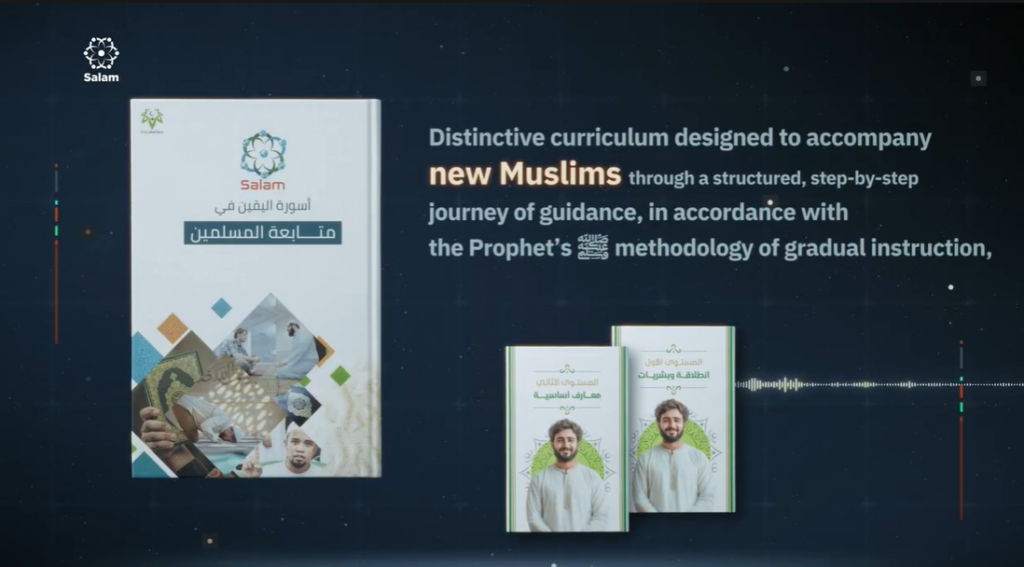
And if you’ve already taken your Shahada, the Asawirat Al-Yaqeen (Bracelets of Certainty) program was built for you. It’s a structured, four-stage educational journey for new Muslims — implemented with over 114,000 graduates across 140 countries — covering:
- Stage One: The foundations of Islamic practice — Shahada, wudu, salah, the pillars of Iman
- Stage Two: Deeper knowledge — Zakat, fasting, Hajj, and the life of the Prophet (PBUH)
- Stage Three: Spiritual character — ethics of the heart, practical life rulings, and moral nurturing
- Stage Four: Confidence and empowerment — contemporary issues, theological foundations, and your life roadmap
Ask the Salam Center team how to enroll, or reach out directly to begin.
Reach out directly to the Salam Center team to start the Asawirat Al-Yaqeen (Bracelets of Certainty) program for FREE.
Summary
The Quran explicitly names the Torah, Psalms, and Gospel as divine revelations sent by Allah to His prophets — and commands Muslims to believe in all of them as part of the six pillars of Iman. Belief in prior scriptures is inseparable from correct Islamic faith, even as Muslims recognize that those texts underwent human alteration over time.
The Quran’s position as muhaymin — guardian over all prior scriptures — gives it the unique role of confirming what remained true and clarifying what was distorted. Its own preservation, guaranteed by Allah and verified across fourteen centuries of unbroken memorization, makes it the final and authoritative source of divine guidance for all of humanity.
Frequently Asked Questions
Does the Quran mention the Bible by name?
The Quran does not use the word “Bible,” but it names and affirms the scriptures that form the Bible’s core — the Torah (Tawrah) sent to Moses, the Psalms (Zabur) sent to David, and the Gospel (Injeel) sent to Jesus. The term “Bible” is a later compilation title that appears in no divine revelation. The Quran engages each scripture individually by its revealed name and divine purpose.
Do Muslims believe the Bible is from Allah?
Muslims believe the original Torah, Psalms, and Gospel were genuinely revealed by Allah, but hold that those original texts were altered by human communities over time — a process the Quran calls tahrif. The Bible in circulation today is therefore understood as containing remnants of divine truth alongside human modifications. More detail on this position is available in the article on whether Muslims believe the Bible.
What does the Quran say about the Torah?
The Quran describes the Torah as a scripture containing “guidance and light,” revealed to Moses and followed by the prophets of Israel (Quran 5:44). It also records that some communities deliberately concealed and altered its rulings. The Quran affirms the Torah’s divine origin while documenting its distortion — treating both facts as equally important.
Does the Quran say the Gospel predicted Prophet Muhammad?
Yes — the Quran states in Quran 61:6 that Jesus told his people of a messenger coming after him whose name would be Ahmad, another name of Prophet Muhammad (PBUH). Classical scholars of Quranic exegesis, including Imam al-Baghawi, understood this as a prophecy that was originally present in the Injeel but was obscured in the texts transmitted to later generations.
Curious about Islam?
Journey towards clarity and purpose. Our team is here to support you in your search for truth and spiritual guidance.
Embrace the Truth