What Does the Quran Say About Jesus?
| Key Takeaways |
| The Quran mentions Jesus (Isa) by name 25 times, more than the name of Prophet Muhammad (PBUH). |
| The Quran affirms the virgin birth of Jesus through Allah’s command “Be,” without a father. |
| Jesus is described in the Quran as the Messiah, a Messenger, and a Word from Allah, but never as divine. |
| Surah Maryam (Chapter 19) is named after the mother of Jesus and details his birth and infancy speech. |
| The Quran explicitly rejects the crucifixion narrative, stating Jesus was raised to Allah rather than killed. |
| Islamic scholarship affirms that Jesus will return before the Day of Judgment as a sign of the final hour. |
Yes, the Quran mentions Jesus extensively, dedicating an entire chapter to his mother and describing him as one of the greatest messengers sent to humanity.
Far from being a peripheral figure, Jesus (referred to as Isa, peace be upon him) holds a position of profound honor in Islamic theology.
What Does the Quran Say About the Virgin Birth of Jesus?
The story of Jesus begins with his mother, Maryam (Mary), whose purity and devotion are highlighted as a model for believers. The Quran dedicates Surah 19 entirely to her name, describing the angelic announcement of Jesus’s birth.
According to the Quran, Maryam was visited by the angel Jibreel (Gabriel) who informed her of a “pure boy” she would bear, despite the fact that she had not been touched by any man.
قَالَتْ رَبِّ أَنَّىٰ يَكُونُ لِي وَلَدٌ وَلَمْ يَمْسَسْنِي بَشَرٌ
“She said, “My Lord, how will I have a child when no man has touched me?”…'” (Quran 3:47)
The answer given highlights the central theme regarding Jesus’s birth: it was an act of divine power, not a biological necessity for Allah.
“قال كَذَٰلِكِ اللَّهُ يَخْلُقُ مَا يَشَاءُ ۚ إِذَا قَضَىٰ أَمْرًا فَإِنَّمَا يَقُولُ لَهُ كُن فَيَكُونُ“
“…[The angel] said, “Such is Allah; He creates what He wills. When He decrees a matter, He only says to it, ‘Be,’ and it is.” (Quran 3:47)
This passage establishes a crucial parallel that Islamic scholars frequently cite. The creation of Jesus without a father is compared directly to the creation of Adam, who had neither a father nor a mother, as detailed in Surah Al-Imran.
The Comparison of Creation of Jesus to the Creation of Adam
The Quran addresses the uniqueness of Jesus’s birth by drawing a comparison to Adam, arguing that a miraculous birth does not necessitate divinity.
“إِنَّ مَثَلَ عِيسَىٰ عِندَ اللَّهِ كَمَثَلِ آدَمَ ۖ خَلَقَهُ مِن تُرَابٍ ثُمَّ قَالَ لَهُ كُن فَيَكُونُ”
“Indeed, the example of Jesus to Allah is like that of Adam. He created Him from dust; then He said to him, “Be,” and he was.” (Quran 3:59)
This verse serves as a direct logical refutation of the claim that Jesus must be the “Son of God” simply because he had no biological father.
If that logic were sound, Adam—created from dust with neither mother nor father—would hold an even higher claim to such a title.
Learn More About Islam
Discover the beauty, teachings, and wisdom of Islam in a clear and welcoming way. Start exploring and deepen your understanding today.
Learn MoreWhat Names and Titles Does the Quran Use for Jesus?
The Quran uses several specific titles for Jesus that carry deep theological weight. Understanding these terms is essential to grasping the Islamic perspective on his role.
1. Al-Masih (The Messiah):
The Quran confirms that Jesus is the Messiah, the anointed one. However, in Islamic theology, this title refers to a chosen prophet and king-like figure, not an incarnation of the divine.
2. Rasul Allah (Messenger of Allah):
Jesus is consistently grouped with other prophets like Noah, Abraham, and Moses as a human messenger sent with a specific message for a specific people.
3. Kalimatullah (A Word from Allah):
This title refers to the fact that Jesus was created by the divine word “Be” (Kun), distinguishing his creation method rather than his essence.
4. Ruhun Minhu (A Spirit from Him):
This phrase emphasizes that the soul breathed into Jesus came from Allah, similar to how Allah breathed life into Adam.
The verse below combines several of these titles in a single, comprehensive statement regarding his identity.
يَا أَهْلَ الْكِتَابِ لَا تَغْلُوا فِي دِينِكُمْ وَلَا تَقُولُوا عَلَى اللَّهِ إِلَّا الْحَقَّ ۚ إِنَّمَا الْمَسِيحُ عِيسَى ابْنُ مَرْيَمَ رَسُولُ اللَّهِ وَكَلِمَتُهُ أَلْقَاهَا إِلَىٰ مَرْيَمَ وَرُوحٌ مِّنْهُ
“O People of the Scripture, do not commit excess in your religion or say about Allah except the truth. The Messiah, Jesus, the son of Mary, was but a messenger of Allah and His word which He directed to Mary and a soul [created at a command] from Him.” (Quran 4:171)
This verse is a direct address regarding Islam vs. Christianity on the topic of theology, urging restraint in attributing divine status to a created being. To fully understand the broader context of this teaching, it helps to look at how Islam views the nature of God as absolutely singular and without partners.
Does the Quran Mention the Miracles of Jesus?
Yes, the Quran is explicit about the miracles performed by Jesus, attributing them entirely to the permission and power of Allah. These miracles are mentioned not to prove Jesus’s divinity, but to validate his prophethood, just as Moses’s staff validated his.
1. Speaking from the Cradle:
Immediately after birth, Jesus spoke to defend his mother’s honor against accusations, identifying himself as a servant of Allah.
2. Healing the Blind and the Leper:
With Allah’s permission, Jesus healed those born blind and those afflicted with leprosy.
3. Bringing the Dead Back to Life:
Jesus raised the dead, a miracle reserved for the most significant prophets.
4. Creating a Bird from Clay:
Jesus shaped a bird from clay and breathed life into it by Allah’s leave.
The repetition of the phrase “by Allah’s permission” (bi-idhni Allah) throughout these verses is a critical linguistic detail. It serves as a constant reminder that Jesus was a conduit for divine power, not the source of it.
إِذْ قَالَ ٱللَّهُ يَٰعِيسَى ٱبْنَ مَرْيَمَ ٱذْكُرْ نِعْمَتِى عَلَيْكَ وَعَلَىٰ وَٰلِدَتِكَ إِذْ أَيَّدتُّكَ بِرُوحِ ٱلْقُدُسِ تُكَلِّمُ ٱلنَّاسَ فِى ٱلْمَهْدِ وَكَهْلًا ۖ وَإِذْ عَلَّمْتُكَ ٱلْكِتَٰبَ وَٱلْحِكْمَةَ وَٱلتَّوْرَىٰةَ وَٱلْإِنجِيلَ ۖ وَإِذْ تَخْلُقُ مِنَ ٱلطِّينِ كَهَيْـَٔةِ ٱلطَّيْرِ بِإِذْنِى فَتَنفُخُ فِيهَا فَتَكُونُ طَيْرَۢا بِإِذْنِى ۖ وَتُبْرِئُ ٱلْأَكْمَهَ وَٱلْأَبْرَصَ بِإِذْنِى ۖ وَإِذْ تُخْرِجُ ٱلْمَوْتَىٰ بِإِذْنِى
“[The Day] when Allah will say, “O Jesus, Son of Mary, remember My favor upon you and upon your mother when I supported you with the Pure Spirit and you spoke to the people in the cradle and in maturity; and [remember] when I taught you writing and wisdom and the Torah and the Gospel; and when you designed from clay [what was] like the form of a bird with My permission, then you breathed into it, and it became a bird with My permission; and you healed the blind and the leper with My permission; and when you brought forth the dead with My permission;” (Quran 5:110)
Did the Crucifixion of Jesus Actually Happen According to the Quran?
This question represents one of the most significant divergences between Islamic and Christian theology. The Quran categorically denies that Jesus died on the cross.
According to the Quran, the Jewish authorities of the time plotted to kill Jesus, but Allah intervened and saved him, raising him up to the heavens. The text states clearly that those who claim to have killed him are mistaken.
وَقَوْلِهِمْ إِنَّا قَتَلْنَا ٱلْمَسِيحَ عِيسَى ٱبْنَ مَرْيَمَ رَسُولَ ٱللَّهِ وَمَا قَتَلُوهُ وَمَا صَلَبُوهُ وَلَٰكِن شُبِّهَ لَهُمْ ۚ وَإِنَّ ٱلَّذِينَ ٱخْتَلَفُوا۟ فِيهِ لَفِى شَكٍّ مِّنْهُ ۚ مَا لَهُم بِهِۦ مِنْ عِلْمٍ إِلَّا ٱتِّبَاعَ ٱلظَّنِّ ۚ وَمَا قَتَلُوهُ يَقِينَۢا
“And [for] their saying, “Indeed, we have killed the Messiah, Jesus, the son of Mary, the messenger of Allah.” And they did not kill him, nor did they crucify him; but [another] was made to resemble him to them. And indeed, those who differ over it are in doubt about it. They have no knowledge of it except the following of assumption. And they did not kill him, for certain.” (Quran 4:157)
The following verse confirms that instead of death, Jesus was raised by Allah, setting the stage for his eventual return.
بَل رَّفَعَهُ اللَّهُ إِلَيْهِ ۗ وَكَانَ اللَّهُ عَزِيزًا حَكِيمًا
“Rather, Allah raised him to Himself. And Allah is Exalted in Might, Wise.” (Quran 4:158)
This event is central to understanding what do Muslims believe about the Quran as the final, unaltered word of Allah, correcting what Islam views as historical inaccuracies that crept into earlier scriptures.
What Role Will Jesus Play in the End Times?
The Quran and the Sunnah together establish that Jesus did not die, and therefore, his mission on Earth is not yet complete. He is destined to return.
While the Quran alludes to his “knowledge of the Hour” being a sign for the Last Day, the detailed Hadith literature elaborates extensively on this event.
The Prophet Muhammad (PBUH) described how Jesus will descend near Damascus, break the false cross (symbolically rejecting the crucifixion narrative permanently), kill the Antichrist (Al-Masih ad-Dajjal), and establish a period of peace and justice on Earth, ruling according to the law of Islam.
This event is widely discussed in major hadith collections. As reported by Sahih Bukhari, the Prophet Muhammad (PBUH) described the descent of Jesus and his role in defeating falsehood.
“”By Him in Whose Hands my soul is, surely (Jesus,) the son of Mary will soon descend amongst you and will judge mankind justly (as a Just Ruler); he will break the Cross and kill the pigs and there will be no Jizya (i.e. taxation taken from non Muslims). Money will be in abundance so that nobody will accept it, and a single prostration to Allah (in prayer) will be better than the whole world and whatever is in it.” (Sahih Bukhari)
It is important to note that Jesus does not return as a new prophet bringing a new law (Sharia). Instead, he returns as a follower of Prophet Muhammad (PBUH), affirming the truth of Islam and the Quran.
Read Also: Does the Quran Mention the Bible?
How Does Jesus Fit into the Islamic Concept of Faith?
The respect for Jesus stems from the Islamic understanding of monotheism, where Allah alone is worthy of worship, and prophets—however miraculous their lives—remain creations distinct from their Creator.
Just as Muslims revere Abraham, Moses, and Muhammad (PBUH) as human servants of Allah, Jesus is honored within that same human framework.
This perspective is foundational to the 9 Islam principles that guide a believer’s worldview, ensuring that reverence for prophets never crosses into the polytheism of worshipping them alongside or instead of Allah.
Read Also: When Was the Quran Written?
Learn More About Islam
Discover the beauty, teachings, and wisdom of Islam in a clear and welcoming way. Start exploring and deepen your understanding today.
Learn MoreLearn More Authentic Knowledge About Islam & Quran with Salam
Exploring the figure of Jesus in the Quran often opens the door to deeper questions about faith, scripture, and the nature of God.
The Salam Center is here to walk alongside you on this path of discovery.
- Have specific questions about Jesus, Mary, or other prophets mentioned in the Quran? Reach out directly to our team for one-on-one guidance.
- Curious about taking the next step toward Islam? We can guide you through the simple, beautiful process of entering the faith.
Reach out directly — our team is ready to listen, guide, and welcome you.

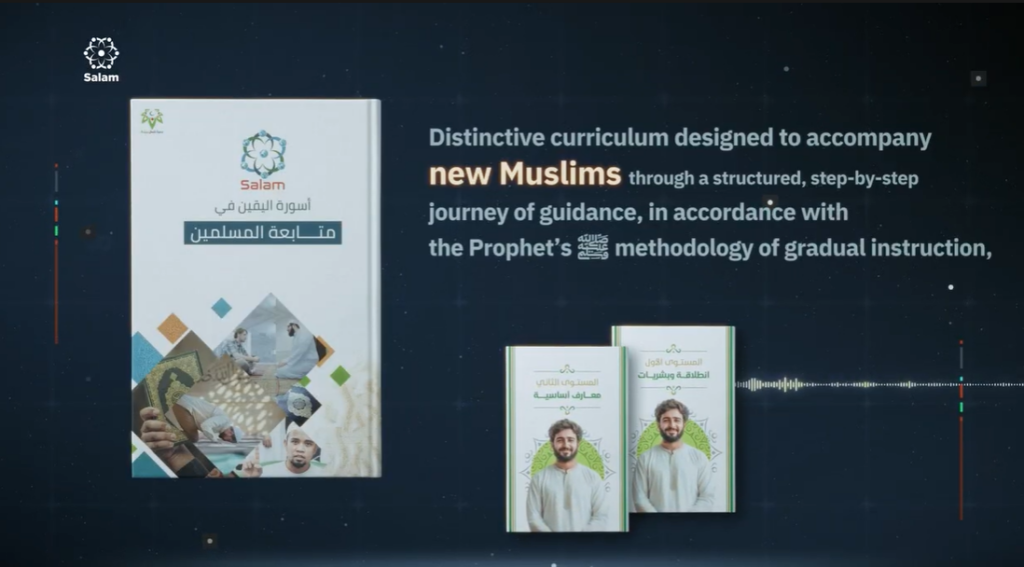
Already a New Muslim looking for structured learning? Join our Asawirat Al-Yaqeen (Bracelets of Certainty) program, designed specifically for your journey:
- Stage One (Foundation): Learn the basics of prayer, purification, and the meaning of the Shahada.
- Stage Two (Construction): Dive into the biography of the Prophet Muhammad (PBUH) and the importance of repentance.
- Stage Three (Consolidation): Master the etiquette of daily life, including practical rulings for trade and family.
- Stage Four (Empowerment): Tackle contemporary issues and solidify your understanding of Ahlus Sunnah.
Reach out directly to the Salam Center team to start the Asawirat Al-Yaqeen (Bracelets of Certainty) program for FREE.
Summary
The Quran presents Jesus as a beloved prophet born of a virgin through Allah’s command “Be,” performing miracles strictly by divine permission. While Christianity and Islam diverge sharply on the crucifixion and divinity of Jesus, the Quran elevates his status as the Messiah destined to return.
This return signifies a future where Jesus defeats falsehood and affirms the singular message of Islam alongside Prophet Muhammad (PBUH). For seekers and new believers alike, understanding Jesus offers a bridge to grasping the seamless continuity of Allah’s guidance throughout human history.
Frequently Asked Questions
Does the Quran mention Jesus by name?
Yes, the Quran mentions Jesus (Isa) by name 25 times, more often than the name “Muhammad” appears. He is referenced throughout multiple chapters, most notably Surah Maryam and Surah Al-Imran, highlighting his significant role as a prophet of Allah.
What does the Quran say about the birth of Jesus?
The Quran states that Jesus was born to the Virgin Mary (Maryam) through a miraculous command from Allah, without a biological father. “Allah creates what He wills… He only says to it, ‘Be,’ and it is” (Quran 3:47), comparing his creation to that of Adam.
Where in the Quran does it talk about Jesus’s crucifixion?
The Quran addresses this in Surah An-Nisa (4:157-158), stating definitively that Jesus was not killed or crucified. Instead, the text explains that it “was made to appear” so to the people, and that Allah raised Jesus up to Himself.
Does the Quran say Jesus will judge mankind?
While the Quran indicates Jesus is a “sign” for the Hour, detailed hadith (like those found in Sahih Bukhari) explain that Jesus will return to Earth, defeat the Antichrist, and rule with justice according to Islamic law, signaling the nearness of the Final Judgment by Allah.
Is Jesus considered the Son of God in the Quran?
No, the Quran explicitly rejects this title. It refers to Jesus as the “Messiah,” a “Messenger of Allah,” and “a Word from Him” (Quran 4:171), but strictly maintains that he is a created human servant, not divine, to preserve the absolute oneness of Allah.
Curious about Islam?
Journey towards clarity and purpose. Our team is here to support you in your search for truth and spiritual guidance.
Embrace the Truth