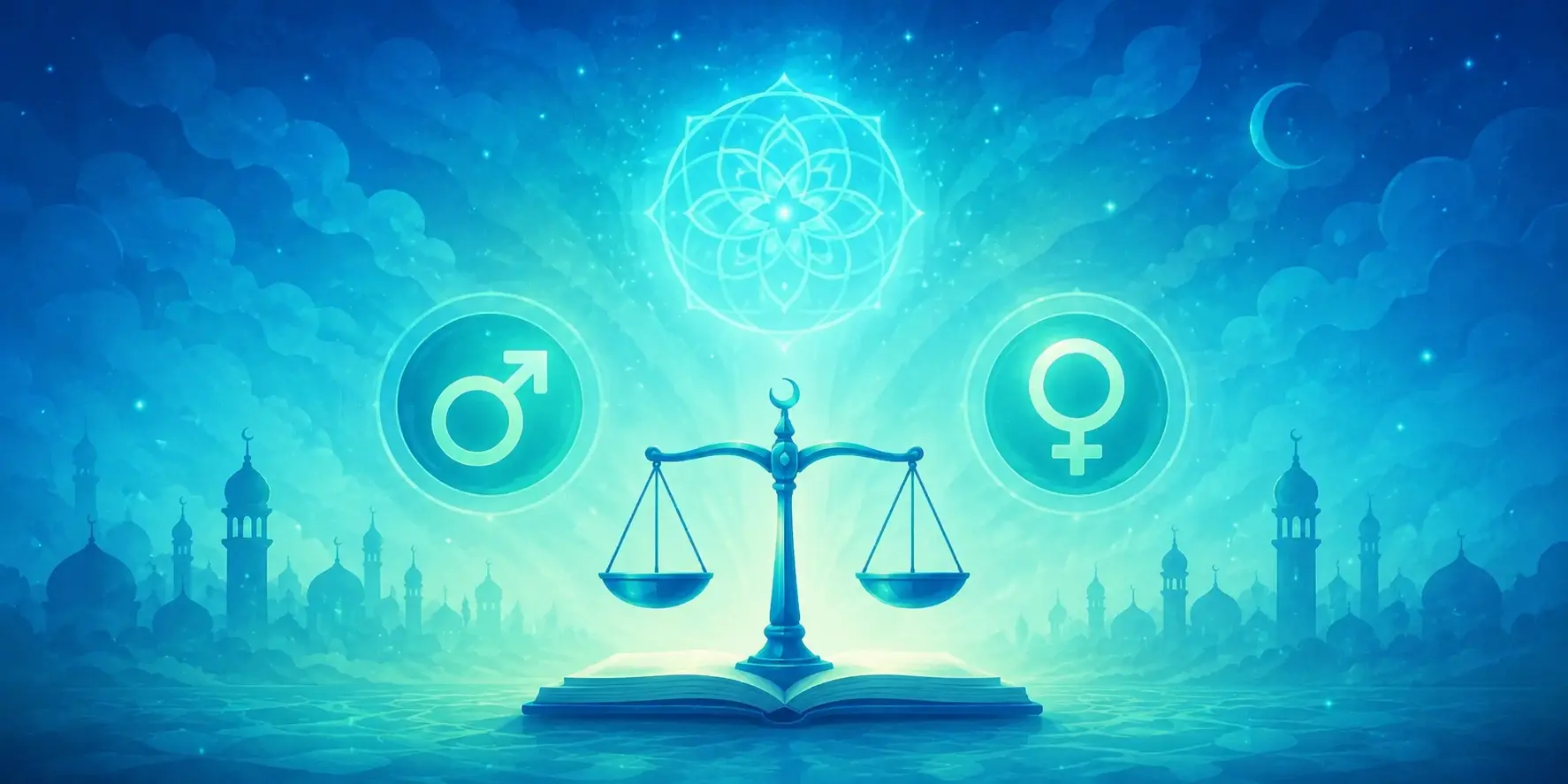
Does the Quran Say Men and Women Are Equal?
| Key Takeaways |
| The Quran affirms the complete spiritual equality of men and women before Allah — both are equally accountable and equally rewarded for righteous deeds. |
| Islam distinguishes between spiritual equality and functional differentiation — identical worth before Allah does not require identical roles in every domain. |
| The Quran explicitly states that men and women who believe, worship, and strive in righteousness are equally deserving of Allah’s forgiveness and great reward. |
| Differences in guardianship, inheritance, and testimony arise from a coherent Islamic framework of complementary responsibilities — not from a belief in female inferiority. |
| Islamic scholars across centuries, from Ibn Kathir to contemporary bodies like the European Council for Fatwa and Research, affirm that Islamic gender relations are built on justice and mercy, not hierarchy of human worth. |
Yes — the Quran establishes profound equality between men and women in the most fundamental sense: their humanity, their moral accountability, and their spiritual standing before Allah. This is not a modern interpretive concession; it is stated plainly in revelation.
At the same time, the Quran presents men and women as complementary rather than interchangeable — and understanding that distinction is the key to understanding Islam’s actual position.
Much of the confusion surrounding this question comes from importing a single Western framework of equality — which often means sameness of function — onto a text with its own coherent, divinely grounded logic. The Quran operates from a different premise: equal worth, purposeful difference.
1. The Quran States Spiritual Equality Directly and Without Ambiguity
Perhaps the most decisive verse on this question comes from Surah Al-Ahzab. After the wives of the Prophet (PBUH) asked why Quranic verses addressed men but not women, this ayah was revealed:
إِنَّ الْمُسْلِمِينَ وَالْمُسْلِمَاتِ وَالْمُؤْمِنِينَ وَالْمُؤْمِنَاتِ وَالْقَانِتِينَ وَالْقَانِتَاتِ وَالصَّادِقِينَ وَالصَّادِقَاتِ وَالصَّابِرِينَ وَالصَّابِرَاتِ وَالْخَاشِعِينَ وَالْخَاشِعَاتِ وَالْمُتَصَدِّقِينَ وَالْمُتَصَدِّقَاتِ وَالصَّائِمِينَ وَالصَّائِمَاتِ وَالْحَافِظِينَ فُرُوجَهُمْ وَالْحَافِظَاتِ وَالذَّاكِرِينَ اللَّهَ كَثِيرًا وَالذَّاكِرَاتِ أَعَدَّ اللَّهُ لَهُم مَّغْفِرَةً وَأَجْرًا عَظِيمًا
“Indeed, the Muslim men and Muslim women, the believing men and believing women, the obedient men and obedient women, the truthful men and truthful women, the patient men and patient women, the humble men and humble women, the charitable men and charitable women, the fasting men and fasting women, the men who guard their chastity and the women who do so, and the men who remember Allah often and the women who do so — for them Allah has prepared forgiveness and a great reward.” (Quran 33:35)
The structure of this verse is intentional. Every virtue is named twice — once for men, once for women. The reward is identical. The moral framework is shared. This is not incidental phrasing; it is divine deliberateness.
2. Personal Accountability in the Quran Belongs to Every Individual Soul
The Quran’s address to the human soul knows no gender boundary. In Surah Al-Nahl, Allah says:
مَنْ عَمِلَ صَالِحًا مِّن ذَكَرٍ أَوْ أُنثَىٰ وَهُوَ مُؤْمِنٌ فَلَنُحْيِيَنَّهُ حَيَاةً طَيِّبَةً
“Whoever does righteousness, whether male or female, while he is a believer — We will surely cause him to live a good life.” (Quran 16:97)
And in Surah Al-Imran:
فَاسْتَجَابَ لَهُمْ رَبُّهُمْ أَنِّي لَا أُضِيعُ عَمَلَ عَامِلٍ مِّنكُم مِّن ذَكَرٍ أَوْ أُنثَىٰ
“And their Lord responded to them: ‘Never will I allow to be lost the work of any worker among you, whether male or female.'” (Quran 3:195)
These verses establish a principle that classical Quranic exegete Ibn Kathir — one of the most authoritative commentators in the Islamic tradition — explains as the complete equivalence of men and women in their relationship with Allah. No deed is discarded. No soul bears another’s burden. No woman is spiritually subordinate to any man.
Learn More About Islam
Discover the beauty, teachings, and wisdom of Islam in a clear and welcoming way. Start exploring and deepen your understanding today.
Learn More3. The Origin of Humanity in the Quran is One Soul, Equal in Creation
The Quran grounds gender equality in the very beginning of human existence. Surah Al-Nisa opens with:
يَا أَيُّهَا النَّاسُ اتَّقُوا رَبَّكُمُ الَّذِي خَلَقَكُم مِّن نَّفْسٍ وَاحِدَةٍ
“O mankind, fear your Lord, who created you from one soul.” (Quran 4:1)
Imam al-Tabari, in his monumental Jami’ al-Bayan, notes that this opening — addressing all of humanity from a single origin — establishes an irreducible commonality.
The human being, before any legal or social differentiation, is one. This is the foundation from which all Islamic ethics of gender flows.
4. Functional Differences in Islamic Law Arise from Justice, Not Inferiority
Where the Quran does distinguish between men and women — in matters like inheritance, testimony in specific financial cases, or the structure of family guardianship — these distinctions operate within a framework of corresponding responsibilities, not a declaration of lesser worth.
The verse most often cited in this context is from Surah Al-Baqarah:
وَلَهُنَّ مِثْلُ الَّذِي عَلَيْهِنَّ بِالْمَعْرُوفِ وَلِلرِّجَالِ عَلَيْهِنَّ دَرَجَةٌ
“And due to the wives is similar to what is expected of them, according to what is reasonable. And men have a degree over them [in responsibility].” (Quran 2:228)
Classical scholars consistently interpret the word darajah here — the “degree” given to men — as the degree of financial and protective obligation, not a degree of spiritual or moral superiority.
A man who bears the full financial responsibility for his household receives a corresponding degree of guardianship within that structure.
His inheritance share, where larger, comes paired with a legal obligation to support women who inherit less. The system is internally coherent when examined as a whole.
5. The Quran on Mutual Rights, Compassion, and Partnership
The Quran describes the marital relationship not in terms of ownership or hierarchy, but in terms of mutual repose, love, and mercy:
وَمِنْ آيَاتِهِ أَنْ خَلَقَ لَكُم مِّنْ أَنفُسِكُمْ أَزْوَاجًا لِّتَسْكُنُوا إِلَيْهَا وَجَعَلَ بَيْنَكُم مَّوَدَّةً وَرَحْمَةً
“And of His signs is that He created for you from yourselves mates that you may find tranquility in them; and He placed between you affection and mercy.” (Quran 30:21)
This is the Islamic vision of gender relations at its core — not a power structure, but a relationship of mawaddah (affection) and rahmah (mercy).
And the Quran reinforces this mutuality by describing each spouse as a garment for the other:
“They are clothing for you and you are clothing for them.” (Quran 2:187)
— a metaphor of protection, intimacy, and honor that belongs equally to both.
Read Also: When the Quran Calls Mary “Sister of Aaron”
6. The Quran Granted Women Rights That History Took Centuries to Reach Elsewhere
When the Quran was revealed in the 7th century, it established for women the right to own property, to inherit, to conduct business independently, to initiate divorce, to receive a mandatory marital gift (mahr) that belongs exclusively to them, and to retain their own family name after marriage. These were not concessions — they were revelations.
European women would not gain the legal right to own independent property until the Married Women’s Property Acts of the 19th century. The Quran had already secured that right over a thousand years earlier.
Read Also: What Does the Quran Say About Alcohol?
Learn More About Islam
Discover the beauty, teachings, and wisdom of Islam in a clear and welcoming way. Start exploring and deepen your understanding today.
Learn MoreRead Also: What Does the Quran Say About Other Religions?
Explore More Authentic Knowledge About Islam & Quran with Salam
If this article raised more questions than it answered — that’s a good sign.
The Salam Center exists precisely for moments like this: when a sincere mind encounters Islam and wants to go deeper, honestly and carefully.
Explore more on the Salam Platform — articles written for seekers, new Muslims, and anyone asking real questions about faith.
Browse the Salam blog for in-depth pieces on Islamic beliefs, practice, and the answers to questions you didn’t know you had.
Reach out directly — whether you have a question, want to learn more about Islam, or are ready to take your Shahada. The Salam Center team is here to walk with you.
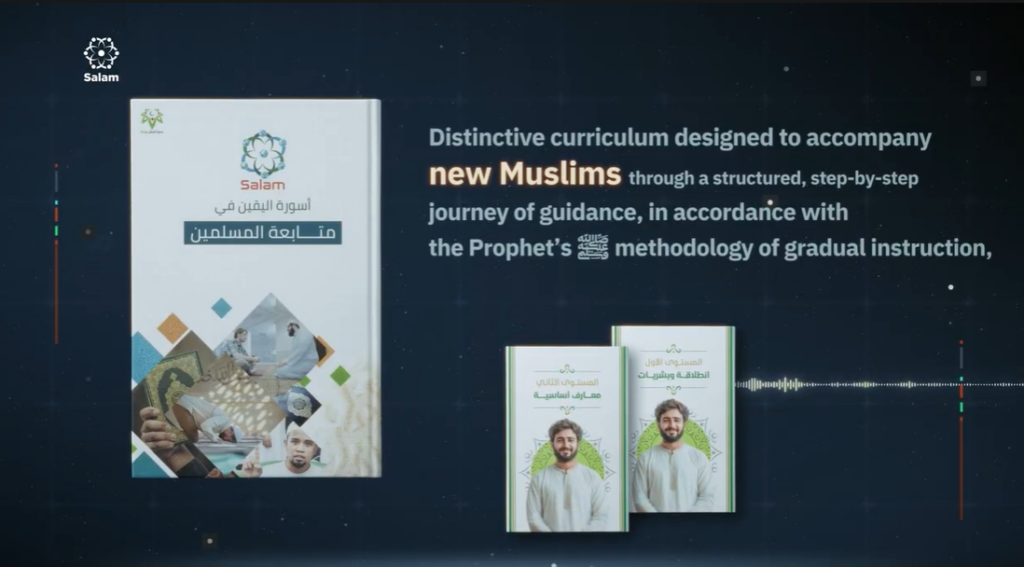
For new Muslims, the Asawirat Al-Yaqeen (Bracelets of Certainty) program offers a structured, compassionate path through the essentials of your new faith:
- A four-stage curriculum covering belief, worship, character, and life rulings
- Professionally designed lessons built for clarity and spiritual depth
- Grounded in the Quran, the Sunnah, and the creed of Ahlus Sunnah wal Jama’ah
- Available across 140 countries, with 114,588 new Muslims already enrolled
- Currently being developed into a smart app and interactive learning platform
You don’t have to figure it out alone.
Reach out directly to the Salam Center team to start the Asawirat Al-Yaqeen (Bracelets of Certainty) program for FREE.
Summary
The Quran affirms the spiritual and moral equality of men and women in unequivocal terms, declaring identical rewards for identical acts of faith and righteousness. Functional differences in Islamic law reflect a system of complementary duties — not a judgment on the worth of either sex.
Fourteen centuries of Islamic scholarship confirm that women in Islam hold full legal personality, independent spiritual accountability, and rights to property, education, and dignity. The Quran’s framework is internally coherent — built on justice and mercy — and stands as one of history’s most profound statements on human equality.
Frequently Asked Questions
Does the Quran explicitly say men and women are equal?
The Quran explicitly declares that men and women who believe and do righteous deeds receive the same divine forgiveness and reward, as stated in Quran 33:35. Spiritual equality before Allah is unambiguous in Islamic scripture — both sexes carry identical moral accountability.
Why do men and women have different inheritance shares in Islam?
In Islamic law, a son’s larger inheritance share comes paired with the legal obligation to financially support female relatives — his mother, sisters, wife, and daughters. A daughter’s smaller share is entirely her own, with no such obligation attached. The system balances rights with responsibilities across the family unit.
Did Islam improve women’s rights historically?
Islam granted women the rights to own property, inherit, conduct business, and retain independent legal personhood in the 7th century. These rights were not codified in European law until more than a millennium later, making Islam’s historical position on women’s rights one of its most remarkable contributions.
Curious about Islam?
Journey towards clarity and purpose. Our team is here to support you in your search for truth and spiritual guidance.
Embrace the Truth