
What Does the Quran Say About Not Believing in Allah?
| Key Takeaways |
| The Quran describes disbelief in Allah (kufr) as a rejection of clear truth after evidence has been presented, not an intellectual accident. |
| Surah Al-Baqarah opens by describing those who disbelieve as sealed in heart and hearing, unable to receive guidance despite warning. |
| The Quran distinguishes between disbelief born of arrogance and disbelief born of genuine confusion, addressing each differently. |
| Allah’s mercy remains open to disbelievers through repentance and sincere return, right up until the final moment of life. |
| The Quran frames disbelief primarily as a spiritual and moral failure — a refusal to submit — rather than a simple absence of belief. |
Disbelief in Allah, known in Arabic as kufr, is not treated in the Quran as a neutral position or an honest mistake. The Quran describes it as a conscious rejection of truth that has already been made clear — a covering-over of what the heart already recognizes. This distinction shapes everything else the Quran says on the subject: its warnings, its patience, and its persistent invitation back.
1. The Quran Says Not Believing in Allah is Covering Over Recognized Truth
The Arabic word for disbelief, kufr, comes from a root meaning “to cover” or “to conceal.” A farmer who buries a seed in soil is, in classical Arabic usage, performing kafara — covering something that was there. This etymology matters because the Quran consistently frames disbelief not as ignorance but as suppression of something the soul already perceives.
Allah describes this directly in Surah Al-Baqarah, the second chapter of the Quran, in one of its opening passages about those who reject faith:
خَتَمَ اللَّهُ عَلَىٰ قُلُوبِهِمْ وَعَلَىٰ سَمْعِهِمْ ۖ وَعَلَىٰ أَبْصَارِهِمْ غِشَاوَةٌ ۖ وَلَهُمْ عَذَابٌ عَظِيمٌ
“Allah has set a seal upon their hearts and upon their hearing, and over their vision is a veil. And for them is a great punishment.” (Quran 2:7)
This sealing is not described as arbitrary. Classical exegesis, including the tafsir of Ibn Kathir, reads this verse as a consequence — a heart that persistently refuses guidance eventually loses the capacity to receive it.
The faith in Islam develops through openness to signs; disbelief develops through their repeated dismissal.
2. The Quran Presents Disbelief as a Choice Made After Evidence
A recurring theme across the Quran is that disbelief follows the arrival of clear signs, not their absence. The Quran rarely describes people rejecting Allah because no evidence reached them. It describes people encountering evidence and refusing it.
Surah Al-Baqarah captures this pattern early:
إِنَّ الَّذِينَ كَفَرُوا سَوَاءٌ عَلَيْهِمْ أَأَنذَرْتَهُمْ أَمْ لَمْ تُنذِرْهُمْ لَا يُؤْمِنُونَ
“Indeed, those who disbelieve — it is all the same for them whether you warn them or do not warn them — they will not believe.” (Quran 2:6)
This verse addresses a specific category: people whose rejection has hardened into a fixed refusal, where the warning itself no longer changes the outcome.
Islamic scholarship, drawing on this and similar verses, has long distinguished between people at different stages of that hardening — a distinction that becomes important when the Quran later discusses accountability.
3. The Quran Treats Disbelief Rooted in Arrogance Different From Disbelief Rooted in Doubt
The Quran does not treat all disbelief identically. It repeatedly singles out arrogance (kibr) as the driving force behind rejection, even when the truth is plainly visible.
The account of Pharaoh in Surah An-Naml illustrates this directly:
وَجَحَدُوا بِهَا وَاسْتَيْقَنَتْهَا أَنفُسُهُمْ ظُلْمًا وَعُلُوًّا
“And they rejected them, while their [inner] selves were convinced thereof, out of injustice and haughtiness.” (Quran 27:14)
This verse describes internal certainty coexisting with external denial — a person’s own conviction overridden by pride. Iblis’s refusal to prostrate before Adam, recounted in Surah Al-Baqarah and elsewhere, follows the same pattern: not confusion about the command, but a refusal rooted in a sense of superiority.
This matters for how the Quran addresses the seeker who has honest questions.
A person wrestling with doubt, asking sincere questions about Islam principles or the nature of Allah, is in a fundamentally different position than one who recognizes truth and rejects it out of pride. The Quran’s harshest language is reserved for the latter.
Have Questions About Islam?
Our team is ready to answer your questions clearly and respectfully. Ask freely and receive honest guidance.
Ask Us Now4. Accountability for Disbelief in the Quran Depends on Whether Clear Proof Reached a Person
Islamic theology within Ahlus Sunnah wal Jama’ah has developed a careful doctrine around this question, built from the Quran’s own language about warning and proof. The Quran repeatedly ties punishment to the arrival of a messenger or clear sign:
وَمَا كُنَّا مُعَذِّبِينَ حَتَّىٰ نَبْعَثَ رَسُولًا
“And never would We punish until We sent a messenger.” (Quran 17:15)
This principle, known among scholars as the establishment of hujjah (proof), shapes how Ahlus Sunnah wal Jama’ah theologians address the person who has never genuinely encountered Islam — as opposed to someone who heard a distorted or hostile portrayal and rejected that instead.
This is a substantial area of classical theology, and the Quran’s own language leaves room for Allah’s mercy to operate in ways not fully disclosed to human judgment.
What remains consistent is that the Quran centers the response to clear truth, not mere unfamiliarity with it, as the basis of accountability.
5. The Quran Repeatedly Invites Disbelievers Back Before Death
Alongside its warnings, the Quran maintains a persistent, open invitation to return. This is not a minor theme — it appears throughout the text, often immediately following its strongest warnings.
Surah Az-Zumar contains one of the clearest examples:
قُلْ يَا عِبَادِيَ الَّذِينَ أَسْرَفُوا عَلَىٰ أَنفُسِهِمْ لَا تَقْنَطُوا مِن رَّحْمَةِ اللَّهِ ۚ إِنَّ اللَّهَ يَغْفِرُ الذُّنُوبَ جَمِيعًا ۚ إِنَّهُ هُوَ الْغَفُورُ الرَّحِيمُ
“Say, ‘O My servants who have transgressed against themselves [by sinning], do not despair of the mercy of Allah. Indeed, Allah forgives all sins. Indeed, it is He who is the Forgiving, the Merciful.'” (Quran 39:53)
The only point at which this door closes, according to the Quran, is the moment death has already begun — a specific and narrow window addressed in Surah An-Nisa (4:18), not a general statement about disbelief becoming unforgivable during ordinary life.
6. The Quran Frames Rejection of Allah as a Moral Failure, Not Only an Intellectual One
Throughout the Quran, disbelief is described using moral language — injustice (zulm), transgression (fisq), corruption — rather than purely epistemic terms like ignorance. This reflects the Quran’s broader view that recognizing Allah is not merely a conclusion one reasons toward, but a disposition one either honors or betrays.
This connects to why Muslims regard the Quran itself as a central proof of Allah’s existence and unity — its preservation, internal coherence, and the history of the Quran as an unaltered text are themselves presented in Islamic scholarship as part of the evidence a sincere seeker can weigh.
Muslims hold that engaging honestly with why the Quran is believed to be divine revelation — rather than dismissing it outright — is itself part of fulfilling the moral obligation the Quran describes.
Read Also: Does the Quran Say the Bible Is Changed?
7. The Quran Distinguishes Disbelief From Associating Partners With Allah
A related but distinct category the Quran addresses is shirk — associating partners with Allah — which the Quran treats as the gravest form of wrongdoing against the concept of pure monotheism.
لَا تُشْرِكْ بِاللَّهِ ۖ إِنَّ الشِّرْكَ لَظُلْمٌ عَظِيمٌ
“Do not associate anything with Allah. Indeed, association [with Him] is a great injustice.” (Quran 31:13)
This verse, spoken as Luqman’s counsel to his son, situates the doctrine of monotheism — Tawheed — at the center of Islamic theology, in contrast with polytheism in its various historical forms.
Disbelief and shirk are related but not identical: one is the rejection of Allah’s existence or lordship, the other is the corruption of pure worship of Him alone.
The Quran’s discussion of God in Islam treats Tawheed as the axis around which the entire question of belief and disbelief turns.
Read Also: What Does the Quran Say About Jews?
Have Questions About Islam?
Our team is ready to answer your questions clearly and respectfully. Ask freely and receive honest guidance.
Ask Us NowRead Also: Does the Quran Say Christians Go to Heaven?
Get Guidance And Support From Salam Platform
Questions like this one — what the Quran actually says, in its own words, about belief and disbelief — deserve careful, honest answers.
If you’re exploring these questions yourself, the Salam Platform has more on the foundations of Islamic belief.
The Salam blog covers these topics in ongoing depth, from theology to lived practice.
If you have a specific question, or you’re considering entering Islam, reach out directly — no pressure, just conversation.

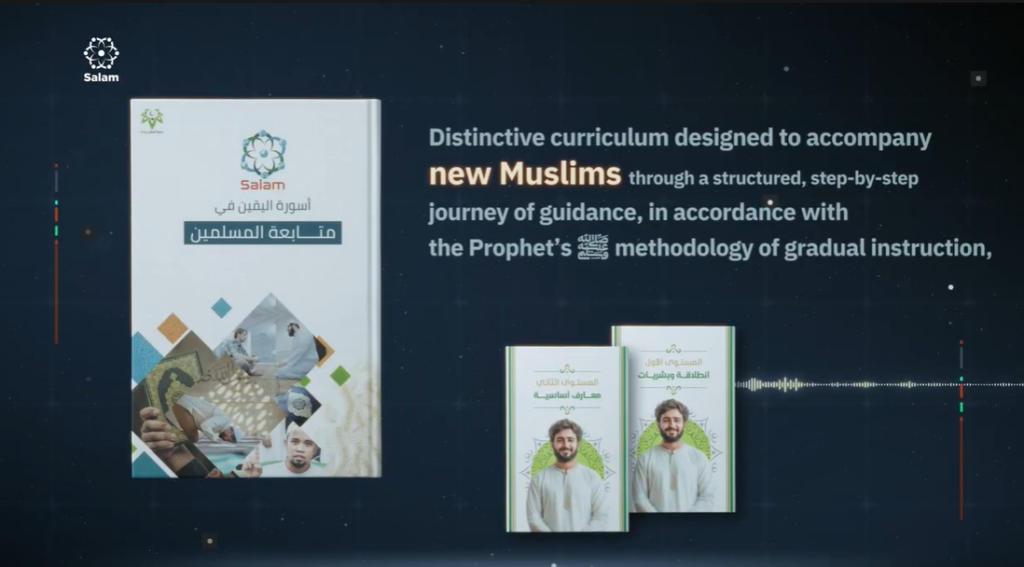
If you’re a new Muslim looking for structured next steps, the Salam Center team built the Asawirat Al-Yaqeen (Bracelets of Certainty) program for exactly this stage. It walks through four stages at a manageable pace:
- Foundations of prayer, purification, and the meaning of the Shahada
- The pillars of faith, zakat, fasting, and Hajj
- Repentance, major sins to avoid, and the life of the Prophet (PBUH)
- Practical daily-life rulings, etiquette, and answers to deeper theological questions
Reach out directly to the Salam Center team to start the Asawirat Al-Yaqeen (Bracelets of Certainty) program for FREE.
Summary
The Quran treats disbelief in Allah as a conscious rejection of recognized truth, often driven by arrogance rather than confusion. Accountability hinges on whether clear proof genuinely reached a person, a nuanced principle within Islamic theology.
Despite its warnings, the Quran repeatedly opens a path back through repentance, right until death approaches. Sincere seekers are invited to examine the evidence honestly, without pressure, at their own pace.
Frequently Asked Questions
Does the Quran say all non-Muslims will be punished?
No. The Quran ties punishment to the establishment of clear proof (hujjah), meaning genuine, undistorted exposure to Islam’s message. Accountability differs for someone who never truly encountered the message versus someone who knowingly rejected it (Quran 17:15).
What is the difference between kufr and shirk in Islam?
Kufr means covering over or rejecting the truth of Allah’s existence or message; shirk means associating partners with Allah in worship. They are related but distinct categories — one denies, the other corrupts pure monotheism (Quran 31:13).
Can a disbeliever be forgiven in Islam?
Yes. The Quran states Allah forgives all sins for those who sincerely repent, with no limit described except the moment death has already begun (Quran 39:53, Quran 4:18).
Why does the Quran say some hearts are “sealed”?
The sealing described in Quran 2:7 is presented as a consequence of persistent, willful rejection — not an arbitrary condemnation. Classical tafsir reads it as the natural result of a heart repeatedly refusing guidance.
Is disbelief in the Quran about ignorance or about choice?
The Quran consistently frames disbelief as a response to evidence already presented, not a lack of information. Its language centers on rejection, arrogance, and denial — moral terms rather than purely intellectual ones (Quran 27:14).
Curious about Islam?
Journey towards clarity and purpose. Our team is here to support you in your search for truth and spiritual guidance.
Embrace the Truth