
When the Quran Calls Mary “Sister of Aaron”
| Key Takeaways |
| The Quran refers to Mary, mother of Jesus, as “sister of Aaron” in Surah Maryam (19:28) — a Semitic expression denoting lineage and spiritual kinship, not literal biological sisterhood. |
| Classical mufassiroon (Quranic exegetes) including Imam al-Tabari and Ibn Kathir both confirmed that “sister of Aaron” refers to Mary’s descent from the Aaronic priestly lineage. |
| The same figurative usage appears in the New Testament itself: Elizabeth, wife of Zechariah and cousin of Mary, is described as being “of the daughters of Aaron” (Luke 1:5) — centuries after Aaron’s death. |
| The Quran demonstrates full awareness of the vast time gap between Moses and Jesus, explicitly referencing the succession of messengers between them in Surah Al-Baqarah (2:87). |
| Mary’s description as “sister of Aaron” reflects her dedication to the temple and her standing within the priestly class — a social reality the Quran acknowledges from her very birth. |
The Quran says something in Surah Maryam that has puzzled some readers. When Mary returns to her people carrying the infant Jesus, they confront her with words that carry accusation and astonishment:
يَا أُخْتَ هَارُونَ مَا كَانَ أَبُوكِ امْرَأَ سَوْءٍ وَمَا كَانَتْ أُمُّكِ بَغِيًّا
“O sister of Aaron, your father was not a man of evil, nor was your mother unchaste.” (Quran 19:28)
The question many visitors to Islam ask is an honest one: Aaron was the brother of Moses, a prophet who lived more than a thousand years before Jesus. How could Mary, the mother of Jesus, be called his sister? Is this a historical error? The answer is no.
Beyond that, the same figurative idiom appears in the Bible, in the very scriptures that critics use to frame the objection. What looks like a contradiction dissolves entirely once the linguistic, social, and exegetical context is understood.
1. Mary and the Attribute of Qunoot
The Quran’s description of Mary carries a dimension that the classical scholars and later commentators have noted as particularly meaningful. In two separate places, the Quran attributes to her the quality of qunoot — sustained, devoted obedience to Allah.
In Surah Al-Imran, Allah commands her directly:
يَا مَرْيَمُ اقْنُتِي لِرَبِّكِ
“O Mary, be devoutly obedient to your Lord.” (Quran 3:43)
And in the closing verses of Surah Al-Tahrim, the Quran describes her with a word that stands out:
وَمَرْيَمَ ابْنَتَ عِمْرَانَ الَّتِي أَحْصَنَتْ فَرْجَهَا… وَكَانَتْ مِنَ الْقَانِتِينَ
“And Mary, the daughter of Imran, who guarded her chastity… and she was of the devoutly obedient.” (Quran 66:12)
The Quran does not say “from the righteous” or “from the believers.” It uses al-qanitin — those characterized by qunoot, the deepest form of humble, sustained submission to Allah.
This precise choice of word aligns perfectly with what the scholars describe as Mary’s defining spiritual identity: a woman consecrated to divine service from before her birth, whose entire life was an act of devoted obedience.
It is the same quality her community invoked — in reverse — when they said “sister of Aaron.” They were reminding her of the priestly heritage of purity she carried, and the Quran crowns her story by affirming that she embodied it completely.
Learn More About Islam
Discover the beauty, teachings, and wisdom of Islam in a clear and welcoming way. Start exploring and deepen your understanding today.
Learn More2. “Aaron” Was the Only Fitting Reference Because of Mary’s Priestly Status
The choice of Aaron specifically — rather than Moses or any other prophet — carries its own significance that the classical commentators recognized. The Quran itself establishes, from the opening of Surah Al-Imran, that Mary’s mother dedicated her unborn child entirely to Allah’s service before she was even born:
رَبِّ إِنِّي نَذَرْتُ لَكَ مَا فِي بَطْنِي مُحَرَّرًا فَتَقَبَّلْ مِنِّي إِنَّكَ أَنتَ السَّمِيعُ الْعَلِيمُ
“My Lord, I have dedicated what is in my womb entirely to You, so accept this from me. You are the All-Hearing, the All-Knowing.” (Quran 3:35)
Mary grew up as a nadhirah — one dedicated to serving the sanctuary. Zechariah himself was appointed her guardian within the temple (3:37). Her entire existence from birth was oriented toward worship, chastity, and sacred service.
Among the Israelites, the lineage responsible for temple service was not Moses’s lineage — it was Aaron’s. The priesthood, the maintenance of the sacred space, the ritual duties of the sanctuary — all of these were the exclusive inheritance of Aaron and his descendants.
When Mary’s people addressed her as “sister of Aaron,” they were invoking the highest possible title for a woman of sacred temple dedication. The force of their accusation lay precisely in that contrast: a woman of the highest priestly standing, from the most devout family, had appeared carrying a child with no father.
3. The Quran Demonstrates Awareness of the Historical Timeline
A frequently raised secondary concern is that the Quran somehow conflates two Maryams across history — the Maryam who was Aaron’s biological sister in the time of Moses, and Maryam the mother of Jesus. The internal evidence of the Quran refutes this entirely.
In Surah Al-Baqarah, the Quran speaks with unmistakable clarity about the succession of messengers across time:
وَلَقَدْ آتَيْنَا مُوسَى الْكِتَابَ وَقَفَّيْنَا مِن بَعْدِهِ بِالرُّسُلِ ۖ وَآتَيْنَا عِيسَى ابْنَ مَرْيَمَ الْبَيِّنَاتِ
“And We did certainly give Moses the Torah and followed up after him with messengers. And We gave Jesus, the son of Mary, clear proofs…” (Quran 2:87)
The phrasing here — “after him,” with a succession of messengers between Moses and Jesus — demonstrates that the Quran’s author is fully aware that Moses and Jesus belong to entirely different historical eras.
There is no confusion. The Quran is not collapsing the timeline; it is explicitly tracing the arc of prophethood through it.
4. The Bible Uses the Exact Same Idiom — and No One Objects
One of the most compelling pieces of evidence in this discussion comes from the New Testament itself. In the Gospel of Luke, Elizabeth — the wife of the priest Zechariah and the cousin of Mary — is described as being “of the daughters of Aaron” (Luke 1:5).
Elizabeth was not the literal daughter of the Prophet Aaron. She lived in the first century CE, long after Aaron had passed.
Yet no biblical scholar considers this a historical error. Every reader understands that “daughters of Aaron” means she descended from the Aaronic priestly line and belonged to the priestly class.
This is precisely the same linguistic convention the Quran employs when Mary’s own people address her as “sister of Aaron.”
The parallel is striking: the New Testament calls Elizabeth a “daughter of Aaron” to signal her priestly lineage; the Quran has Mary’s community call her “sister of Aaron” to invoke the same priestly heritage. The linguistic mechanism is identical. The objection, when applied to the Quran, would have to apply equally to Luke — and no one raises it there.
This convergence is not coincidence. It reflects a shared Semitic linguistic world in which genealogical titles functioned as markers of social standing, spiritual class, and tribal identity rather than as literal familial claims.
Read Also: What Does the Quran Say About Other Religions?
Learn More About Islam
Discover the beauty, teachings, and wisdom of Islam in a clear and welcoming way. Start exploring and deepen your understanding today.
Learn MoreRead Also: Does the Quran Say Men and Women Are Equal?
Explore Further Authentic Knowledge About Islam & Quran with Salam
If this question about Mary opened a wider curiosity about Islam, you are in good company. Millions of seekers have walked this same path — from honest questions to growing certainty.
The Salam Platform is here for that journey. Browse the Salam blog for in-depth articles on Islamic beliefs, prophethood, and the Quran’s relationship to earlier scriptures.
If you have taken your shahada or are seriously considering Islam, reach out directly — the Salam Center team is here to walk with you.

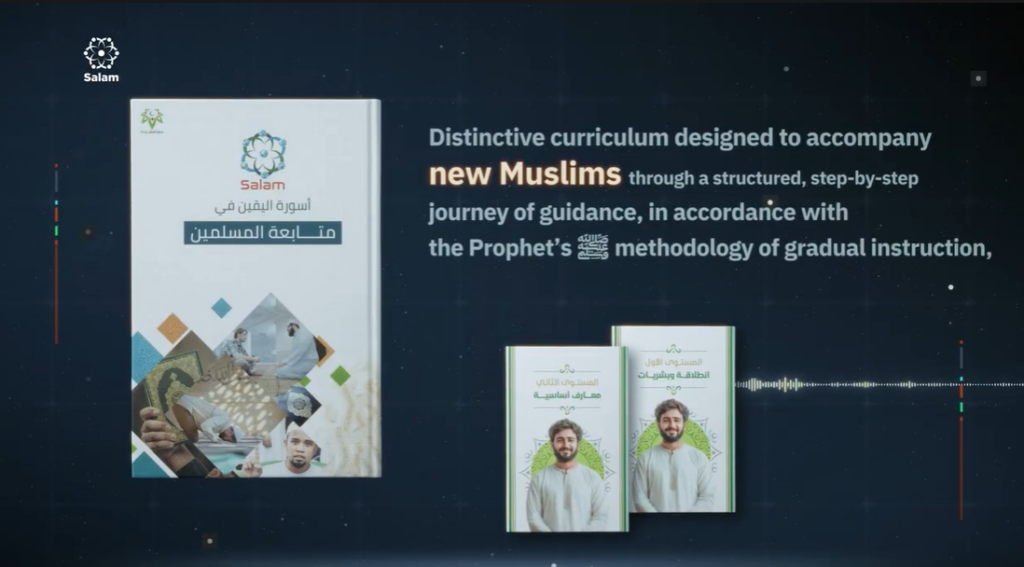
For those who have embraced Islam and want a structured path forward, the Salam Center runs Asawirat Al-Yaqeen (Bracelets of Certainty) — a four-stage curriculum designed specifically for new Muslims across the world. It includes:
- Stage One: The meaning of the Shahada, prayer, purification, and pillars of faith
- Stage Two: Zakat, fasting, Hajj, and the six pillars of Iman
- Stage Three: Repentance, major sins, and the biography of the Prophet (PBUH)
- Stage Four: Contemporary questions, Islamic ethics, and a life roadmap grounded in Surah Al-Asr
The program has reached over 114,000 new Muslims in 140 countries. You are welcome in it.
Reach out directly to the Salam Center team to start the Asawirat Al-Yaqeen (Bracelets of Certainty) program for FREE.
Summary
The Quran’s use of “sister of Aaron” in Surah Maryam is not an error — it is a documented Semitic expression of lineage and priestly affiliation, confirmed by an authentic hadith in Sahih Muslim where the Prophet (PBUH) directly explained the Israelite custom of naming people after revered prophets and righteous predecessors. Classical authorities including al-Tabari and Ibn Kathir recorded two complementary interpretations, both rooted in the Arabic language and the historical context of Israel’s priestly class.
Far from revealing confusion, the Quran demonstrates consistent awareness of the full sweep of prophetic history, explicitly naming the succession of messengers between Moses and Jesus. Mary’s title — “sister of Aaron” — places her exactly where the Quran’s own narrative positions her: a woman of priestly dedication, raised in the sanctuary, and described as one of the truly qanit — the deeply and devotedly obedient to Allah.
Frequently Asked Questions
Does the Quran confuse Mary the mother of Jesus with Miriam the sister of Moses?
The Quran makes no such confusion. In Surah Al-Baqarah (2:87), it explicitly references the long succession of messengers between Moses and Jesus, demonstrating clear awareness of the historical gap between them. Ibn Kathir stated directly in Qisas al-Anbiya’ that conflating these two women contradicts both the Quranic text and authentic hadith.
Is calling someone “sister” or “daughter” of a long-dead ancestor common in ancient Semitic languages?
Yes. The New Testament itself uses this exact convention. Elizabeth, wife of the priest Zechariah, is described in Luke (1:5) as being “of the daughters of Aaron” — meaning she descended from the priestly line of Aaron, not that Aaron was her literal father. The Quran employs the same well-established Semitic idiom.
Why specifically Aaron and not Moses or another prophet?
Among the Israelites, the Aaronic lineage held exclusive responsibility for temple service and priestly duties. Mary was herself a nadhirah — a girl dedicated from before birth to the service of the sanctuary (Quran 3:35). Calling her “sister of Aaron” was a socially precise invocation of her priestly standing and sacred dedication, not a random choice of name.
Curious about Islam?
Journey towards clarity and purpose. Our team is here to support you in your search for truth and spiritual guidance.
Embrace the Truth