
Prophet Muhammad Mercy Stories
| Key Takeaways |
| Prophet Muhammad (PBUH) demonstrated mercy toward children, women, servants, the sick, soldiers, prisoners of war, animals, and even inanimate objects. |
| Authentic narrations in Sahih Bukhari and Sahih Muslim document his gentleness with children, including carrying his granddaughter Umamah during prayer. |
| The Prophet (PBUH) reserved his intercession (shafa’ah) for his entire Ummah on the Day of Judgment — a supreme act of mercy recorded in Sahih Ibn Majah. |
| His mercy extended beyond Muslims to disbelievers, prisoners of war, and the tribes of Ta’if who persecuted him — refusing to call for their destruction. |
The Quran described Prophet Muhammad (PBUH) in a single, breathtaking verse:
وَمَا أَرْسَلْنَاكَ إِلَّا رَحْمَةً لِّلْعَالَمِينَ — “And We have not sent you except as a mercy to the worlds.” (Quran 21:107).
That was a lived reality, documented across hundreds of authentic narrations — in his home, on the battlefield, in the marketplace, and even in the desert with a camel and a bird.
1. Prophet Muhammad’s Mercy Toward the Sick
The Prophet (PBUH) instructed his companions to visit the ill, not merely as a social duty but as an act with spiritual weight:
“Whoever visits a sick person remains in the harvest of Paradise.” When asked what that meant, he said: “Its fruit” (Sahih Muslim, 2568).
The Prophet (PBUH) modeled this himself. He visited his ailing Jewish neighbor and offered him Islam — and when the man accepted, the Prophet (PBUH) left his home overjoyed, expressing gratitude to Allah for sparing a soul from the Fire.
2. Prophet Muhammad’s Treatment of Servants Established a Standard No Society Had Previously Articulated
Anas ibn Malik (may Allah be pleased with him) served the Prophet (PBUH) from the age of ten for a full decade. His testimony is among the most powerful prophet Muhammad kindness stories in the entire hadith literature:
“I served the Prophet for ten years, and he never said to me ‘uff’ (a word of contempt), nor ‘why did you do this?’ nor ‘why did you not do that?'” (Sahih Bukhari, 6038).
In a world built on master-slave hierarchies, he commanded his companions to feed their servants from the same food they ate and clothe them from what they wore — as narrated by Abu Dharr al-Ghifari and recorded with a sound chain in Sharh Fath al-Qadir (30). He played with young servants, joked with them, and checked on them by name.
Learn More About Islam
Discover the beauty, teachings, and wisdom of Islam in a clear and welcoming way. Start exploring and deepen your understanding today.
Learn More3. The Prophet’s Mercy Toward Children Was Expressed Through Touch, Play, and Patience
One of the most striking prophet Muhammad mercy stories involves a group of men who visited him while he was kissing his grandson al-Hasan ibn Ali. They said: “Do you kiss your children? We, by Allah, do not kiss them.” The Prophet (PBUH) replied:
“What can I do for you if Allah has stripped mercy from your hearts?“ (Sahih Muslim, 2317).
He was modeling a principle: that tenderness toward children is an attribute of faith, and its absence is a spiritual deficiency — not strength.
The Prophet’s mercy was also practical. When leading the congregational prayer and hearing a child cry, he would shorten the prayer out of compassion for the mother.
The Prophet carried his granddaughter Umamah bint Zaynab during prayer — placing her gently on the ground when he prostrated and lifting her again when he rose — as recorded in Sahih Bukhari (516) and Sahih Muslim (543). He was patient when children caused disruption, and he grieved openly when they died.
4. The Prophet Showed Mercy to Women When Their Status Was Dismissed Across Entire Civilizations
Prophet Muhammad kissed his daughter Fatimah (may Allah be pleased with her) whenever she visited and offered her his own seat.
When Umm al-Mu’minin Safiyyah (may Allah be pleased with her) struggled to mount her camel, Prophet Muhammad knelt and offered his knee as a step for her to climb.
Prophet Muhammad public teachings were explicit. In his Farewell Sermon, he stated:
“Be advised to treat women well” (Sunan al-Tirmidhi, 1163, graded Hasan Sahih).
He taught that raising daughters with care and excellence serves as a shield from the Fire.
These were not peripheral remarks. They were direct counter-instructions to a society that buried daughters alive — a fact the Quran itself condemned in Surah al-Takwir (81:8–9).
5. The Prophet Treated His Soldiers with Mercy and Refused to Punish Them for Their Mistakes
In the Battle of Uhud, archers abandoned their positions against the Prophet’s direct instruction, leading to a reversal that cost Muslim lives. The Prophet (PBUH) did not convene a tribunal. He did not shame them publicly. He gathered them, comforted them, and continued leading.
The Prophet’s compassion extended to those who died. He ordered the martyrs of Uhud buried where they fell — not transported to their families — understanding that seeing them would deepen grief without purpose.
The Prophet then ordered that those families who had already taken their dead return them to their burial sites, so that people would know their station and so their kin would be spared repeated sorrow.
He was a commander whose authority came from love — a quality that scholars across generations have analyzed in their commentaries on prophetic conduct.
6. Prophet Muhammad’s Mercy towards Animals
Prophet Muhammad’s kindness to Animals Is among the most documented categories of his mercy.
A Camel Approached Him Weeping and Prophet Muhammad Listened
Among the most moving prophet Muhammad kindness to animals narrations is the one recorded in Musnad Ahmad (3/189) with a sound chain, narrated by Abdullah ibn Ja’far ibn Abi Talib.
A camel came to the Prophet (PBUH), groaning, its eyes streaming tears. When the Prophet saw him, the camel pressed close. The Prophet stroked the place behind the camel’s ear where sweat gathers — and the animal fell silent.
He then asked: “Who owns this camel?” A young Ansari man came forward. The Prophet said:
“Do you not fear Allah regarding this animal that Allah has placed under your care? It complained to me that you starve it and exhaust it.”
A Bird’s Nest Was Disturbed and He Commanded Its Restoration
During a journey, companions came across a small bird — a type resembling a sparrow — whose chicks had been taken from her nest. She hovered over the Prophet (PBUH) trembling. He asked:
“Who distressed this bird by taking her young? Return her young to her.”
The Prophet explicitly classified mistreating animals as a cause of punishment.
A woman was condemned for tying a cat until it starved (Sahih Bukhari, 3318).
A man was forgiven for giving water to a thirsty dog (Sahih Bukhari, 3321). Allah’s mercy mirrors our mercy — and the Prophet taught this through action.
7. Prophet Muhammad’s Mercy Toward Disbelievers Revealed the True Scope of His Mission
When the people of Ta’if drove him out, mocked him, and left him bleeding, the Angel of the Mountains appeared and offered to crush them between two mountains.
The Prophet’s (PBUH) response is among the most cited prophet Muhammad mercy stories across Islamic scholarship:
“Rather, I hope that Allah will bring from their descendants people who worship Allah alone and associate nothing with Him.” (Sahih Bukhari, 3231).
He entered Mecca after its conquest in a posture of humility, not triumph. He pardoned those who had tortured his companions, expelled his community, and plotted his assassination.
The story of Prophet Muhammad’s night journey and his continual return to patient endurance reveals a man whose mercy was structurally inseparable from his mission.
In handling prisoners of war after Badr, he accepted the counsel of Abu Bakr al-Siddiq and released them for ransom — and for those who could not pay, he accepted their teaching Muslim children to read and write as their redemption price.
8. Prophet Muhammad’s Greatest Act of Mercy Was Reserving His Du’a for His Ummah’s Intercession
Every prophet, the narration tells us, was granted a special supplication (du’a mujabah) that Allah accepted. Most used it in this world. The Prophet Muhammad (PBUH) preserved his:
“Every prophet had a supplication he made in this world. I have kept mine as intercession for my Ummah on the Day of Judgment.”
He also interceded structurally in life — negotiating the reduction of daily prayers from fifty to five during the Night Journey, sparing his community from an impossible burden.
He warned against imposing on those under authority what they could not bear — and even adjusted his own optional worship to avoid it being made obligatory for his community.
read Also: The Story of Prophet Muhammad’s Mother
Learn More About Islam
Discover the beauty, teachings, and wisdom of Islam in a clear and welcoming way. Start exploring and deepen your understanding today.
Learn MoreLearn More Authentic Knowledge About Islam with Salam
These prophet Muhammad mercy stories are more than history — they are an invitation. The Prophet (PBUH) modeled a way of being in the world that transformed individuals, families, and civilizations. If you are curious about the man behind this mercy, or about the faith he carried, Salam is here to walk with you.
Explore more about Prophet Muhammad (PBUH), Islam’s principles, and the answers to your sincere questions on the Salam Platform.
Browse articles, reflections, and in-depth guides on the Salam blog.
Have a specific question about Islam, or are you considering taking your Shahada? Reach out directly — a knowledgeable, compassionate team is ready to respond.
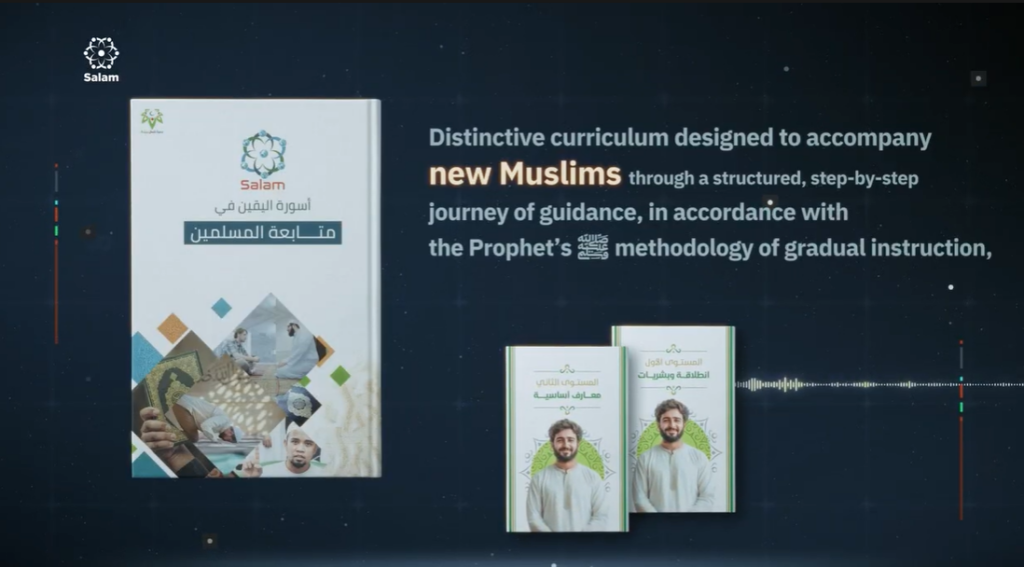
For new Muslims seeking a structured, supported path forward, the Salam Center offers Asawirat Al-Yaqeen (Bracelets of Certainty) — a comprehensive four-stage curriculum implemented with over 114,000 new Muslims across 140 countries:
- Stage One: Foundations of prayer, purification, the Shahada, and the pillars of Iman
- Stage Two: Repentance, zakat, fasting, and the Seerah of the Prophet (PBUH)
- Stage Three: Spiritual ethics, women’s guidelines, and practical life rulings
- Stage Four: Contemporary issues, theological foundations, and your personal life roadmap
Reach out directly to the Salam Center team to start the Asawirat Al-Yaqeen (Bracelets of Certainty) program for FREE.
Summary
Prophet Muhammad’s mercy toward children, women, servants, the sick, soldiers, and animals was not exceptional behavior — it was his consistent character, documented in Sahih Bukhari, Sahih Muslim, and Musnad Ahmad across dozens of authenticated narrations.
His compassion extended to disbelievers who harmed him, to prisoners of war, and even to inanimate creation — and his greatest mercy was reserving his intercession for his entire Ummah on the Day of Judgment, a gift preserved across centuries of Islamic scholarship.
Frequently Asked Questions
What are the most authentic prophet Muhammad mercy stories recorded in hadith?
The most authenticated mercy narrations include his response to the men who did not kiss their children (Sahih Muslim, 2317), Anas ibn Malik’s ten-year testimony about never being rebuked (Sahih Bukhari, 6038), the weeping camel narration (Musnad Ahmad, sound chain), and his refusal to destroy the people of Ta’if (Sahih Bukhari, 3231). Each is graded sahih or with a sound chain by classical hadith scholars.
How did Prophet Muhammad show kindness to animals specifically?
The Prophet rebuked an Ansari man for starving and overworking his camel, comforted the animal physically, and intervened on its behalf. He also ordered companions to return baby birds to their mother after she appeared trembling before him. He explicitly taught that mistreating animals brings punishment and that showing them mercy is spiritually rewarded.
Did the Prophet Muhammad show mercy to non-Muslims and disbelievers?
Yes — authentically documented. He refused to allow the Angel of the Mountains to destroy Ta’if after its people persecuted him, visited and offered Islam to his ill Jewish neighbor, pardoned the Meccan leadership after the conquest, and released prisoners of war through ransom rather than execution where possible.
Why did the Prophet reserve his special supplication for intercession on Judgment Day?
Every prophet had a guaranteed supplication. The Prophet Muhammad (PBUH) chose not to use his in this world, preserving it instead as intercession for his Ummah when they need it most — on the Day of Judgment. This is narrated in a hadith graded sahih by Imam al-Albani in Sahih Ibn Majah and reflects the full scope of his mercy toward his community.
Curious about Islam?
Journey towards clarity and purpose. Our team is here to support you in your search for truth and spiritual guidance.
Embrace the Truth