
Prophet Muhammad’s Kindness Stories
| Key Takeaways |
| Prophet Muhammad (PBUH) demonstrated profound kindness toward children, women, servants, the elderly, animals, and even his enemies. |
| When the Prophet (PBUH) heard a baby crying during congregational prayer, he would shorten the prayer out of compassion for the mother. |
| Anas ibn Malik served the Prophet for ten years and testified that he never once received a word of reproach or impatience. |
| The Prophet (PBUH) intervened when he saw a camel weeping from exhaustion and rebuked its owner. |
| His kindness toward non-Muslims, including enemies who had persecuted him, established a universal moral standard rooted in divine guidance. |
What does it look like when a human being embodies mercy in its most complete form? The life of Prophet Muhammad (PBUH) answers that question — not through abstract ideals, but through moments so specific, so human, and so thoroughly documented that they remain vivid fourteen centuries later.
A man shortening his prayer because he hears an infant cry. A leader kneeling so a woman can use his knee as a step to mount her camel.
A prophet intercepting his companions to stop them from taking baby birds from their nest, then commanding them to return the hatchlings to their mother.
1. Prophet Muhmmad’s Kindness Toward Children
The Prophet (PBUH) had an instinctive tenderness toward children that stood in sharp contrast to the cultural norms of his time. He kissed them, played with them, carried them, and treated their emotional worlds as worthy of serious attention.
The most cited narration on this theme comes from Sahih Muslim. A group of men came upon the Prophet while he was kissing his grandson Al-Hasan ibn Ali (may Allah be pleased with him). One of them remarked:
“Do you kiss your children? We do not kiss ours.”
The Prophet (PBUH) replied:
“What can I do for you if Allah has removed mercy from your heart?” (Sahih Muslim, 2317).
The Prophet was not merely defending affection — he was identifying tenderness as something divinely given, and its absence as a deprivation, not a virtue.
His accommodation of children extended into his role as imam of congregational prayer. It is authentically narrated in Sahih al-Bukhari that the Prophet said:
“I start the prayer intending to prolong it, then I hear a child crying, so I shorten it, knowing how distressed its mother would be.” (Sahih al-Bukhari, 709).
A man leading thousands was adjusting his worship out of consideration for a single mother’s anxiety.
He also carried his granddaughter Umamah bint Zaynab (may Allah be pleased with her) during prayer — placing her gently on the ground when he prostrated and lifting her again when he stood. This narration, recorded in Sahih al-Bukhari, shows a prophet whose devotion to Allah never eclipsed his warmth toward the people around him.
2. The Prophet’s Treatment of Servants Established a Human Dignity That Predated Modern Ethics
Anas ibn Malik (may Allah be pleased with him) entered the Prophet’s household at approximately ten years old and served him for a full decade. At the end of his life, he offered one of the most remarkable character testimonies in Islamic literature:
“I served the Prophet (PBUH) for ten years. He never said ‘Uff’ to me, never said ‘Why did you do that?’ and never said ‘Why didn’t you do that?'” (Sahih al-Bukhari, 6038).
Ten years. No reproach. No impatience. No complaints.
The Prophet was a leader managing a community, a state, and a revelation. His restraint with Anas was a deliberate practice of the mercy he preached. He would joke with him, give him affectionate nicknames, and engage him as a full human being rather than a function.
The Prophet’s instructions to the wider community reflected this same ethic. He commanded those who employed servants:
“They are your brothers whom Allah has placed under your care. Whoever has a brother under his care, let him feed him from what he eats and clothe him from what he wears. Do not burden them beyond their capacity, and if you do, help them.” (Recorded by Ibn Humam in Sharh Fath al-Qadir, narrated by Abu Dharr al-Ghifari, authenticated).
Learn More About Islam
Discover the beauty, teachings, and wisdom of Islam in a clear and welcoming way. Start exploring and deepen your understanding today.
Learn More3. The Prophet’s Compassion Toward Women Reflected a Vision His Society Had Not Articulated
The Prophet (PBUH) was, by the testimony of those closest to him, the most gentle of men toward the women of his household and community.
When his daughter Fatimah (may Allah be pleased with her) entered his presence, he would stand to welcome her, kiss her, and give her his own seat. This is narrated in Sunan Abi Dawud and authenticated by scholars.
With his wife Safiyyah (may Allah be pleased with her), his physical consideration was equally striking. When she needed to mount a camel, the Prophet knelt down and offered his knee as a step for her to climb. This narration illustrates a man whose dignity was not threatened by serving those in his care.
He addressed the community repeatedly on the rights of women. In his Farewell Sermon, he declared:
“Take care of women, for they are entrusted to you.”
He warned explicitly against mistreating them and described those who raise daughters with goodness as being shielded from the Fire
“Whoever is tested with daughters and treats them well, they will be a shield for him from the Fire.” (Sahih Muslim, 2629).
His instruction on marriage was equally direct:
“The best of you are those who are best to their wives, and I am the best of you to my wives.” (Sunan al-Tirmidhi, authenticated).
These were a lived reality witnessed by his household and preserved by his companions.
4. Prophet Muhammad’s Kindness to Animals
Perhaps no Prophet Muhammad kindness story illustrates the scope of his mercy more vividly than his interaction with a camel — an animal, incapable of speech, that nevertheless communicated its suffering to him.
Abdullah ibn Ja’far ibn Abi Talib (may Allah be pleased with him) narrated that the Prophet (PBUH) entered an Ansari man’s orchard and found a camel there.
When the camel saw the Prophet, it groaned and its eyes filled with tears. The Prophet went to it, stroked its hump and the area behind its ear — and the camel fell silent.
Then the Prophet asked:
“Who is the owner of this camel?”
A young Ansari man came forward.
The Prophet said to him:
“Do you not fear Allah regarding this animal that Allah has given you ownership of? It has complained to me that you starve it and exhaust it.”
This narration — recorded in Musnad Ahmad — presents a Prophet to whom even an animal turns for justice.
His prophet muhammad kindness to animals extended beyond sentiment into accountability: he named the sin, identified the perpetrator, and made clear that mistreating an animal is a matter between a person and Allah.
The companions witnessed a similar scene when the Prophet was traveling and some of them had taken baby birds from their nest. The mother bird returned and found her hatchlings gone. She flew frantically above the group.
The Prophet saw her and said:
“Who has distressed this bird by taking her young? Return her children to her.”
Even a Camel’s Weeping Found an Answer in the Prophet’s Mercy Toward Animals
Islamic scholarship has long recognized that the Prophet’s mercy toward animals was not incidental — it was principled and instructed.
The Prophet forbade mutilating animals, forbade killing them unnecessarily, forbade burdening them beyond their capacity, and forbade using them as targets for sport.
The Prophet described that a woman entered the Fire because she imprisoned a cat, neither feeding it nor releasing it to feed itself (Sahih al-Bukhari).
He described that a man earned Allah’s forgiveness because he gave water to a thirsty dog (Sahih al-Bukhari, 2363).
These narrations establish a theology of mercy that encompasses the entire created world. Faith in Islam does not begin and end with ritual — it extends into every interaction with every living thing.
Read Also: Prophet Muhammad Mercy Stories
5. Prophet Muhammad’s Mercy Toward His Enemies
The Prophet (PBUH) was driven out of Mecca, boycotted, mocked, and persecuted for over a decade. When he finally returned to Mecca in victory, the people who had most grievously wronged him stood before him, expecting punishment.
He asked them: “What do you think I will do with you?” They said: “You are a noble brother and the son of a noble brother.” He replied: “Go — you are free.”.
This was not weakness. It was a conscious act of mercy toward people who had no claim to it.
The story of Ta’if goes even further. When the people of Ta’if rejected the Prophet, mocked him, and had their youth stone him until he bled, the Angel of the Mountains appeared and offered to destroy the city.
The Prophet (PBUH) refused. He said:
“Rather, I hope that Allah will bring forth from their descendants people who worship Allah alone, associating nothing with Him.” (Sahih al-Bukhari, 3231).
This single response defines his mission. Understanding how Islam views other religions helps contextualize this mercy — it was not tolerance born of indifference, but compassion born of genuine care for human souls.
He also visited a Jewish neighbor who was ill, sat with him, and invited him to Islam. When the man accepted, the Prophet left rejoicing — not at a strategic gain, but at a soul saved from the Fire. The human being mattered to him more than the category he belonged to.
read Also: The Story of Prophet Muhammad’s Mother
6. A Wooden Pillar Mourned Prophet Muhammad and He Answered
Among the most remarkable narrations in Islamic literature concerns an inanimate object — a trunk of a date palm in the Prophet’s mosque.
Before the minbar (pulpit) was built, the Prophet (PBUH) would lean against this trunk while delivering the Friday sermon.
When the minbar was constructed and he began using it instead, the companions heard a sound like a crying camel emerging from the trunk.
The Prophet (PBUH) descended from the minbar, walked to the trunk, and placed his hand upon it. The sound ceased.
This narration is recorded in Sahih al-Bukhari (3585) from Jabir ibn Abdullah. Ibn Umar’s version in the same collection adds that the trunk made a sound like a weeping she-camel until the Prophet placed his hand on it and it went quiet.
Read Also: The Prophet Muhammad’s (PBUH) Story with the Jinn
7. The Prophet’s Mercy Toward His Ummah Extended Beyond His Own Lifetime
The Prophet (PBUH) carried his community with him even in his relationship with Allah. He was granted, as every prophet is granted, one supplication that would certainly be answered.
Every prophet before him used that supplication in this world. The Prophet Muhammad (PBUH) reserved his:
“Every prophet had a supplication that was answered. Every prophet made his supplication, and I have saved mine as intercession for my Ummah on the Day of Resurrection.”
He gave up a guaranteed answered prayer in this life — to use it for his people on the Day when they would need it most.
The story of Prophet Muhammad’s Night Journey further illustrates how he negotiated on behalf of his Ummah, reducing the obligatory prayers from fifty to five out of mercy for the community he was about to lead.
Read Also: The Prophet Muhammad Hijrah Story
Learn More About Islam
Discover the beauty, teachings, and wisdom of Islam in a clear and welcoming way. Start exploring and deepen your understanding today.
Learn MoreRead Also: The Prophet Muhammad’s Honesty Story
Learn More Authentic Knowledge About The Prophet Muhammad with Salam
These stories belong to a tradition that welcomes sincere questions. If reading about Prophet Muhammad (PBUH) has stirred something in you — curiosity, recognition, or the beginning of something deeper — the Salam Center exists precisely for this moment.
Visit the Salam Platform to explore more articles, evidence, and perspectives on Islam written for people exactly where you are.
Browse the Salam blog for ongoing content on Islamic beliefs, the Prophet’s life, and answers to the questions you carry.
Reach out directly — our team is ready to listen, guide, and welcome you.

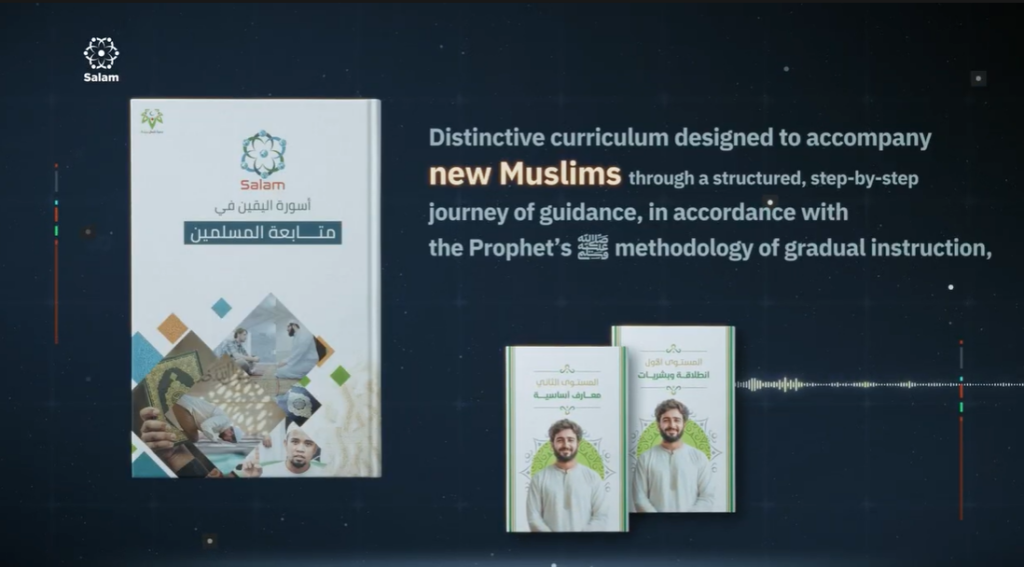
If you want to go further — to understand Islam in a structured, compassionate way — the Salam Center team invites you to join Asawirat Al-Yaqeen (Bracelets of Certainty), a progressive four-stage curriculum designed specifically for new Muslims:
- Stage One: Foundational beliefs, prayer, purification, and the meaning of the Shahada
- Stage Two: The six pillars of faith, fasting, zakat, and Hajj
- Stage Three: Repentance, moral refinement, and the Seerah of the Prophet
- Stage Four: Contemporary issues, theology, and a life roadmap rooted in the Quran
Over 114,000 new Muslims across 140 countries have walked this path. You are welcome to walk it too.
Reach out directly to the Salam Center team to start the Asawirat Al-Yaqeen (Bracelets of Certainty) program for FREE.
Summary
Prophet Muhammad’s kindness was not a personality trait isolated from his mission — it was the living expression of a divine mercy he was sent to embody. From shortening prayers for a crying infant to weeping over the elderly and ill, his compassion covered every category of human and creature life.
His mercy toward enemies, animals, and even inanimate creation establishes a moral standard the world has never surpassed. For anyone seeking to understand Islam through its Prophet, these authenticated stories offer a beginning — and an invitation.
Frequently Asked Questions
What is the most famous prophet muhammad kindness story involving an animal?
The most well-documented story is the weeping camel narrated by Abdullah ibn Ja’far, recorded in Musnad Ahmad with an authenticated chain. A camel groaned and shed tears when the Prophet approached; the Prophet stroked it, then rebuked its owner for starving and exhausting it, framing animal mistreatment as an accountability matter before Allah.
Did Prophet Muhammad show kindness to non-Muslims and enemies?
The Prophet (PBUH) showed consistent mercy to non-Muslims throughout his life. After the conquest of Mecca, he declared a general amnesty for those who had persecuted him. After being stoned in Ta’if, he declined an angel’s offer to destroy the city, expressing hope that future generations would embrace Islam.
How did Prophet Muhammad treat his servants according to authentic narrations?
Anas ibn Malik served the Prophet for ten years and testified in Sahih al-Bukhari (6038) that the Prophet never once said “Uff” to him, never questioned his actions, and never criticized him. The Prophet also instructed the community to feed servants from their own food and clothe them similarly.
What does Prophet Muhammad’s kindness to animals teach Muslims?
Prophet Muhammad’s kindness to animals establishes that mercy in Islam is not limited to human beings. The Prophet forbade overburdening animals, forbade using them as sport targets, and intervened personally when he witnessed animal suffering. He described both punishment for animal mistreatment and divine reward for acts of kindness toward animals in authenticated hadiths.
Curious about Islam?
Journey towards clarity and purpose. Our team is here to support you in your search for truth and spiritual guidance.
Embrace the Truth