
The Story of Prophet Muhammad’s Mother
| Key Takeaways |
| Prophet Muhammad’s (PBUH) mother was Aminah bint Wahb, a noble woman of the Quraysh tribe from the Banu Zuhrah clan. |
| Aminah’s husband, Abdullah ibn Abdul-Muttalib, passed away before the Prophet (PBUH) was born, leaving her to carry the pregnancy alone. |
| Aminah experienced a miraculous pregnancy, sensing a light within her and being given the name “Ahmad” for her son in a vision. |
| Aminah bint Wahb passed away in Abwa when the Prophet (PBUH) was approximately six years old, during their return from Madinah. |
The story of Prophet Muhammad’s mother is one of quiet nobility and profound trust in Allah’s decree. Aminah bint Wahb was not simply the woman who gave birth to the greatest of all messengers — she was a woman whose brief life left an indelible mark on her son’s earliest years and whose memory he honoured with tears long after her passing.
To understand the Prophet Muhammad’s mother story is to enter the opening chapter of one of history’s most extraordinary lives.
Aminah’s story is documented in the classical Seerah literature and is narrated through chains of transmission by scholars including Ibn Hisham, Ibn Kathir, and Imam al-Bayhaqi.
1. Who Was Aminah bint Wahb?
Aminah bint Wahb belonged to the Banu Zuhrah clan, one of the most distinguished branches of the Quraysh tribe. Her father was Wahb ibn Abd Manaf ibn Zuhrah, and she was considered among the finest women of Quraysh in both character and lineage.
The Quraysh were the custodians of the Ka’bah in Makkah, and within their society, lineage carried enormous weight. Aminah’s standing in this world was genuine and recognized.
When the young Abdullah ibn Abdul-Muttalib — himself the son of the custodian of the Ka’bah, Abd al-Muttalib — sought a wife, Aminah was chosen as his match.
This union brought together two of the most respected families within Quraysh, a convergence that the classical scholars have always understood as part of divine arrangement for the Prophet’s arrival into the world.
2. The Marriage of Abdullah and Aminah and the Loss That Followed
Abdullah ibn Abdul-Muttalib and Aminah bint Wahb were married in a union that those around them expected to produce great offspring. Their joy, however, was cut short in a way that would define much of Aminah’s life.
Shortly after the marriage — and according to several narrations, shortly after she conceived — Abdullah set out on a trading journey to the Levant (al-Sham).
Abdullah fell ill on the return and died in Madinah, at the home of his maternal relatives from Banu al-Najjar.
Aminah received the news of her husband’s death while still carrying the Prophet (PBUH) in her womb. Aminah was now a widow and an expectant mother, left to face the pregnancy alone.
Aminah bore this with patience and carried the pregnancy, reportedly feeling an unusual lightness — a mercy often referenced in the classical sources.
This early trial is part of understanding Prophet Muhammad’s childhood — he entered the world already an orphan on his father’s side, and this circumstance shaped the compassion and consciousness of orphanhood that would later run through his prophethood, his character, and the teachings of Islam itself.
3. The Miraculous Accounts of Aminah’s Pregnancy
The classical Seerah sources preserve narrations, traced by scholars including Imam al-Bayhaqi in his Dala’il al-Nubuwwah (Evidences of Prophethood), that describe Aminah experiencing something extraordinary during her pregnancy. Aminah saw a vision — or received an address during sleep — in which she was told that she was carrying the greatest of people and was instructed to name him Ahmad or Muhammad.
The narration of a light — نور — that she sensed within her, said to illuminate the palaces of the Levant, appears in several Seerah accounts. The classical scholars of have understood these reports as signs of the divine distinction conferred on the Prophet (PBUH) even before his arrival in the world.
Learn More About Islam
Discover the beauty, teachings, and wisdom of Islam in a clear and welcoming way. Start exploring and deepen your understanding today.
Learn More4. The Birth of the Prophet (PBUH) and Aminah’s Immediate Care
Prophet Muhammad (PBUH) was born in the Year of the Elephant (approximately 570 CE), a year already marked in the collective Qurayshi memory by the dramatic defeat of Abraha’s army as it marched to demolish the Ka’bah — an event referenced in the Quran:
أَلَمْ تَرَ كَيْفَ فَعَلَ رَبُّكَ بِأَصْحَابِ الْفِيلِ
“Have you not considered how your Lord dealt with the companions of the elephant?” (Quran 105:1)
His grandfather, Abd al-Muttalib, received the newborn with joy and took him to the Ka’bah to express gratitude, naming him Muhammad — a name meaning “the praised one” — which was relatively uncommon at the time. Aminah, now his sole parent, oversaw his earliest days of care.
In keeping with the custom of the noble Quraysh — who believed that raising children in the desert air of the Bedouin tribes produced healthier constitutions, stronger speech, and purer Arabic — Aminah entrusted the infant Muhammad (PBUH) to a wet nurse.
The woman who came forward was Halimah bint Abi Dhu’ayb of the Banu Sa’d ibn Bakr tribe, known in Islamic history as Halimah al-Sa’diyyah.
5. Halimah al-Sa’diyyah and the Years of Nursing
Halimah al-Sa’diyyah arrived in Makkah with a group of women from her tribe, all seeking infants to nurse for the payment that Qurayshi families offered. Most of the women passed over the Prophet (PBUH), knowing that as a fatherless child his family’s payment would be limited.
Halimah herself initially hesitated, but took him when no other child was available — and from that moment, she and her household experienced an extraordinary transformation.
Her previously barren mount became lively; her dried nursing was restored; her meager flock began to graze in abundance.
Halimah said: “By Allah, I do not know of any blessing that I experienced except through him.”
She kept him beyond the customary two years, returning to request — and receiving from Aminah — an extension of his stay, before eventually bringing him back to Makkah after the famous incident of the chest-opening (Shaq al-Sadr), which unsettled her and her husband enough to return the young child to his mother’s care.
6. Aminah’s Journey to Madinah and Her Passing
When the Prophet (PBUH) was approximately six years old, Aminah made the decision to travel to Madinah — then called Yathrib — to visit the graves of her late husband Abdullah and the relatives of his mother’s family, the Banu al-Najjar. She took with her the young Muhammad (PBUH), along with her servant Umm Ayman (also known as Barakah), who would later become one of the most beloved companions of the Prophet (PBUH) and whom he called a remnant of his family (ahl bayti).
The journey to Madinah was approximately 500 kilometres from Makkah. Aminah spent time there visiting the graves and renewing ties. The return journey, however, became her last. At a place called Abwa, roughly midway between Makkah and Madinah, Aminah fell gravely ill. She passed away there, leaving her six-year-old son beside her.
The young Muhammad (PBUH) was now an orphan on both sides. He had lost his father before birth and his mother at six.
Umm Ayman held his hand and brought him back to Makkah, where his grandfather Abd al-Muttalib received them.
This defining moment in the prophet muhammad mother story — his witness to her death — shaped the depth of mercy and his awareness of vulnerability that would become hallmarks of his prophethood.
7. The Prophet’s Early Life After Aminah
After Aminah’s death, the Prophet (PBUH) was raised by his grandfather Abd al-Muttalib, who showed him a love of singular warmth, seating him at his side at the Ka’bah in a way he permitted no one else.
Abd al-Muttalib passed away when the Prophet (PBUH) was eight years old. Custody then passed to his paternal uncle, Abu Talib, who raised him and protected him for decades.
This entire arc — orphanhood, guardianship, and the gradual emergence of an extraordinary character — is documented across the Seerah literature and forms the foundation for understanding how Muhammad became the Prophet of Islam.
The prophethood came later, at age forty, with the first revelation in the Cave of Hira. But those who study the Seerah carefully see in every phase of his early life — including his mother’s story — the quiet preparation of a vessel that would carry the final message to all of humanity.
The story of Prophet Muhammad’s Night Journey and his later prophetic mission cannot be fully appreciated without understanding the human being who was shaped first by his mother’s care and then by her loss.
8. The Prophet’s (PBUH) Visit to His Mother’s Grave
One of the most moving episodes in the prophetic Seerah is the Prophet’s (PBUH) visit to Aminah’s grave in his later years.
عَنْ أَبِي هُرَيْرَةَ قَالَ: زَارَ النَّبِيُّ ﷺ قَبْرَ أُمِّهِ فَبَكَى وَأَبْكَى مَنْ حَوْلَهُ
“Abu Hurayrah (may Allah be pleased with him) reported: The Prophet (PBUH) visited his mother’s grave and wept, and caused those around him to weep.” — Sahih Muslim
This narration is a window into the Prophet’s (PBUH) humanity. He wept. His companions wept with him.
Love for one’s mother — even across the years and the distance of death — is a human reality that the Prophet (PBUH) embodied without restraint.
What Do the Story of Aminah Teach?
The prophet muhammad mother story carries lessons that extend well beyond biography. Aminah bint Wahb lived through profound loss — the death of her husband, the weight of a remarkable pregnancy, and the responsibility of raising a child as a widow.
She did all of this within the framework of her time, in a society that honoured lineage and quiet dignity.
Her son would later establish clear rights for mothers within Islamic law. The Quran itself ties the rights of parents — especially mothers — to the worship of Allah:
وَقَضَىٰ رَبُّكَ أَلَّا تَعْبُدُوا إِلَّا إِيَّاهُ وَبِالْوَالِدَيْنِ إِحْسَانًا
“Your Lord has decreed that you worship none but Him, and that you be good to parents.” (Quran 17:23)
The Prophet (PBUH) reinforced this in a hadith that every Muslim knows intimately:
عَنْ أَبِي هُرَيْرَةَ قَالَ جَاءَ رَجُلٌ إِلَى رَسُولِ اللَّهِ ﷺ فَقَالَ مَنْ أَحَقُّ النَّاسِ بِحُسْنِ صَحَابَتِي قَالَ أُمُّكَ
“A man came to the Messenger of Allah (PBUH) and asked: ‘Who is most deserving of my good companionship?’ He said: ‘Your mother.'” — Sahih Bukhari, 5971
The mother is mentioned three times in this narration before the father. This is not incidental — it is a deliberate, prophetic elevation of the maternal role, a role that Aminah bint Wahb exemplified in silence and sacrifice.
The principles of Islam consistently ground human dignity in family, lineage, and the honour of those who brought us into being.
Read Also: Prophet Muhammad Mercy Stories
Learn More About Islam
Discover the beauty, teachings, and wisdom of Islam in a clear and welcoming way. Start exploring and deepen your understanding today.
Learn MoreLearn More Authentic Knowledge About Prophet Muhammad with Salam
The story of Prophet Muhammad’s mother opens a door into the full richness of the prophetic Seerah — a world of human depth, divine providence, and timeless lessons. If this story has stirred something in you, there is more waiting.
Explore more on the Salam Platform — a space built to answer sincere questions about Islam with knowledge, clarity, and warmth.
Browse the Salam blog for articles on Islamic beliefs, prophetic history, and guidance for new Muslims.
Reach out directly to connect with our team for personal guidance, questions about entering Islam, or anything on your journey.

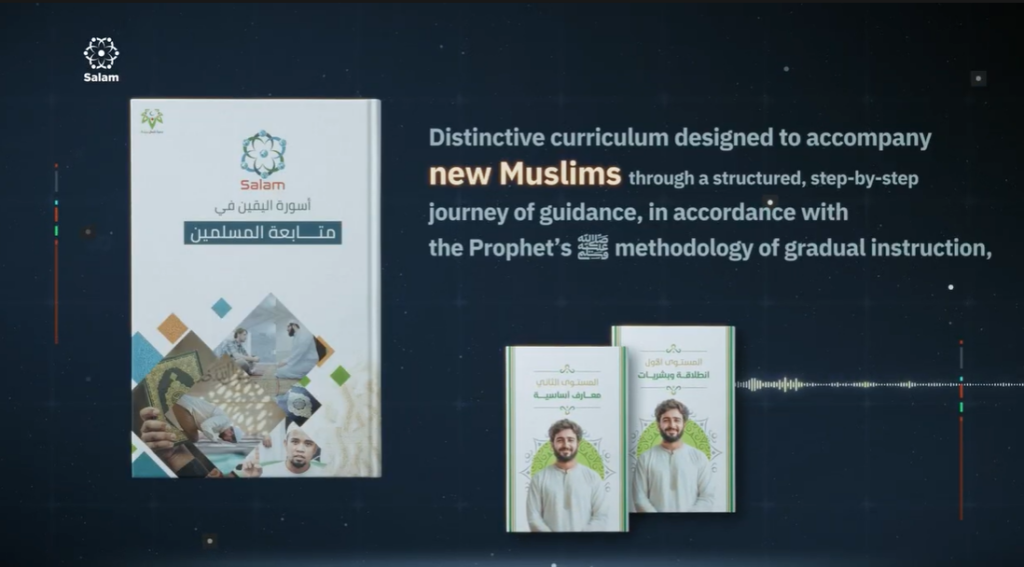
For those newly entering Islam, the Salam Center warmly invites you to join Asawirat Al-Yaqeen (Bracelets of Certainty) — a progressive, structured curriculum designed specifically for new Muslims:
- A four-stage journey covering faith, worship, character, and real-life Islamic rulings
- Grounded in the creed of Ahlus Sunnah wal Jama’ah and the Prophetic tradition
- Implemented with 114,588 new Muslims across 140 countries
- Professionally designed lessons in a format that builds Yaqeen (certainty) step by step
- Currently being expanded into multiple languages and a smart interactive application
Reach out directly to the Salam Center team to start the Asawirat Al-Yaqeen (Bracelets of Certainty) program for FREE.
Summary
Aminah bint Wahb stands at the beginning of the prophetic story — a noble, patient woman who carried in her womb the Seal of the Prophets, and whose early death gave the Prophet (PBUH) his first experience of profound human loss. Her lineage, her quiet strength, and her brief years of motherhood are preserved in the classical Seerah tradition.
The Prophet’s (PBUH) tears at Aminah’s grave, narrated in Sahih Muslim, speak across the centuries to every person who has lost a mother. Islam honours motherhood as one of the highest stations in human life — and the story of the prophet muhammad mother is a timeless reminder that behind the greatest of all messengers was a woman who loved him first.
Frequently Asked Questions
Who was the mother of Prophet Muhammad (PBUH)?
Prophet Muhammad’s (PBUH) mother was Aminah bint Wahb, from the Banu Zuhrah clan of the Quraysh. She was married to Abdullah ibn Abdul-Muttalib, who died before the Prophet (PBUH) was born. Aminah raised her son alone until her death when he was approximately six years old, at a place called Abwa between Makkah and Madinah.
How did Aminah bint Wahb die and where is she buried?
Aminah bint Wahb fell ill during the return journey from Madinah to Makkah and passed away at a location known as Abwa. She was buried there. The Prophet (PBUH) later visited her grave, wept, and caused those around him to weep, as recorded in Sahih Muslim (hadith 976). Her grave at Abwa is the site of this historically documented visit.
How old was Prophet Muhammad (PBUH) when his mother died?
Prophet Muhammad (PBUH) was approximately six years old when his mother Aminah bint Wahb passed away. He was in her company during the journey from Madinah back to Makkah, and her death left him an orphan on both sides — his father Abdullah had died before his birth, and now his mother was gone as well.
Did Prophet Muhammad (PBUH) cry for his mother?
Yes. An authentic hadith in Sahih Muslim narrates that the Prophet (PBUH) visited his mother’s grave, wept, and caused those around him to weep. He also sought permission from Allah to seek forgiveness for her, which was not granted, though permission to visit her grave was given. This narration demonstrates the Prophet’s (PBUH) deep human love for his mother.
What was Prophet Muhammad’s (PBUH) family lineage through his mother?
Through his mother Aminah bint Wahb, the Prophet (PBUH) descended from the Banu Zuhrah clan of Quraysh. His mother’s grandfather, Wahb ibn Abd Manaf ibn Zuhrah, placed her family among the most respected households of Makkah. His full lineage on both sides traces back through illustrious Qurayshi ancestry, as documented in Prophet Muhammad’s family tree from Abraham.
Curious about Islam?
Journey towards clarity and purpose. Our team is here to support you in your search for truth and spiritual guidance.
Embrace the Truth