
The Prophet Muhammad’s (PBUH) Story with the Jinn
| Key Takeaways |
| The Quran dedicates an entire chapter — Surah Al-Jinn (Chapter 72) — to the event in which a group of jinn encountered the Prophet Muhammad (PBUH) and accepted Islam. |
| The first encounter at Nakhlah occurred while the Prophet (PBUH) was leading Fajr prayer, unaware that jinn had gathered to listen; Allah later informed him through revelation. |
| A second, deliberate encounter — known as the “Night of the Jinn” — took place near Makkah, where the Prophet (PBUH) recited the Quran directly to the jinn, with Abdullah ibn Mas’ud (RA) accompanying him. |
| The Quran records the jinn’s own testimony: they called the Quran “amazing” and declared their belief in Allah alone, renouncing all association with Him. |
Yes, the Quran explicitly records that a group of jinn listened to Prophet Muhammad (PBUH), accepted Islam, and returned to their people as its first propagators among their kind. This is not legend or folklore — it is established Islamic doctrine, rooted in two Quranic chapters and authenticated hadith from Sahih al-Bukhari and Sahih Muslim.
The prophet Muhammad jinn story is one of the most profound signs of the universality of Islam: a message that transcended the boundaries of the human world, reaching a created realm entirely invisible to the human eye.
Who Are the Jinn in Islam?
Before entering the story itself, the Islamic understanding of jinn must be established clearly — because the Quran’s account only makes full sense when you know who these beings are.
The jinn are a created species, formed by Allah from smokeless fire, as the Quran states:
وَخَلَقَ الْجَانَّ مِن مَّارِجٍ مِّن نَّارٍ
“And He created the jinn from a smokeless flame of fire.” (Quran 55:15)
They inhabit a realm parallel to ours — real, yet beyond ordinary human perception. They have free will, moral accountability, and they will face judgment before Allah just as human beings will.
Among them are believers and disbelievers, the righteous and the corrupt. Understanding the Islamic concept of faith in Islam helps situate the jinn within the broader framework of accountability: all beings with rational souls are responsible before their Creator.
This is why the arrival of Prophet Muhammad (PBUH) — as a mercy to all worlds, as the Quran states in 21:107 — logically extended to the jinn. His prophethood was never geographically or species-specific. It was universal.
1. The First Encounter of the Prophet with the Jinn Took Place in a Valley Called Nakhlah
The most historically documented account of the Prophet’s (PBUH) encounter with the jinn took place in a valley called Nakhlah, located between Makkah and Ta’if.
The Prophet (PBUH) had just returned from Ta’if — a journey of immense personal pain. He had gone there seeking support for Islam after years of hardship in Makkah, only to be rejected, mocked, and driven out while his feet bled from the stones thrown at him.
On his way back, he stopped at Nakhlah. There, he led his companions in the Fajr prayer and recited the Quran in the stillness of the early morning.
Those of the devils who had set out towards Tihama, went to Allah’s Messenger (PBUH) at Nakhla while he was on his way to `Ukaz Market. They met him while he was offering the Fajr prayer with his companions.
When they heard the Quran being recited, they listened to it and said to each other: “This is the thing which has intervened between you and the news of the Heavens.”
Then they returned to their people and said: “O our people! We have really heard a wonderful recital. It gives guidance to the right, and we have believed therein. We shall not join in worship anybody with our Lord.”
This account, recorded in Sahih al-Bukhari (Hadith 4921), establishes something crucial: the Prophet (PBUH) did not know the jinn were there. Ibn Abbas (RA) narrates, as recorded in Sahih al-Bukhari, Sahih Muslim, and Tirmidhi, that Allah’s Messenger (PBUH) did not by deliberate design make the jinn listen to the Quran, nor did he see them.
Allah informed him of the entire event through revelation — and the result was the opening verses of Surah Al-Jinn.
The Prophet (PBUH) stood in Nakhlah, wounded from Ta’if, reciting to Allah in the pre-dawn dark. And unseen by him, an entire delegation of the jinn fell silent to listen — and left as Muslims.
What Were the Jinn Doing at Nakhlah?
This incident took place at a time when the devils were barred from going to the skies and eavesdropping on the conversations of the angels by being pelted with piercing flames. When the jinn realized that they were no longer free to eavesdrop, they discussed among themselves that the incident could not be coincidental. There must be a genuine reason for that.
So they divided themselves into groups and each group went in a different direction to investigate the cause of the new phenomenon. One of the groups arrived at a place called Nakhlah in Tihamah.
There was a cosmic disturbance. The heavens had been sealed. Shooting stars now guarded the celestial realm against the jinn who had previously been able to sneak fragments of knowledge from the conversations of the angels.
The jinn knew something had changed fundamentally in the order of creation — and they spread out across the earth to find out what it was.
What they found was a man standing in prayer before dawn, reciting words that answered everything.
Learn More About Islam
Discover the beauty, teachings, and wisdom of Islam in a clear and welcoming way. Start exploring and deepen your understanding today.
Learn More2. The Second Encounter of the Prophet with the Jinn Took Place on the Night of the Jinn
On what scholars have called the “Night of the Jinn,” the Prophet (PBUH) went out specifically to meet a delegation of jinn near Makkah and recited the Quran to them directly. Abdullah ibn Mas’ud (RA) accompanied him.
The Prophet (PBUH) drew a circle on the ground and instructed Ibn Mas’ud to remain within it, then went forward to meet the jinn.
This encounter involved the Prophet (PBUH) deliberately inviting jinn to the call of Islam, a direct, purposeful extension of his prophetic mission beyond the human world.
This second encounter demonstrates a dimension of the Prophet’s (PBUH) mission that is often overlooked: he was not merely a prophet to the Arabs, or even to all humanity. He was a prophet to the jinn as well.
This is precisely why understanding how Muhammad became the Prophet of Islam requires seeing his prophethood in its full cosmic scope — a mission embracing all beings of rational will.
What Did the Quran Record Regarding the Prophet Muhammad’s (PBUH) Story with the Jinn?
Allah commanded the Prophet (PBUH) to relay the jinn’s own words in the Quran, making their testimony part of the eternal record of revelation. Surah Al-Jinn opens with a direct instruction to the Prophet (PBUH):
قُلْ أُوحِيَ إِلَيَّ أَنَّهُ اسْتَمَعَ نَفَرٌ مِّنَ الْجِنِّ فَقَالُوا إِنَّا سَمِعْنَا قُرْآنًا عَجَبًا
“Say, [O Muhammad], ‘It has been revealed to me that a group of the jinn listened and said, Indeed, we have heard an amazing Quran.'” (Quran 72:1)
The next verse records their declaration of faith:
يَهْدِي إِلَى الرُّشْدِ فَآمَنَّا بِهِ وَلَن نُّشْرِكَ بِرَبِّنَا أَحَدًا
“It guides to the right course, and we have believed in it. And we will never associate with our Lord anyone.” (Quran 72:2)
The word عَجَبًا — amazing, wondrous, astonishing — is not a casual descriptor. These were beings from a world of fire and ancient power, yet they stood before the sound of the Quran and could find no word for it except wonder.
Their immediate response was not curiosity or debate — it was faith.
And their first commitment upon accepting Islam was tawhid: no association with Allah whatsoever. This is the very foundation of the principles of Islam they instinctively grasped from a single hearing.
This Makkan surah primarily seeks to prove the truth of the Quran and the prophethood of Muhammad (PBUH) by documenting the hidden miracle of the jinn’s conversion. It establishes monotheism, refutes the worship of the jinn and the practice of soothsaying, and warns the polytheists of their impending punishment and eventual regret.
Read Also: Prophet Muhammad’s Kindness Stories
The Jinn’s Testimony About Monotheism and Earlier Revelation
What makes the jinn’s account in Surah Al-Jinn particularly striking is how theologically literate they were. They did not just say they liked what they heard — they articulated core Islamic creed with remarkable precision.
They affirmed that Allah had taken neither a wife nor a child. They acknowledged their own previous error in attributing partners to Allah. They described divisions among their own people — some righteous, some astray.
And they spoke about their former habit of eavesdropping on the heavens and how that had now been shut off by guarded angels and piercing flames.
The jinn recount how they once sought to eavesdrop on the heavens to learn secrets of the unseen, but found the skies heavily guarded with shooting stars after the advent of the Prophet’s mission, signaling a new era in which divine revelation replaced illicit attempts to access celestial knowledge.
Read Also: The Prophet Muhammad Hijrah Story
Learn More About Islam
Discover the beauty, teachings, and wisdom of Islam in a clear and welcoming way. Start exploring and deepen your understanding today.
Learn MoreRead Also: The Prophet Muhammad’s Honesty Story
Explore More with the Salam Platform
If this account has stirred questions, or if you are on a journey toward Islam and want to understand the full picture of what you are entering, the Salam Center is here to walk alongside you.
Browse the Salam platform for articles covering everything from the nature of Allah and the Quran, to the lives of the prophets, to the practical life of a Muslim. The Salam blog covers dozens of topics relevant to seekers and new Muslims alike.
Reach out directly — our team is ready to listen, guide, and welcome you.

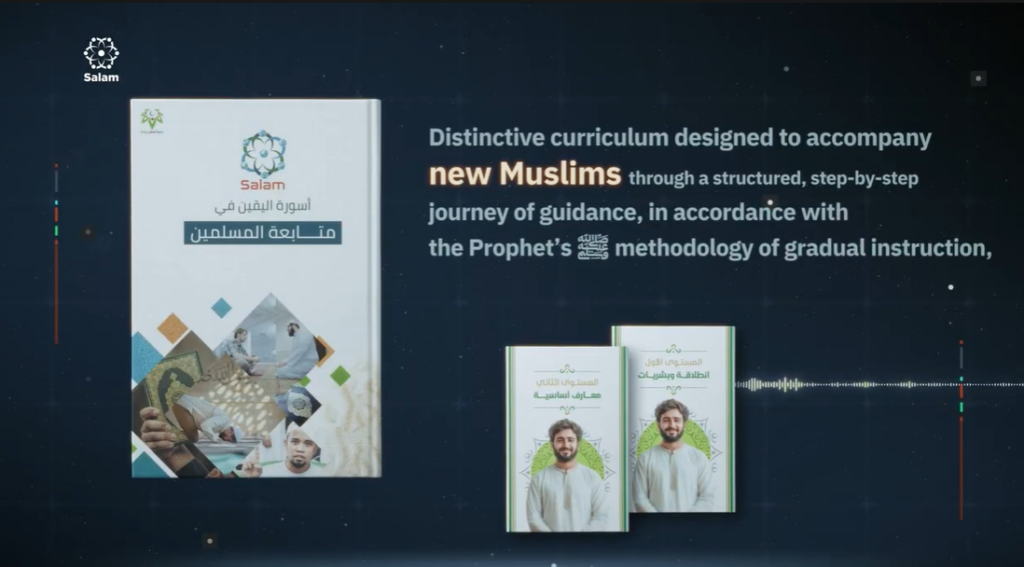
If you are considering entering Islam, or if you have already taken your Shahada and want structured, guided support, the Salam Center offers its flagship program — Asawirat Al-Yaqeen (Bracelets of Certainty) — a four-stage educational journey built specifically for new Muslims:
- Stage One covers the fundamentals of Islam: the Shahada, the pillars, wudu, and salah
- Stage Two deepens your knowledge of Iman, fasting, zakat, and Hajj
- Stage Three addresses repentance, spiritual refinement, and the Seerah of the Prophet (PBUH)
- Stage Four tackles contemporary challenges, Islamic reasoning, and life according to Surah Al-Asr
This curriculum has guided over 114,000 new Muslims across 140 countries. It is available to you now.
Reach out directly to the Salam Center team to start the Asawirat Al-Yaqeen (Bracelets of Certainty) program for FREE.
Summary
The Prophet Muhammad’s (PBUH) encounter with the jinn at Nakhlah stands as one of the Quran’s most remarkable evidences: a moment when the unseen world confirmed the truth of a message the visible world was still resisting. Recorded in Sahih al-Bukhari and immortalized in Surah Al-Jinn, the story affirms that Islam is not a human-centric religion but a universal call — directed at every being of rational will, from humanity to the world of smokeless fire.
The jinn who listened in that valley needed no convincing beyond the Quran itself. They heard it once and declared their faith with clarity. For the seeker who has arrived at this article with honest questions, the same invitation stands: the Quran has not lost the quality that moved the jinn to prostrate. Read it, and let it speak.
Frequently Asked Questions
Is the Prophet Muhammad’s story with the jinn mentioned in the Quran?
Yes, the Quran explicitly records this event. Surah Al-Jinn (Chapter 72) was revealed specifically to document the encounter in which a group of jinn listened to the Prophet (PBUH) recite the Quran at Nakhlah and accepted Islam. The opening verse begins: “Say, it has been revealed to me that a group of the jinn listened and said, ‘Indeed, we have heard an amazing Quran'” (Quran 72:1).
Did the Prophet Muhammad (PBUH) know the jinn were listening at Nakhlah?
No. The authentic narration recorded in Sahih al-Bukhari (Hadith 4921), transmitted by Ibn Abbas (RA), confirms that the Prophet (PBUH) was unaware of the jinn’s presence at Nakhlah during Fajr prayer. Allah informed him of their visit and conversion afterward through divine revelation, which became the basis for Surah Al-Jinn.
What did the jinn say after hearing the Quran from the Prophet (PBUH)?
The Quran records their testimony directly. They described the Quran as “amazing,” affirmed it guides to righteousness, declared their belief in Allah, and committed to never associating partners with Him (Quran 72:1–2). They then returned to their communities to convey the message of Islam, becoming the earliest propagators of the faith among their kind.
Were there multiple encounters between the Prophet (PBUH) and the jinn?
Islamic scholarship identifies at least two distinct encounters. The first, at Nakhlah, was unplanned — the jinn heard him praying and left as Muslims. The second, the “Night of the Jinn” near Makkah, was deliberate — the Prophet (PBUH) went specifically to recite the Quran to the jinn, accompanied by Abdullah ibn Mas’ud (RA), as recorded in classical tafsir including Ma’arif al-Quran by Mufti Muhammad Shafi.
Do Muslims have to believe in the jinn?
Yes. Belief in the jinn is obligatory for Muslims, since their existence is confirmed explicitly in the Quran — including a chapter named after them (Surah Al-Jinn, Chapter 72), and references throughout the text to their creation from smokeless fire (Quran 55:15), their moral accountability, and their presence within Allah’s created order. Denying what the Quran establishes unambiguously is not permissible in Islam.
Curious about Islam?
Journey towards clarity and purpose. Our team is here to support you in your search for truth and spiritual guidance.
Embrace the Truth